기능코성형ㅣ비중격만곡증, 비밸브재건술 등 기능적 부분까지

Functional rhinoplasty considers the internal structure of the nose and can improve both functional problems and aesthetic aspects at the same time,
so it may be satisfying because a single surgery can produce several rhinoplasty effects.
However, because the cause of functional rhinoplasty differs from person to person
and each person’s nasal condition is also different, it is necessary to closely analyze the shape and size of the septal cartilage and bones
through 3D-CT scans, and then apply a functional rhinoplasty plan suited to the findings.
If nasal conditions are left untreated for a long time, they can cause various complications,
so early treatment may be very important.
If you want to improve nasal conditions caused by various factors while also achieving a more three-dimensional nose line,
consultation with a plastic surgery specialist who focuses on functional rhinoplasty is recommended.

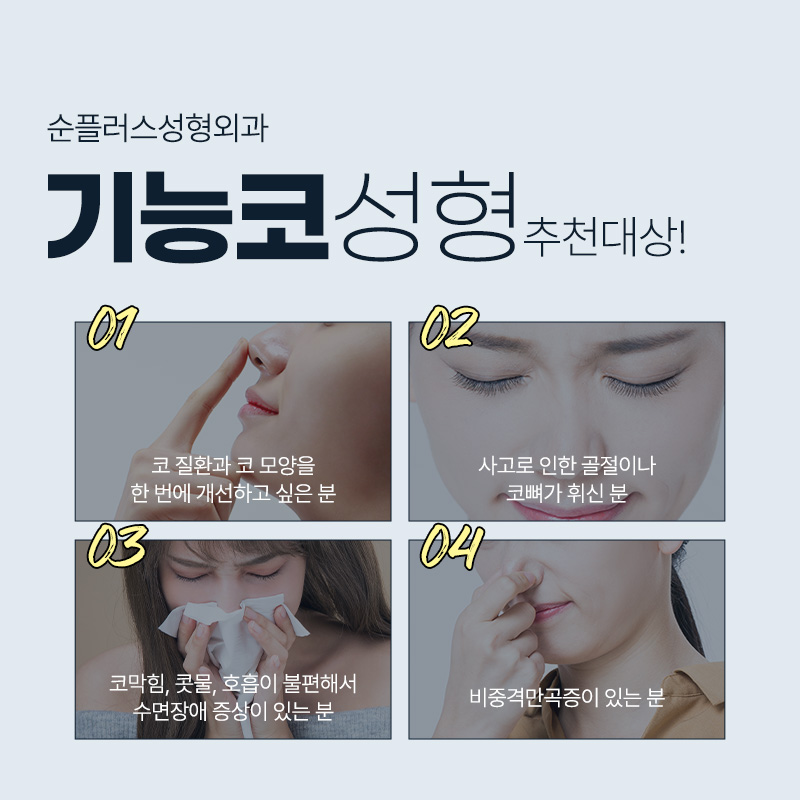
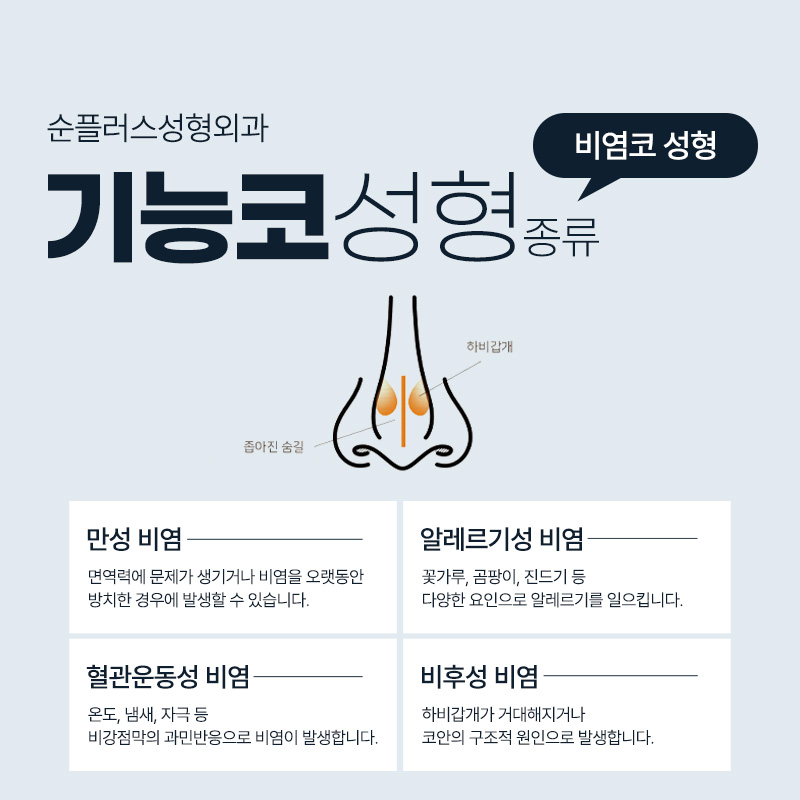
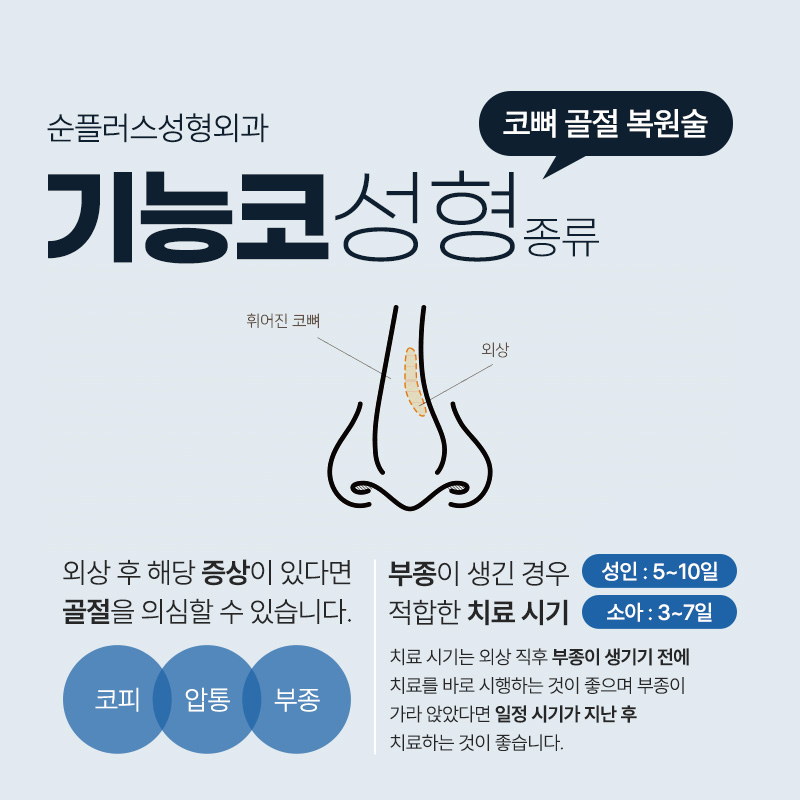
The items included in functional rhinoplasty include rhinoplasty for rhinitis, deviated septum correction, nasal valve correction, and nasal bone fracture repair,
as well as other functional improvements,
and the surgical method varies depending on the symptoms and the underlying cause.
A deviated septum correction keeps the center of the nose aligned so it does not bend. The septal cartilage, which acts as a pillar that supports the center of the nose,
can bend to one side and cause functional problems such as nasal congestion, rhinitis, and sinusitis.
Because the septum is bent, nasal congestion and runny nose continue to occur,
and breathing problems can also lead to issues such as sleep disturbances and reduced concentration,
so straightening the bent septum improves the structural cause and helps smooth breathing and relieve complication symptoms.

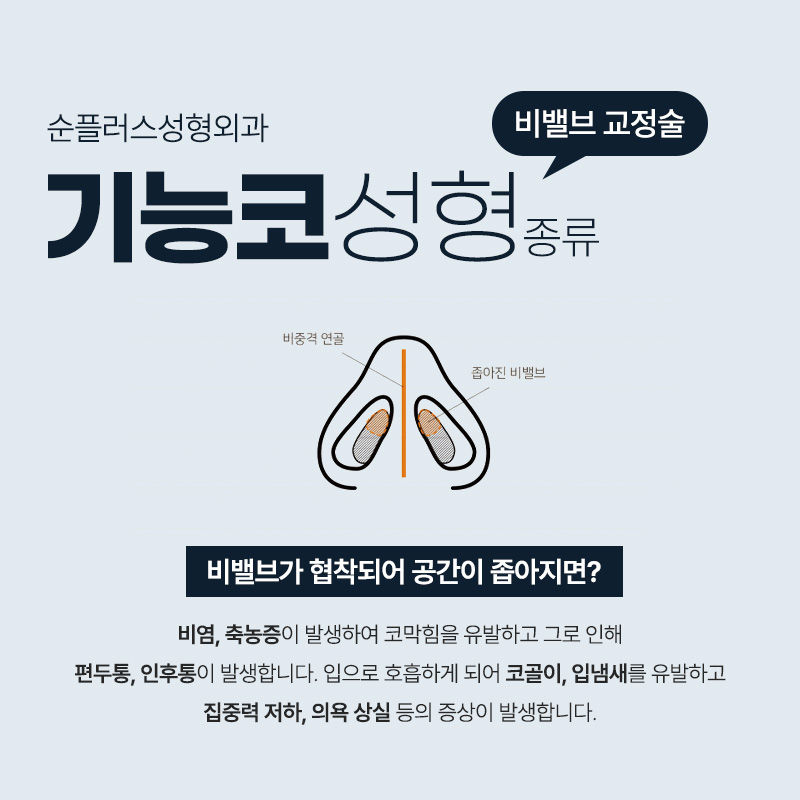
Nasal valve correction addresses a narrowed nasal valve.
The nasal valve is a roof-like space at the upper part of the septum inside the nose that regulates the flow of air entering through the nose,
allowing smooth breathing. When the nasal valve narrows, it is called nasal valve stenosis,
and in severe cases, symptoms such as nasal congestion and headaches may be experienced.
Cartilage is inserted and corrected in the narrowed area that causes nasal congestion to secure space.
By separating the septum and the dorsal cartilage, correcting the upper septal deviation,
and widening the narrowed nasal valve through spreader grafts and reinforcement of the sidewall,
the collapsed airway is opened.
In addition, by improving various functional aspects of the nose, such as rhinitis-related nasal issues and nasal bone fractures,
it can also be improved at the same time into the desired nose line and shape, resolving troublesome concerns and creating a more three-dimensional
and refined appearance.
Furthermore, in addition to functional rhinoplasty, we also perform a wide range of rhinoplasty procedures such as standard low-nose rhinoplasty, crooked-nose rhinoplasty, hump-nose rhinoplasty,
male rhinoplasty, revision rhinoplasty, and customized implants.
Through thorough consultation with a rhinoplasty specialist, one-on-one customized design, and a tailored plan,
we strive to meet the patient’s needs and achieve high-quality rhinoplasty results.