
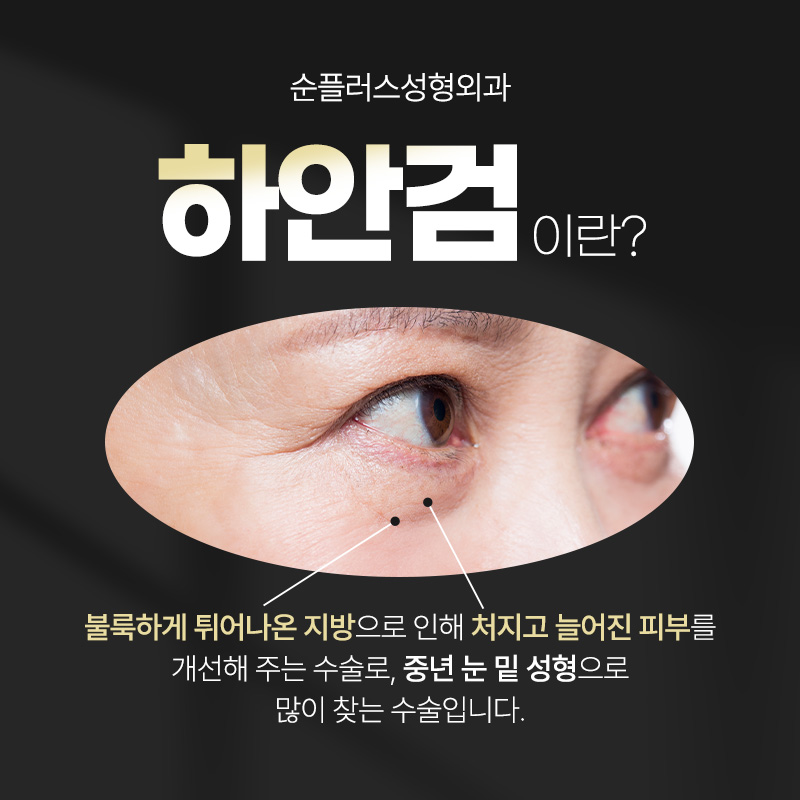
Due to skin aging that comes with age, fat builds up under the eyes, and at the same time
the skin under the eyes becomes loose and saggy, which can make a person look older,
so many people worry about this.
One procedure many people choose to address this concern is lower blepharoplasty.
As an aging society continues, many middle-aged people want to maintain social activities
with a younger-looking image and a more favorable impression than they currently have.
If you want to improve to a younger and brighter impression through procedures such as
lower blepharoplasty, anti-aging care, and other procedures, it is important to carefully
look into the surgical method, as well as the effects, recovery period, scars, and more,
before making a decision.
Then, what is lower blepharoplasty?
Lower blepharoplasty is a procedure that removes sagging fat and loose skin under the eyes.
As aging causes the fat under the eyes to sag and the skin to stretch,
it smooths the under-eye skin where wrinkles form,
helping create a cleaner and brighter under-eye area.

Over time, it becomes easy to see the under-eye area become puffy as fat accumulates.
Depending on the degree of bulging fat, a dark shadow can form beneath it,
creating darker dark circles.
To improve this, under-eye fat repositioning may be considered.
However, under-eye surgery due to aging may be difficult to improve with under-eye fat repositioning alone,
and if only the fat is addressed through under-eye fat removal, the excess skin may increase instead,
which can make eye-area wrinkles worse.
Therefore, through lower blepharoplasty, the protruding fat is removed and repositioned,
and after removing excess skin, orbicularis oculi muscle repositioning is performed to preserve
the aegyo-sal and achieve a lifting effect on the under-eye skin.
Lower blepharoplasty recovery period
The average recovery period for lower blepharoplasty is about one week, after which major bruising and swelling subside,
making daily life possible. Considering that 70–80% of the swelling and scars become smaller,
the final recovery can be said to take about 1 to 3 months.
(*The recovery period may vary depending on the surgical method, the patient’s skin condition, and physical condition.)
Also, since the age group of patients undergoing lower blepharoplasty is usually older,
the recovery period for the procedure itself may take longer than other general surgeries.
If there are other conditions such as diabetes, the recovery period may take a little longer as well.
If you want to minimize the recovery period, consistently following the clinic’s guidance,
such as compresses and walking, and avoiding the precautions you should not take,
can help shorten recovery.

In the case of lower blepharoplasty, the amount of skin removed can be important.
If too much skin is removed, it can cause side effects such as the eye turning outward,
while if too little skin is removed, fine lines may not be sufficiently reduced.
How much skin can be removed appropriately is an important point, and the decision on the amount removed
may be made according to each patient’s skin condition, the degree of wrinkles, and so on.
Above all, the surgeon’s experience and know-how are very important, so if you are considering
lower blepharoplasty, it is necessary to look into it carefully and make a cautious decision.
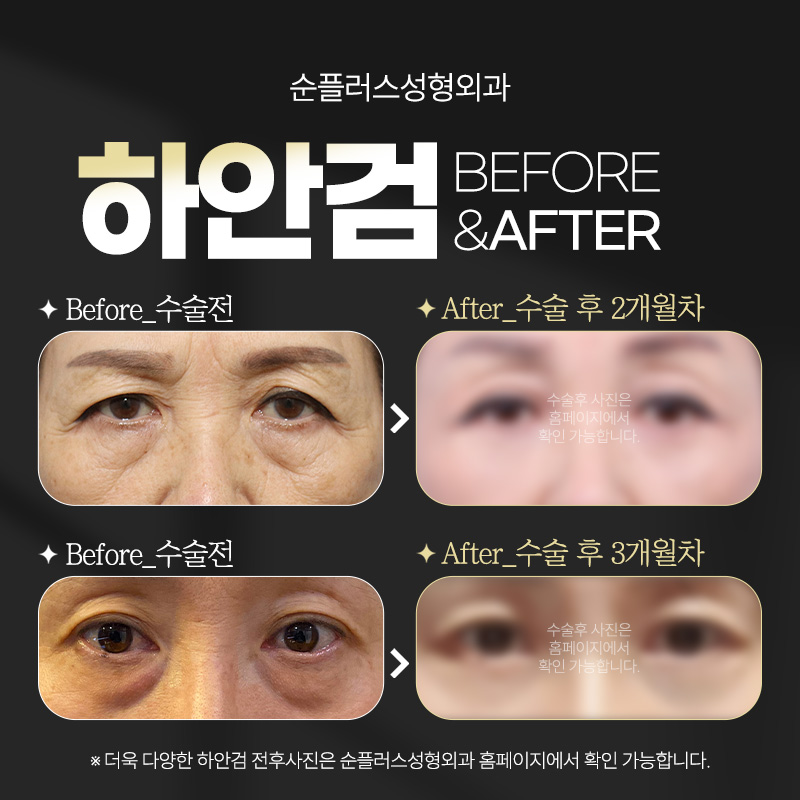
Sufficient consultation time between the patient and the medical team is important for lower blepharoplasty.
By carefully understanding the patient’s under-eye skin condition, the amount of fat, and the patient’s needs,
a one-on-one customized design and customized plan are applied to increase satisfaction with the procedure.
The procedure is performed by a plastic surgery specialist with more than 15 years of experience,
supporting safe and systematic treatment, and continuous communication after surgery helps with faster recovery.
By applying swelling laser treatment and various recovery care systems,
we help patients recover more quickly.








Previous image
Next image