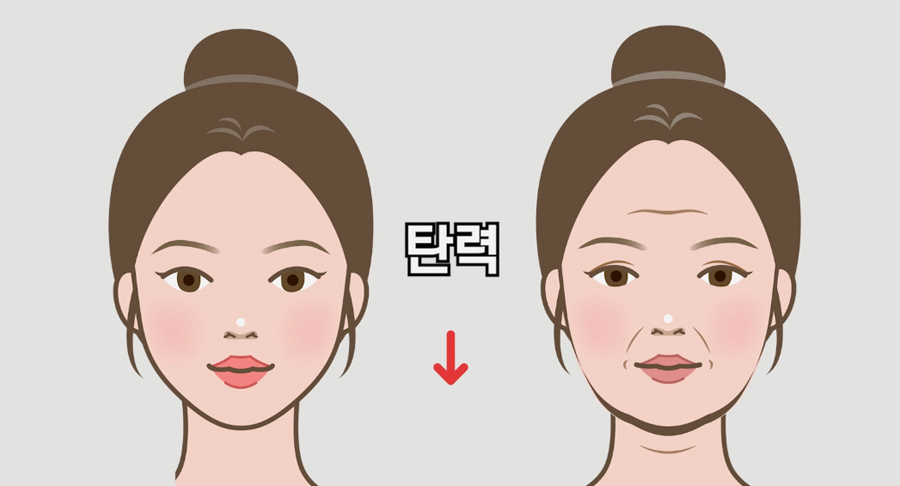
Many people are worried because the skin on their face sags day by day.
There are also many people who visit lifting clinics to improve it.
When consulting about sagging skin, various reasons for facial sagging can be identified.
A representative reason is sagging caused by aging.
As collagen and elastin in the skin decrease, the skin gradually loses elasticity,
and there may be cases where it stretches and sags,
and there are also many younger people who undergo lifting
to prevent the feeling that their skin is gradually sagging.

Also, when the skin has stretched all at once due to extreme dieting or sudden weight changes,
lifting procedures may be used to improve skin sagging and drooping skin.
And many people visit lifting clinics to improve sagging that occurs after facial contouring surgery.
The facial contouring surgery we are talking about is effective in making the facial outline smaller
through zygomatic bone / lower jaw bone osteotomy.
However, if the internal structure of the face becomes smaller due to bone osteotomy while the facial skin and tissue remain the same,
a phenomenon occurs in which the outer tissue and skin are left behind.
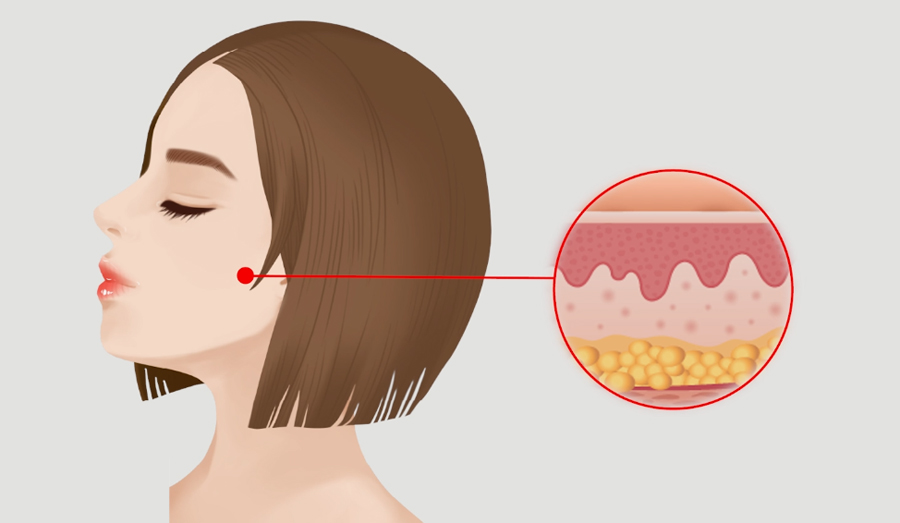
In that case, the remaining skin gradually begins to sag over time.
A lifting method that can be recommended when sagging occurs after facial contouring surgery
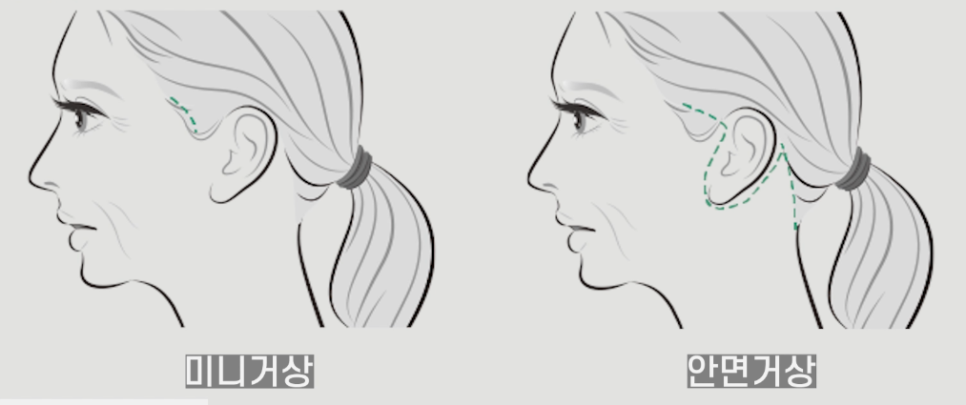
may be a mini facelift.
When a full facelift feels too burdensome, a mini facelift relatively simply performs dissection and repositioning of the retaining ligaments,
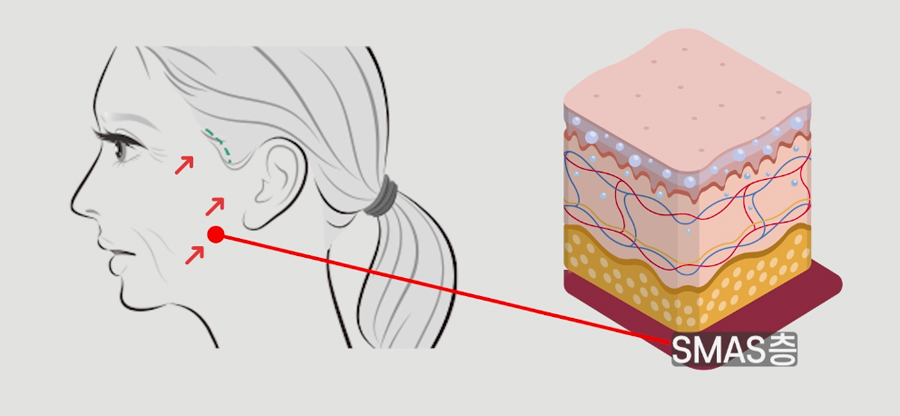
then pulls up even the SMAS layer that had become loose,
helping to improve the sagging that appeared after facial contouring surgery.
A mini facelift has a smaller incision area than a general facelift,
so it has the advantage of a faster recovery, and by adjusting and tightening the SMAS layer,
it can make the muscles and connective tissues firm and natural,
which may help improve sagging that occurs after facial contouring surgery.
Of course, depending on each patient’s skin condition, the degree of sagging, and other factors,
the lifting procedure method may differ,
so for an accurate diagnosis, a careful consultation with a medical professional specializing in lifting is essential.
Most people who undergo facial contouring surgery are not older people whose skin has sagged due to aging,
but relatively younger people,
so lifting must be performed in a state where elasticity has not declined.
Therefore, when undergoing a lifting procedure such as a mini facelift after facial contouring surgery,
it may be more difficult than a general facelift,
and there may be cases where it is difficult to achieve high satisfaction.
For this reason, it is very important to proceed with the procedure through medical professionals who have a deep understanding of facelift surgery,
extensive knowledge, and abundant experience and know-how.