How long is the recovery period, including upper blepharoplasty swelling?
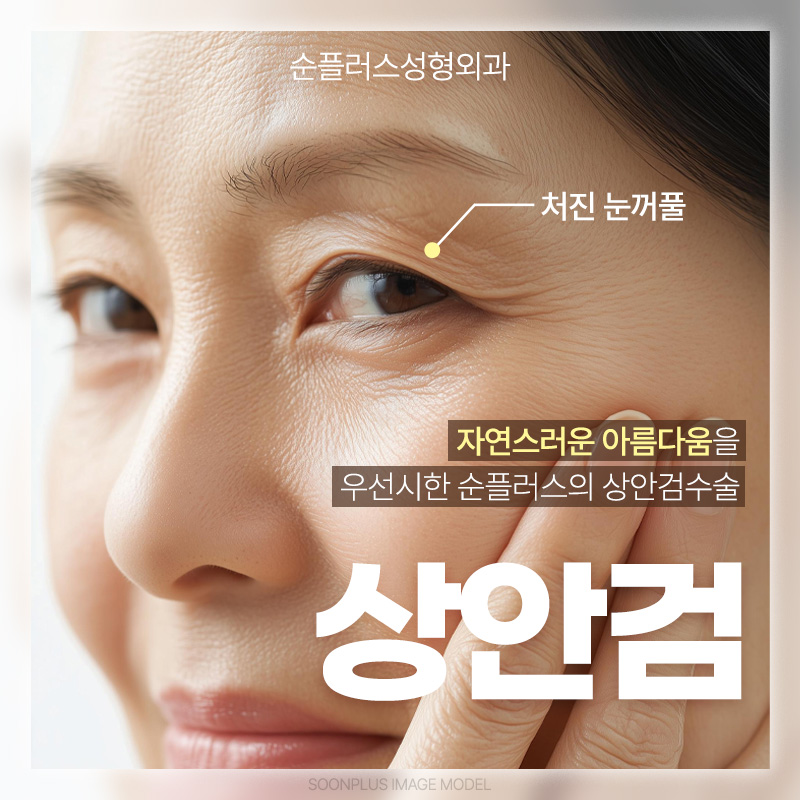
When you face someone, it seems that youthful-looking images and older-looking images each have their own characteristics.
In the case of a youthful image, clear and bright skin, along with a firm, voluminous, rounded face shape, are
representative features. In the case of an older-looking image, there may be sagging skin,
wrinkles around the eyes, drooping eyelids, and skin without elasticity.
In particular, the skin around the eyes is thin, so wrinkles and eyelid drooping can appear
more quickly and more deeply. That is why, before the condition becomes more severe,
we look for ways to improve the image.
These days, rather than pursuing glamorous and sophisticated facial features,
more people seem to prefer a younger-looking, youthful image.
As a result, many want to improve the various signs of aging that appear around the eyes.
Among the many improvement methods, if the eyelids have drooped as the skin ages,
causing a tired and sleepy-looking eye shape, upper blepharoplasty may be used to help improve it.
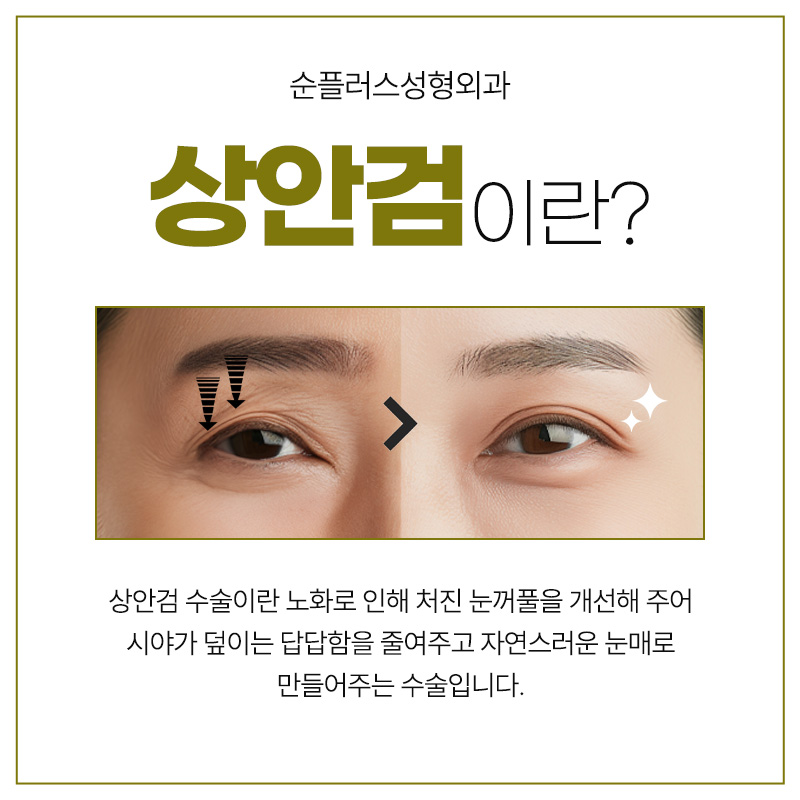
Upper blepharoplasty is a representative eye procedure for middle-aged people, and it can be the basic
and also an important operation in wrinkle surgery around the eyes.
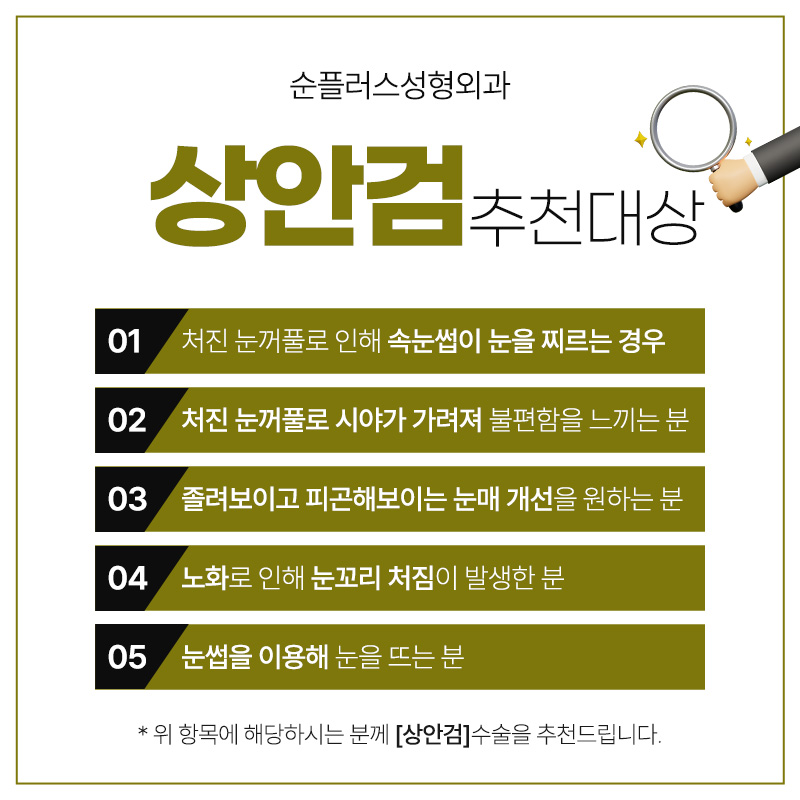
Upper blepharoplasty, also called middle-aged double eyelid surgery, can be recommended for people whose drooping eyelids obstruct their field of vision and who raise their forehead to secure their line of sight, resulting in forehead wrinkles. By removing sagging skin and muscle,
a clearer and more natural double eyelid line is created,
with the expectation of a younger and softer impression.
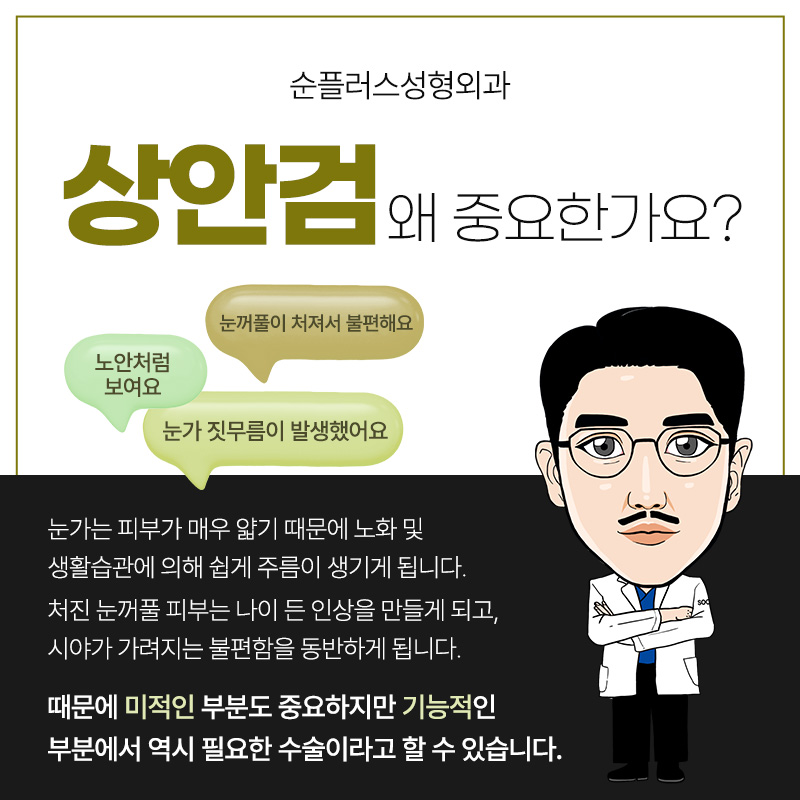
As people age, they experience aging, and changes around the eyes include
symptoms such as eyelid skin stretching and sagging, as well as a decrease in eyelid fat.
When the eyelids sag, they interfere with vision, and people raise their forehead to secure their field of view,
which is often accompanied by forehead wrinkles and can make them appear even older.
Also, above all, drooping eyelids can give a tired impression,
leaving a poor image.
Recently, as more middle-aged people continue to engage in social activities, image has become important,
so concerns should be addressed quickly through rapid improvement such as upper blepharoplasty.
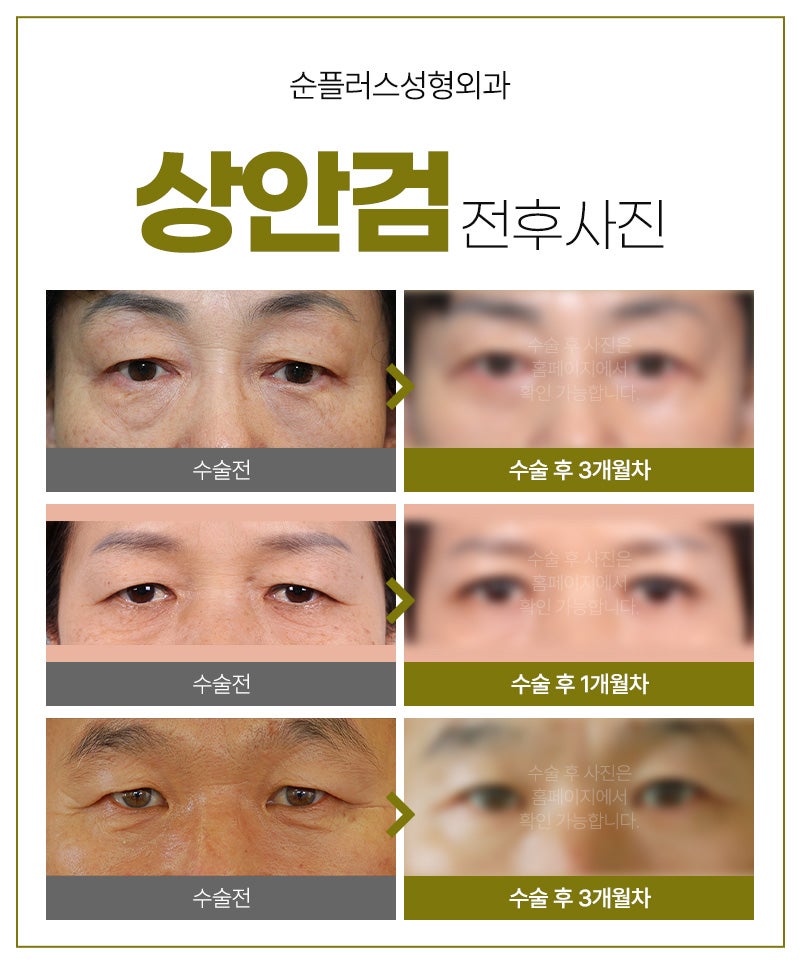
Even though upper blepharoplasty is middle-aged double eyelid surgery, it generally requires a different plan from double eyelid surgery performed on younger age groups.
Middle-aged double eyelid surgery, upper blepharoplasty, must remove the drooping eyelid while at the same time creating a natural double eyelid line.
If upper blepharoplasty is performed excessively, it can result in an unnatural effect and an impression that looks harsher than before surgery,
so the goal is to achieve naturalness and ensure that the procedure also meets the patient’s needs.
A one-on-one customized plan based on each patient’s eye condition must be applied.
By carefully assessing the degree of eyelid drooping, skin thickness, and excess skin,
a customized design and plan are applied, and for a high-quality result, procedures such as upper eyelid fat grafting are performed together,
with the expectation of a more natural double eyelid line and compensation for hollow areas, resulting in a lively and younger-looking eye shape.

Many people are also curious about swelling and the recovery period after upper blepharoplasty.
In terms of recovery, there may be slight differences depending on age.
As people get older, recovery may be slower than in younger age groups, but at our clinic,
we apply a variety of recovery management systems, including swelling laser treatment, to support a faster recovery period.
The recovery period after upper blepharoplasty may vary depending on each person’s condition and skin state,
but major swelling generally improves within 1 to 2 weeks. Since swelling is at its worst 2 to 3 days after surgery,
raising the upper body while sleeping helps manage swelling.
For about 3 to 4 days after upper blepharoplasty, cold compresses can help with bruising and swelling, and after that,
we manage swelling by combining cold and warm compresses.
Follow the clinic’s instructions and use the ointment consistently, and be careful not to let water touch the surgical site before the stitches are removed.
After eye surgery, including upper blepharoplasty, the shapes of the left and right eyes may look different because of swelling,
and once the swelling goes down and settles to some extent, a natural eye shape can be seen.
Swelling, bruising, and redness after eye surgery are part of the recovery process.
However, if discomfort such as pain or heat sensation continues, it is best to notify the clinic quickly so that appropriate action can be taken.