
Functional rhinoplasty is a nose surgery that improves functional problems of the nose, such as hypertrophic rhinitis, nasal valve stenosis, septal deviation, and fractures,
while also performing cosmetic rhinoplasty at the same time.
As a result, multiple effects can be achieved with a single surgery.
Because the issues each patient wants to improve in functional rhinoplasty differ,
and the shape of the nose also varies from person to person,
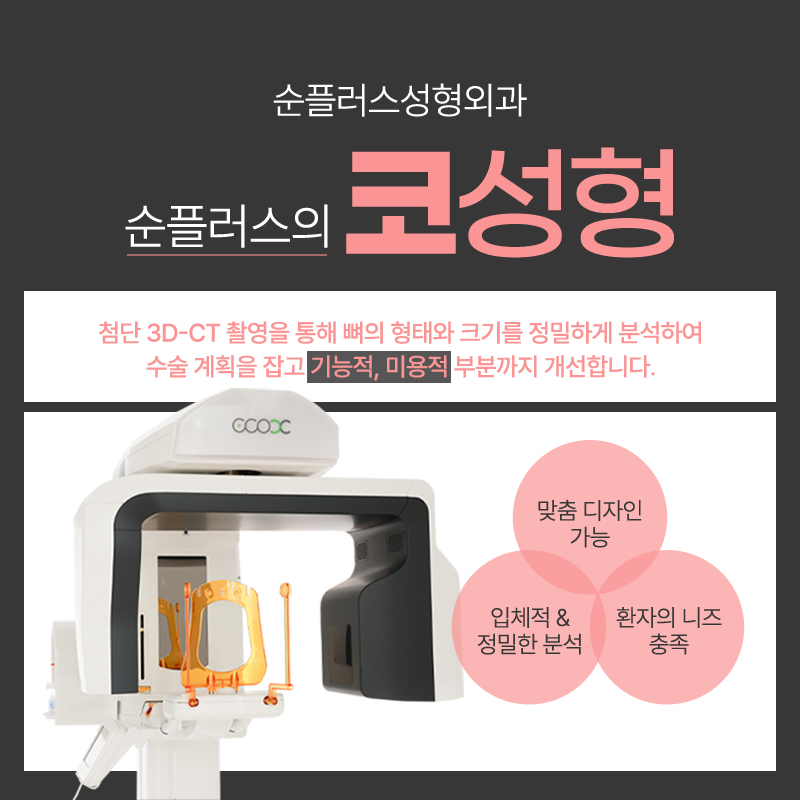
3D-CT imaging is used to three-dimensionally examine and carefully analyze the shape and size of the septal cartilage and bone,
so that a functional rhinoplasty plan suited to the individual can be applied.
If nasal conditions such as rhinitis or septal deviation are left untreated,
they can cause various complications, so early treatment may be important.
If you want to improve nasal conditions caused by various factors
and at the same time transform a low nasal bridge and nasal tip into a raised, three-dimensional nose line,
you should have a more detailed consultation with a board-certified plastic surgeon who specializes in functional rhinoplasty.

The procedures included in functional rhinoplasty vary widely, such as hypertrophic rhinitis, septal deviation correction, nasal valve correction, and nasal bone fracture repair.
Depending on the symptoms or the cause of the problem, the surgery must be carried out with an appropriate method.
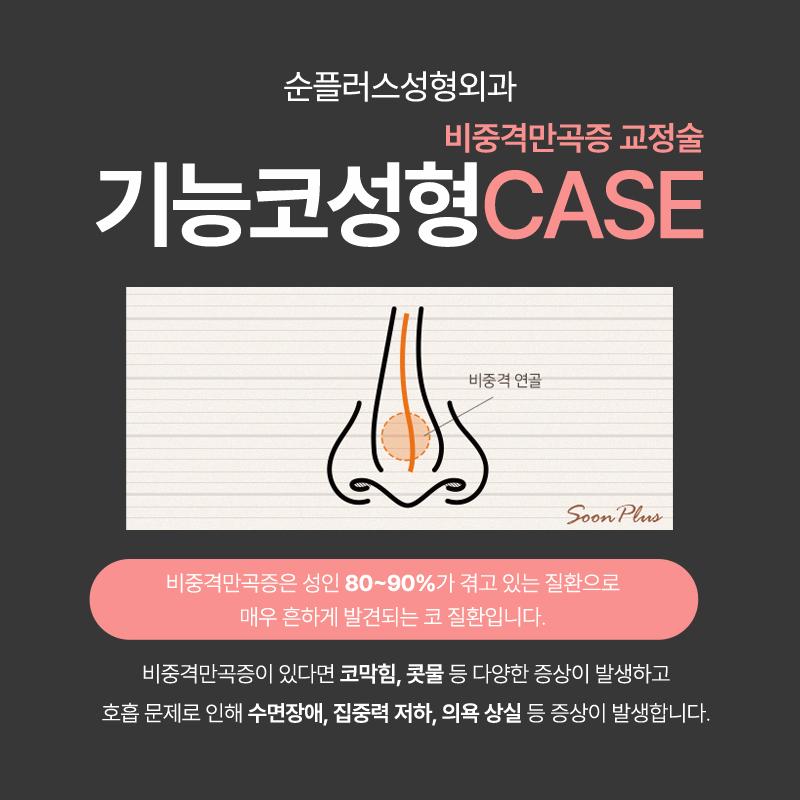
Septal deviation is one of the nasal conditions commonly found in adults.
When the septal cartilage, which supports the center of the nose, bends to one side,
it can cause functional problems such as nasal congestion, rhinitis, and sinusitis.
Because the septum is bent, nasal congestion and runny nose occur continuously,
and breathing problems can lead to discomfort in daily life, such as sleep disturbances and decreased concentration.
For this reason, the bent septum is straightened,
and by improving the structural cause, smooth breathing and prevention of complications are promoted.
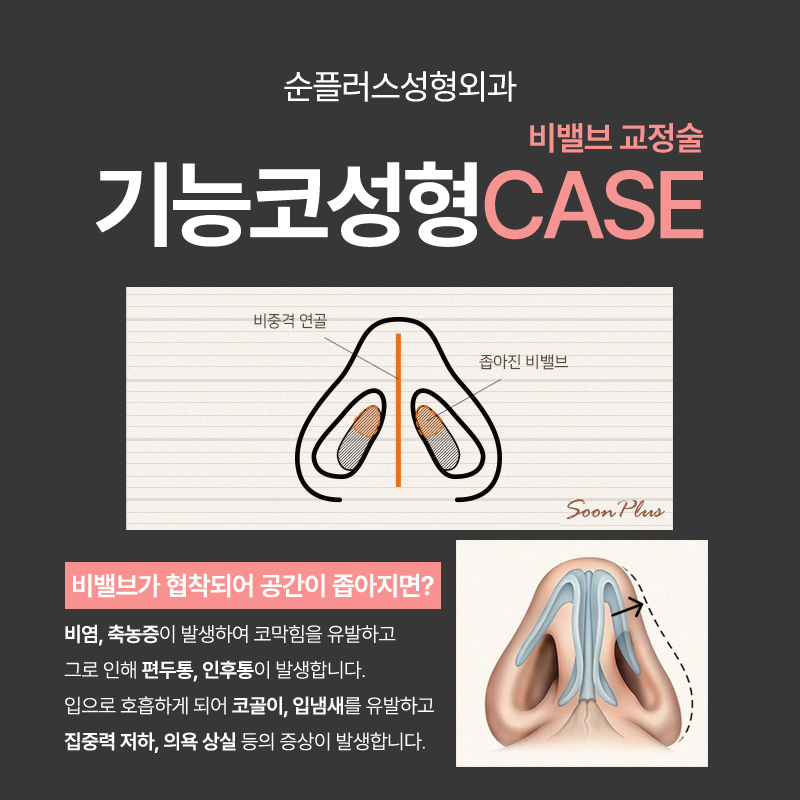
Nasal valve correction surgery, which improves a narrowed nasal valve,
addresses the nasal valve, a roof-like space at the upper part of the septum inside the nose,
regulating the flow of air entering through the nose so that breathing can be smooth.
When the nasal valve narrows, it is called nasal valve stenosis,
and in severe cases it can cause nasal congestion, which may lead to symptoms such as headache and sore throat.
By inserting or correcting cartilage in the narrowed area to secure space,
detaching the septum from the dorsal cartilage to improve upper septal deviation,
and widening the narrowed nasal valve through spreader grafts and reinforcement of the side wall,
the collapsed airway is opened so that breathing can proceed smoothly.
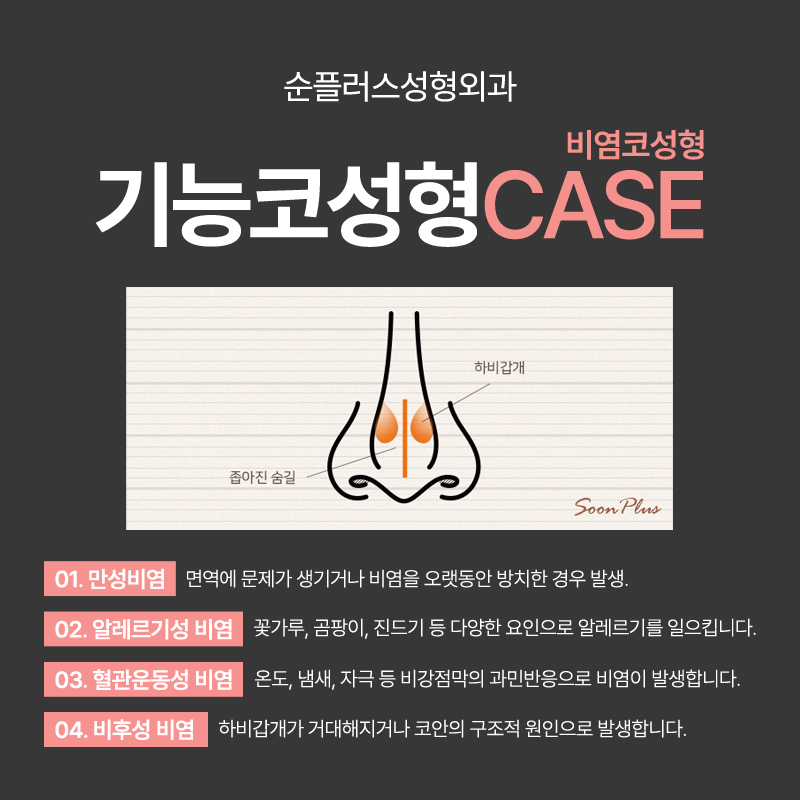
In the case of a rhinitis nose, which is one of the most common functional nasal problems,
there are various types such as chronic rhinitis, allergic rhinitis, vasomotor rhinitis, and hypertrophic rhinitis.
Symptoms such as runny nose, sneezing, and nasal congestion occur frequently,
causing discomfort in daily life, so prompt improvement is needed.
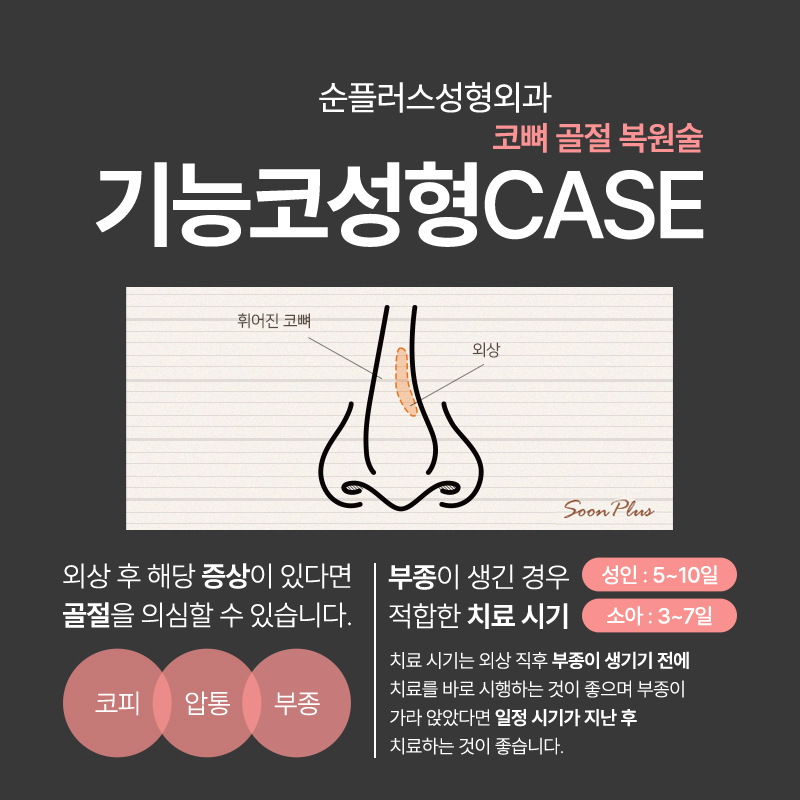
In addition, in cases of a fractured nasal bone after trauma, various symptoms such as nosebleeds, swelling, and tenderness occur,
and the shape of the nose may change as well.
Therefore, while treating the fractured nasal bone,
it is possible to improve it at the same time into the desired nose line and shape,
resolving the functional problems that had been concerning you and creating a more defined, three-dimensional nose shape.

In the case of functional rhinoplasty, it is not performed for cosmetic purposes alone.
As the functional aspects must also be improved at the same time, the procedure is highly complex,
and the process itself is also demanding, so it is important that it be carried out safely by medical staff with extensive experience and know-how in functional rhinoplasty.
By having specialized equipment for functional rhinoplasty, three-dimensional and precise analysis can be performed,
and the surgery can proceed with a safe and appropriate plan.
By adding the medical team’s expertise and aesthetic sense, the design satisfaction desired by the patient can be increased,
allowing for highly refined functional rhinoplasty results.