
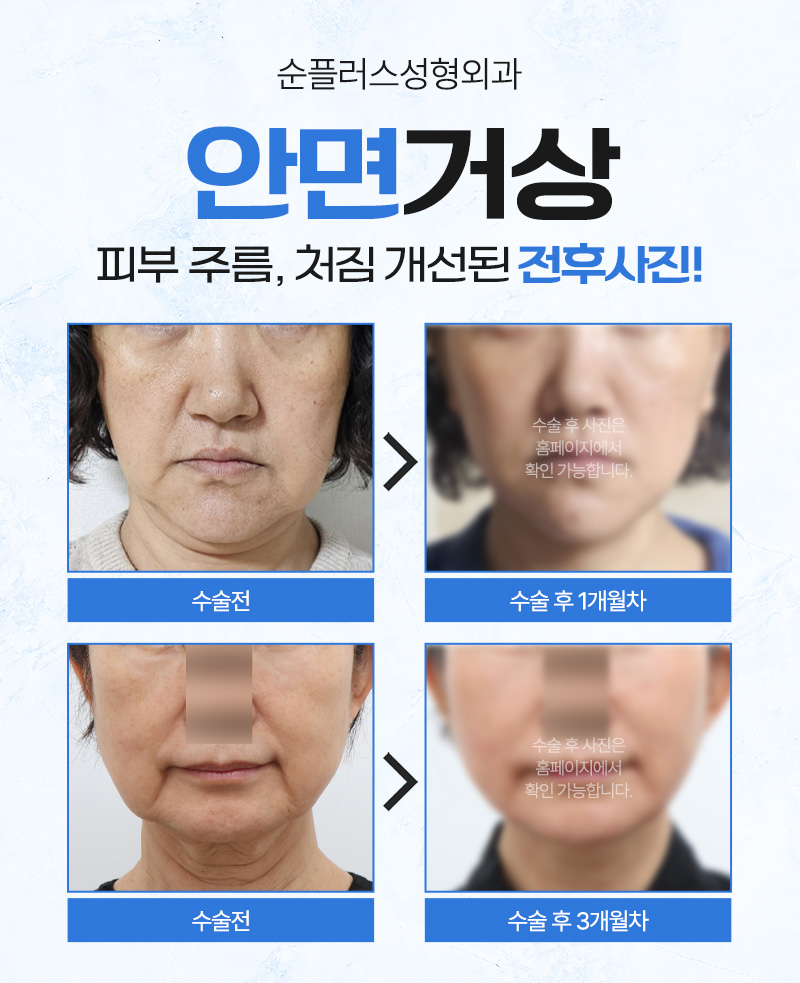
From the late 40s onward, the skin’s elastic fibers weaken, and the fat layer and muscles move downward with gravity,
causing overall facial sagging.
There are areas where this change appears especially clearly.
Deepened nasolabial folds / formation of jowls / a less defined jawline and neck boundary / double chin and neck wrinkles, etc.
When these noticeable signs of aging appear,
a relatively simple procedure such as laser treatment or thread lifting alone may make it difficult to expect overall facial improvement and satisfying results.
At this point, a facelift can be recommended as an improvement option to consider.
Looking at the principle of a facelift, it does not simply pull the skin.
It also lifts the fascia layer beneath the skin, called the SMAS, to improve facial sagging structurally.
The reason SMAS-layer lifting is needed is that it is closely related to the facial muscles, allowing a natural lifting effect,
and it improves sagging without excessive tension on the skin surface.
In addition, by pulling the deep SMAS layer, the lifting effect can be maintained for a long time.


The facelift procedure starts with an incision in front of the ear and continues behind the ear into the hairline, after which the skin layer is widely dissected
and the SMAS layer and skin tissue are removed.
The tissue and muscles are pulled together and fixed at key points,
and unnecessary skin is removed, then the procedure is finished with delicate suturing.
(The scope of surgery may vary depending on each patient’s degree of sagging and anatomical characteristics.)
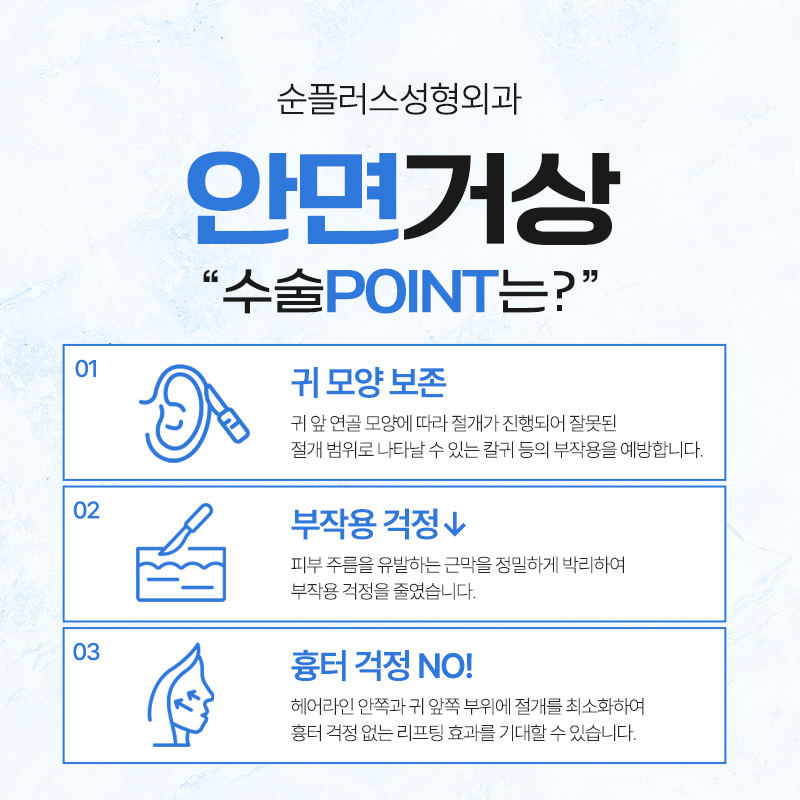
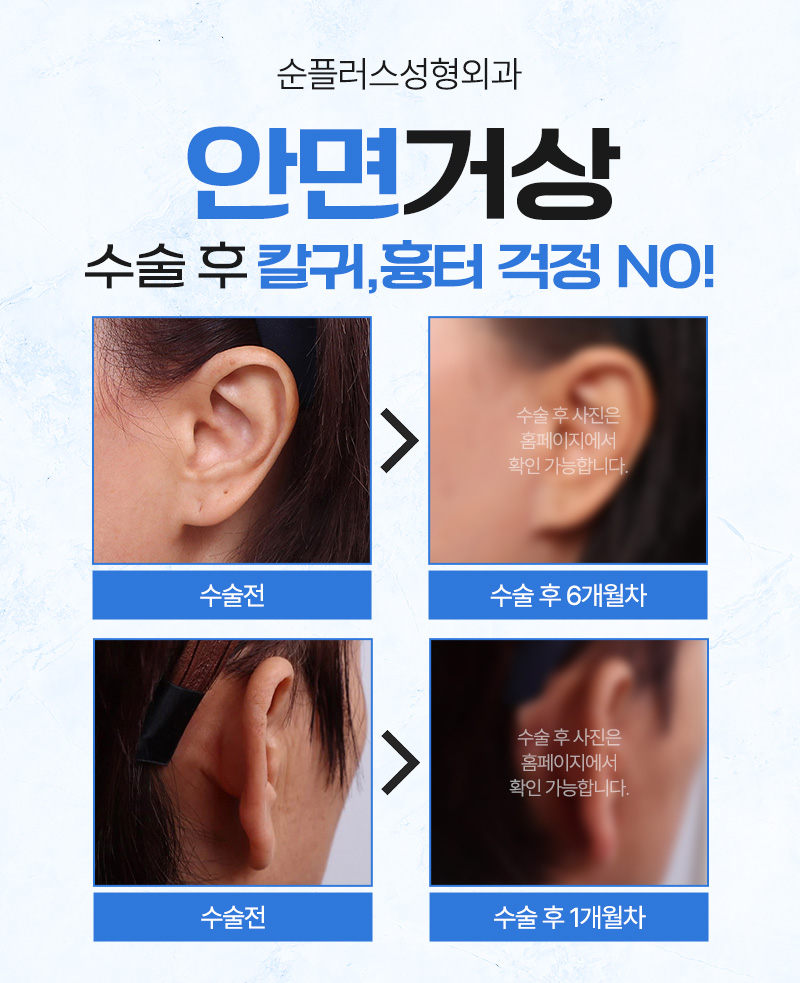
To minimize the visibility of scars that may occur during a facelift, the incision is made starting in front of the hairline and following the shape of the cartilage in front of the ear.
Over time, the scar becomes less noticeable,
and this helps prevent side effects such as a pointed ear shape or loss of sideburns that can occur with an incorrect incision range.
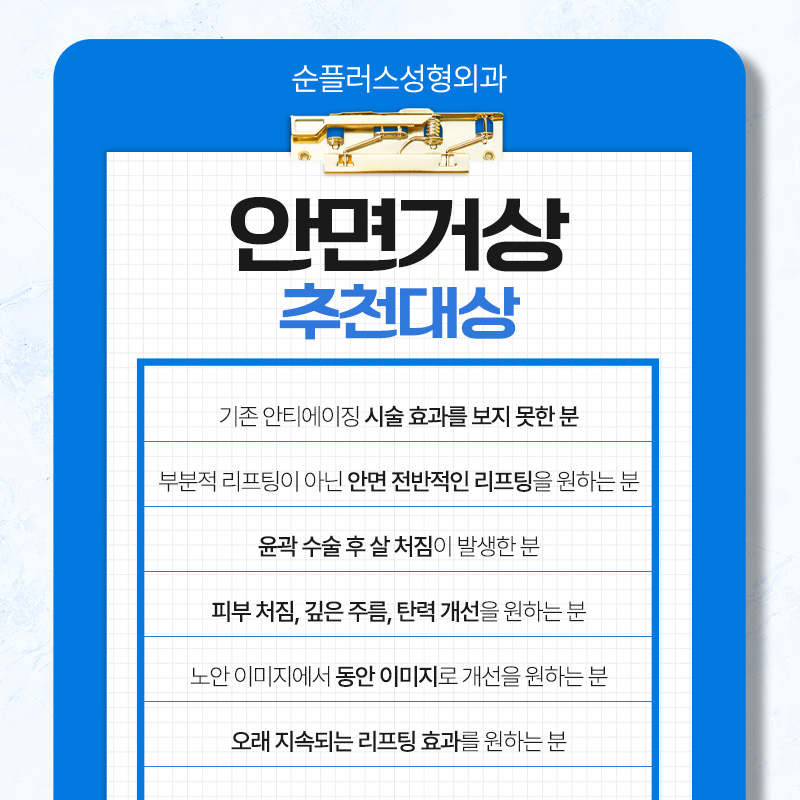
People for whom a facelift may be recommended include:
When sagging and laxity have worsened across the entire face rather than in just one area
When the main concerns are not only fine wrinkles but also jowls and a blurred jawline in various parts of the face
When the effectiveness of repeated lifting procedures has decreased
When asymmetry or bumpy side effects were experienced after thread lifting or laser lifting
When skin sagging occurs over time after bone surgery such as facial contouring
A facelift can be recommended for people with the concerns above, and
for a more accurate diagnosis, a detailed consultation with a board-certified plastic surgeon through an in-person visit can help plan an appropriate procedure.
There are several precautions after a facelift.
Pain varies depending on the patient’s condition and individual differences, and in most cases it is managed with painkillers.
It is best to wash the face after the stitches are removed, and in the early stage after surgery it is better to avoid unnecessary stimulation of the surgical area.
To reduce swelling, keeping the upper body elevated during sleep for about a week after surgery can help reduce swelling,
and strenuous exercise is recommended after about one month.
Alcohol and smoking, which can slow wound healing and cause infection, are best avoided for at least one month.
※In addition, following the precautions provided by the hospital after surgery will help with a faster recovery.
Frequently Asked Questions After a Facelift
Q. Does a facelift leave a lot of scars?
A. Because the incision is made from inside the hairline along the shape of the cartilage in front of the ear,
the scar is less visible,
and over time it gradually fades and blends naturally with the surrounding skin.
Q. Is it more effective than regular lifting procedures?
A. It may be effective for moderate to severe skin sagging that has limitations with short-term procedures,
and because it involves extensive dissection and lifting,
it may be suitable for people concerned about overall facial skin sagging and laxity rather than a localized issue.