Functional rhinoplasty for cosmetic improvement and better breathing through relief of rhinitis and a deviated septum

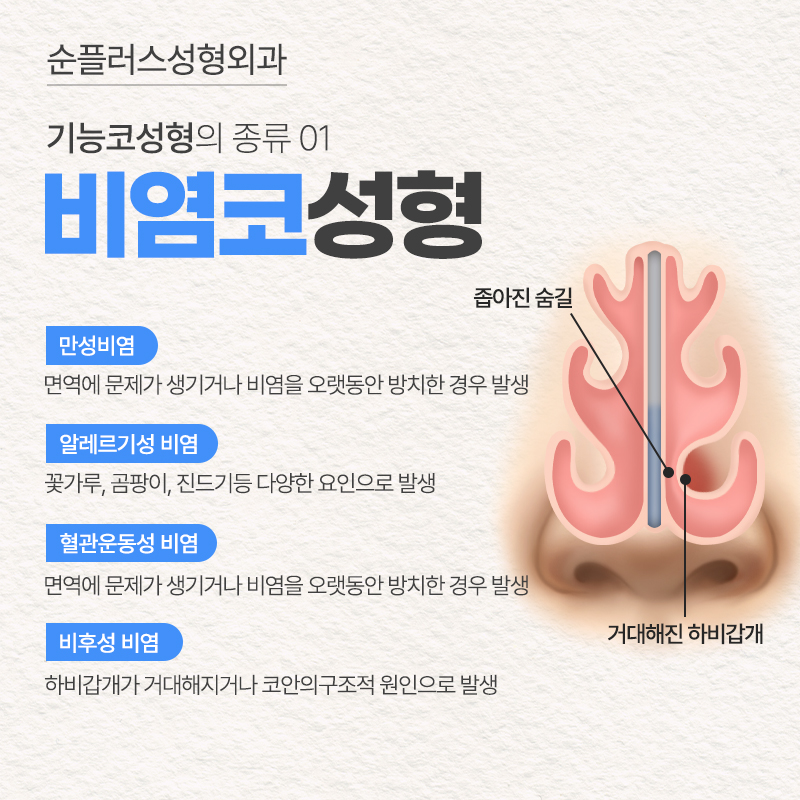
Functional rhinoplasty is not simply a surgery performed for cosmetic purposes to make the nose look more attractive. It is a nose surgery that also improves functional issues accompanied by breathing discomfort, such as nasal congestion, rhinitis, and a deviated septum.
Functional correction may be performed on its own, but when carried out together with cosmetic rhinoplasty, it has the advantage of achieving both an improved appearance and functional improvement at the same time, which can increase satisfaction.
Candidates for functional rhinoplasty include:
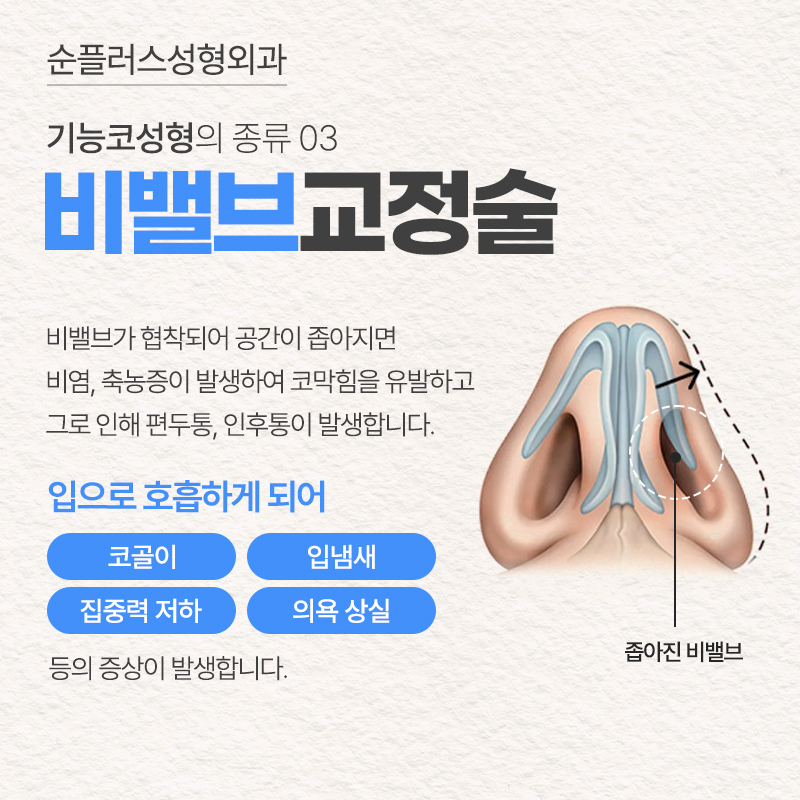
- People who usually breathe through their mouth because of severe nasal congestion caused by rhinitis or other factors
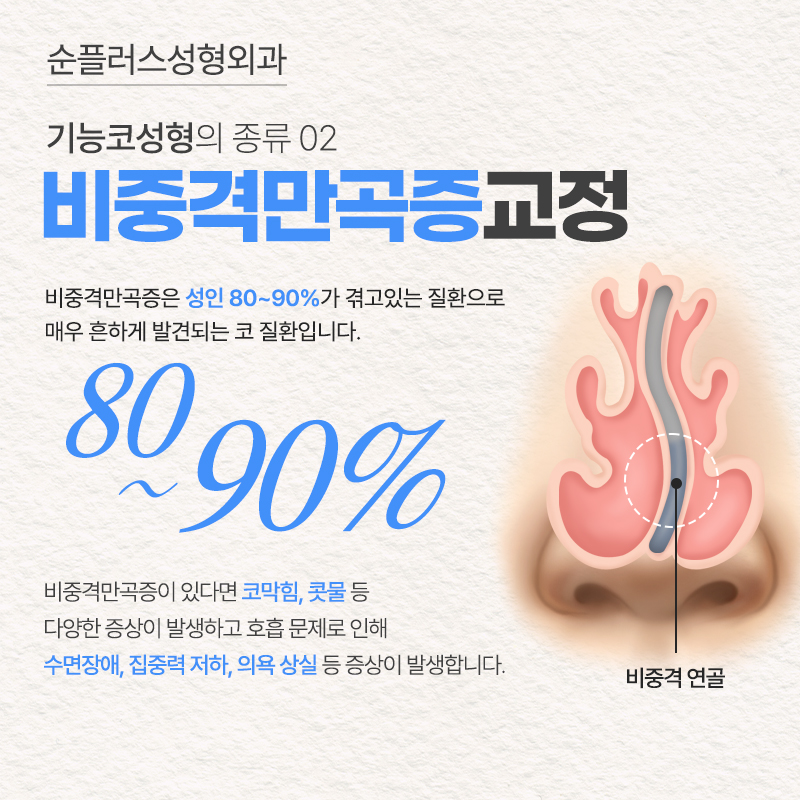
- People who have severe rhinitis or have been diagnosed with a deviated septum
- People who still have breathing discomfort and a collapsed nose line after a previous nose surgery
- People who are considering cosmetic nose surgery and want functional improvement at the same time
For an accurate diagnosis, it is important to visit a clinic that performs functional rhinoplasty and receive an examination using specialized equipment along with 충분한 상담 with the medical staff.

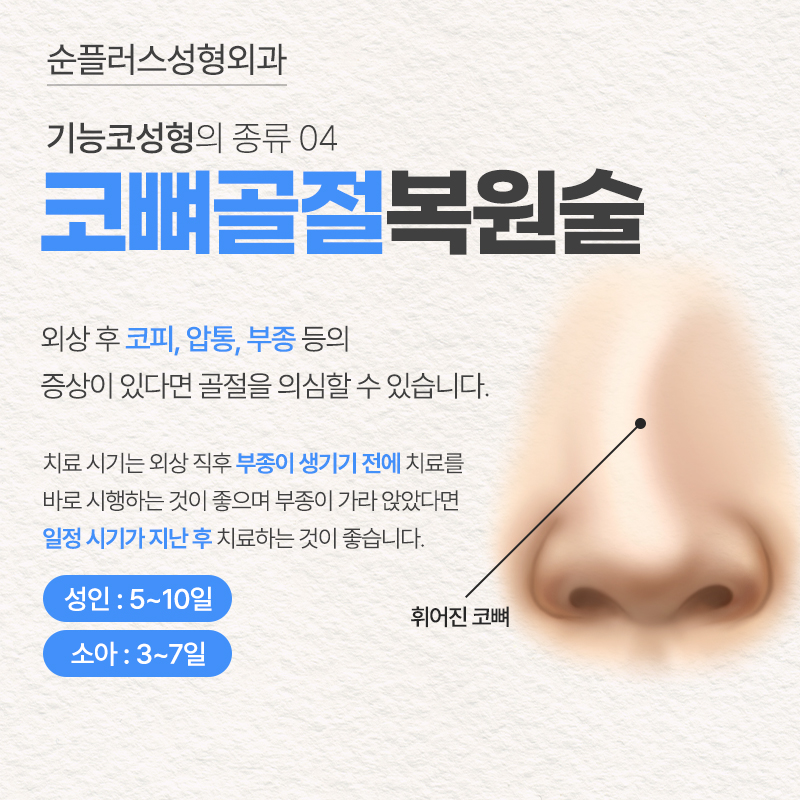
Functional rhinoplasty is not the same as a regular cosmetic nose surgery. Because the functional aspects of the nose that support breathing, such as rhinitis-related nasal obstruction, a deviated septum, nasal valve collapse, and nasal bone fractures, need to be improved, it must be planned and performed more carefully.
For this reason, an accurate diagnosis comes first.
Using 3D-CT and endoscopic equipment, the internal structure of the nose is examined in detail, and the condition of the septum, the space inside the nose, and the presence of inflammation are analyzed closely.
If only function is considered, the appearance may be unsatisfactory, and if only appearance is considered, breathing may become uncomfortable. That is why a one-on-one customized surgery that considers both function and aesthetics at the same time should be performed.
In the case of revision surgery, a medical team with abundant know-how and experience in functional revision rhinoplasty cases that address problems caused by previous surgery can help safely improve complex issues.
Precautions after functional rhinoplasty include avoiding lying face down or bending your head down immediately after surgery, since there is a risk of bleeding. It is also recommended to apply cold compresses for about 2 to 3 days after surgery to reduce swelling and bruising, and then switch to warm compresses to help speed up recovery.
To prevent the surgical area from drying out, keep it moist with the ointment prescribed by the clinic. Taking the prescribed antibiotics, anti-inflammatory medications, and other medications regularly as instructed also helps recovery and prevents inflammation.
In addition to functional rhinoplasty, after a general nose surgery, glasses and sunglasses may be recommended only after one month due to concerns that the weight could distort the shape of the nose.
Sneezing, blowing your nose, and similar actions are also best avoided for about one month.
After functional rhinoplasty, symptoms such as swelling, bruising, and nasal congestion are common and gradually improve over time.
The final nose line may be guided as taking at least 6 months, and the functional improvement effect also appears gradually after surgery.

If you want to improve not only the beauty of your nose but also the functional problems, please seek a more detailed consultation about functional rhinoplasty.
When the shape of the nose becomes more attractive, confidence in appearance can rise. When breathing becomes easier, you can expect a change in quality of life.