
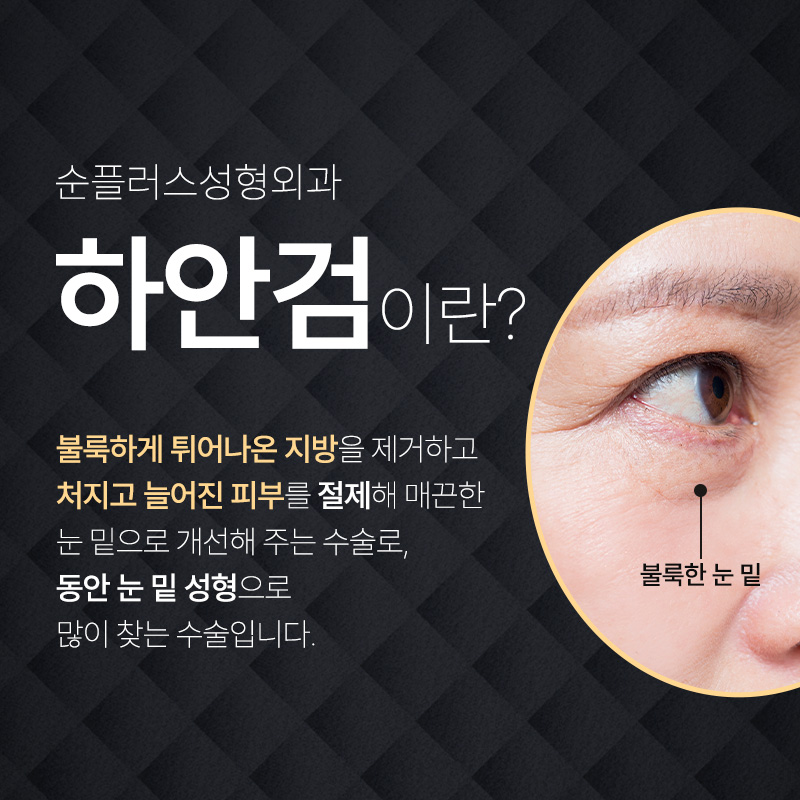
Many people continue to prefer under-eye surgery. A representative example is lower eyelid fat repositioning surgery,
and along with that, many people also consider lower eyelid surgery, which is a midlife under-eye procedure.
Lower eyelid surgery is generally a slightly more difficult procedure than the under-eye fat repositioning commonly performed in people in their 20s and 30s,
and it is one of the surgical options chosen when under-eye fat repositioning alone is difficult to solve the problem.
The biggest difference between under-eye fat repositioning and lower eyelid surgery is that
in the case of lower eyelid surgery, access is made through an incision on the outside of the skin,
and it can be distinguished by whether the orbicularis oculi muscle and skin surrounding the eyes are adjusted or not.
In cases of under-eye fat repositioning, if the under-eye fat is sagging and protruding, but the skin and muscle have not stretched much
and still retain some elasticity, access through the conjunctiva leaves no visible scar on the skin surface.
In cases of lower eyelid surgery, the fat under the eyes has already protruded significantly, and after a long period of stretching,
the muscle and skin have sagged, so simply adjusting the inner fat cannot produce a sufficient result.
If adjusting only the inner fat would leave wrinkled skin on the outside, the procedure involves making an incision in the outer skin
and tightening the eye muscle by lifting the orbicularis oculi muscle around the eyes, among other steps.
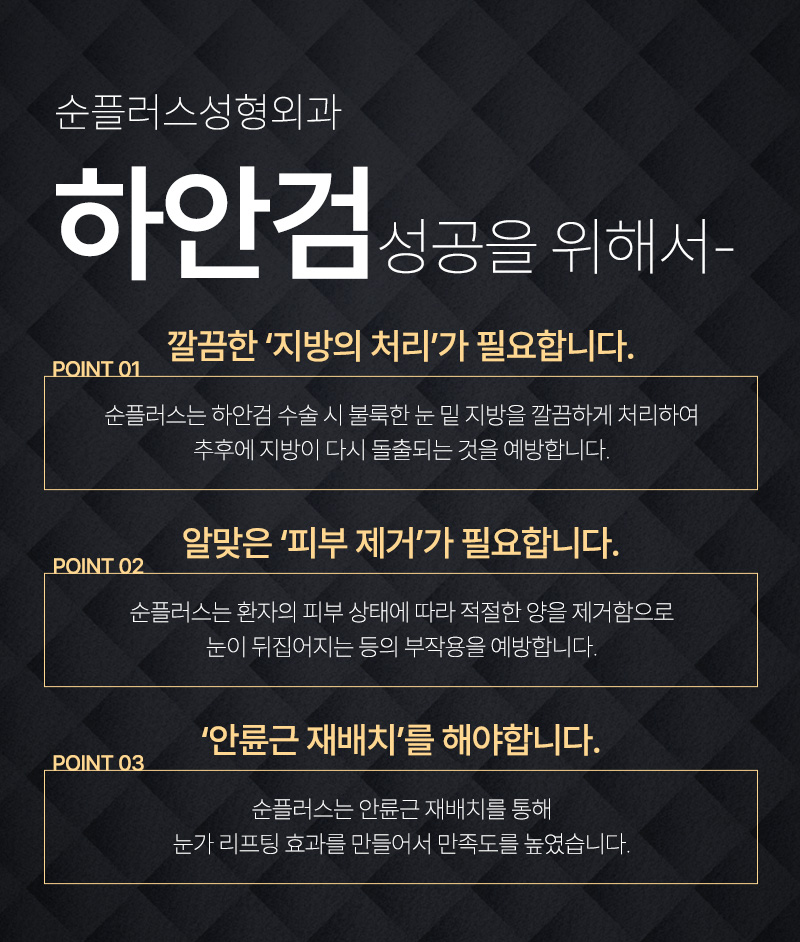
Is lower eyelid reoperation difficult?
Compared with under-eye fat repositioning, it is more difficult, so some people worry about reoperation.
Looking at photos of an actual patient who underwent lower eyelid reoperation,
this was a case in which lower eyelid surgery was performed at another hospital 20 years ago, and the area became stretched again over time.
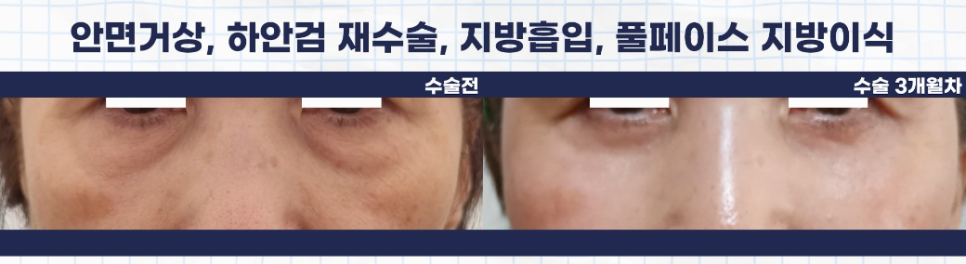
Looking at the post-surgery photo, the under-eye fat has been neatly corrected, and the wrinkles around the eyes have also become tighter by lifting the muscle.
The hollowed area under the eyes and the tear trough were also corrected with fat grafting.
The surgical scar has also improved significantly, and after about a year, it becomes so natural that it is difficult to find the scar.
In this way, lower eyelid reoperation is possible, and reoperation scars also improve naturally after the recovery period.
However, scars and recovery time may vary depending on the patient’s skin texture.

The average recovery period after lower eyelid surgery is about one week before daily life is possible, once the major bruising and swelling have subsided.
Considering that 70–80% of the scar and swelling improve, it can be said to take about 1 to 3 months.
Because the patients undergoing lower eyelid surgery are relatively older,
the recovery from lower eyelid surgery itself may take longer than other procedures, and if there are age-related conditions,
the recovery period may be even longer.
In addition, when combined with procedures such as facelifts or forehead lifts, which many middle-aged people prefer,
the recovery from swelling and bruising may take longer.
If you want to minimize the recovery period, following the hospital’s instructions for warm compresses and walking,
and avoiding prohibited precautions, may help speed up recovery.