There are wrinkles in various places on the human face.
When we think of wrinkles, the image that most immediately comes to mind is a face that looks older, or “aged.”
In particular, the nasolabial folds that run from the sides of the nose down to the mouth are deeper than typical facial wrinkles, stand out more, and have the drawback of making a person look older.
They can also make the mouth appear more protruded depending on the depth of the folds, and leave an impression of anger or a pouty expression.
Nasolabial folds that create an unfavorable impression,
why do they form?
Common facial wrinkles are caused mostly by aging, but nasolabial folds can have different causes.
The various causes of nasolabial folds include:
First, when the muscles move a lot due to habitual facial expressions or excessive changes in expression
Second, when the skin sags due to excessive fat accumulation in the cheekbone area
Third, when the area beside the nose becomes significantly sunken due to genetics or congenital reasons
Fourth, when the skin sags as collagen decreases with aging
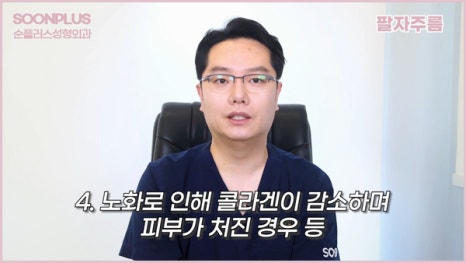
These causes may not occur individually, but may also combine to create nasolabial folds.
Because the causes vary, the ways to improve nasolabial folds can also vary.
From relatively simple procedures such as nasolabial fillers and collagen injections, to nasolabial thread lifting, which helps improve skin elasticity using dissolvable threads,
and aristocratic surgery, which offers a long-lasting result and a natural effect even for deep wrinkles through custom implants,
there are various procedures and surgeries that can help improve nasolabial folds.
Nasolabial fold procedures · Nasolabial fold surgery
For nasolabial fillers, which are simple and can deliver immediate results, they may be recommended for people whose sunken area beside the nose is not severe and who feel 부담 about surgery or recovery.
However, with filler procedures, if the medication is injected in the wrong place, it can instead cause side effects that make the nasolabial folds appear more prominent than before,
so the procedure should be performed safely by specialized medical staff.
Nasolabial collagen injections are injections containing PDO ingredients that induce the body’s own collagen production. When injected into the dermis or subcutaneous fat layer of the skin, they gradually restore elasticity over time and create natural volume, improving sunken areas.
Like nasolabial fillers, collagen injections can be recommended for people whose sunken area is not severe and who are considering a nasolabial fold procedure for the first time.
If the nasolabial folds stand out due to the cheekbones in the front or sagging cheeks, nasolabial thread lifting may be recommended.
Using PDO threads with a 3D protrusion structure distributed in 360 degrees, it pulls up the skin that makes the nasolabial folds more noticeable, helping improve wrinkles and skin elasticity.
It may be suitable for people whose skin has sagged due to aging or bone surgery such as contour surgery, making the nasolabial folds more noticeable and bothersome.
Aristocratic surgery, which provides semi-permanent longevity and a one-to-one custom implant, can also be a good solution because it improves the nasolabial area naturally even if the wrinkles are deep, there is a lot of fat, or there is a lot of movement around the mouth.
With one-to-one custom implant production tailored to the patient, its features include a volumizing effect for deeply indented wrinkles and a natural result that lasts a long time.

However, in the case of aristocratic surgery, since an implant is inserted into the sunken area beside the nose, its effect may be limited for wrinkles that extend down to the mouth,
so it is better to choose a nasolabial fold procedure or surgery that fits the patient’s condition.
The diagnosis and treatment for nasolabial fold procedures and surgery vary depending on each patient’s degree of sunken area, skin condition, and the cause of the wrinkles,
so it is very important to make a decision through sufficient consultation with specialized medical staff.