
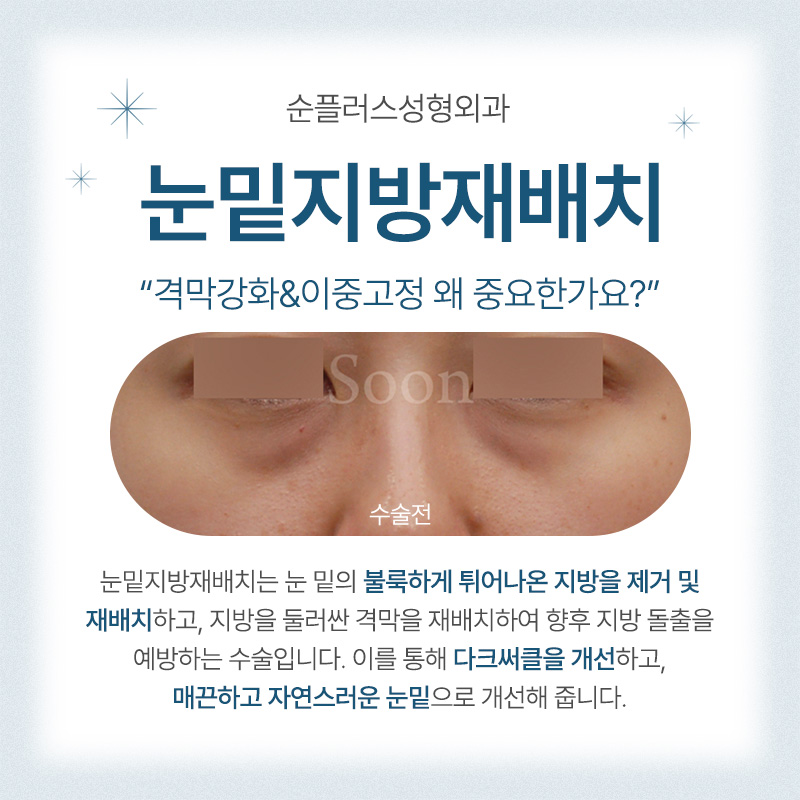
One of the main reasons a face can look dull and appear older is the darkness under the eyes.
As people age, they experience what is called aging.
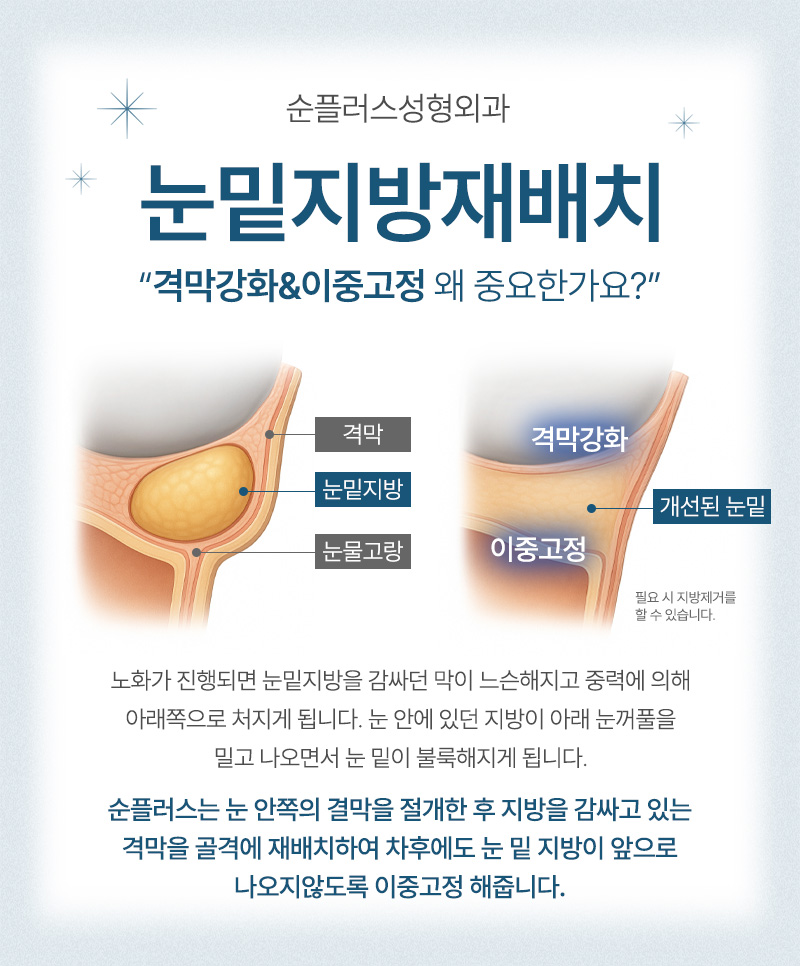
As aging progresses, the membrane surrounding the under-eye fat loosens and gradually sags downward due to gravity.
As a result, the fat inside the eye pushes out against the lower eyelid, causing the area under the eyes to become puffy.
The most typical cause of under-eye puffiness is aging,
but other factors such as the habit of rubbing the eyes, or eye fatigue caused by long hours of computer or smartphone use, can also lead to fat accumulation.
There are also various other reasons, including genetic factors, that can cause fat to build up under the eyes.
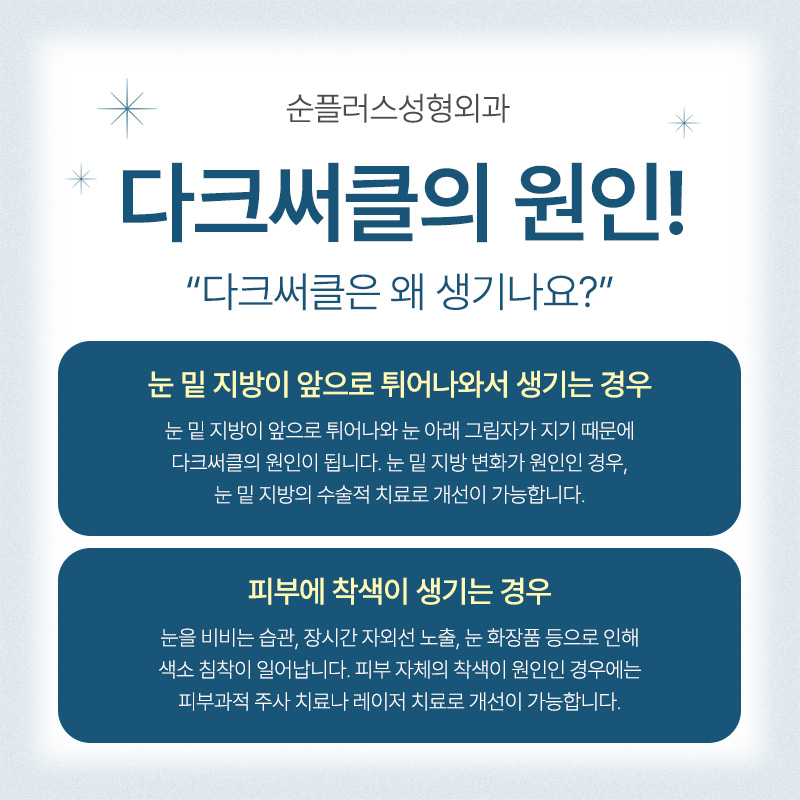
Depending on the degree of under-eye fat, the uneven bulge can create a dark shadow beneath the eyes,
which may lead to dark circles.
Because this can make a person look tired and their complexion appear dull,
improving under-eye fat quickly can help create a noticeable change in appearance.
There are several procedures for improving puffiness under the eyes, but in typical cases where under-eye fat is present without severe skin sagging, under-eye fat repositioning surgery may be suitable.
Under-eye fat repositioning removes and relocates the protruding fat under the eyes,
and repositions the septum surrounding the fat to smoothly improve the bulging under-eye area
and help prevent fat from protruding again in the future.
Through the surgical process, it improves dark under-eye circles and creates a smoother, more natural under-eye area,
aiming for a younger-looking impression.
Under-eye fat repositioning surgery involves making an incision in the conjunctiva on the inside of the eye, removing the fat, and then repositioning the septum to the periosteum.
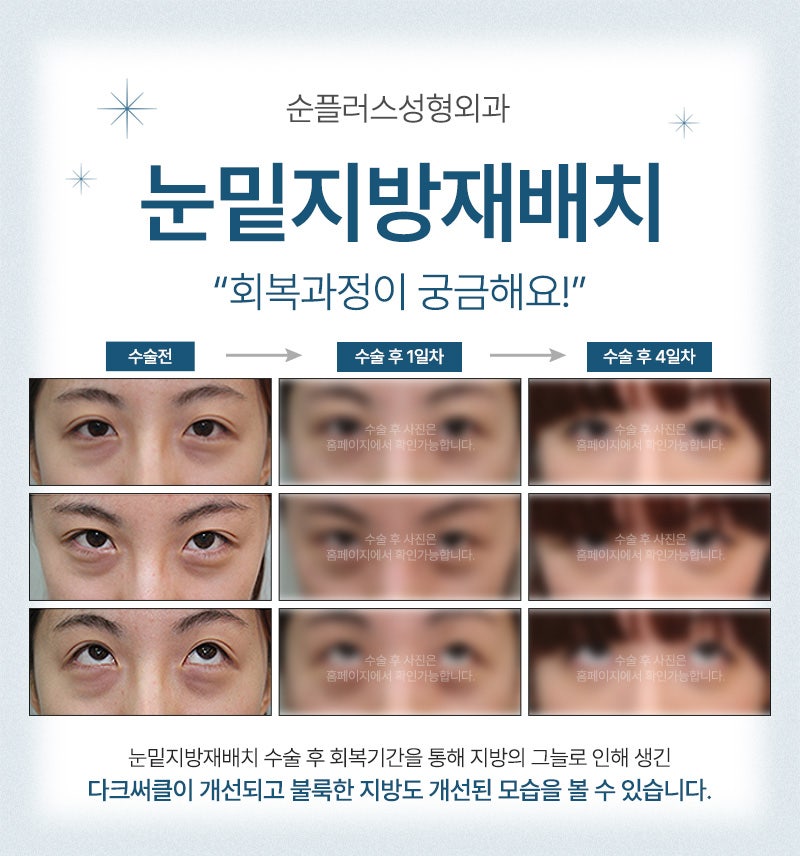
Because no external stitches or visible surgical scars are left behind, the recovery period for under-eye fat repositioning is relatively quick, allowing a return to daily life sooner.
However, depending on the patient's skin condition, bruising and swelling may occur,
and the recovery period for bruising and swelling can also vary depending on the individual's overall health and skin condition,
but in most cases, recovery is quick and people return to daily life soon after.
(You can find a detailed explanation of the under-eye fat repositioning recovery period on the Splus Plastic Surgery website.)

Recommended candidates for under-eye fat repositioning include:
People concerned that protruding under-eye fat makes them look older
People bothered by puffiness under the eyes that cannot be concealed even with makeup
People with eyes that have both hollowness and protrusion under the eyes
People who want to improve dark under-eye circles and achieve a brighter, clearer facial appearance
People troubled by unevenly protruding under-eye fat
If you have concerns like the above, please consider receiving a detailed consultation about under-eye fat repositioning.

Postoperative precautions after under-eye fat repositioning surgery include:
Under-eye fat repositioning does not require stitch removal; the tape applied on the day of surgery is removed the next day.
In the early stage, be careful not to give the surgical area any unnecessary stimulation,
and apply cold compresses for 2 to 3 days to reduce swelling.
After day 4 or 5 following surgery, warm compresses can help reduce bruising.
Alcohol and smoking slow wound healing and may cause infection, so it is best to avoid them for about one month after surgery,
and while light walking is allowed, exercises that put pressure on or strain the surgical area are also permitted only after one month.
Following the precautions given by the hospital in addition to the above will help with a faster recovery.