

One of the areas where signs of aging appear first is the under-eye area.
Because the skin is thin and the area contains a lot of fat, wrinkles, sagging, and dark circles can develop easily.
In particular, under-eye puffiness or hollowness can make a person look tired and older, and the option chosen to fundamentally address these issues is
lower blepharoplasty.
Lower blepharoplasty is a procedure that improves under-eye puffiness, hollowness, wrinkles, and loose skin by correcting the fat, muscle, and skin beneath the eyes.
Although it is often called under-eye fat removal surgery, the key is not simply removing fat. Rather, it may be about fat repositioning and skin improvement to create a natural and refreshed appearance.
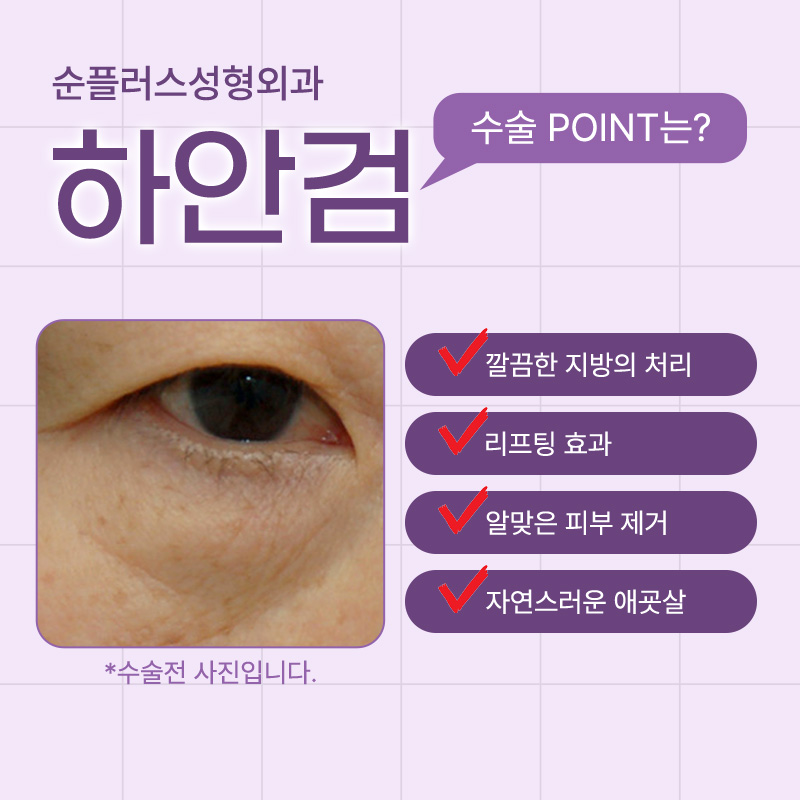
Causes of under-eye puffiness
The reason the under-eye area becomes puffy is not simply because there is too much fat, but because the fascia under the eyes weakens and the fat is pushed forward.
The fat remains in place, but the wall (septum) that surrounded it loosens, causing the fat to bulge forward and cast a shadow underneath, making it look like dark circles.
Simply removing the fat can temporarily make the under-eye area look smoother,
but over time the fat may bulge out again or the hollowed appearance may become even more pronounced, so it is necessary to address the underlying issue through lower blepharoplasty.
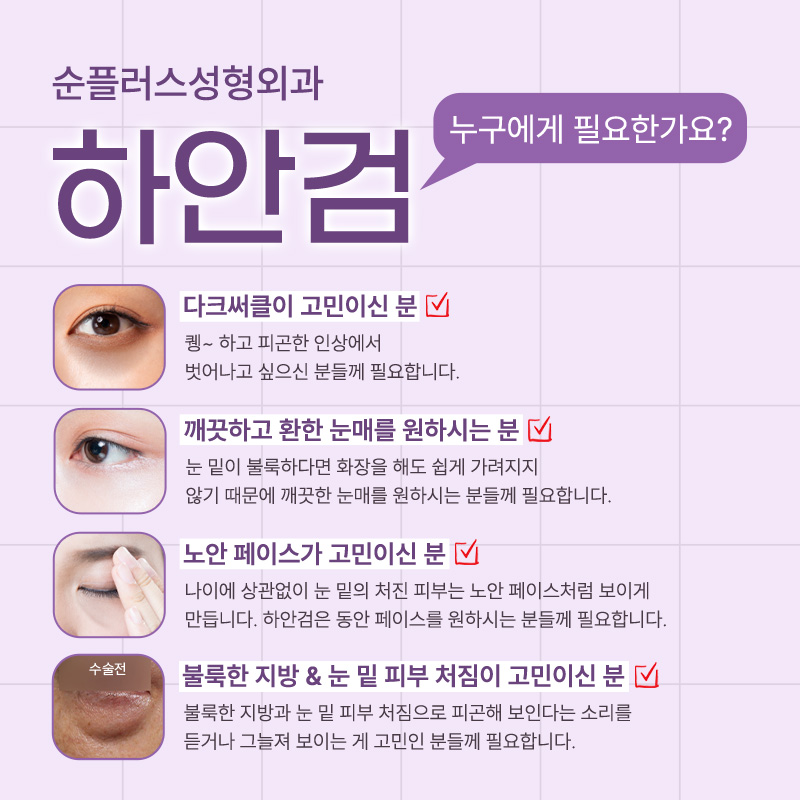
Cases in which lower blepharoplasty is recommended include:
When under-eye puffiness makes you look tired and causes concern
When sagging skin and dark circles are severe and cannot be covered even with makeup
When under-eye hollowness and wrinkles are present, making you look older
When the under-eye area sags due to reduced skin elasticity
When you want a natural-looking under-eye line effect through fat repositioning
Lower blepharoplasty is performed by making a small incision in the skin under the eyes and removing and repositioning unnecessary fat, sagging skin, and muscle.
After surgery, you can expect effects such as reduced tired-looking appearance caused by dark circles and sagging skin, improved under-eye wrinkles and sagging, and a natural, smooth under-eye skin texture.
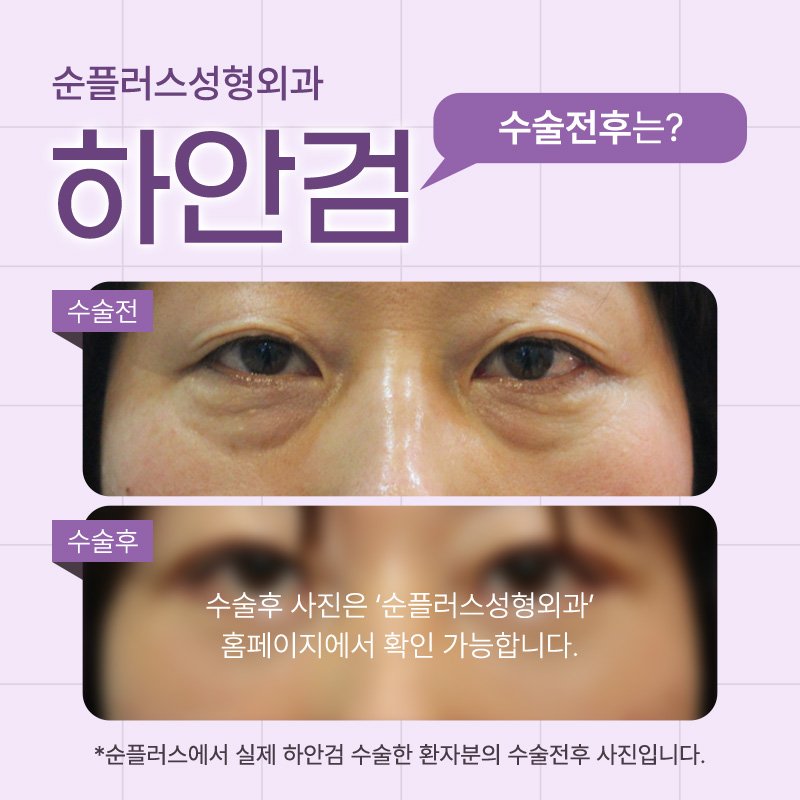
Because most patients considering lower blepharoplasty are middle-aged or older, functional improvement is also important, not just cosmetic purposes.
The lower eyelid is a functional area that protects the eyes, so handling the muscles or fat too aggressively can affect tear control and eyelid position.
Therefore, even if the procedure is for cosmetic purposes, lower blepharoplasty should be performed safely and systematically by a board-certified plastic surgeon with a thorough understanding of the anatomical structure of the eyes and extensive experience and know-how in under-eye surgery.
In addition, the surgical method for under-eye surgery may vary depending on the individual’s skin elasticity, fat position, and muscle thickness.
Therefore, sufficient consultation and diagnosis, along with a delicate procedure by an experienced surgeon, are important.

Since removing only the bulging fat can make the under-eye area look hollow instead, fat repositioning and skin correction should be considered together
in order to expect a natural and long-lasting result.