Among the many skin care treatments available, one of the most popular procedures recently is undoubtedly the stem cell skin injection.
Even celebrities and influencers, who are seen as standards of glowing, firm skin and a youthful image, have shared their experiences with stem cell skin injection procedures,
which has made this treatment even more widely noticed.
What exactly are the “stem cells” at the core of stem cell skin injections?
Stem cells are cells that can differentiate into various types of cells and have the ability to repair damaged tissue on their own,
so they can be described as versatile cells that can transform into any tissue in the body.
Stem cell procedures are injected into the skin and body to promote skin regeneration, help prevent age-related decline in bodily function, and support the recovery of damaged tissue,
with the goal of achieving various anti-aging effects.
As we age, the structure and function of the body decline, and this is referred to as “aging.”
Our body’s cells continue to divide and be replaced, and as this process repeats, cell function weakens and damage accumulates.
Eventually, the ability of cells to recover declines, and tissues and organs no longer function as they did when we were younger.
In particular, skin aging is not just a matter of getting older, hormone changes, and reduced blood circulation leading to dull, wrinkled skin.
Because the causes are so diverse—such as UV exposure, smoking, stress, lack of sleep, diet, and air pollution—even relatively young people may experience skin aging.
In such cases, stem cell skin injections that restore and regenerate damaged cells can be a good solution.
 Stem cell skin injection,
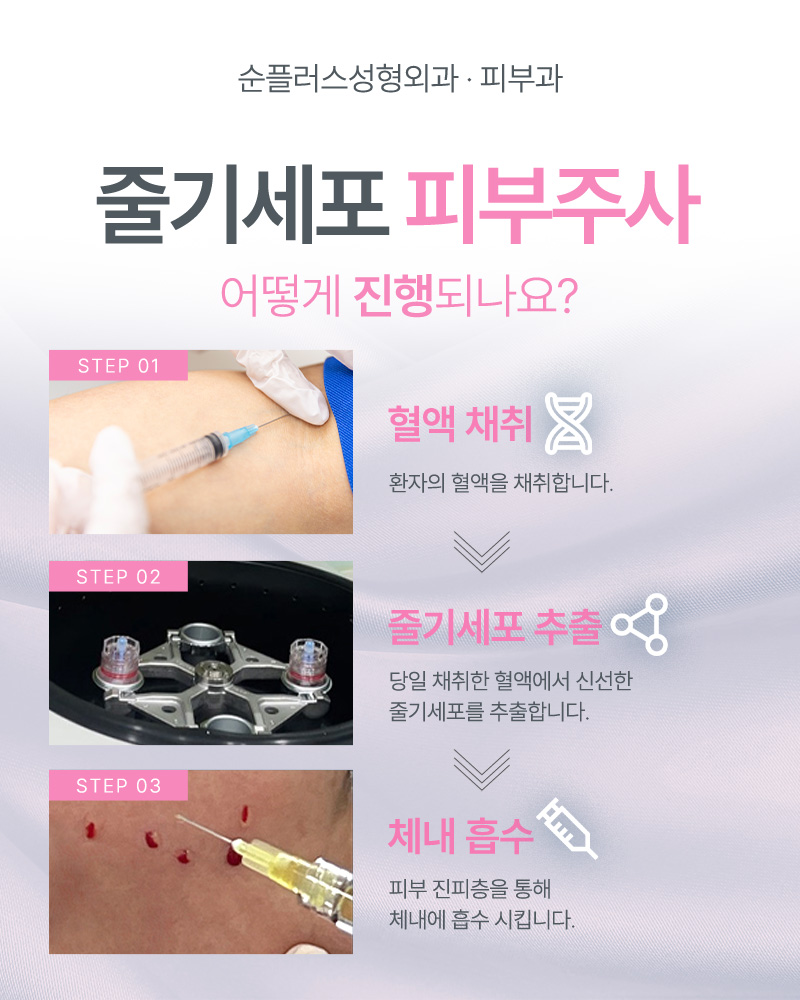
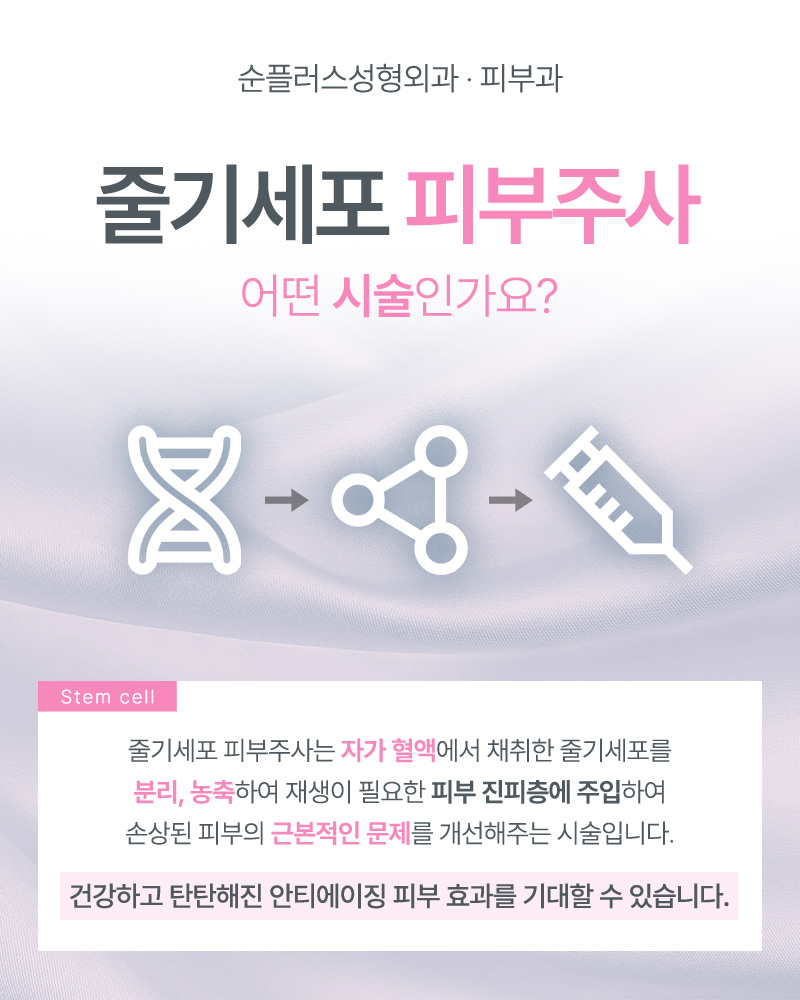
Stem cell skin injection concentrates stem cells collected from the patient’s blood and transplants them into the dermis, where regeneration is needed.
Stem cell skin injection,
Stem cell skin injection concentrates stem cells collected from the patient’s blood and transplants them into the dermis, where regeneration is needed.
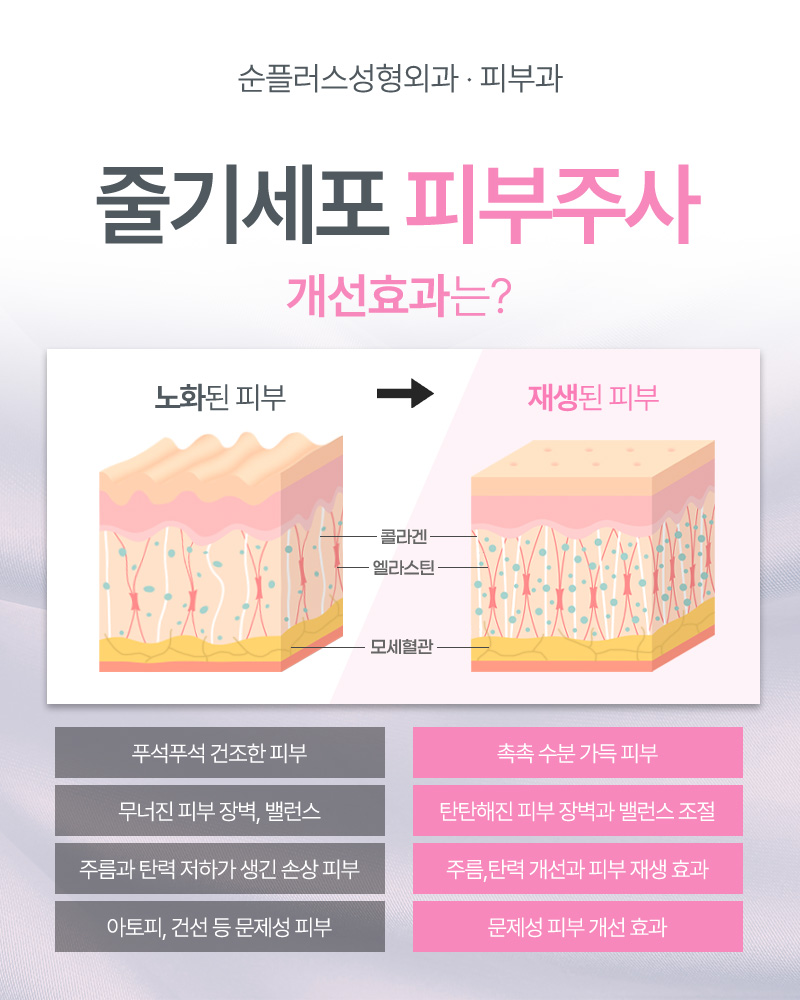
Stem cells injected into the dermis regenerate collagen and elastin, helping naturally refine skin texture and improve skin elasticity, while regenerating damaged skin from within
and supporting the goal of healthier, firmer-looking skin.
Recently, stem cell skin injections are being performed at many places, and because there are various collection methods, choosing one can be difficult.
For this reason, it is important to look into it carefully and make a thoughtful decision.
At our clinic, we inject blood-derived stem cells, which are relatively easy and quick to collect and can be treated on the same day using a centrifuge.
We provide stem cell procedures safely and systematically using a stem cell treatment method that has been certified for safety and effectiveness.
Using stem cells collected from the patient’s own blood helps minimize inflammation and side effects, and because they are not cultured, it eliminates the risk of infection and cellular transformation that may occur during the culture process.
In addition, to enhance the effects of stem cell skin injections, the procedure is carried out using highly concentrated, high-quality stem cells.
 Stem cell skin injection effects,
Stem cell injections are broadly divided into skin injections and intravenous injections,
Stem cell skin injection effects,
Stem cell injections are broadly divided into skin injections and intravenous injections,
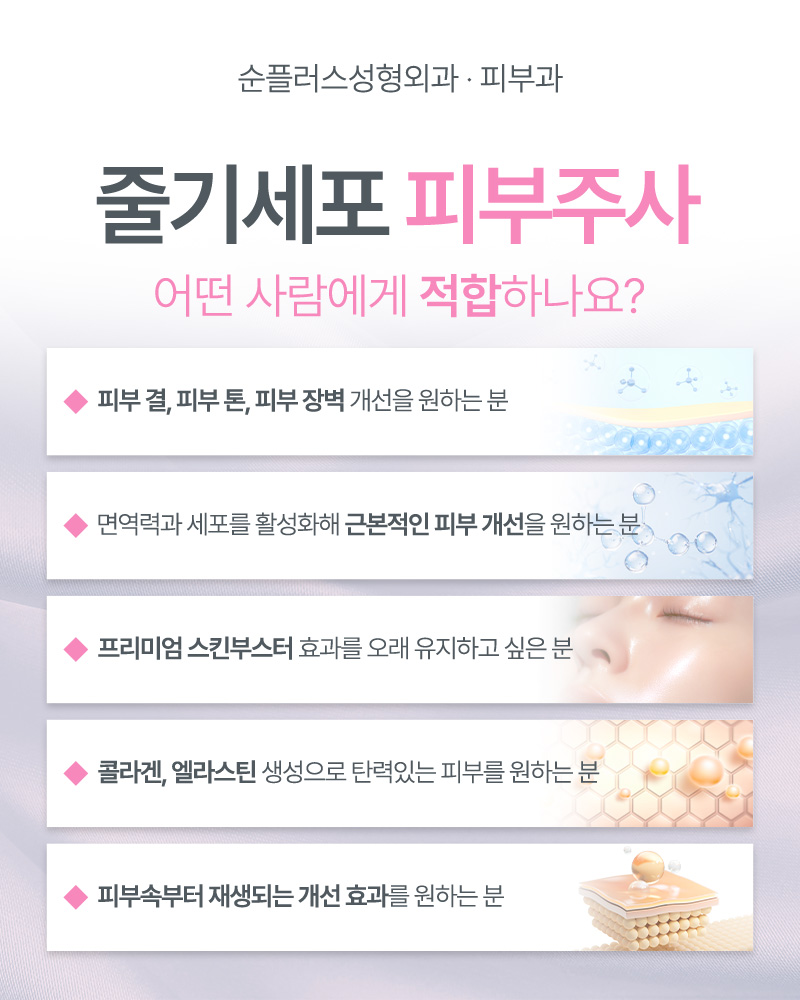
and when performed as skin injections, they regenerate collagen and help improve skin elasticity and wrinkles, as well as strengthen the skin barrier and improve skin tone and texture.
They also help improve itching and dryness through skin immune support and cell activation, which can benefit atopic skin and psoriatic skin,
and they help improve acne-prone skin by supporting the recovery of damaged skin tissue through the anti-inflammatory action of various growth factors, cytokines, proteins, and other components contained in stem cell culture media.
The average duration of stem cell skin injection effects is about 6 months or more, and with consistent repeat treatments, the duration of the stem cell procedure may become longer.
Stem cell skin injections fundamentally improve various skin concerns caused not only by aging but also by external factors.
However, since the effects and duration may vary depending on the patient’s health condition, skin condition, and purpose of treatment, the appropriate procedure should be selected through sufficient consultation with a specialist medical team.