
As people get older, the eyes are one of the first areas to show visible signs of aging.
In particular, under the eyes, fat can protrude forward and elasticity decreases, making sagging, hollowing, and dark circles appear at the same time.
That is why lower blepharoplasty is a procedure often considered by people in their 40s to 60s.
In this article, we will look at why middle-aged eye surgery, especially lower blepharoplasty, may be needed, as well as the surgical method and recovery process.
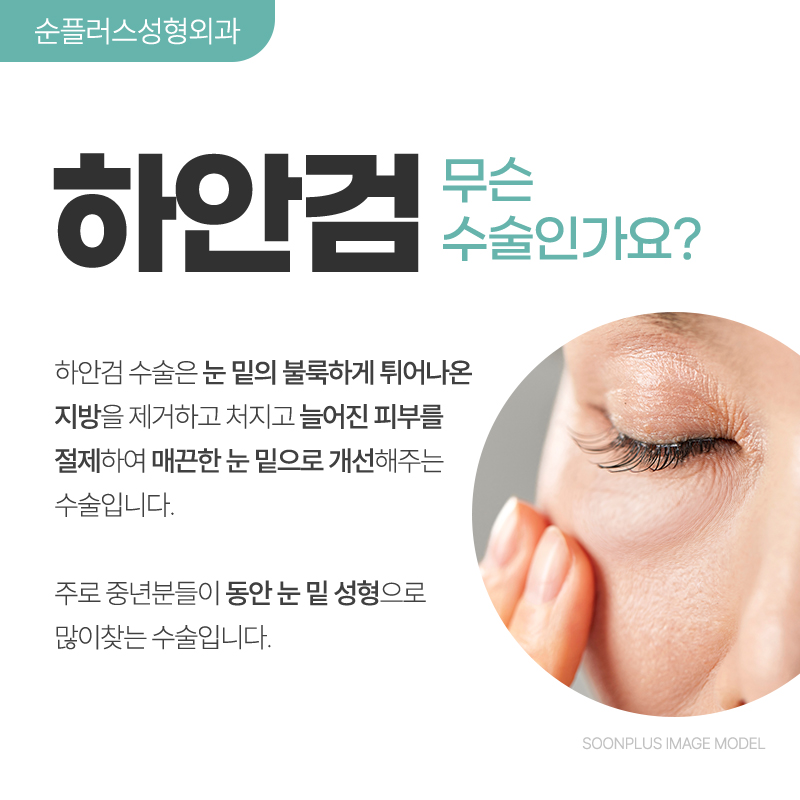
The characteristics of changes under the eyes in middle age include, first, protruding fat.
As people age, the tissue supporting the under-eye area weakens, and fat is pushed forward. This is what is commonly referred to as under-eye fat.
- Hollowing and wrinkles.
While the fat moves forward, the lower area hollows out, creating shadows such as dark circles, and reduced skin elasticity makes fine lines more noticeable.
- Skin sagging occurs.
After the 40s, not only fat-related concerns but also loosening of the skin itself becomes more significant, so in many cases, simply removing fat does not make the under-eye area look neat.
For this reason, the sagging skin often needs to be improved at the same time as under-eye fat removal and repositioning.
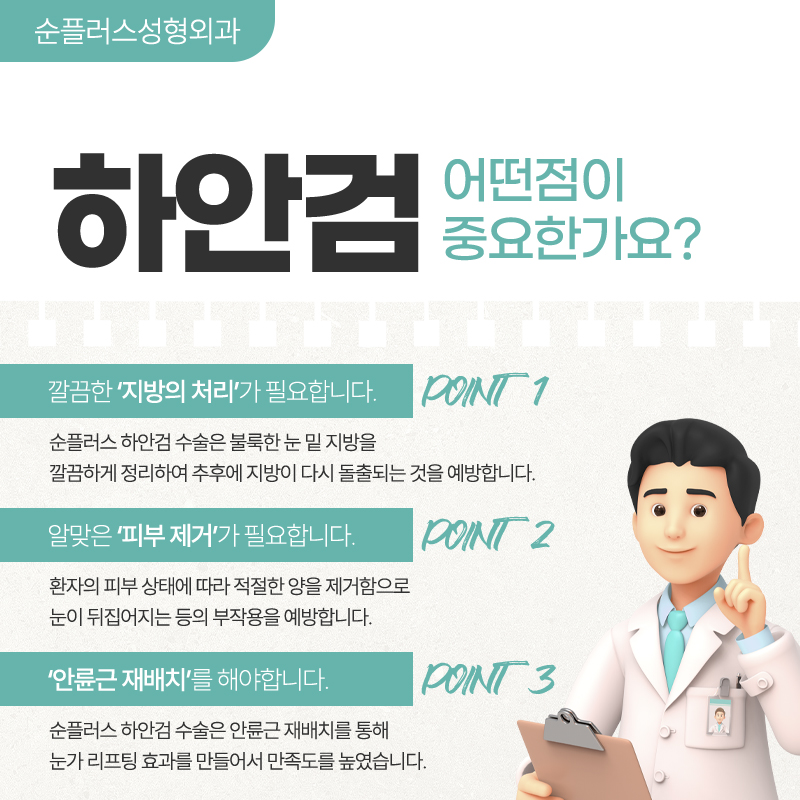
Because of the changes above, lower blepharoplasty may be needed. In addition, it may be recommended in cases such as:
when under-eye fat is prominently visible, when dark circles persist for a long time due to shadows, when under-eye wrinkles are not covered even with makeup,
when you are often told that you look tired, or when the effect is minimal even after fat removal.
In particular, for the under-eye area in middle age, the key may be to address fat, skin, and elasticity together.
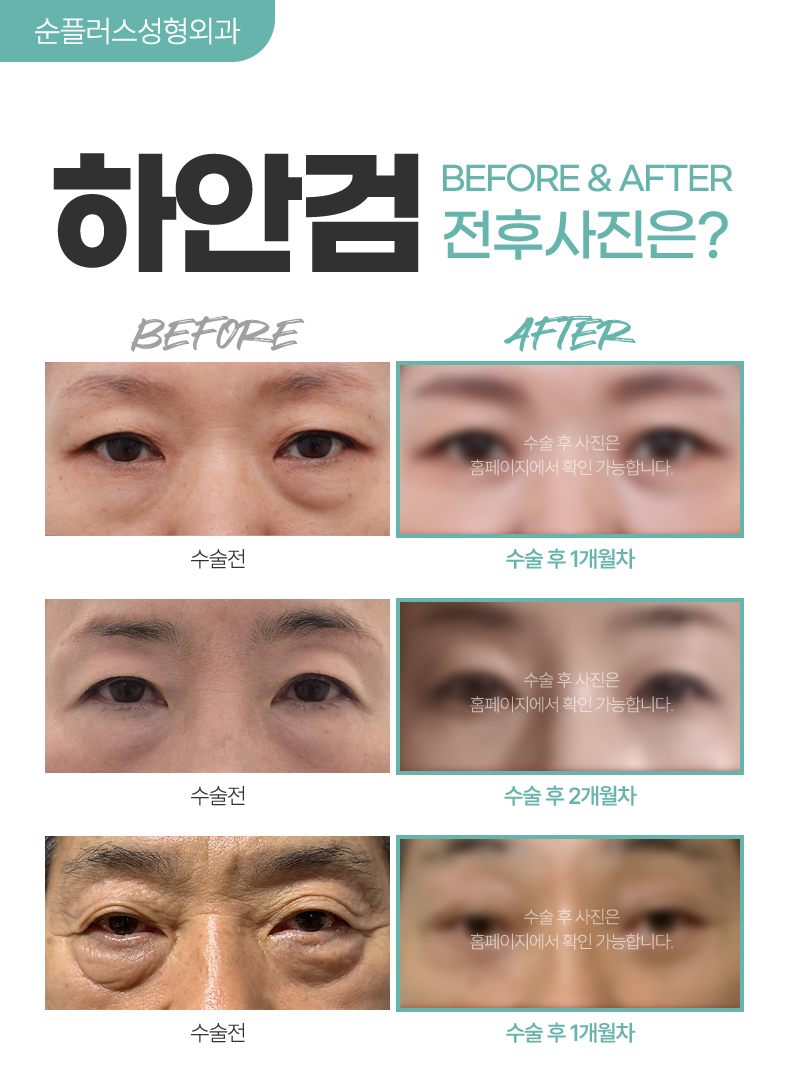
Middle-aged eye surgery, lower blepharoplasty, may involve removing excessively protruding fat or repositioning it to a lower area.
This creates a flatter under-eye line, correcting hollowing and volume asymmetry at the same time. It also removes sagging skin and firmly supports weakened muscles and ligaments,
helping improve elasticity and soften fine lines so that a naturally smoother under-eye area can last longer.

Because the skin recovery ability of middle-aged people is somewhat slower than that of people in their 20s and 30s, recovery care may be especially important.
Swelling is usually most severe for up to a week and then gradually eases, while bruising may last for about 1 to 2 weeks.
In general, light activities are possible around one week before or after, and a stable daily routine can usually be resumed after 1 to 3 months.
However, the recovery period may vary depending on individual skin elasticity, the amount of under-eye fat, lifestyle habits, and overall condition.

Under-eyes that have protruded and sagged due to aging,
If you want to improve under-eye bulging, soften fine lines and shadows, reduce the tired and aged appearance, achieve a more youthful look, and make your under-eye area look naturally better, please consult in detail about lower blepharoplasty.
Lower blepharoplasty is not simply fat removal; it requires expertise to closely understand the anatomical structure and simultaneously adjust the fat, muscles, and skin.
Please seek detailed consultation and diagnosis from medical professionals with extensive experience and know-how in middle-aged eye surgery and lower blepharoplasty.