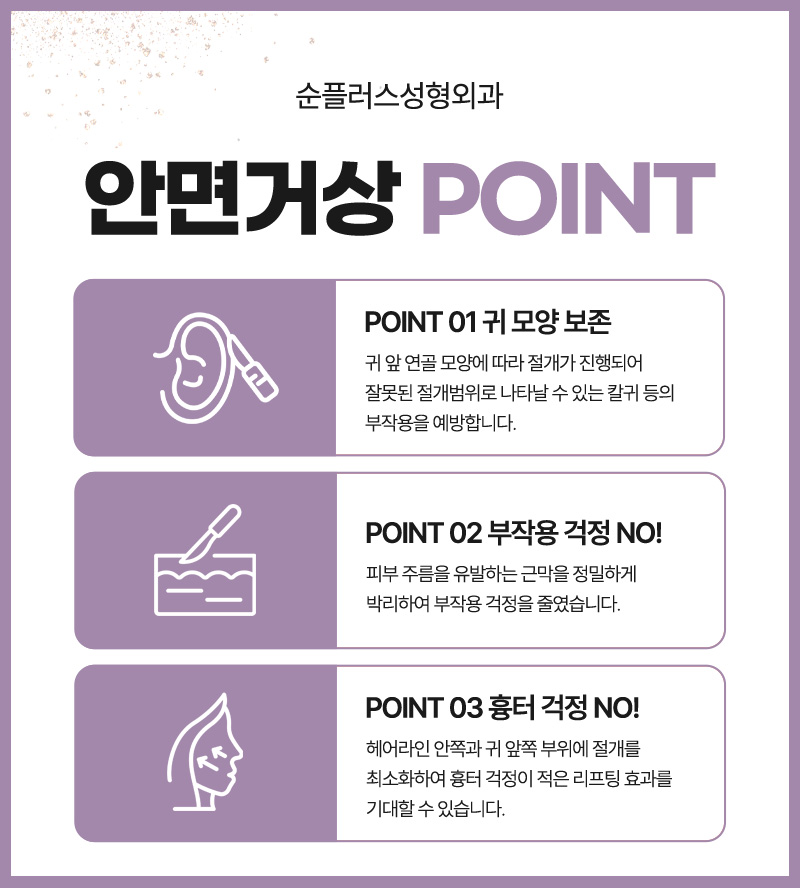
When people hear “facelift,” they often think of it as a surgery that simply pulls up sagging skin.
In reality, it is a procedure that also addresses the structural aging of the face, so it can produce results that are different from general lifting procedures.
As we age, the face does not just sag; it becomes heavier.
Cheek volume, fat around the jawline, and the sagging SMAS layer are pulled downward, making the face appear broader and longer overall.
The key to a facelift is restoring this heavier structure to its original position as much as possible, aiming for a reorganization effect on the facial contour that cannot be achieved with simple thread lifting or laser lifting.

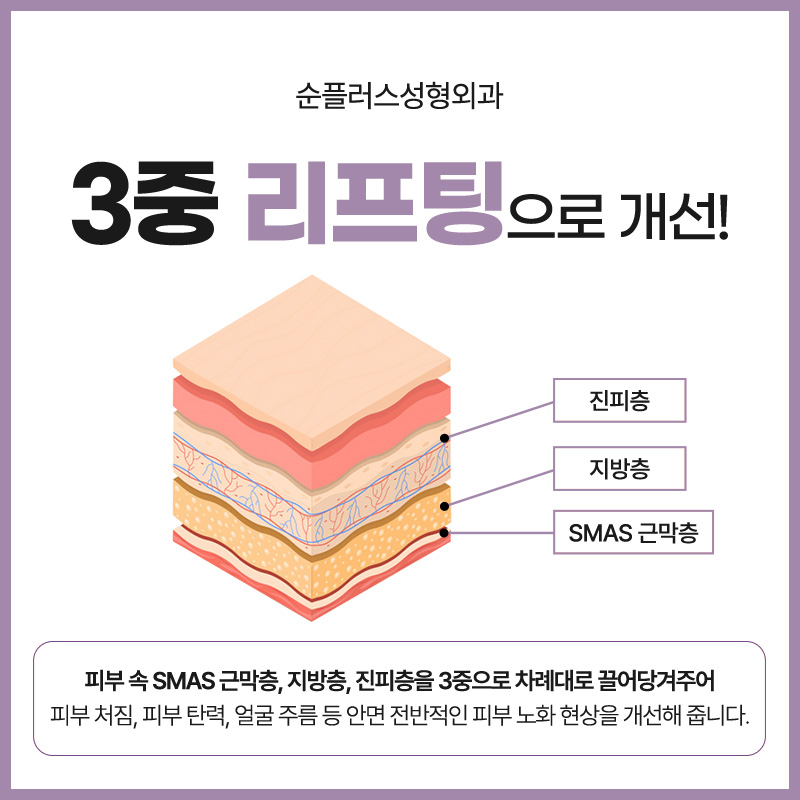
A facelift is a surgery that lifts the skin and fascial layer to restore sagging tissue to its proper position. It does not simply pull the skin tight; it also lifts the deeper layers that support the face, which is why people hope for a natural, long-lasting effect.
Typical effects of a facelift include lifting the midface, reducing cheek sagging so the face looks lighter, and softening nasolabial folds.
It can also improve a sagging jawline and jowls, creating a smoother facial line.
As the skin is lifted and tightened, the overall face can appear younger, with a more youthful-looking contour.

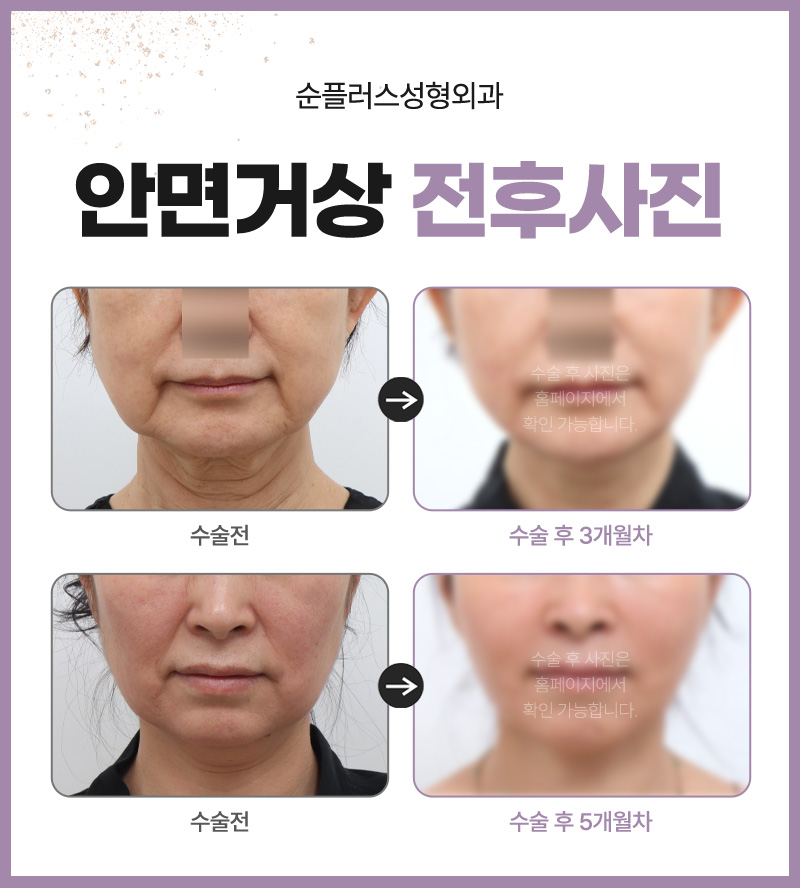
The reason a facelift becomes important as aging progresses is that it does not only address what is sagging now.
Once the structure is lifted back to its original position, the starting point of future aging may change.
If you want the pace of aging to slow down, consulting about a facelift can also be a good option.
Also, as aging progresses, sagging skin makes the boundary between the jaw and neck less distinct, giving a heavier appearance and making the face look older.
Through a facelift, the curve from the cheekbone to the cheek and jawline can be refined, making the side profile look much lighter and more defined.
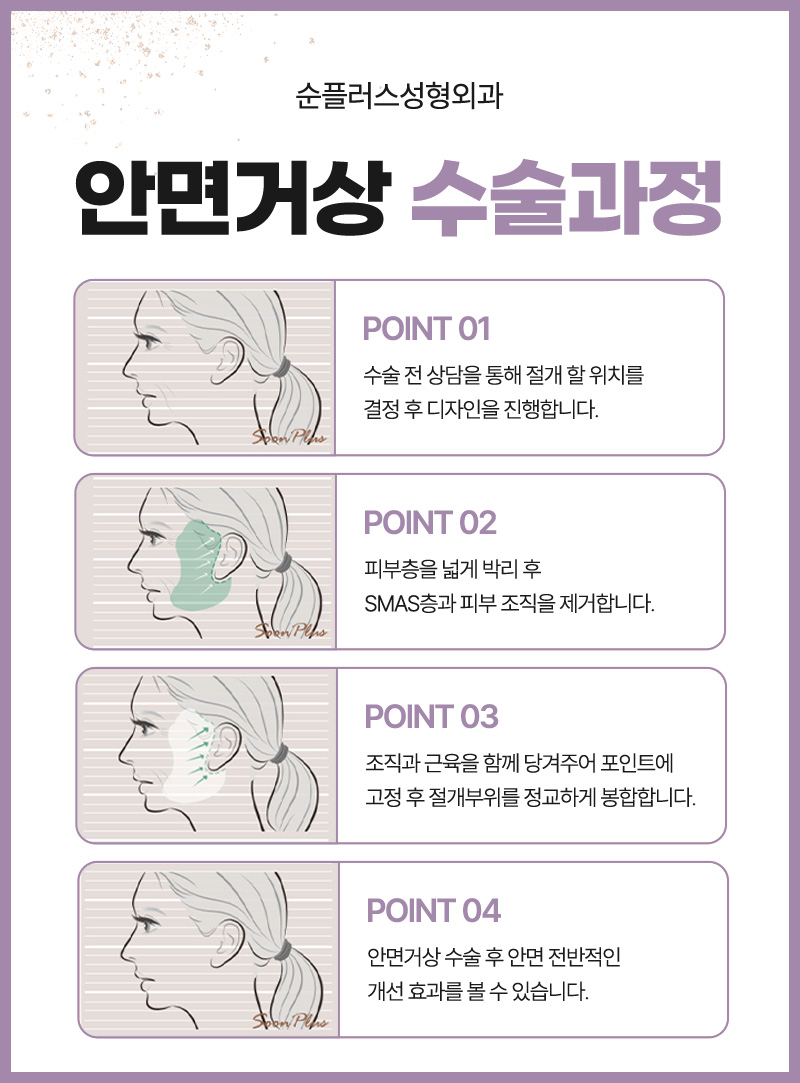

Recovery from a facelift is not especially fast, but with proper care, it can be relatively stable.
Bruising and swelling vary by person, but daily life is usually possible within about 1 to 2 weeks, and major swelling improves within about a month. However, restrictions such as exercise, saunas, and massage should be avoided for a certain period as instructed by the hospital.
The duration of facelift results depends on each person's rate of aging, but it is generally said to last about 5 to 10 years. Because the pace of aging differs from person to person, the maintenance period can vary individually.