Double fixation to prevent fat protrusion even later after lower eyelid fat repositioning surgery

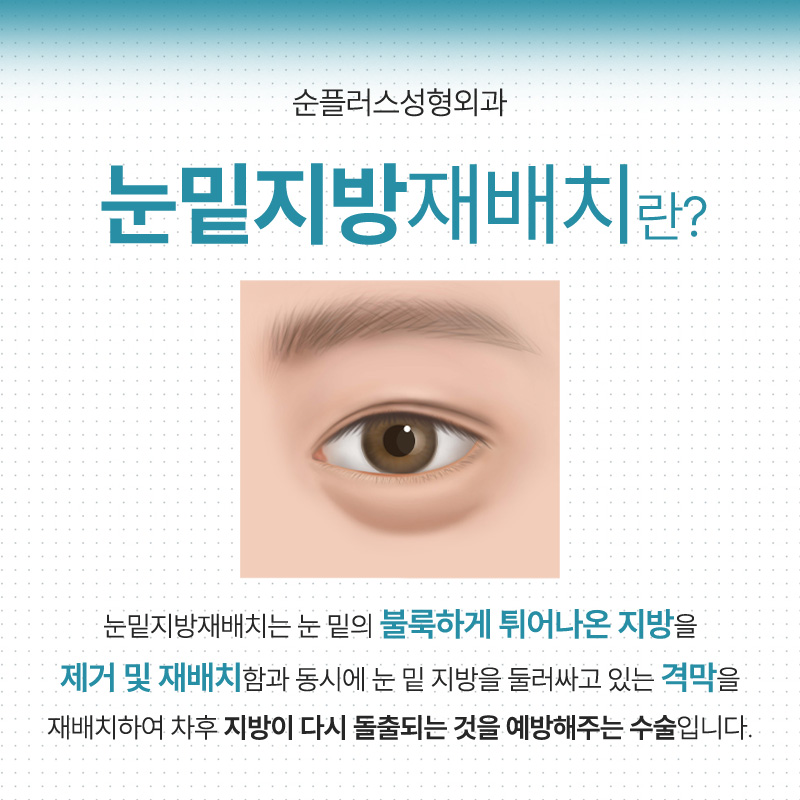
If the under-eye area looks puffy or shadowed, it can easily create an impression of looking more tired and older than your actual age.
Lower eyelid fat repositioning surgery is a procedure that evenly adjusts the position of the fat under the eyes that causes these concerns, improving both hollowness and puffiness at the same time
with the goal of creating a more natural-looking eye area.
The under-eye area has thin skin and a complex fat structure.
As you age, or due to genetic factors or frequent eye use, fat can shift forward or bulge in certain areas, creating shadows.
This can make dark circles look more severe and create an impression of constant fatigue.
Lower eyelid fat repositioning surgery does not simply remove unnecessarily protruding fat; instead, it repositions the fat into hollow areas to make the under-eye area flatter and
smoother. This can reduce an overly hollow or artificial appearance and allow for relatively natural results.
The surgical method for lower eyelid fat repositioning is generally performed through the inside of the eye, via a conjunctival incision. By minimizing the incision, it helps reduce bruising and swelling,
and has the advantage of leaving no visible external scar.
However, if the skin’s elasticity has decreased significantly, an external approach through lower blepharoplasty may be necessary, so regarding the exact surgical method,
it is important to decide after 충분한 consultation with specialized medical staff.

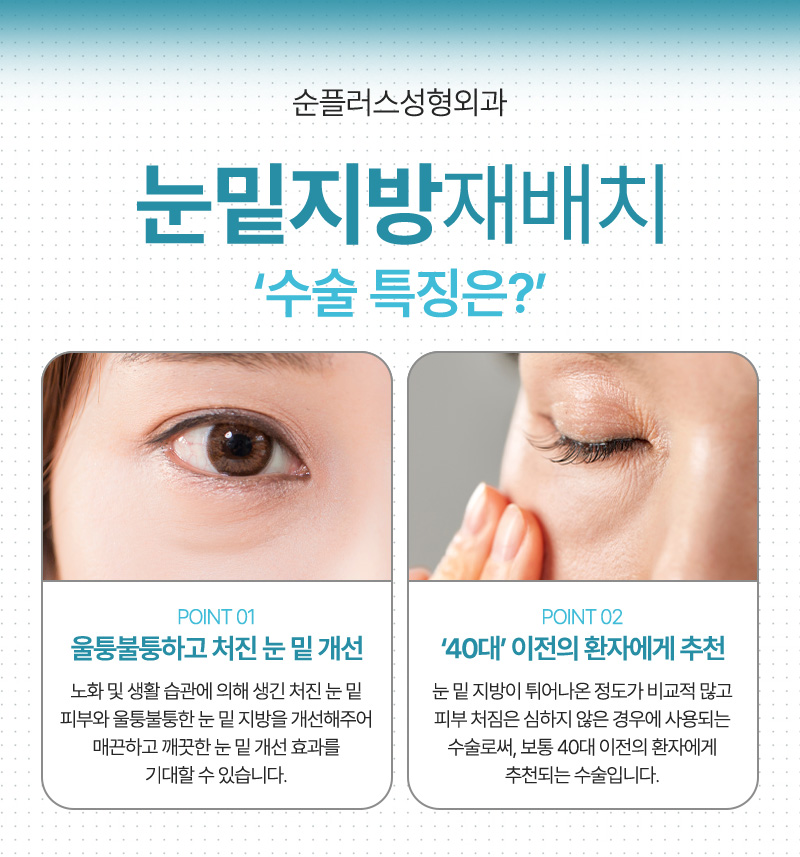
Lower eyelid fat repositioning is mainly recommended for people whose under-eye area looks bulging or whose fat is protruding.
It can also be recommended when dark circles are severe and the cause is more structural than pigmentation, and
for cases where both under-eye hollowness and puffiness are present, or when a relatively natural, brighter, younger-looking impression is desired.
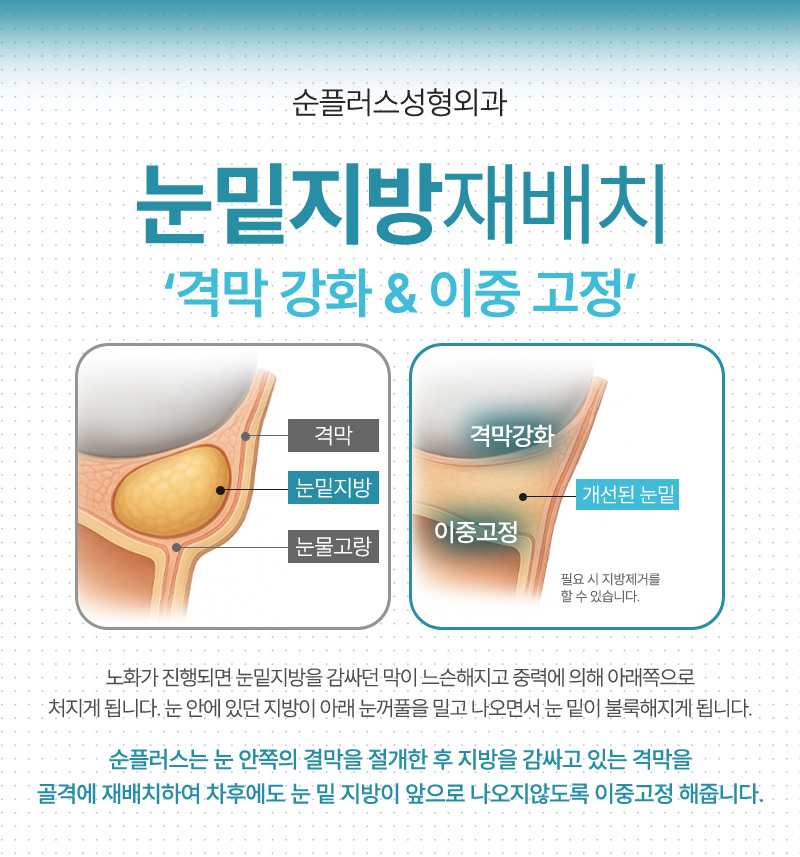
To prevent recurrence after lower eyelid fat repositioning surgery, septal reinforcement and double fixation are important.
After making a conjunctival incision on the inside of the eye, the septum surrounding the fat is repositioned to the periosteum so that even after lower eyelid fat repositioning surgery, the fat does not protrude forward
enabling double fixation to help prevent recurrence.
In addition, although recovery after lower eyelid fat repositioning surgery varies from person to person, major swelling is usually reduced within one week.
There may be slight swelling or bruising at the beginning, but it gradually becomes more natural over time, and
daily life is relatively quickly possible; however, strenuous exercise or physical activity should be avoided for a certain period.
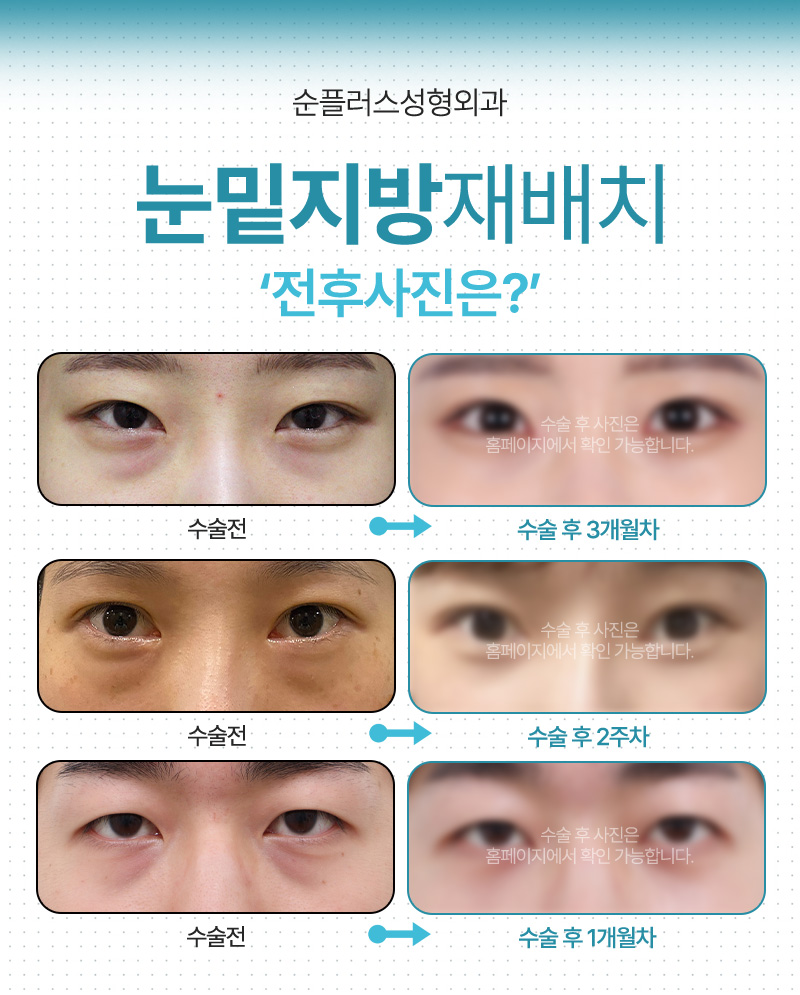
Because the under-eye area is a part where even small differences can greatly change the impression, it is important to accurately diagnose an individual’s eye structure and skin condition.
A surgical plan should be made by considering the amount of fat, skin elasticity, and the overall harmony of the eye area together in order to improve satisfaction after lower eyelid fat repositioning surgery.