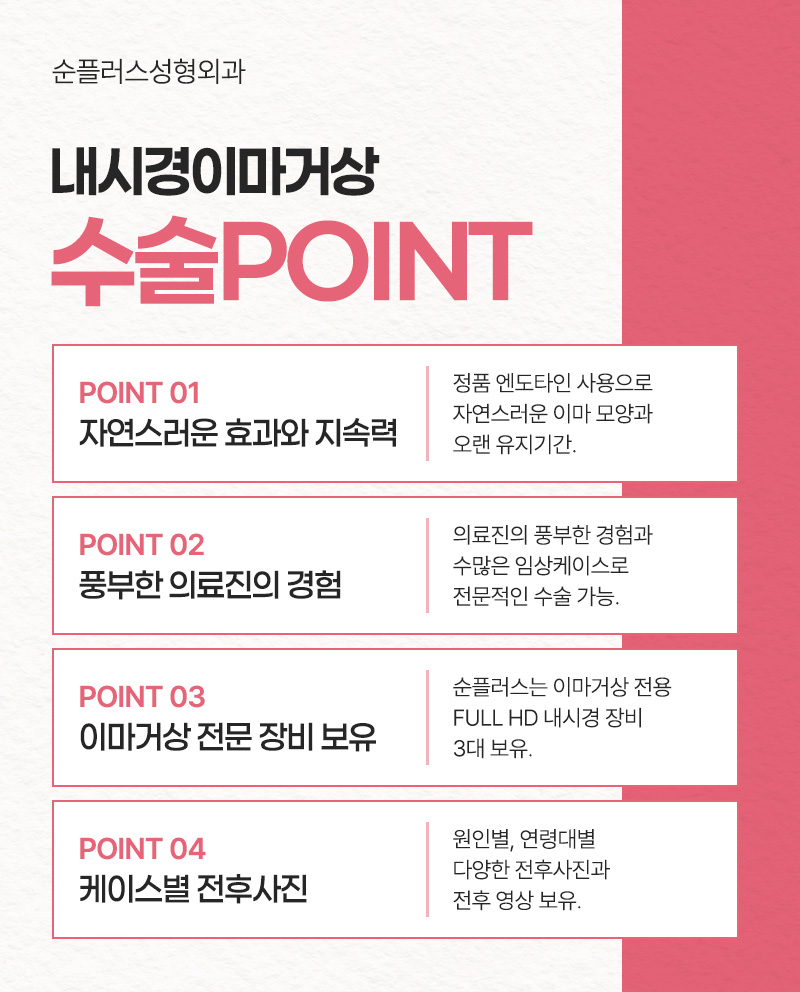
Endoscopic forehead lift is one of the procedures that can improve a drooping forehead and wrinkles, helping the face look clearer and more youthful.
Unlike earlier forehead lift surgeries that required a larger incision area, this procedure is performed through small incisions using endoscopic equipment,
which has the advantages of fewer scars and a faster recovery.
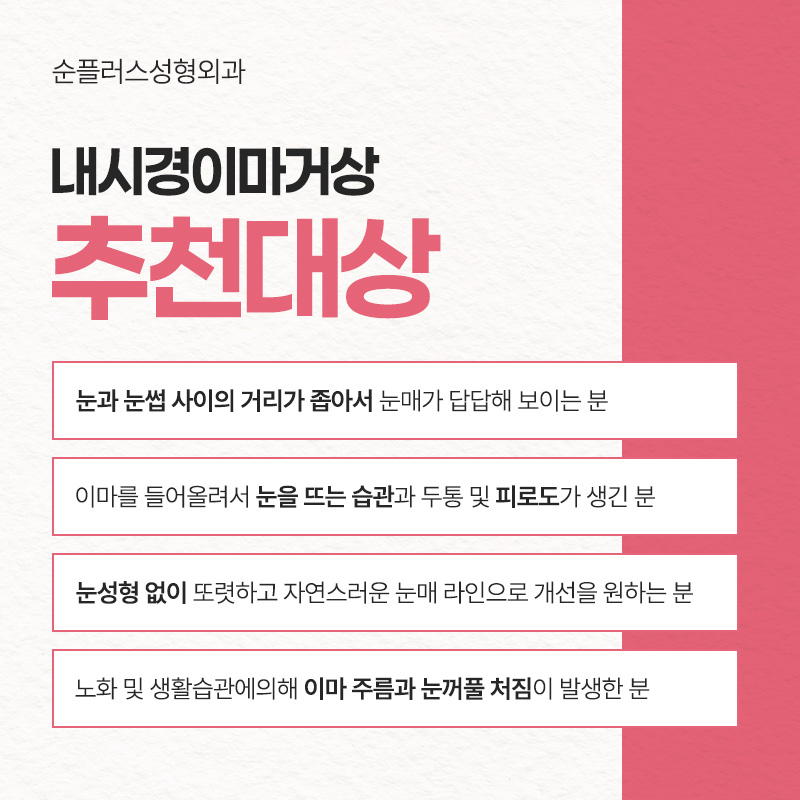
Endoscopic forehead lift may be considered in cases where the forehead skin and the tissue around the eyebrows have sagged, or where deep forehead wrinkles make the area between the eyes and eyebrows appear narrow and heavy.
It is not only intended to improve sagging that develops with age, but can also be a suitable option for younger people who have concerns around the eye area.
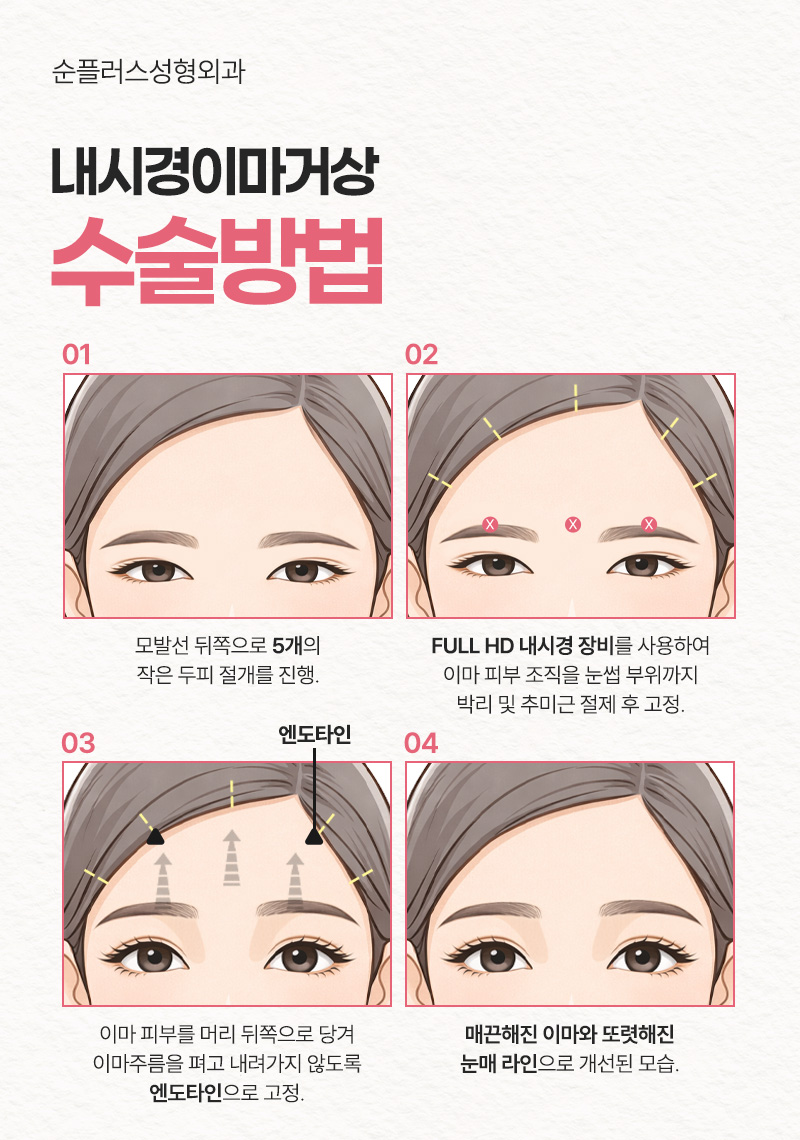
The surgical method for endoscopic forehead lift involves making five small scalp incisions inside the hairline, then using endoscopic equipment to dissect the forehead skin tissue up to the eyebrow area and correct it after removing the corrugator muscle.
At this time, depending on the method used for lifting and fixation, fixation materials such as Endotine are used to secure the tissue, with the goal of achieving a smoother forehead and a more defined eye area.

The fixation method for endoscopic forehead lift may differ depending on the hospital and medical staff.
Recently, fixation using Endotine has been commonly used, and fixation methods using sutures may also be used.
At our clinic, the procedure is mainly performed with Endotine fixation, but suture fixation may also be performed according to the patient's needs.
Endoscopic forehead lift is not a one-time procedure that ends permanently; over time, some tissue sagging can occur again,
so the duration of the result may not be permanent. To increase the longevity of the endoscopic forehead lift,
it is necessary to fully consider each person's skin condition and tissue elasticity, and sufficient dissection and fixation methods during the procedure are also important.
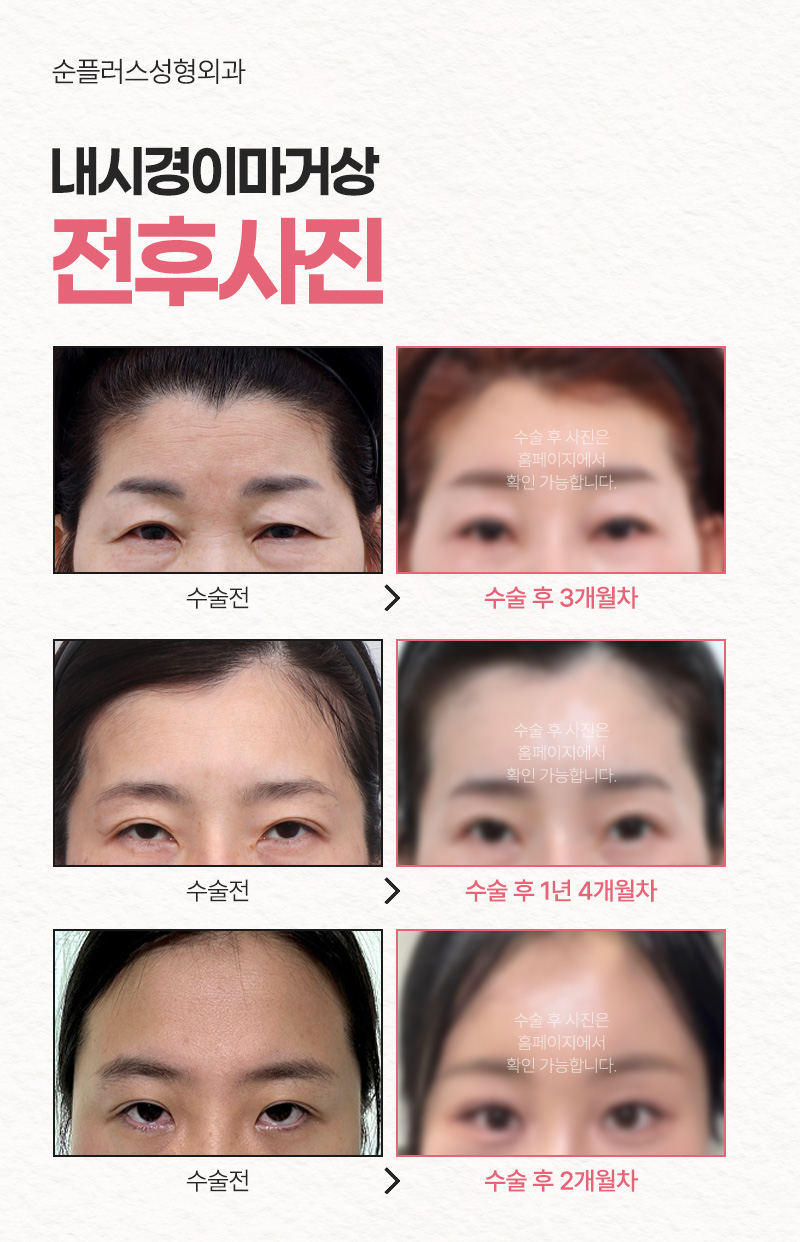
After a forehead lift, the space between the eyes and eyebrows becomes wider, which can give the eyes a more open and refreshed appearance,
and in addition to improving forehead wrinkles, an improvement in eyelid drooping can also be expected.
It is basically performed to improve forehead wrinkles and sagging forehead skin, and because forehead sagging is associated with eyelid drooping or changes in eyebrow position,
after endoscopic forehead lift, the eye area may look more refreshed and the double eyelid line may appear more naturally refined.
However, whether the procedure is effective or suitable should not be determined simply by the presence of forehead wrinkles and sagging;
it can vary depending on factors such as individual skin elasticity, previous procedures, eyebrow position, the distance between the eyes and eyebrows, facial balance, and the patient's health condition,
so thorough consultation with a specialist medical team is important.
As precautions after endoscopic forehead lift, it is recommended to minimize activity in the early stage after the procedure,
and to keep the upper body positioned higher than the heart to help reduce swelling.
Also, cold compresses at the beginning can help reduce swelling, and before the stitches are removed, care should be taken to prevent water from touching the treated area.
After stitch removal, it is important not to irritate the incision site when shampooing or washing the face.
During recovery, smoking and drinking alcohol can delay wound healing and increase the risk of infection, so they should be avoided for a certain period,
and prescribed medications should be taken regularly.
Also, to monitor progress, visits should be made according to the scheduled timetable so that recovery can proceed as quickly as possible.
After endoscopic forehead lift, some numbness and headaches may occur, but these gradually improve over time.
If symptoms persist or severe pain occurs, contact the hospital promptly so that appropriate measures can be taken.