�
�

�
�
Many people know forehead lift surgery as a procedure that smooths wrinkles or makes the eyes look brighter.
In reality, however, it is a process that arranges the overall structure of the upper face, from the forehead to the eyebrows and the temple area.
If you do not know the details of forehead lift surgery, there may be things you miss out on,
so if you are considering it, it is best to gather enough information before deciding.
�
�

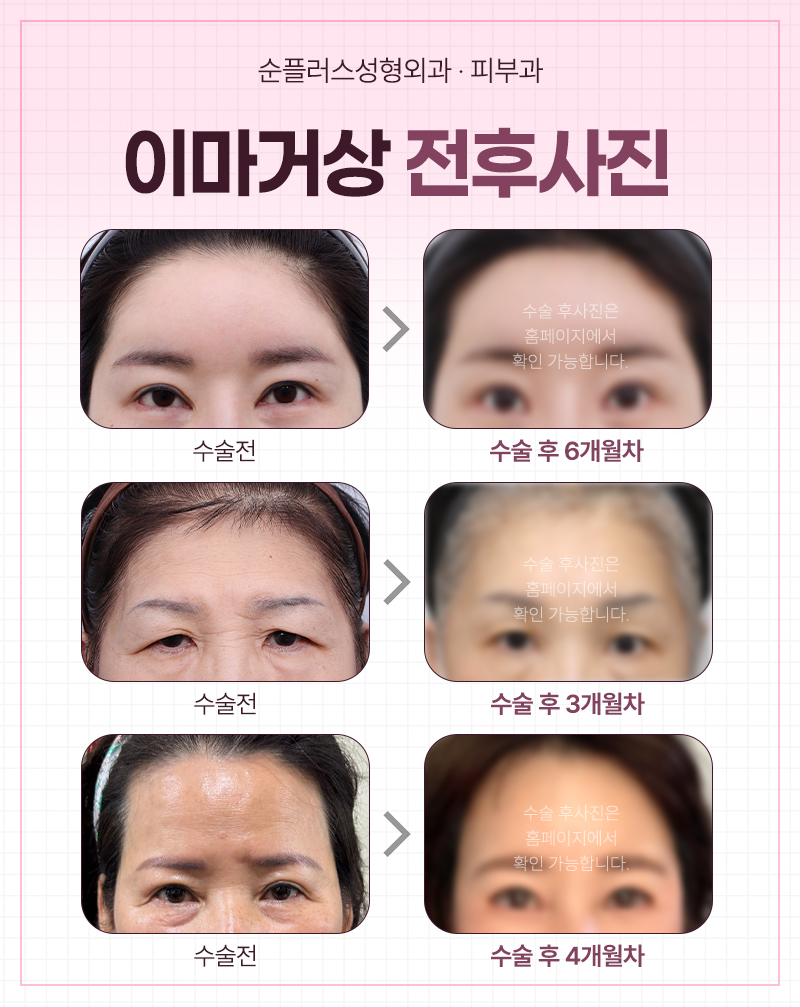
A forehead lift is about setting the angle, not simply lifting the eyebrows.
Many people think forehead lift surgery is a procedure that raises the eyebrows upward, but the important point is the tilt of the eyebrows.
During a forehead lift, the lifting direction based on the eyebrow tilt can change the result.
If the outer corners of the eyes are drooping, slightly lifting the outer side can create a fresher, more open impression.
If the front part of the eyebrows is raised, the midface is softly refined, helping create a naturally gentle impression.
If the eyebrows are flat, creating a curve can produce a softer, younger-looking effect.
Rather than how much you lift, the direction or shape of the lift can be the key to the result.
�
�
The results can vary depending on how you use your forehead muscles.
You may not even know how much you use your forehead when opening your eyes.
Because of that, if this is not checked during forehead lift surgery, it can lead to an awkward result.
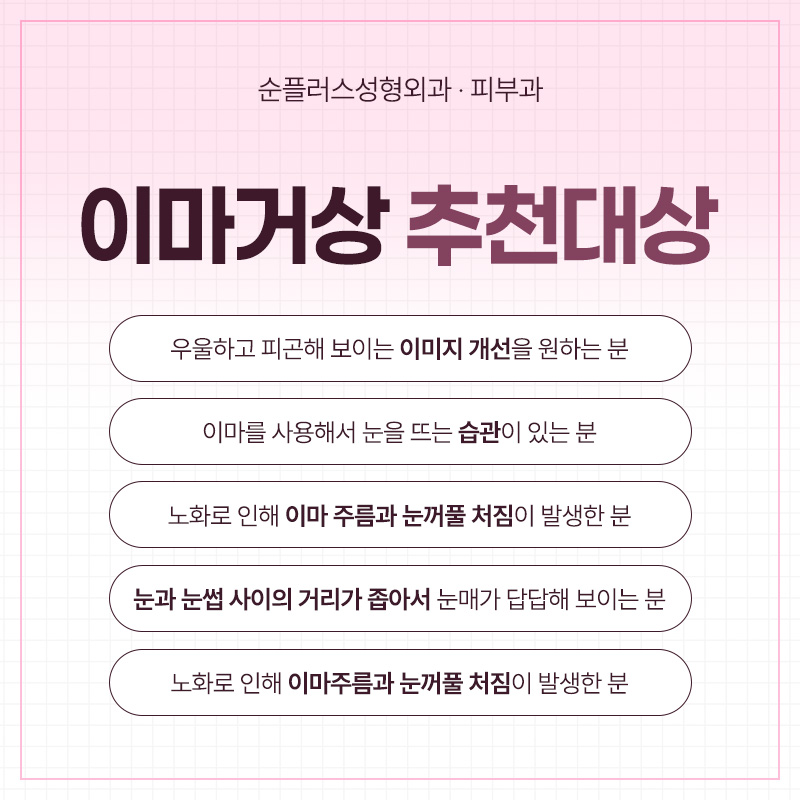
If only one side of the forehead is used, or if the force used to open the eyes is weak and the forehead compensates,
then in such cases the plan must be set correctly to maintain balance.
Therefore, when consulting about forehead lift surgery, it can be important to look at your usual facial expression habits.
�
�
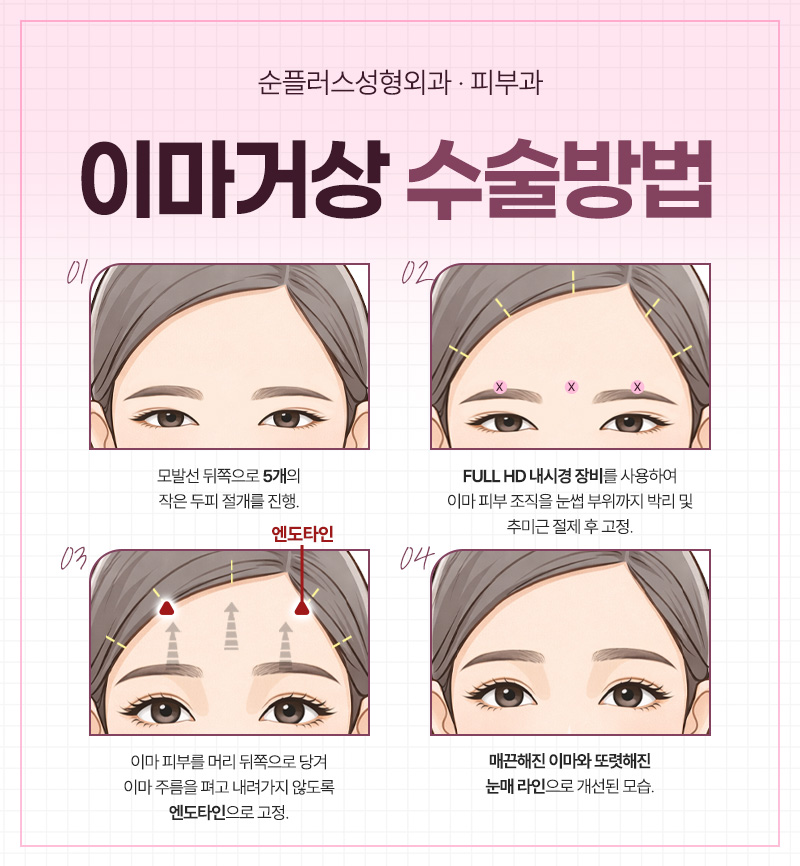
A device that reduces the incision area
Forehead lift surgery using an endoscope may simply be thought of as leaving a smaller scar.
Of course, using an endoscopic device does reduce the incision area,
but a bigger advantage is that it allows the surgeon to see the patient's nerves and blood vessels and perform the forehead lift with greater precision and detail.
A more systematic surgical process can affect the quality of the result and the recovery period.
�
�
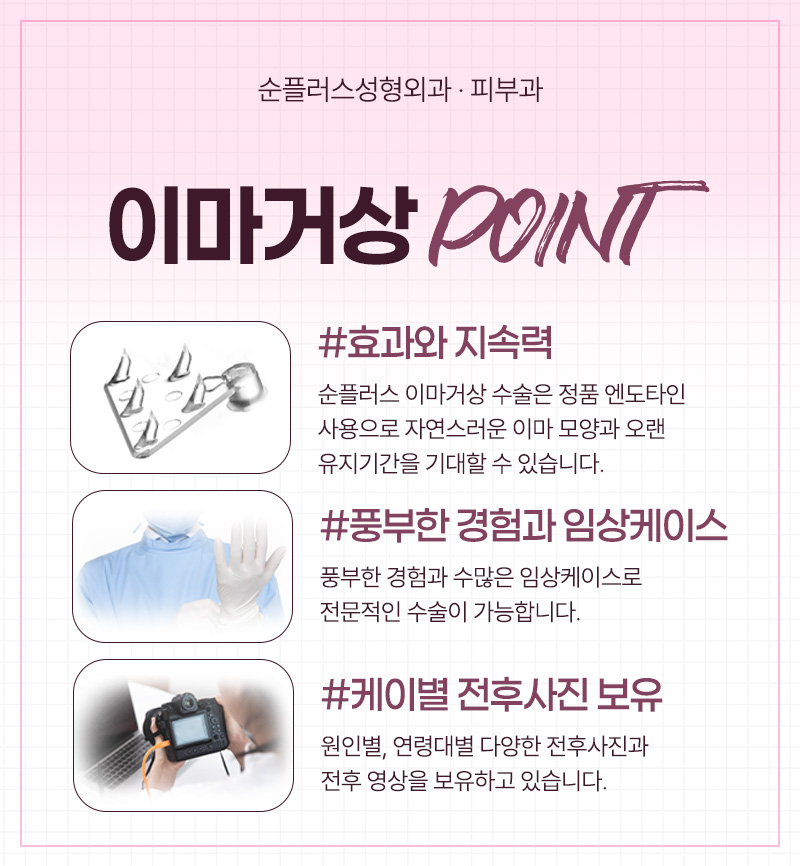
In the early stage after forehead lift surgery, your facial expressions may feel awkward,
but this can be seen as part of adapting to a new expression pattern rather than a side effect.
The part that previously relied on the forehead to compensate when opening the eyes becomes more comfortable, so you let go of old habits
and learn new movements, which gradually becomes natural.
�
�




�