As you get older, one of the first areas to change is around the eyes.
Especially in your 50s and 60s, it is common for not only the skin to sag, but also for changes to appear in the tissue under the eyebrows, eyelid fat, and forehead muscles.
Because of this, many people visit the clinic with concerns such as, 'My eyes feel heavy when I try to open them.' 'I always look tired.' 'My double eyelids keep covering my eyes.'
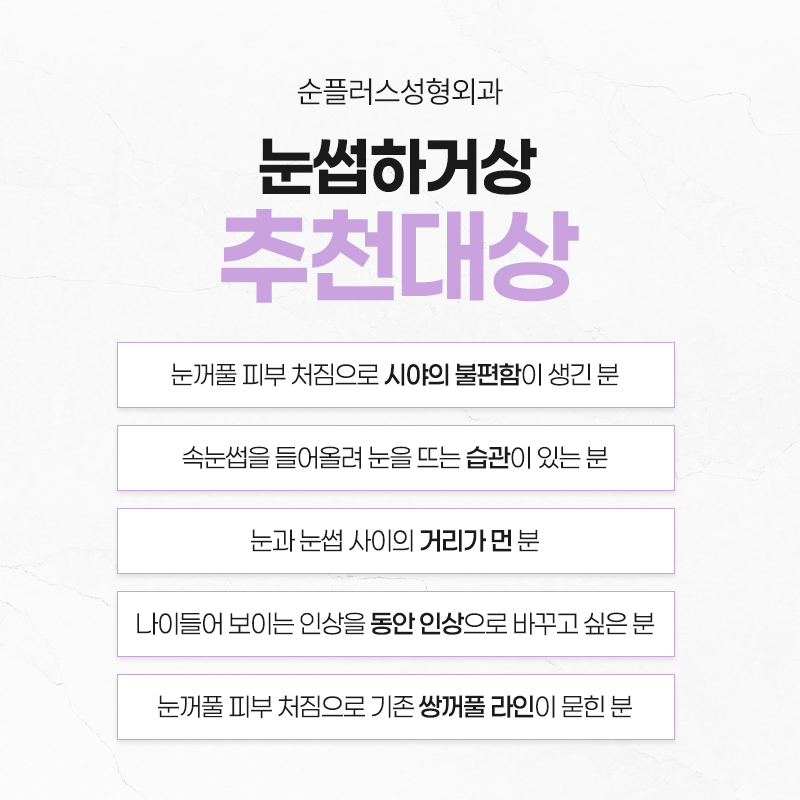
One of the methods often considered at this time is an upper eyelid lift under the brow.
Recently, however, the focus has shifted from simply removing sagging skin to how naturally the appearance is improved.
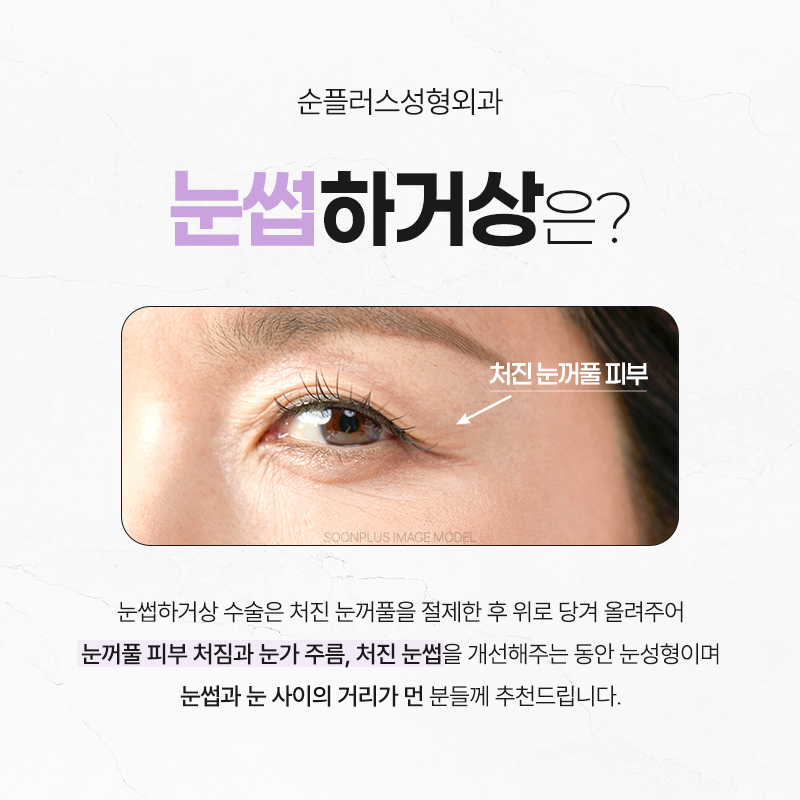
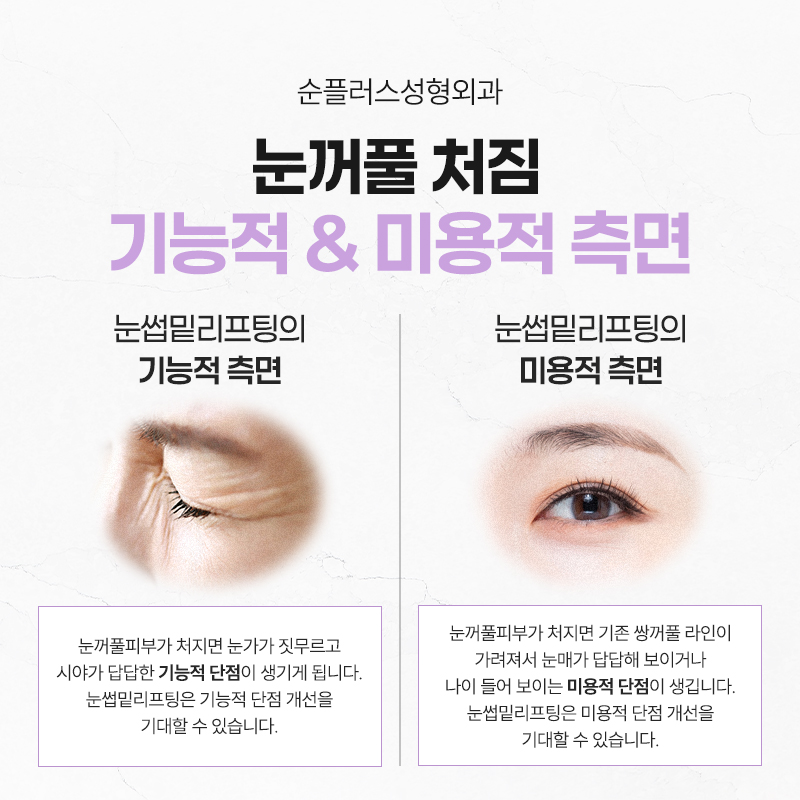
An upper eyelid lift under the brow involves making an incision along the line beneath the eyebrow and removing loosened skin.
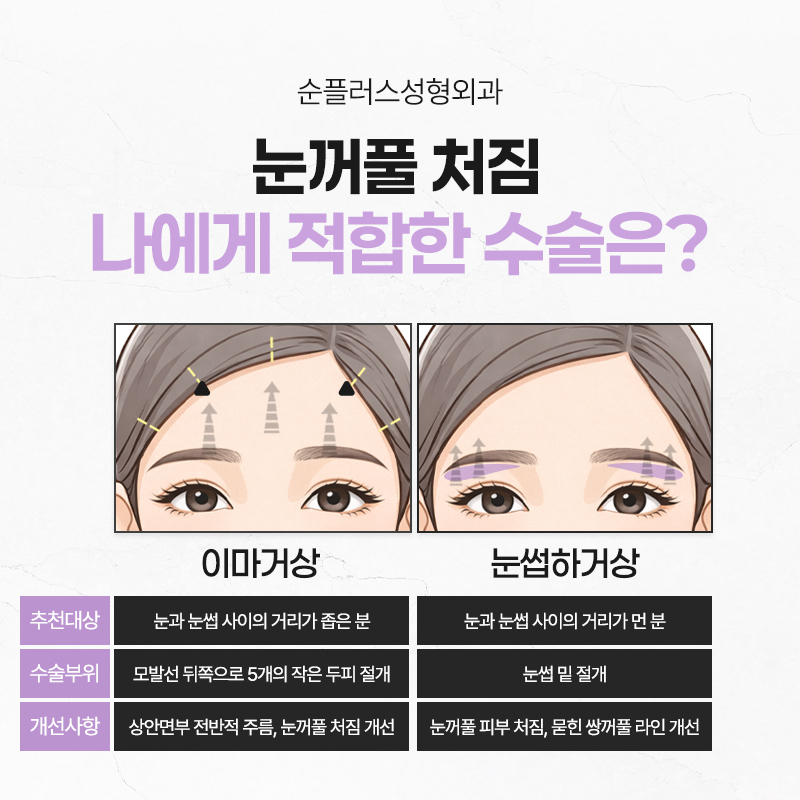
It is often compared with upper blepharoplasty, a common middle-aged double-eyelid surgery, but the actual points of improvement are somewhat different.
Upper blepharoplasty: changes centered on the double-eyelid line
Upper eyelid lift under the brow: improvement of sagging skin above the eyes and a heavy-looking appearance
In particular, in people in their 50s and 60s, the eyelid skin itself is often already thin,
so if the double-eyelid line is altered too aggressively, the expression can become unnatural.
On the other hand, an upper eyelid lift under the brow is preferred because it softens the heavy feeling naturally without greatly changing the existing eye shape.
Many people think that when doing an upper eyelid lift under the brow, removing more sagging skin is better.
But in reality, excessive removal can lead to unnatural results.
Because the elasticity of the skin in people in their 50s and 60s is different from that of younger people, forcing it too much can also cause the following problems.
-
The eyebrow position rises too much
-
The eyes look overly wide and tense
-
The scar becomes more noticeable
-
Difficulty closing the eyes
For this reason, rather than removing too much skin, many people prefer a direction that preserves their current appearance while reducing only the tired look.
In short, subtle naturalness may be the key.
Also, what many patients in their 50s and 60s worry about more than scarring, somewhat unexpectedly, is whether the surgery looks too obvious.
Since the incision line of an upper eyelid lift under the brow is located beneath the eyebrow, it is relatively well concealed once the initial redness fades.
However, the important thing is not just the incision location, but also considering the individual’s eyebrow direction, skin thickness, and tendency toward pigmentation.
In particular, men have different eyebrow density, and for women, the incision design may vary depending on whether they have semi-permanent eyebrows, so a more detailed approach may be needed than expected.
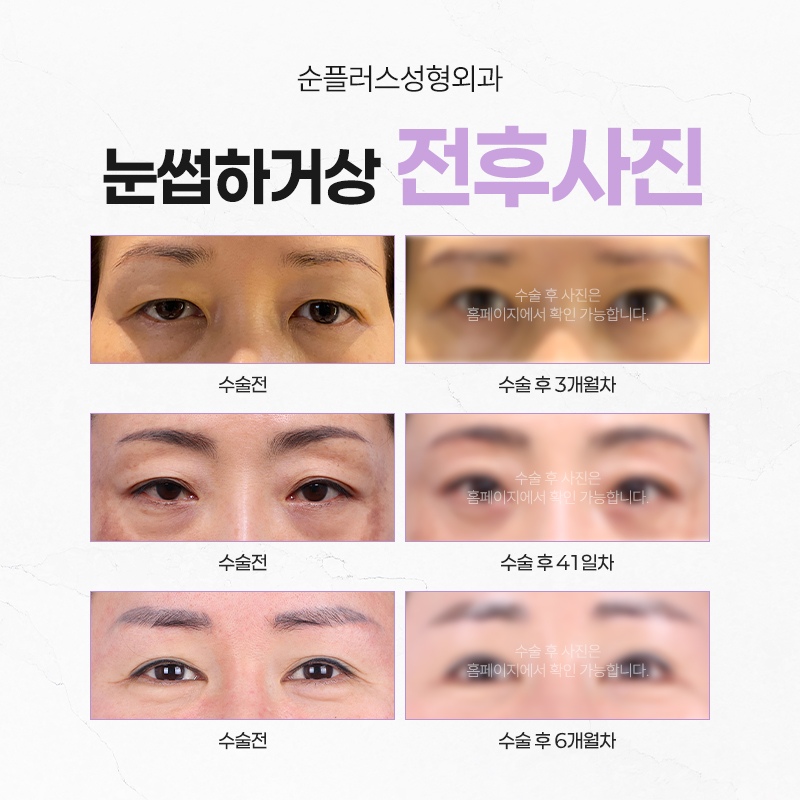
Recently, eye surgery for middle-aged and older adults seems to be leaning more toward not looking tired than simply looking younger.
Rather than an eye shape that has changed too dramatically, the change that preserves the original impression while making the eyes look more comfortable and defined.
This is often what determines actual satisfaction.
An upper eyelid lift under the brow is also not simply a surgery to remove skin,
but a procedure that needs to take into account the impression around the eyes, muscle use, and skin characteristics together.