
Aptos thread lifting is a lifting procedure in which medical threads with a special cog structure are inserted into the skin layer to pull up sagging tissue.
Aptos threads are designed not only to physically pull the skin,
but also to induce collagen production in the skin and improve elasticity.
In particular, some lines in the Aptos line use HA (hyaluronic acid) in the thread coating ingredient, which helps with skin hydration and maintaining elasticity,
and this can be described as a differentiating point of premium thread lifting.
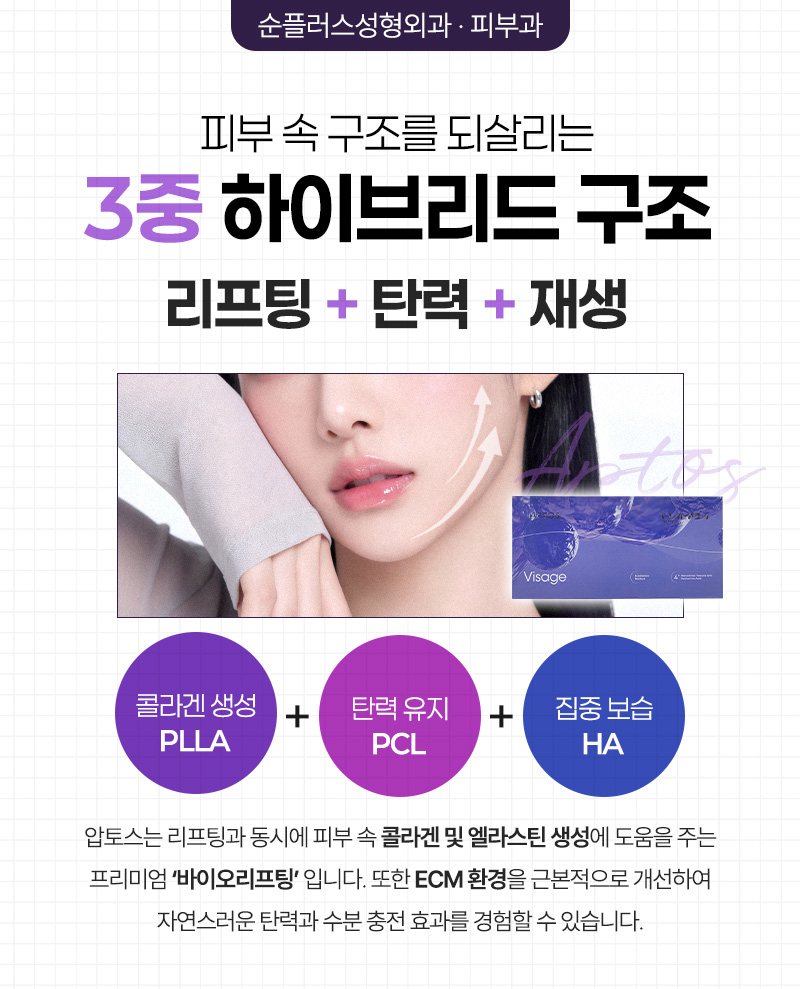
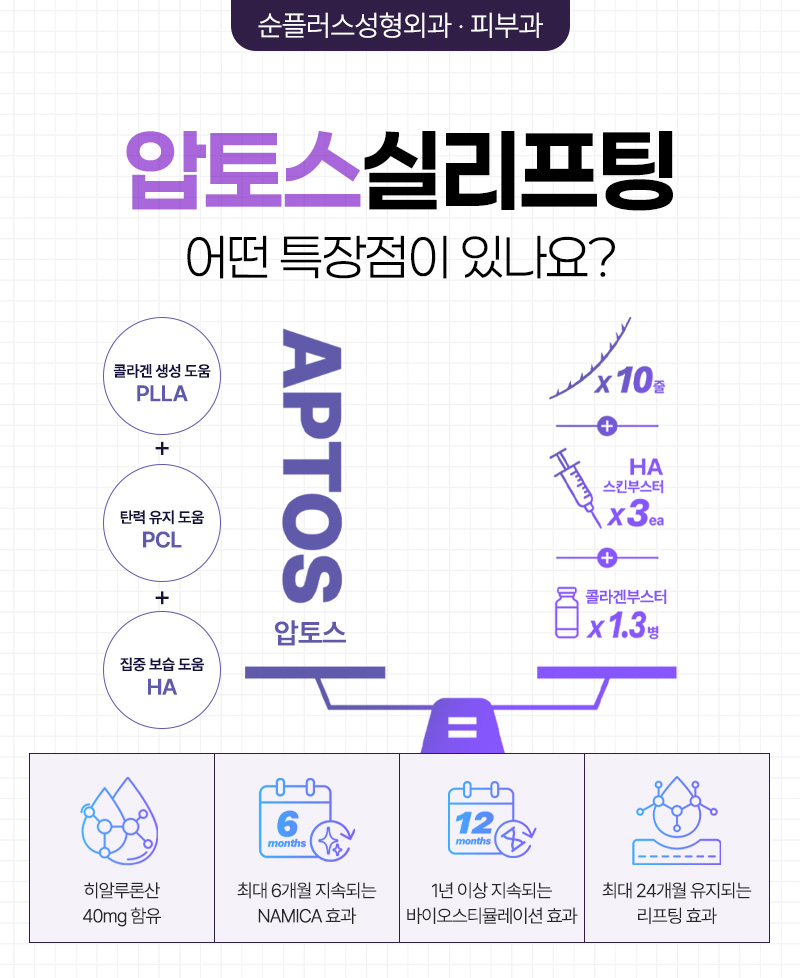
One of the key ingredients in Aptos thread lifting is PCL.
PCL is a biodegradable polymer material widely used in the medical field, and the reasons PCL draws attention in Aptos thread lifting are
its expected long maintenance period, flexibility that helps support natural movement, induction of collagen production in the skin, and the potential to be slowly absorbed while helping improve elasticity.
Compared with existing PDO threads, it dissolves relatively slowly, so many people are interested in it from the standpoint of durability.
In addition, the PLA ingredient in Aptos thread lifting has the characteristic of inducing collagen formation in the skin,
so you can expect improved skin elasticity around the area where the thread is inserted, and especially over time, a feeling that the skin gradually becomes firmer.
In the case of Namika thread lifting in the Aptos line, it uses threads with hyaluronic acid applied.
Hyaluronic acid is a representative moisturizing ingredient that plays an important role in maintaining moisture in the skin.
When HA is applied to the thread surface, it can help maintain skin hydration, improve skin condition, assist in maintaining a sense of elasticity, and help the thread adapt flexibly to skin tissue,
so it can be discussed not only as simple lifting but also as taking skin condition into account, which is why it is sometimes referred to as bio-lifting.
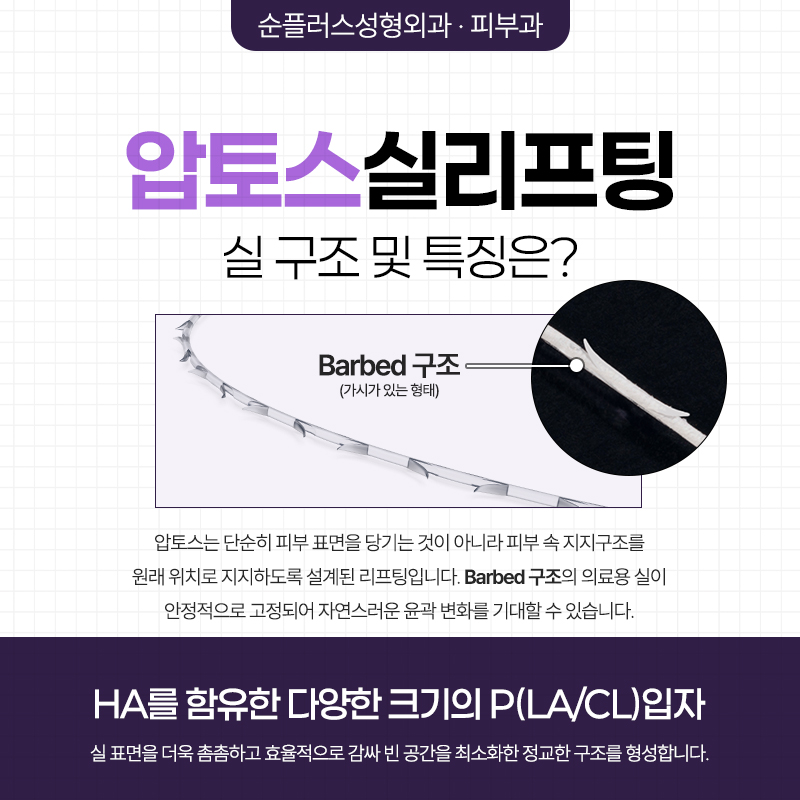
Aptos thread lifting is characterized not only by its ingredients but also by the structure of the thread itself.
The cog-shaped protrusions formed on the thread surface play a role in holding skin tissue more stably.
In particular, Aptos uses a bidirectional cog structure designed to help increase tissue fixation strength,
and this structure is especially recommended for those who want to support sagging tissue and expect effects such as a more natural jawline, mid-cheek lifting, and facial contour refinement.
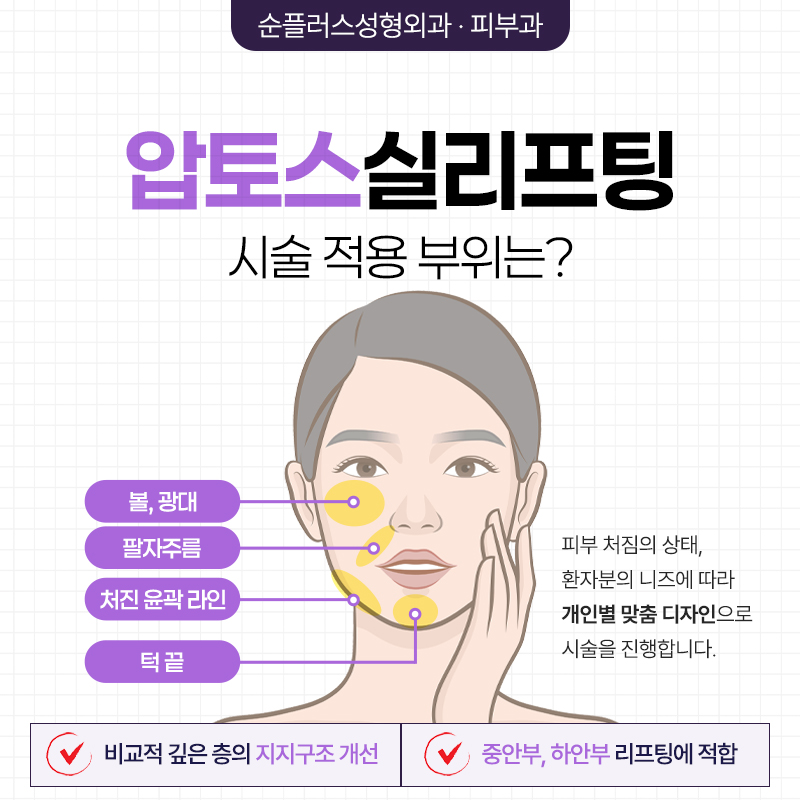
Premium thread lifting, Aptos thread lifting, should not be seen as a simple procedure of inserting threads like ordinary thread lifting,
and it is differentiated in several ways, including the thread material, moisturizing ingredients, durability, and thread structure.
However, depending on the patient's skin thickness, degree of sagging, skin condition, and other factors, the lifting threads and procedure method may differ,
so it is important to visit a clinic and choose the lifting method appropriate for the individual through sufficient consultation with a medical professional.

Aptos thread lifting is not simply a thread lifting procedure that pulls the skin.
Rather, by using ingredients such as PCL, PLA, and hyaluronic acid (HA) along with a special cog structure,
it can be greatly differentiated as a lifting method that considers both skin elasticity and tissue support.
However, the appropriate type and design of threads may vary depending on skin condition, degree of sagging, and desired direction,
so it is important to proceed with a plan that suits you through sufficient consultation.