Midlife rhinoplasty for people in their 40s, 50s, and older: Why naturalness matters.
As people age, the overall impression of the face changes little by little.
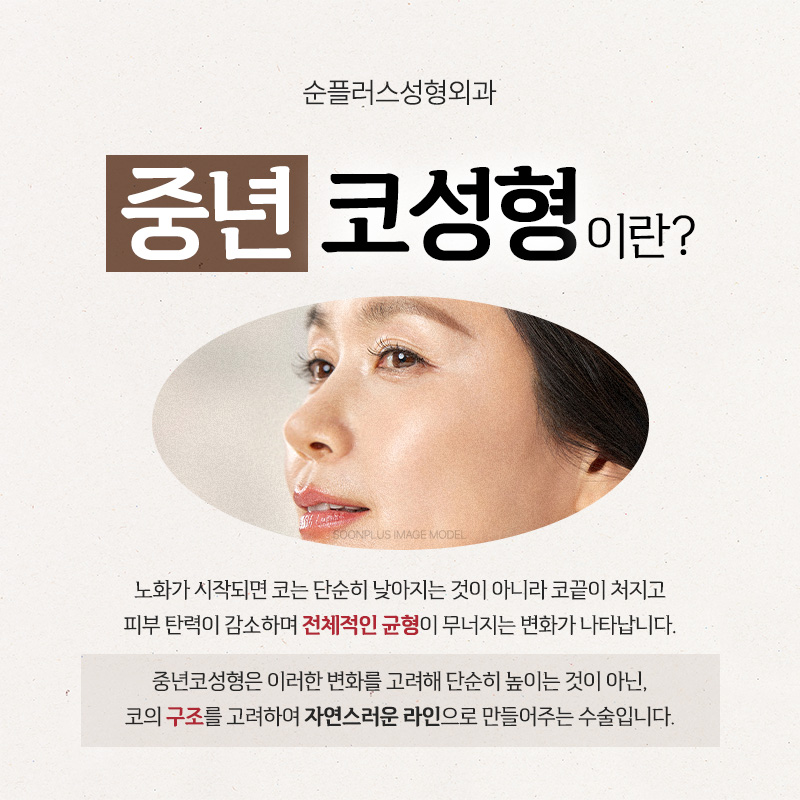
Skin elasticity decreases and volume diminishes, and in many cases the nose can appear larger and more drooped than before.
Because of this, recent interest has grown not simply in making the nose higher, but in midlife rhinoplasty that considers the balance of the entire face.
In particular, for people in their 40s and 50s and older, an approach that differs from that for younger patients is important.
Rather than aiming for an overly dramatic line, the key point can be to maintain a natural and refined impression.
Midlife rhinoplasty requires careful consideration.
In middle age, skin thickness, elasticity, and the condition of the soft tissue are different from those in younger people.
In addition, due to aging, the nasal tip often droops downward or the support of the septum becomes weaker, so simply inserting an implant alone may not produce satisfactory results.
For this reason, midlife rhinoplasty needs to take the following factors into account together:
-
Improving a drooping nasal tip
-
Adjusting the facial center ratio
-
Height that does not look artificial
-
Considering skin elasticity
-
Checking functional aspects at the same time
In particular, among middle-aged patients, functional issues such as breathing discomfort or rhinitis symptoms are often checked alongside appearance.
The importance of 'naturalness' in midlife rhinoplasty
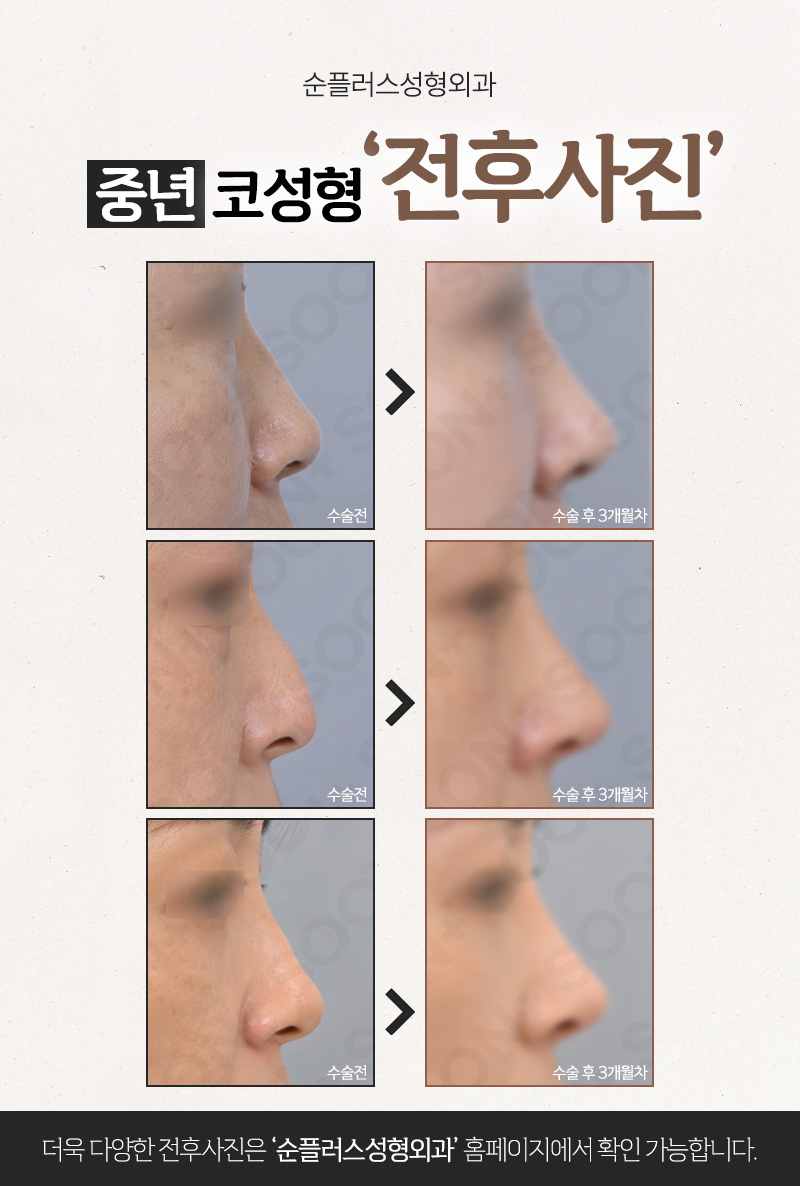
The keyword often mentioned during consultations for midlife rhinoplasty is 'naturalness.'
This is because a nose line that is too high or too sharp may not match the overall mood of the face.
Recently, the preferred trend is toward creating a refined image through changes that are not excessive, while considering harmony with the individual facial shape and features.
In particular, it is important to carefully design not only the side profile but also the change in the frontal impression.
Cases that may be worth considering for midlife rhinoplasty include:
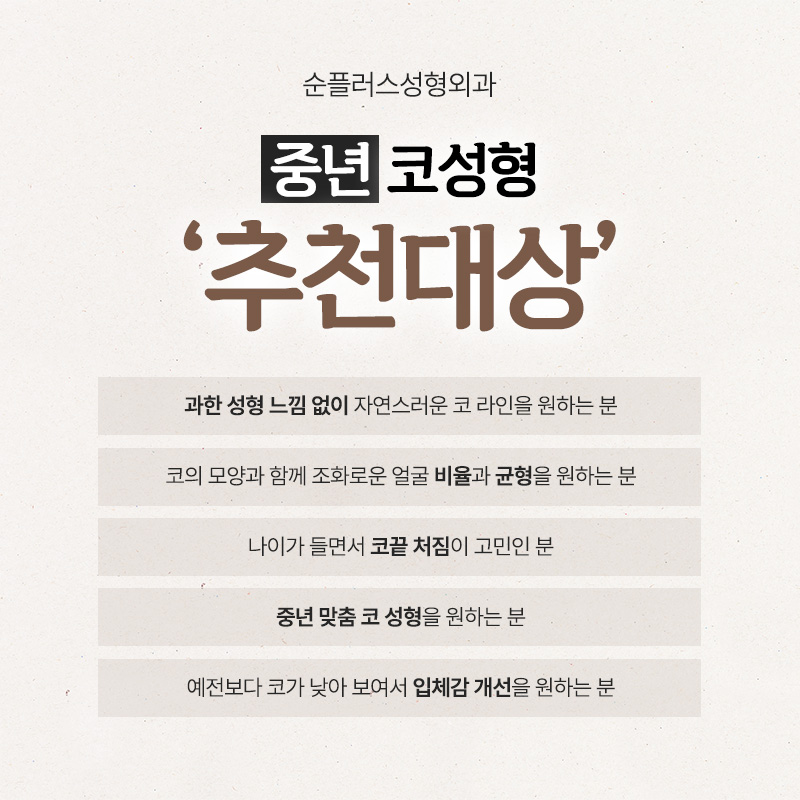
As age increases, the nasal tip gradually appears to droop
The face looks flatter than before and is a concern
You want to improve the first impression more clearly
You are considering revision after a previous nose surgery
You want a natural-looking improvement in appearance
However, because each person’s skin condition and existing nasal structure are different, sufficient consultation and precise diagnosis should come first.
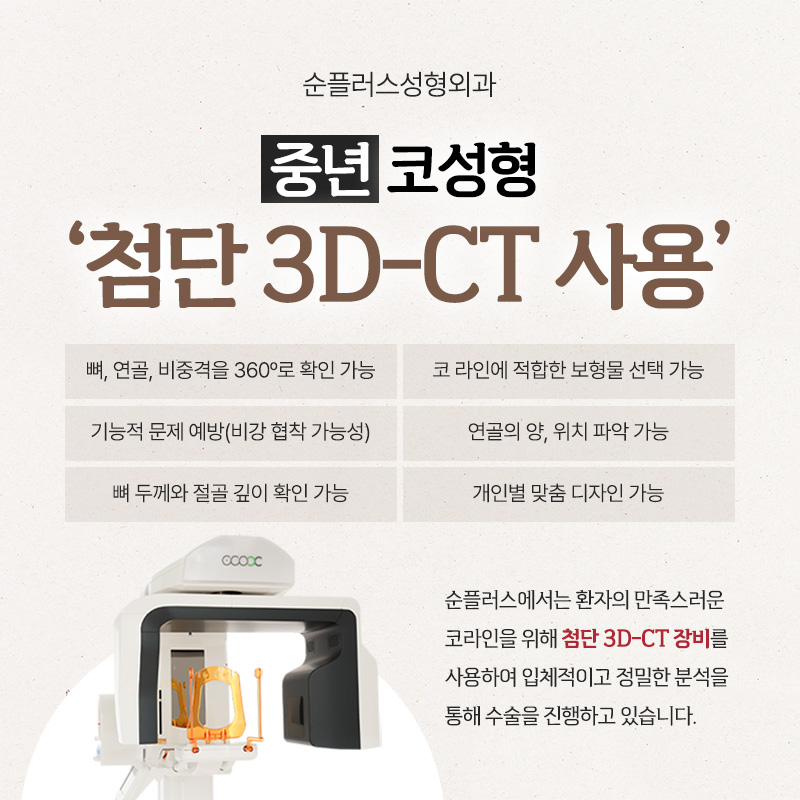
Midlife rhinoplasty also requires checking recovery.
In middle age, the speed of recovery and the condition of the tissues vary greatly from person to person.
Therefore, rather than an overly aggressive surgical plan, it is important to have a safety-focused plan that fits the current condition, and it is also important to carefully check the postoperative management system.
In addition, receiving enough explanation about the timing of returning to daily life, swelling management, and scar management before proceeding can help improve satisfaction.
Midlife rhinoplasty for people in their 40s, 50s, 60s, and beyond is not simply a surgery to change the shape of the nose.
It can be described as a process that considers harmony with the overall facial impression.
Among middle-aged patients, satisfaction tends to be higher when the goal is to preserve one’s own atmosphere while improving it naturally rather than making excessive changes.
Above all, because a customized plan that sufficiently considers the individual’s skin condition, nasal structure, and overall facial proportions is important, it is best to have a thorough consultation with an experienced medical team.