

Sillim-dong Dental Clinic, the No. 1 Cause of Tooth Extraction Is...
Hello. I am Shin Seung-hwan,
the director of Yonsei U-Line Dental Clinic.
Today, I have prepared an opportunity for us to think together
about why we lose our teeth and how to address it.
Many people probably think of cavities as the No. 1 cause of tooth extraction.
In fact, the biggest cause of tooth loss in adults
is periodontal disease, or gum disease.
In other words, it is a condition in which inflammation develops
not in the crown of the tooth, but near the gums, around the root.

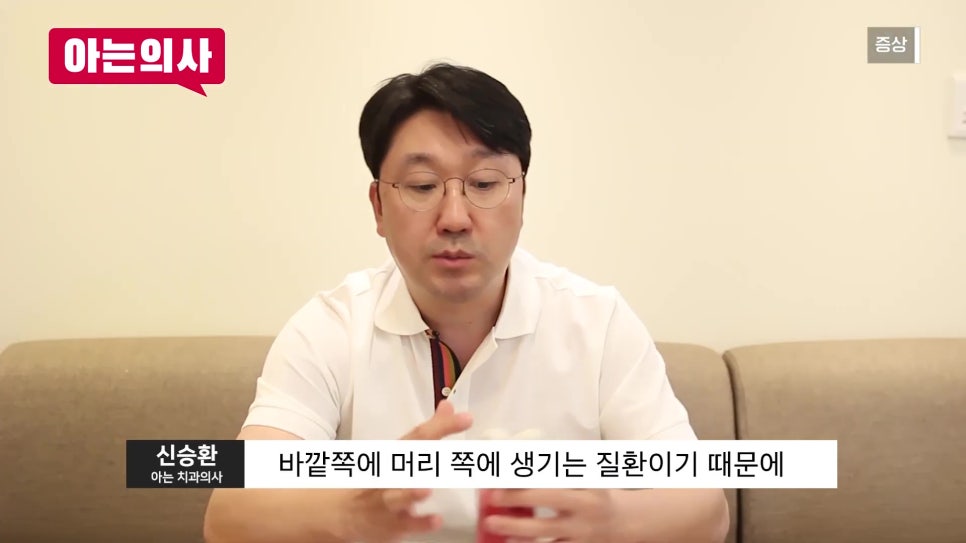
Cavities are noticeable.
They also cause sensitivity and pain when you eat cold or sweet foods.
As a result, they are relatively easy to detect,
and people tend to visit the dentist fairly quickly when a problem occurs.
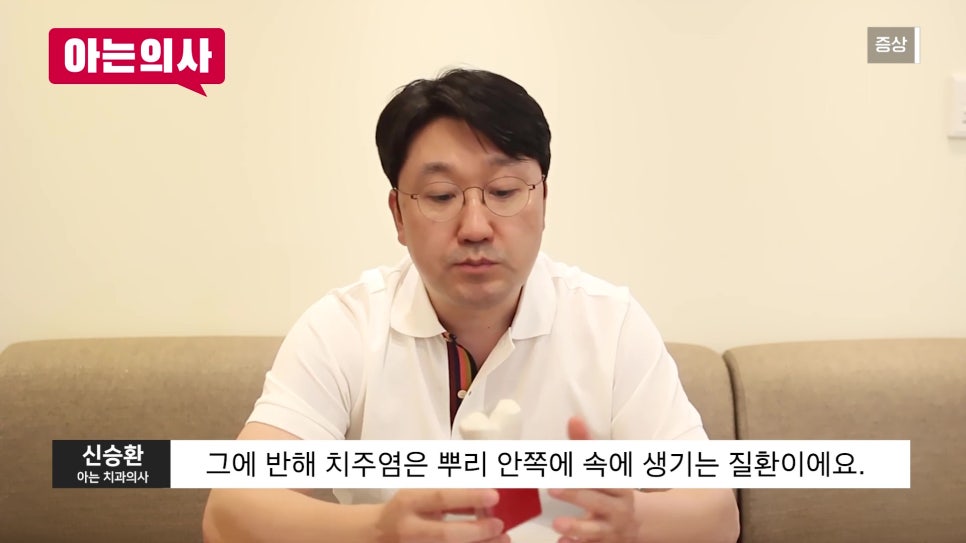
However, periodontal disease develops in areas inside the tooth root
that are not visible.
Because the gums cover it and keep it out of sight,
it is by no means easy to notice on your own.
So how can you recognize it?
The most common sign is bleeding gums.
When the gums are swollen, they bleed easily.
Tooth mobility, commonly known as loose teeth,
is also one of the symptoms of periodontal disease.

Therefore, if your gums bleed while brushing,
do not assume that it will simply go away.
It is not a good sign at all, so it is best to visit the dentist promptly
for an examination.


Then why does periodontal disease,
the No. 1 cause of tooth extraction, develop?
To put it bluntly, it develops because the teeth are not cleaned properly.
The same applies to cavities, but cavities and periodontitis
involve different areas that need to be cleaned.
If you maintain thorough hygiene around the exposed crown of the tooth,
cavities can be prevented.
To properly prevent periodontal disease, however,
you need to clean not only the teeth but also the area between the teeth and gums.
However, it is by no means easy to clean every corner of the gap
between the teeth and gums.
As a result, tartar accumulates easily in these spaces,
and bacteria multiply readily, causing inflammation.

To remove the tartar in these areas,
you should visit the dentist and have a professional cleaning
at least once a year.
Even then, tartar that has formed deep under the gums
is not easy to remove.

Bacteria gradually burrow deeper to create a place to hide.
If you both have professional cleanings and brush your teeth properly,
they have nowhere to hide, so they begin to dissolve the jawbone around the teeth.
As they dissolve the jawbone and create space,
tartar accumulates in that space,
and the bacteria gradually expand their territory.
When a significant amount of jawbone has been lost in this way,
the teeth eventually become loose.
If you visit the dentist when your teeth have become this loose,
the periodontitis may already have progressed to a severe stage
where little can be done.
In other words, the tooth may need to be extracted.
That is why I repeatedly emphasize the importance of regular checkups.
Even if there are no problems, you should visit the dentist at least once a year,
have a professional cleaning, and have your teeth and gums checked
to make sure they are healthy.
Many people also dismiss bleeding while brushing as insignificant,
but bleeding means that gum treatment is needed.
If the condition progresses beyond simple bleeding,
with severe gum swelling and even pus,
drainage treatment is needed to remove the pus.
For people who have experienced extensive jawbone loss,
bone grafting around the tooth socket or periodontal surgery may be necessary.
Before extracting a tooth, it is best to make every effort
to save it if possible.



That is why I recommend trying gum treatment first.
If the tooth becomes less loose and the bleeding decreases after treatment,
you may be able to continue using the tooth
while receiving regular maintenance care.


Unfortunately, if bleeding continues despite treatment
and bone loss progresses rapidly,
extraction may be unavoidable.
In that case, we recommend placing an implant
before it is too late.
https://youtu.be/0pCUYNbIymQ?si=7PCf5P-QlMIx4kaE