Hello. This is Yonsei U-Line Dental Clinic, located on the 17th floor of Mijin Plaza, 825 Yeoksam-dong, Gangnam-gu.
Today, we would like to discuss why sharp edges can develop on teeth—in other words, tooth fractures.
Sometimes a tooth suddenly chips while you are eating, or you may grind your teeth unconsciously at night and notice a rough or sharp area when you wake up in the morning.
More people than you might expect visit the dentist because of this type of tooth fracture.

Because the treatment method varies depending on the extent of the fracture, we will explain in detail what treatment may be needed when a sharp edge develops or when the tooth breaks completely.
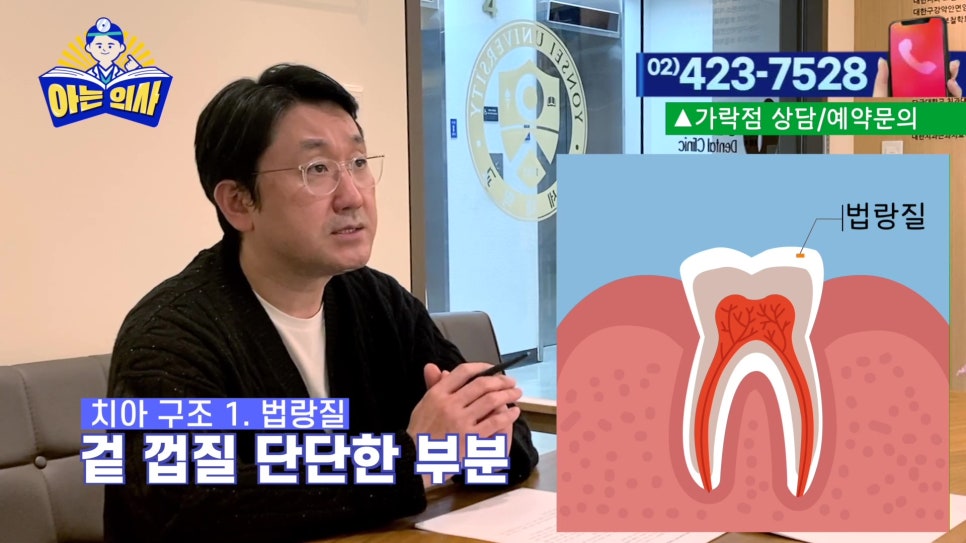
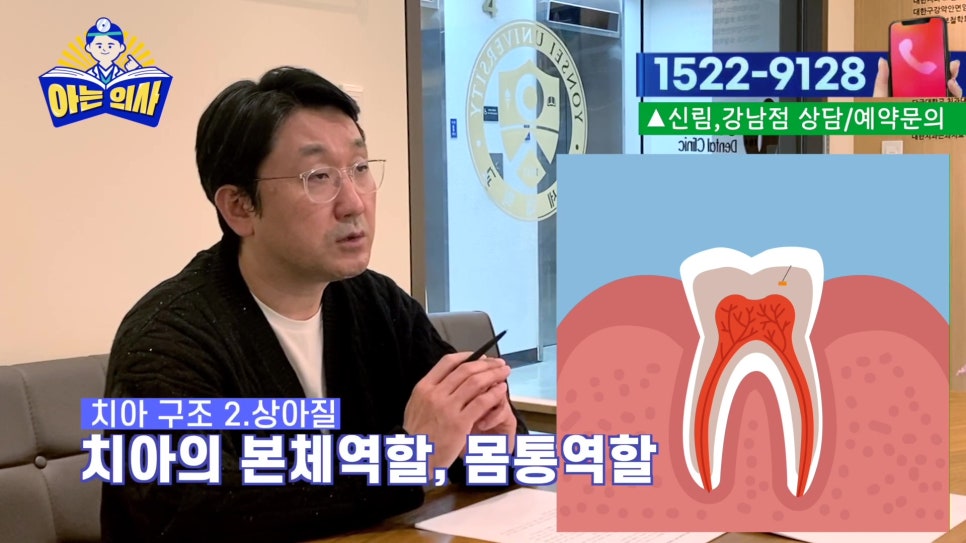
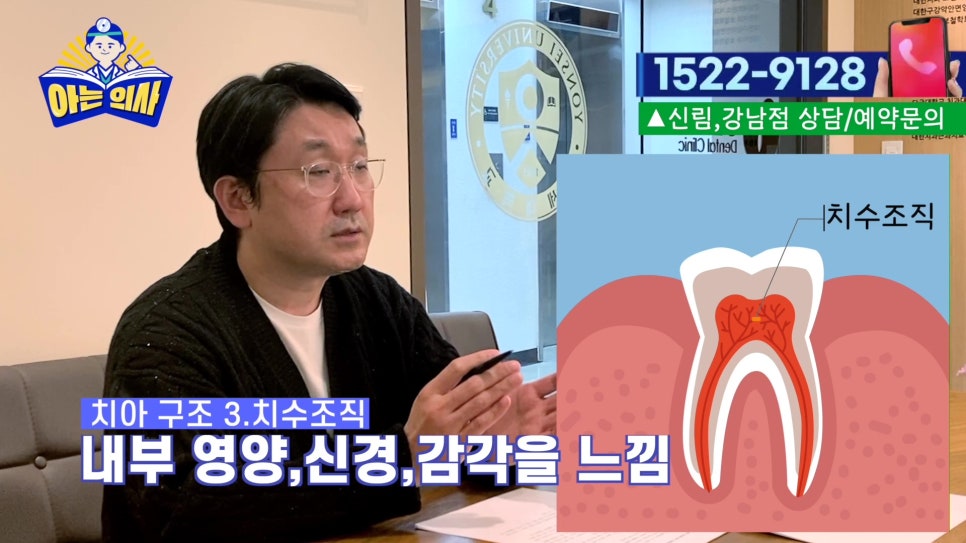
A tooth can be divided into three main structures.
First, there is the hard enamel that covers the outside.
Second, there is the dentin, which makes up the main body of the tooth.
Third, there is the pulp, which contains the nerves and is responsible for sensation inside the tooth.


The treatment method depends on the extent to which each of these structures has been damaged.
In other words, it varies depending on whether the damage is limited to the enamel, extends to the dentin, or reaches the pulp.



First, if only the enamel is chipped, the sharp area can be trimmed and smoothed.
If the enamel of a tooth that affects appearance, such as a front tooth, is chipped, it can be restored with composite resin or a similar material.



The reason for not immediately treating the tooth with composite resin and simply smoothing it first is that, if the tooth fractured because of everyday eating habits, the area may be subjected to considerable stress.
In other words, even if it is restored with composite resin, it may come off prematurely due to repeated pressure or irritation.


If a molar or another area that bears substantial force has chipped, simply smoothing the sharp, bothersome area is also an option.
However, if the affected area is visible and appearance is important, such as with a front tooth, composite resin treatment may be performed, followed by careful use of the tooth.



If the damage extends beyond the enamel and reaches the dentin, more active treatment is needed.
In this case, the enamel that protects the tooth has fractured, exposing the dentin underneath, which may cause discomfort such as tooth sensitivity.

If left untreated, the dentin may develop decay, food may become trapped and cause further chipping, or cracks may form.


When the affected area is small, it can be treated with composite resin or an inlay.
If the area is extensive or there is a risk of cracking, a crown should be considered.
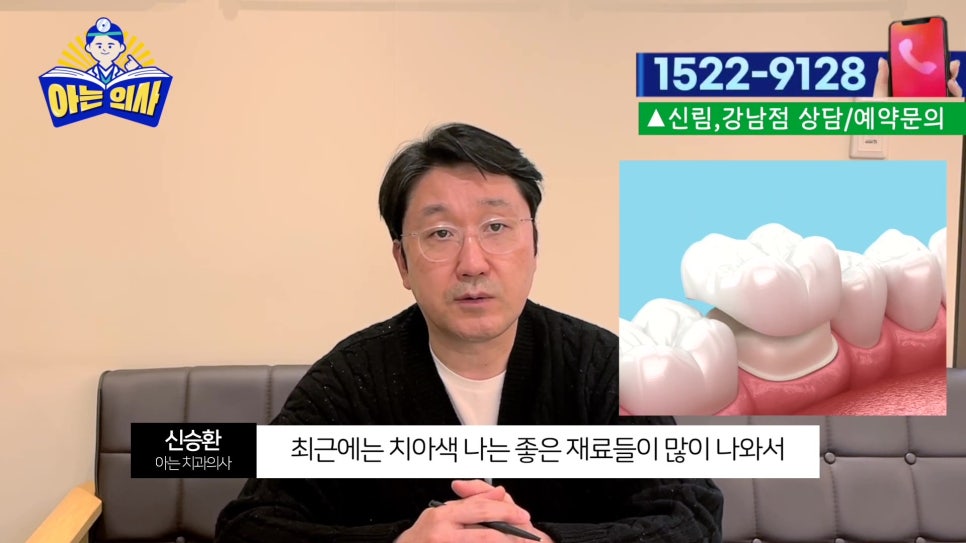

Recently, treatments using tooth-colored ceramic or zirconia materials have become possible, offering good aesthetics as well as excellent strength.


If the fractured area is so extensive that it reaches the pulp, it is usually accompanied by pain and requires root canal treatment.
Root canal treatment involves removing the contaminated pulp tissue, filling the area with medication, and then sealing it.



If the tooth is left untreated after root canal treatment, additional holes may develop inside the tooth.
In particular, areas that bear strong forces, such as molars, may break again.
Therefore, after root canal treatment, protecting the tooth with a crown is essential.


If a slightly chipped tooth is left untreated, food debris or hard particles may enter the gap, causing the tooth to chip or break further.

In addition, if you keep running your tongue over the sharp area, you may injure yourself. Therefore, if your tooth is chipped or feels unusual, it is important to seek treatment promptly.

Treatment at an early stage has a higher likelihood of success and can be simpler.
Therefore, if your tooth has chipped and developed a sharp edge, we recommend visiting a dentist as soon as possible for a detailed examination.