Hello. I’m Shin Seung-hwan, the chief director of Yonsei Uline Dental Clinic, Garak-dong branch, located near Exit 4 of Garak Market Station in Garak-dong, Songpa-gu.
Nice to meet you all. Today, I’d like to talk about whether a loose tooth must always be extracted.
There isn’t just one fixed reason why a tooth becomes loose.
There are several possible causes, and the treatment method changes depending on the cause.
So let me explain the causes of looseness step by step first.
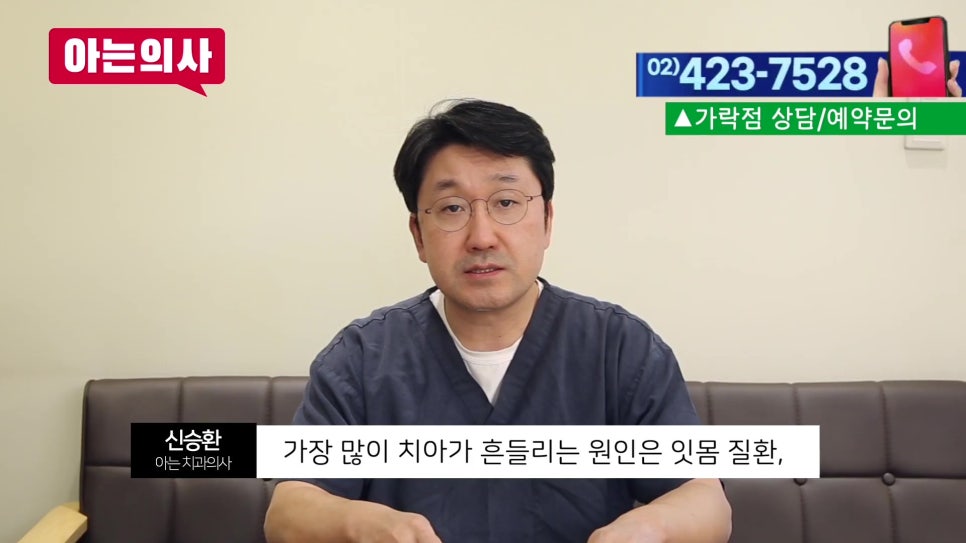
The most common cause is gum disease,
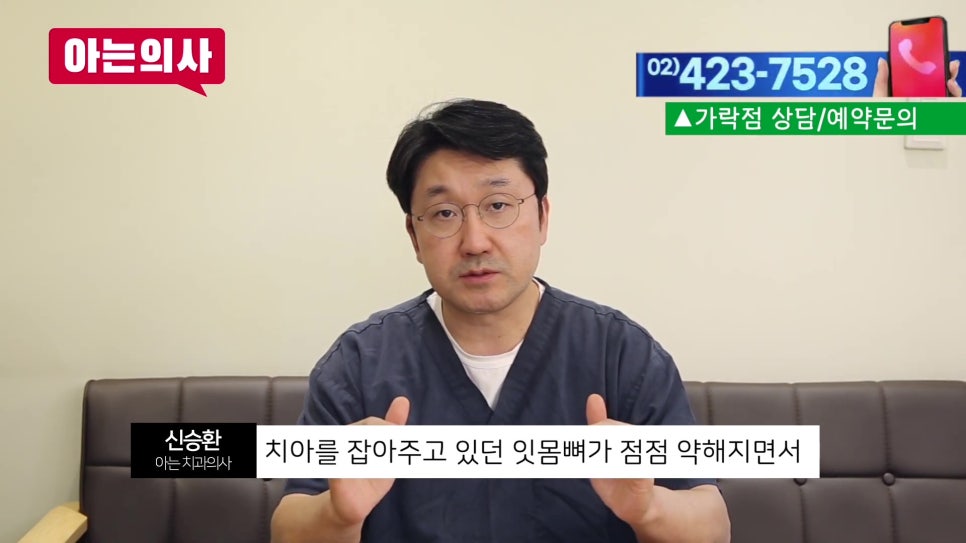
that is, periodontal disease. Normally, the root of a tooth is much longer and stronger than the crown, so it is firmly supported.
But as gum disease progresses, the gum bone that holds the tooth in place gradually weakens and recedes.
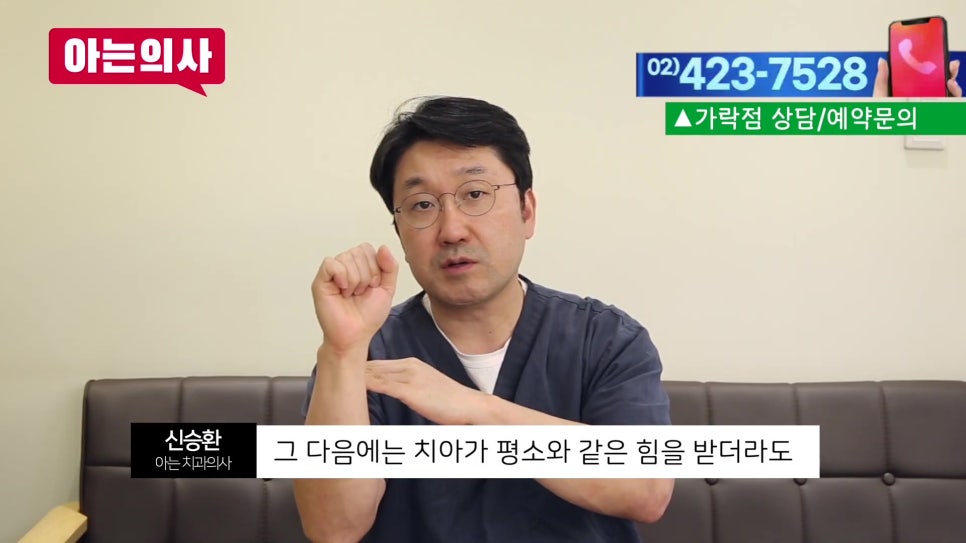
Then the tooth no longer has the strength to endure over time, and it begins to loosen even under normal chewing pressure.
When a tooth becomes loose, that movement further irritates the gums and worsens inflammation,
so a vicious cycle begins.
A typical sign of gum disease is bleeding when brushing.
Rather than thinking, “It’s probably just like this today,”
you should see it as a warning sign from your body.
Prevention is not difficult. Regular scaling and dental checkups are the most important,
and what you can do at home is brush thoroughly and carefully in every corner.
In particular, as you get a little older and the gums recede,
spaces that did not exist before appear between the teeth.
It is not that a cavity has created a hole; the gums have receded,
so the spaces between the teeth look open.
If this area is not managed, gum disease progresses much faster.
That is why after your 30s and 40s, simply cleaning the surface of the teeth is not enough.
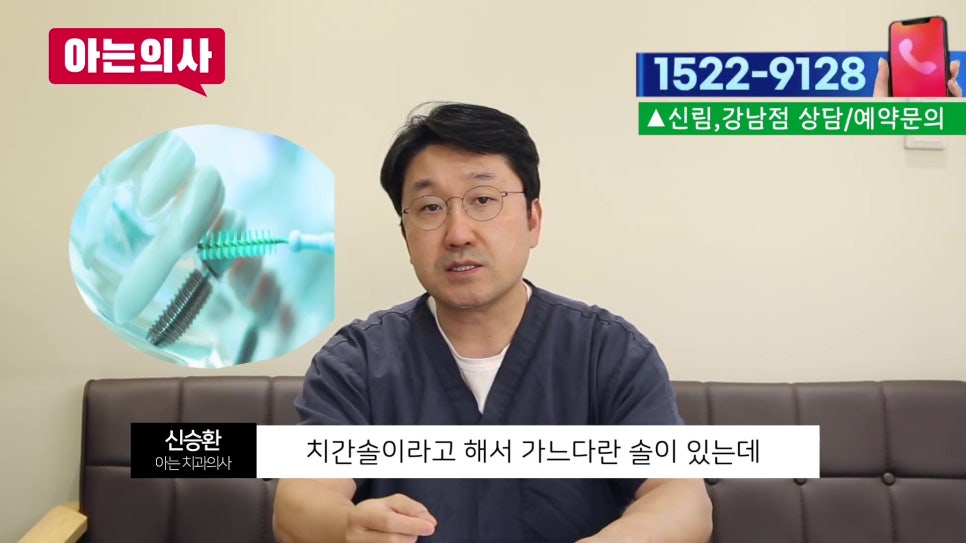
Floss is basic, and you must also use interdental brushes to clean the spaces created by gum recession.
And for areas that are hard to reach below that, adding a water flosser such as a Waterpik can help manage things much more effectively.
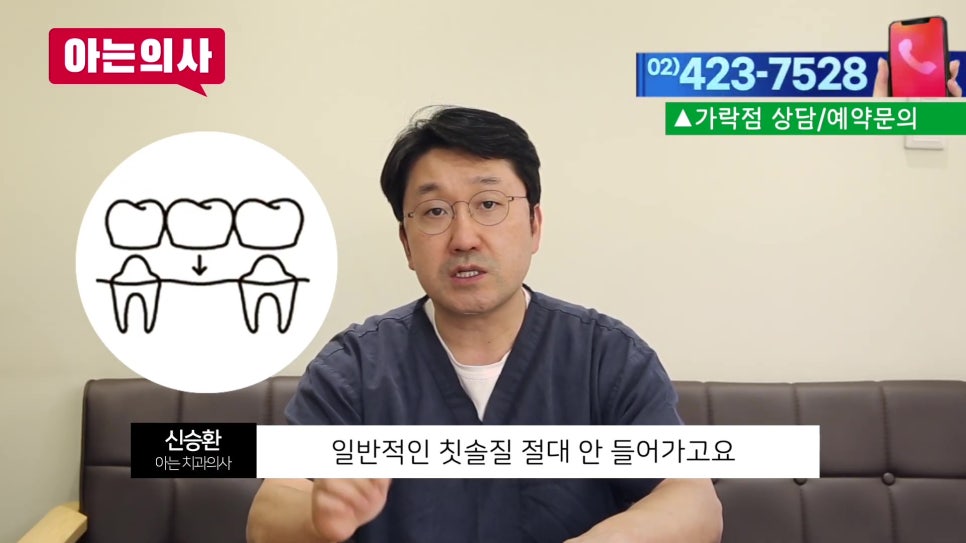
In particular, for people with implants or bridge prostheses,
there are many structures that a toothbrush or floss cannot reach at all,
so you can think of a water flosser as almost the only way to keep them clean.
The second cause is inflammation at the root of the tooth.
This applies when the overall gum condition is fine,
but one or two specific teeth suddenly hurt,
feel pushed upward, and become loose.
The main reason is inflammation caused by a deep cavity progressing toward the nerve and root area.
Even teeth that previously received root canal treatment can sometimes develop inflammation again at the root tip over time.
In this case, retreatment with root canal therapy may be needed,
but because the success rate of retreatment is not considered very high,
extraction can be unavoidable in some cases.
The important thing is that this kind of inflammation never improves on its own.
If left untreated, the looseness becomes worse,
and eventually the tooth is lost.
The third cause is relatively uncommon,
but it can be due to a cyst. When a cyst like a fluid-filled sac forms inside the bone of the upper or lower jaw,
the bone supporting the tooth disappears,
and the tooth can suddenly become loose.
Because it is not easily visible from the outside,
it is often only identified through regular X-ray imaging.
The fourth is trauma. A typical example is when a front tooth becomes loose due to a strong impact, such as falling down or getting hit during sports.
If the movement is not large, we may adjust the bite and observe for 1–2 weeks,
but if it is severely loose or has shifted position, it needs to be moved back to its original position and treated by splinting several teeth together to stabilize them.
And after trauma, as time passes,
there are many cases where the nerve is damaged and inflammation develops at the root tip,
so additional treatment may be necessary.
In conclusion, no matter what the cause of a loose tooth is,
the most important thing is that it does not get better by simply leaving it alone.
When the gums start bleeding,
when you become sensitive to hot things,
and when something feels off while chewing rice or other food,
that is, before the signs of a “serious problem just around the corner” appear,
coming to the clinic is the biggest help in saving the tooth.
A loose tooth does not mean extraction is always the answer. But if the problem is left untreated for too long,
your options often disappear except for extraction.
Please remember that not ignoring small warning signs is the first secret to keeping your teeth for a long time.
That was Yonsei Uline Dental Clinic, Garak-dong branch, near Exit 4 of Garak Market Station in Garak-dong, Songpa-gu.