송파구치과 - 발치 후 술과 담배, 언제까지 피해야 할까
Hello. I am Shin Seung-hwan, the chief dentist at the Songpa-gu branch of Yonsei Uline Dental Clinic, near Garak Market Station in Garak-dong, Songpa-gu.
Today, I’d like to talk about one of the questions you ask most often:
why quitting smoking and avoiding alcohol is important before and after tooth extraction or implant surgery.
Among people who drink alcohol,
there are quite a few who also smoke.
But many people say that quitting smoking and drinking
is “as hard as having a tooth pulled.”
So why are alcohol and cigarettes not good when undergoing tooth extraction or implant treatment,
and for how long should you avoid them?
Let’s take a look.
First, we need to think about the reasons why a tooth is extracted.
Looking at the age groups of people who have teeth extracted,
it is usually people in their 50s and 60s, and in some cases,
even people in their 40s experience extraction.
One of the biggest reasons teeth end up being removed
is periodontal disease, that is, gum disease.
This is a condition commonly called pyorrhea.
One of the main causes of this periodontal disease
is smoking and drinking.
Even if an implant is placed with difficulty
and the surgery ends successfully,
during the later maintenance period, smoking becomes one of the biggest causes of implant failure.
That is why quitting smoking before and after surgery is extremely important.
In particular, the period before surgery and immediately after surgery is very important.
Here, “before surgery” refers to the period after tooth extraction and before implant placement.
The space left by a pulled tooth is not just an empty space;
it is a wound.
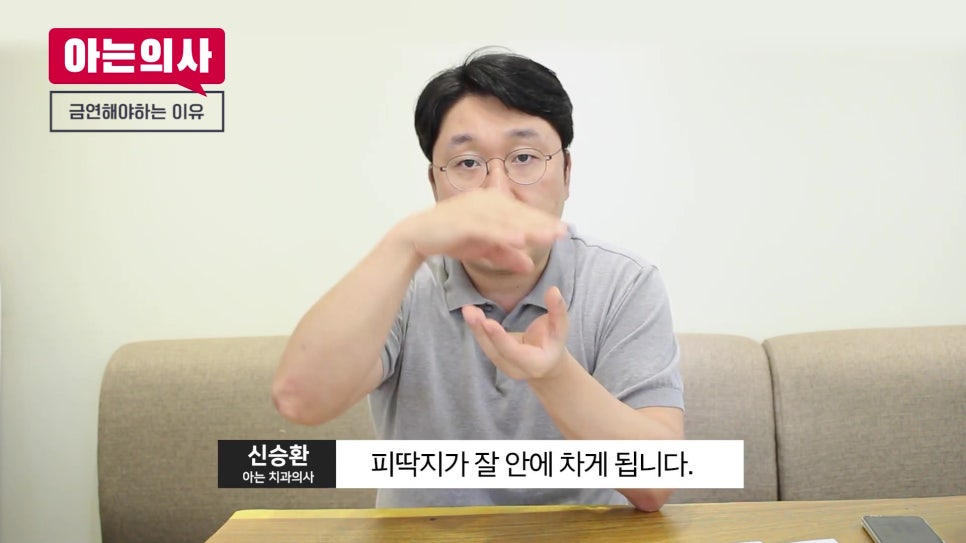
At the extraction site, although you cannot see it,
blood clots and forms a scab, called a blood clot.
This scab plays a very important role in the healing process of the wound.
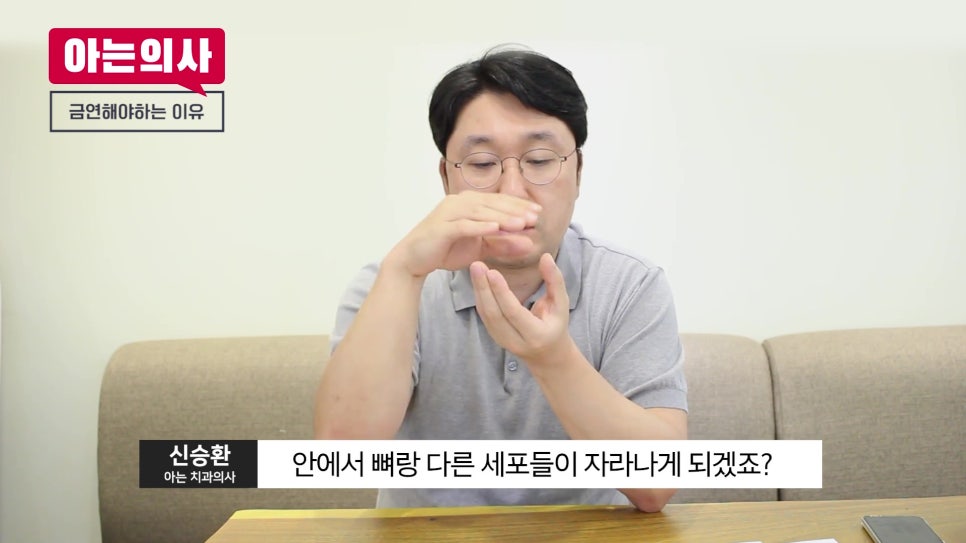
Only when the blood clot settles stably
can new tissue and bone form inside it,
allowing the wound to heal properly.
But if you smoke, a problem arises.
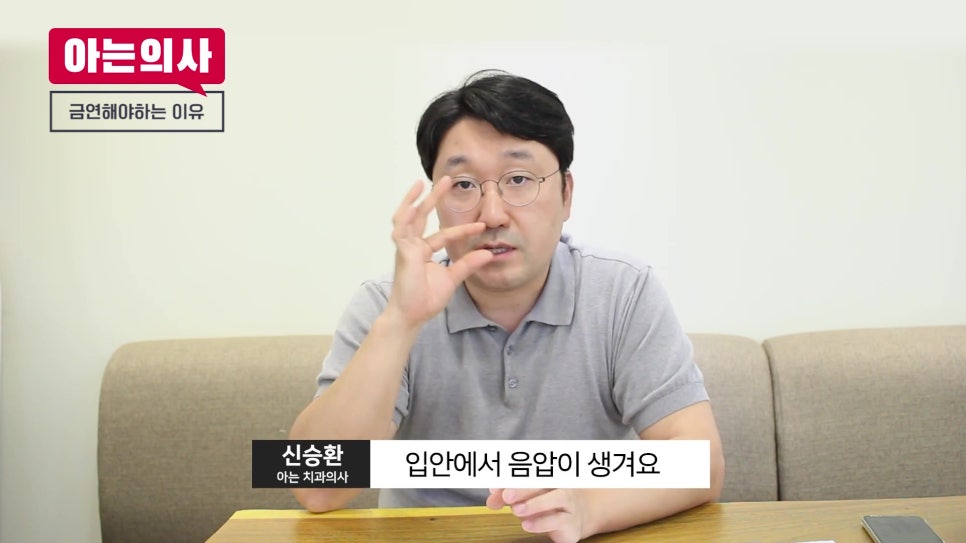
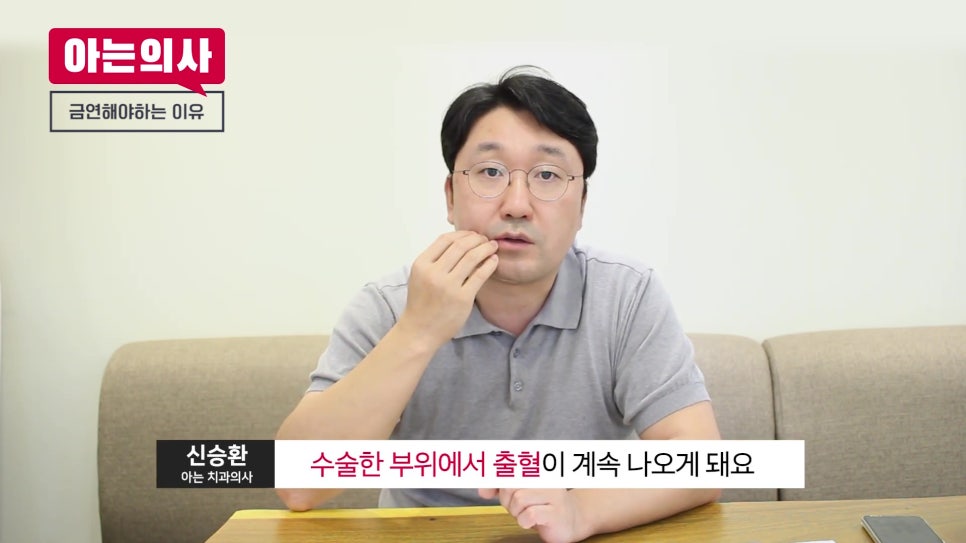
When you smoke, negative pressure is created in the mouth.
Simply put, a sucking force is generated as air is drawn into the mouth,
and during this process, bleeding may start again at the extraction site,
or the formed blood clot may come off.
The blood needs to clot firmly for the wound to heal,
but if bleeding continues, recovery is delayed
and the chance of the wound becoming worse increases.
As a result, the plan to place an implant two months after extraction
keeps getting delayed.
Originally, the plan was to go through a recovery period after extraction,
then place the implant, and proceed with prosthetic treatment a few months later,
but if wound healing is delayed,
the overall treatment period can become longer.
Another important reason is the substances in cigarettes.
Cigarette smoke contains nicotine,
and nicotine is one of the representative substances that slows wound healing.
Along with carbon monoxide and many harmful substances,
they interfere with the tissue healing process.
In the end, this prevents wounds from healing well
and increases the risk of inflammation or complications.
This is especially a bigger problem when implant surgery is performed with bone grafting.
Bone grafting requires new bone to settle and harden firmly,
and smoking has a very high chance of interfering with this process.
That is why, in many dental clinics,
patients who continue to smoke are not actively recommended for bone-graft implants.
Even if surgery is performed, compared with non-smokers,
the results may be poorer or the likelihood of problems may increase.
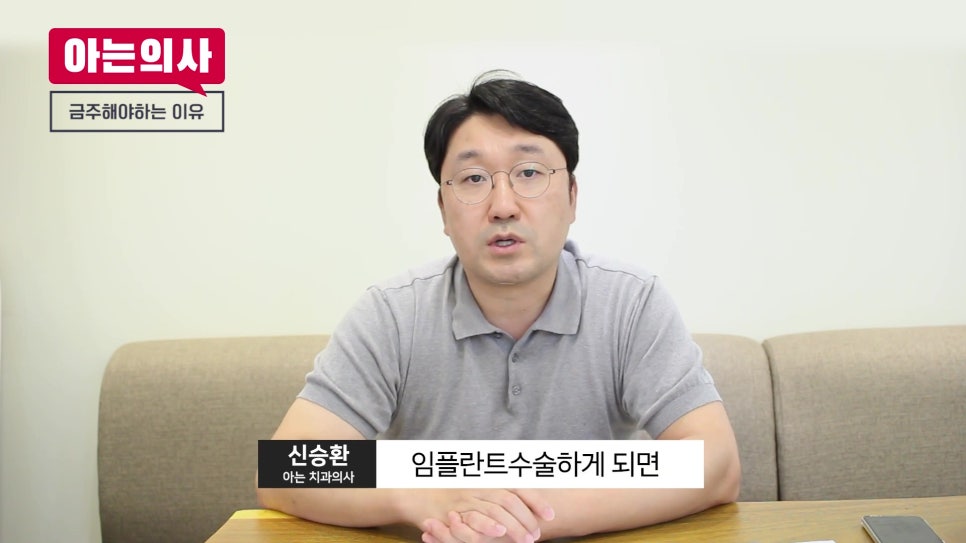
Alcohol also requires caution.
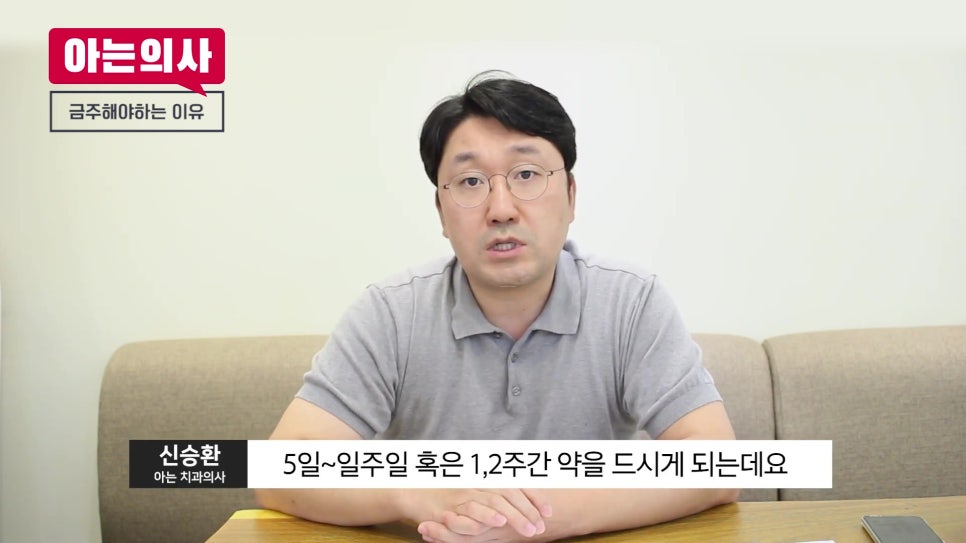
After implant surgery or tooth extraction, patients are usually prescribed antibiotics and anti-inflammatory painkillers for about a week.
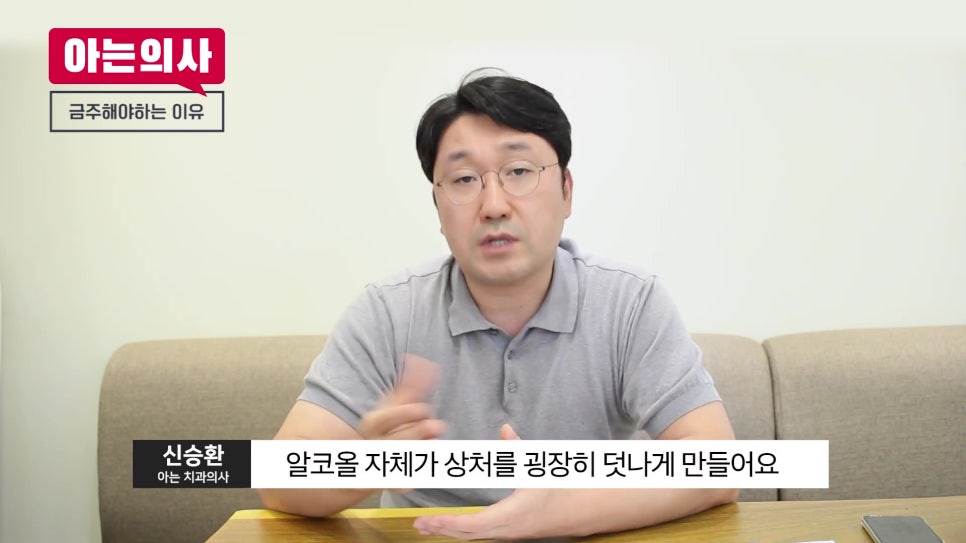
If you drink alcohol at this time, the medication and alcohol are metabolized together in the liver,
which can increase the burden on the liver.
Alcohol itself can also be a factor that slows wound healing.
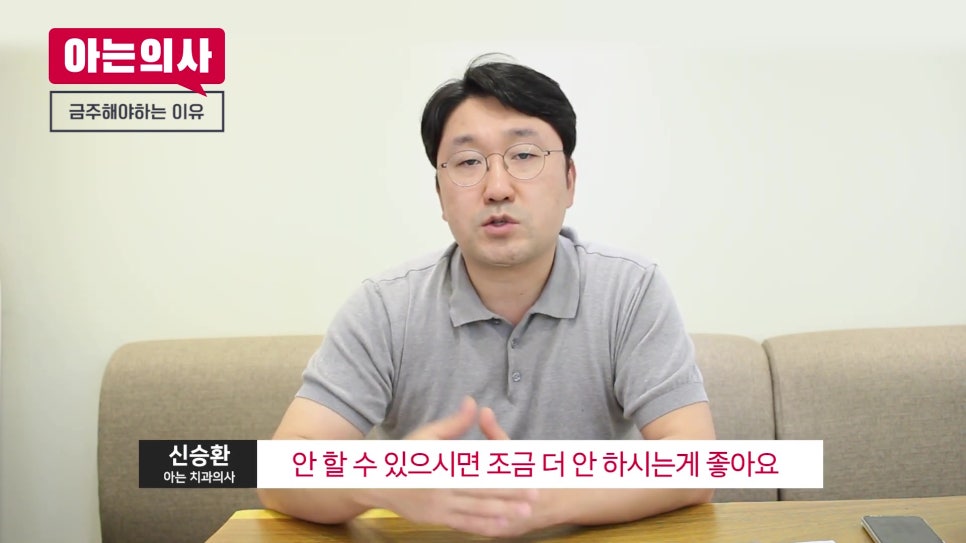
So even if it is a relatively simple surgery,
it is better to avoid alcohol for at least 1 to 2 weeks.
If possible, abstaining for a little longer is more helpful for recovery.
If the implant surgery includes bone grafting,
it is safest not to drink alcohol until the dentist in charge tells you, “It’s okay now.”
In the case of smoking, it is better to be even stricter.
The best thing is to start quitting from the time of tooth extraction.
Some people think they will smoke until the day before implant surgery
and then quit after that,
but if the healing process has already begun after extraction,
quitting from that point is much more important.
That is because the extraction site must heal well
for the implant to proceed stably afterward.
Tooth extraction is difficult, and implant surgery is
by no means an easy process either.
Moreover, the recovery period in between is quite long,
so from the patient’s perspective, it takes a lot of time and effort.
If you go through such a difficult treatment,
but then have to undergo surgery again because a problem occurs,
it can become a major burden both physically and in terms of time.
Therefore, to use implants well for a long time,
it is very important to follow smoking and drinking restrictions before and after surgery.
If you pay a little more attention to care,
you can use your implant much more stably and for a much longer time.
I hope you can use the implant you worked hard to receive in good health for a long time.
Please remember to quit smoking and avoid alcohol.
This has been Yonsei Uline Dental Clinic in Garak-dong, Songpa-gu.