Hello. I’m Shin Seung-hwan, chief director of Yonsei Uline Dental Clinic Garak-dong Branch, near Garak Market Station in Garak-dong, Songpa-gu.
A sudden sharp sensation when chewing,
many people think it is simply tooth sensitivity
and let it pass.
However, this symptom may be a more important signal than you think.
That is because it is a representative symptom
that appears when a tiny crack forms in a tooth.
Although teeth look strong on the outside,
they are made up of several layers.
The outermost layer is a hard layer called enamel,
and over time, this part also
gradually wears down and weakens.
Molars erupt when we are young and are used for decades,
so even without any special problems,
they can naturally develop cracks
as part of the aging process.
Especially after your 30s, as the time you have used your teeth gets longer,
the surface gradually weakens,
and as a result, it can no longer withstand the tiny splitting force when chewing,
leading to a sharp sensation.
At this point, even if nothing looks wrong on the outside,
there are many cases where a crack has already begun inside the tooth.
The problem is what happens when this condition is left untreated.
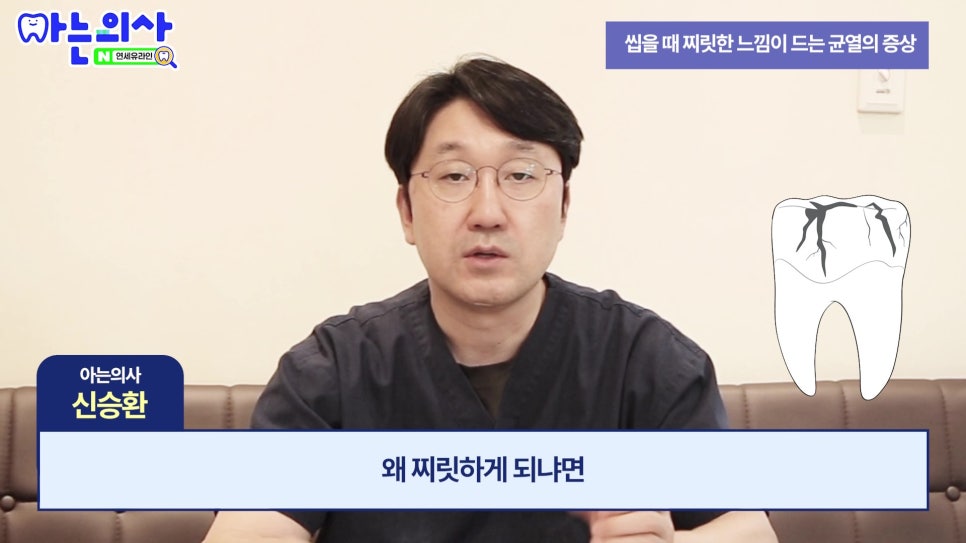
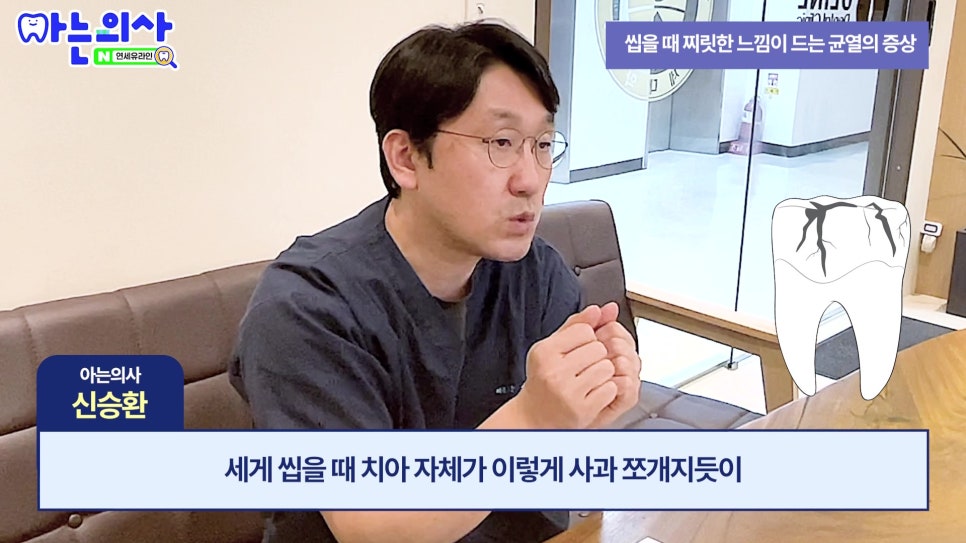
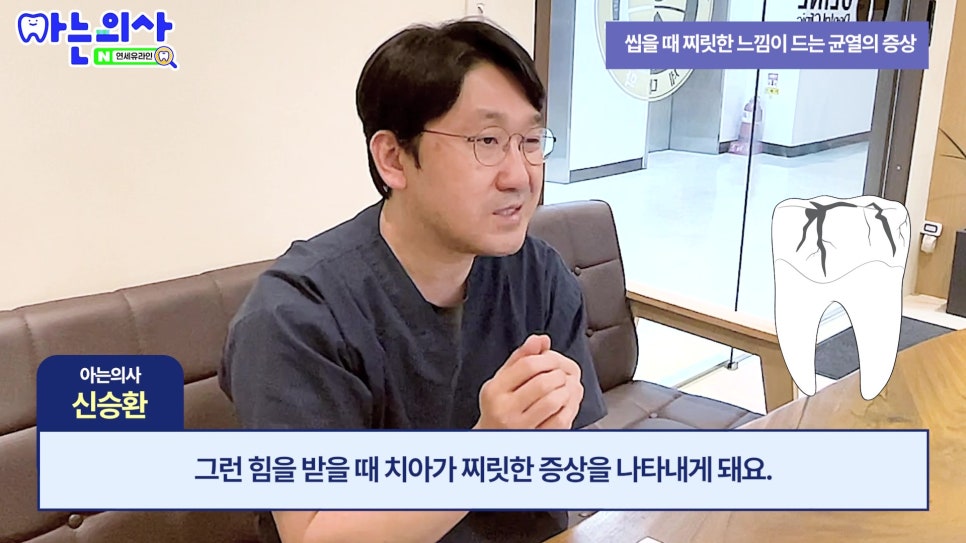
In the early stages, it may only end with simple sensitivity or
a sharp feeling,
but over time the crack becomes deeper
and can progress into the inside of the tooth or toward the root.
When that happens, the scope of treatment becomes larger,
and root canal treatment may be needed,
or in some cases, it may even become difficult to save the tooth.
Treatment varies depending on the severity of the symptoms.
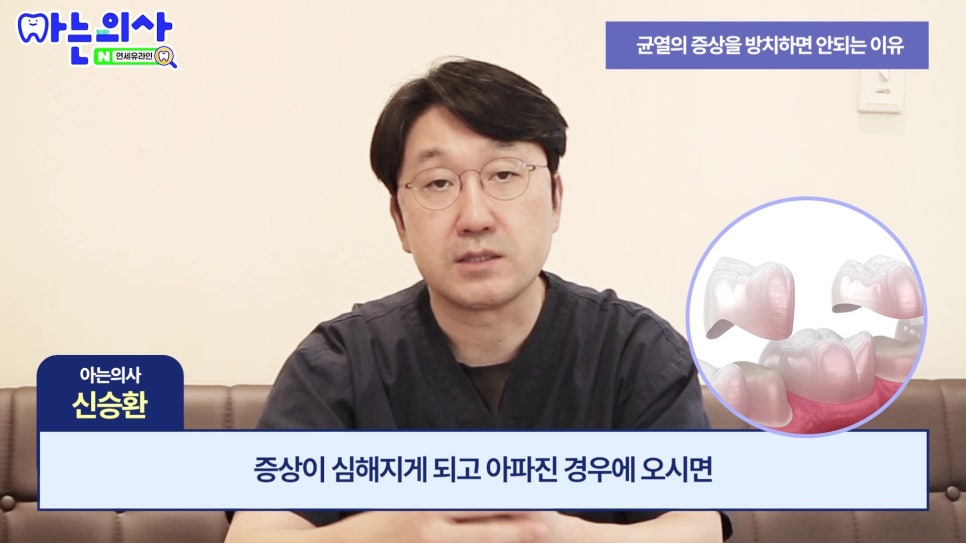
If the pain is not yet severe and the crack is not deep,
the tooth can be covered with a crown treatment
to protect it from splitting further.
However, if the pain has already become severe and the nerve has been affected,
root canal treatment must be performed as well,
and in this case the tooth's strength
will inevitably become weaker than before.
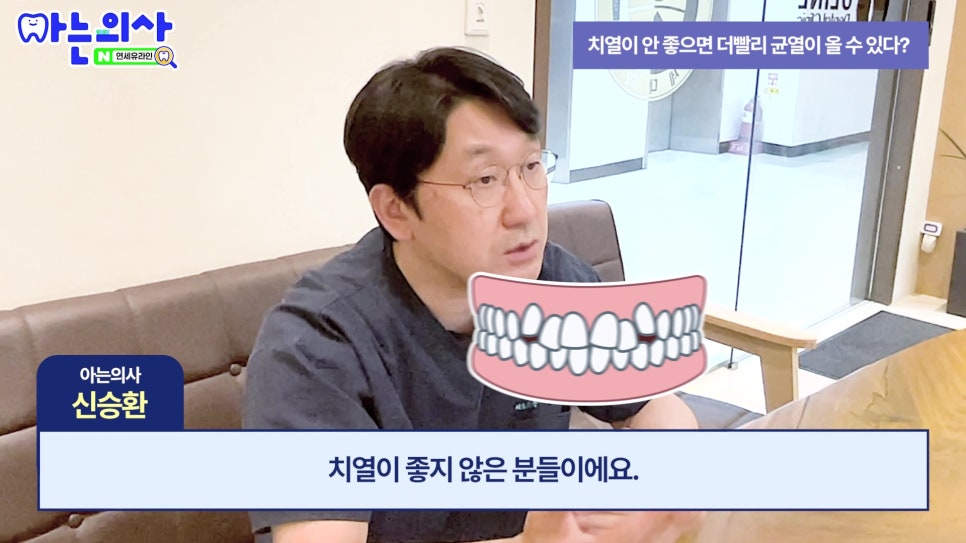
Another important point is that there are people in whom cracks
develop more quickly.
A representative example is when the teeth are not evenly aligned.
If the teeth are not well aligned, the chewing force becomes
concentrated on specific areas,
and this places repeated
stress on the teeth.
If you also have the habit of grinding your teeth,
the rate of wear and crack progression
can only become faster.
In such cases, it is important not only to look at the symptoms,
but also to manage the habits that are causing them.
In particular, for those who unconsciously grind their teeth at night,
using a teeth-grinding device such as a mouthpiece can help
reduce the force applied to the teeth.
If the sharp feeling when chewing keeps recurring,
rather than brushing it off as a simple symptom, it is better to
receive an accurate examination at least once.
This is because the earlier a tooth crack is detected,
the smaller the scope of treatment,
and the higher the chance of keeping your natural teeth for a long time.
That concludes Yonsei Uline Dental Clinic in Garak-dong, Songpa-gu.