As time passes, one of the body changes that becomes noticeable is that the hands, after the face, are one of the areas where aging shows most clearly. The back of the hands has a thin layer of subcutaneous fat and is often exposed to external irritation, so a loss of elasticity can appear relatively quickly, making the hands look older than they really are.
In particular, when the fat layer decreases and the skin becomes thinner, veins and tendons become more visible, which can create a rough and tired impression. Because of these changes, interest in hand filler and Gangnam Station filler for improving the volume and contour of the back of the hands has been steadily increasing.
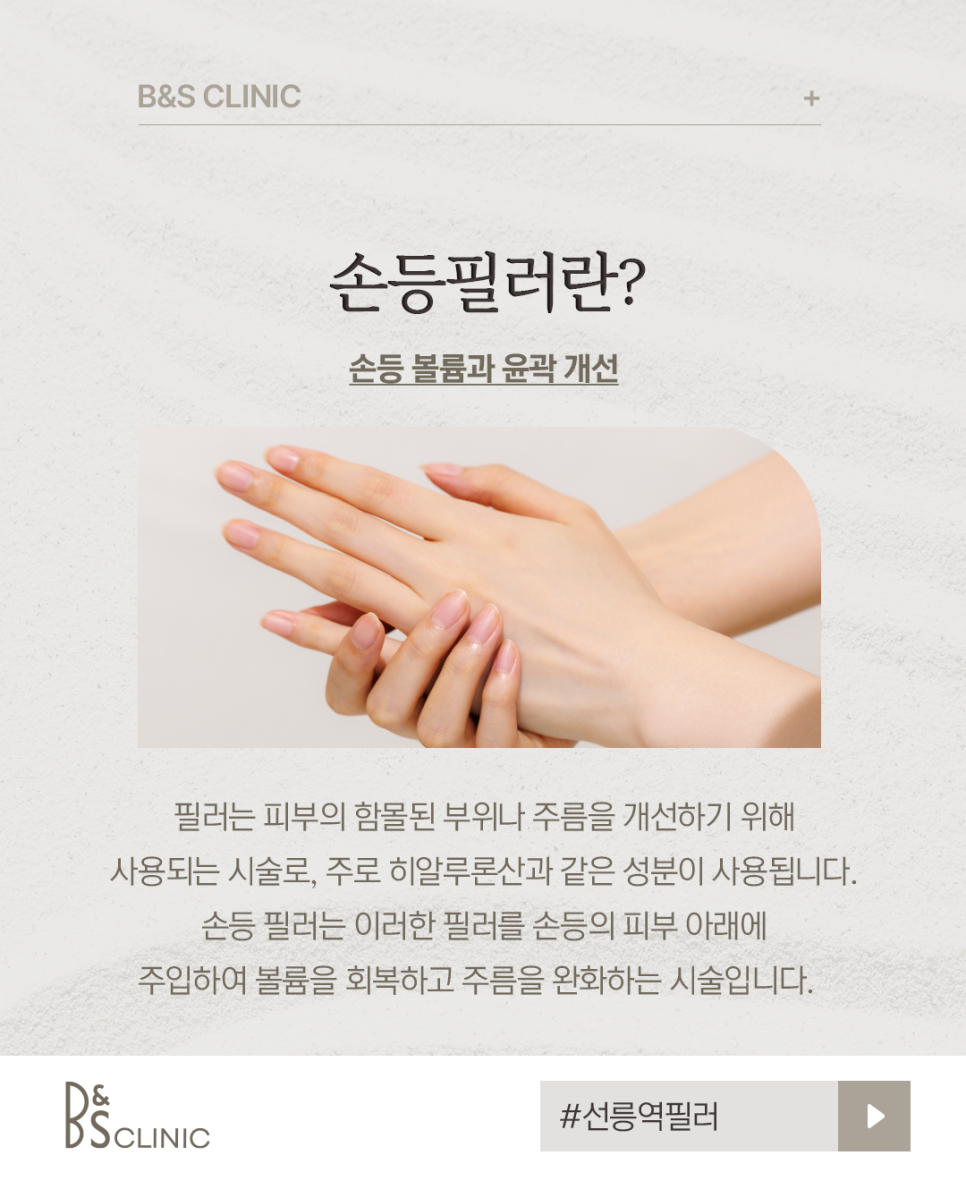
Gangnam Station filler is a procedure used to improve sunken areas or wrinkles in the skin, and ingredients such as hyaluronic acid are commonly used. Hyaluronic acid is a substance naturally present in the human body and plays a role in retaining moisture and increasing skin elasticity.
Hand filler is a procedure in which such filler is injected under the skin on the back of the hands to restore volume and reduce wrinkles. The filler is usually injected below the dermal layer, and the treatment area and depth vary depending on the condition of each person's hands. Therefore, before the procedure, it is advisable to carefully evaluate the condition of the skin on the back of the hands, the distribution of blood vessels, and the depth of wrinkles in order to determine the appropriate type and amount of filler.
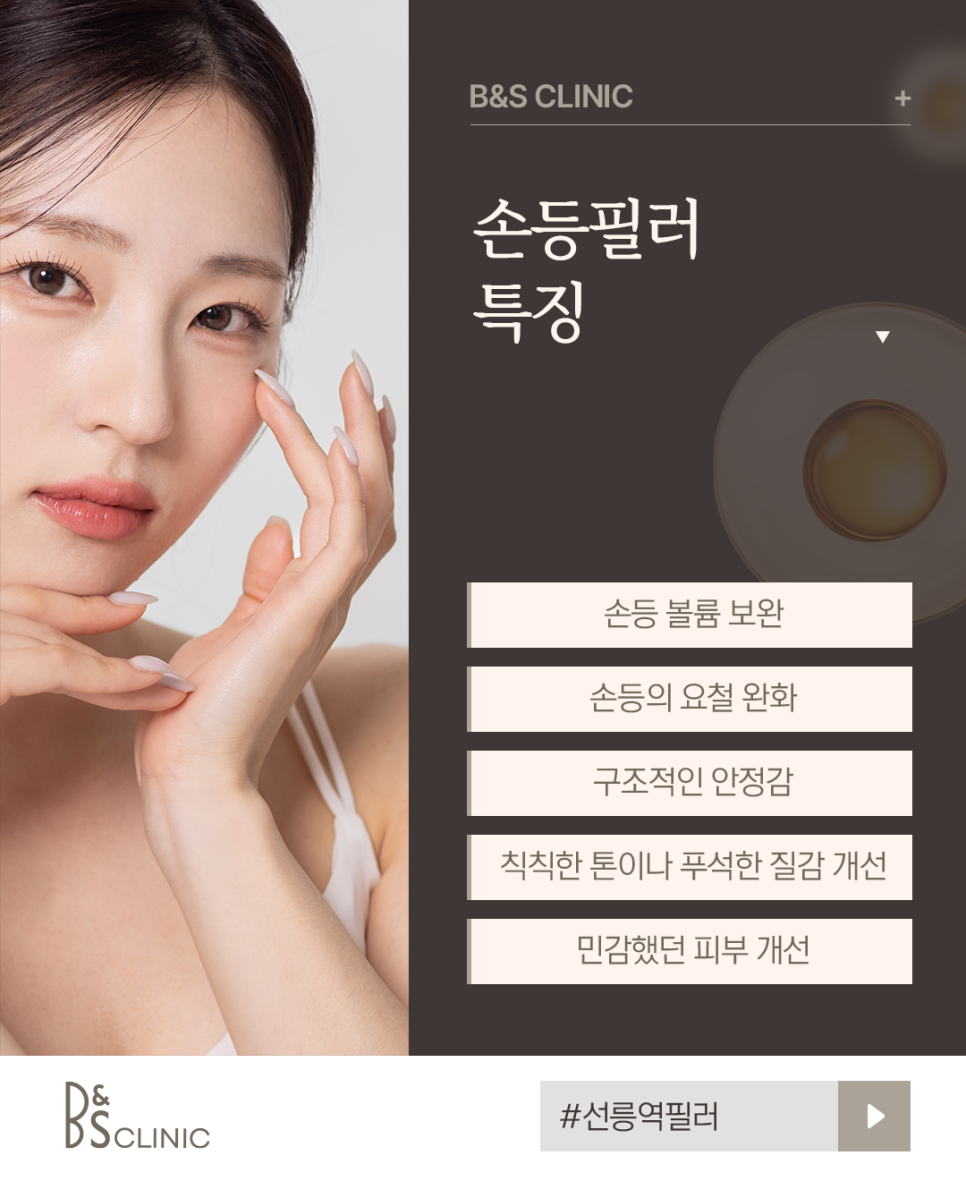
Hand filler treatment can contribute to improving the overall impression of the hands in several ways, beyond simply adding volume. As the skin surface is evened out, irregularities on the back of the hands are softened, and the silhouette of the hands appears much smoother. It also helps cover minor hollows or skeletal prominence caused by the loss of subcutaneous fat, providing a greater sense of structural stability.
In addition, as the moisture content in the skin increases, a natural glow may return, and a dull tone or rough texture may improve. At the same time, skin that was sensitive to repeated friction or use of cleansers can be maintained in a more comfortable state. However, temporary bruising, swelling, and, in rare cases, asymmetry or a lump-like sensation may occur after the procedure, so sufficient consultation with the medical staff before Gangnam Station filler is necessary.
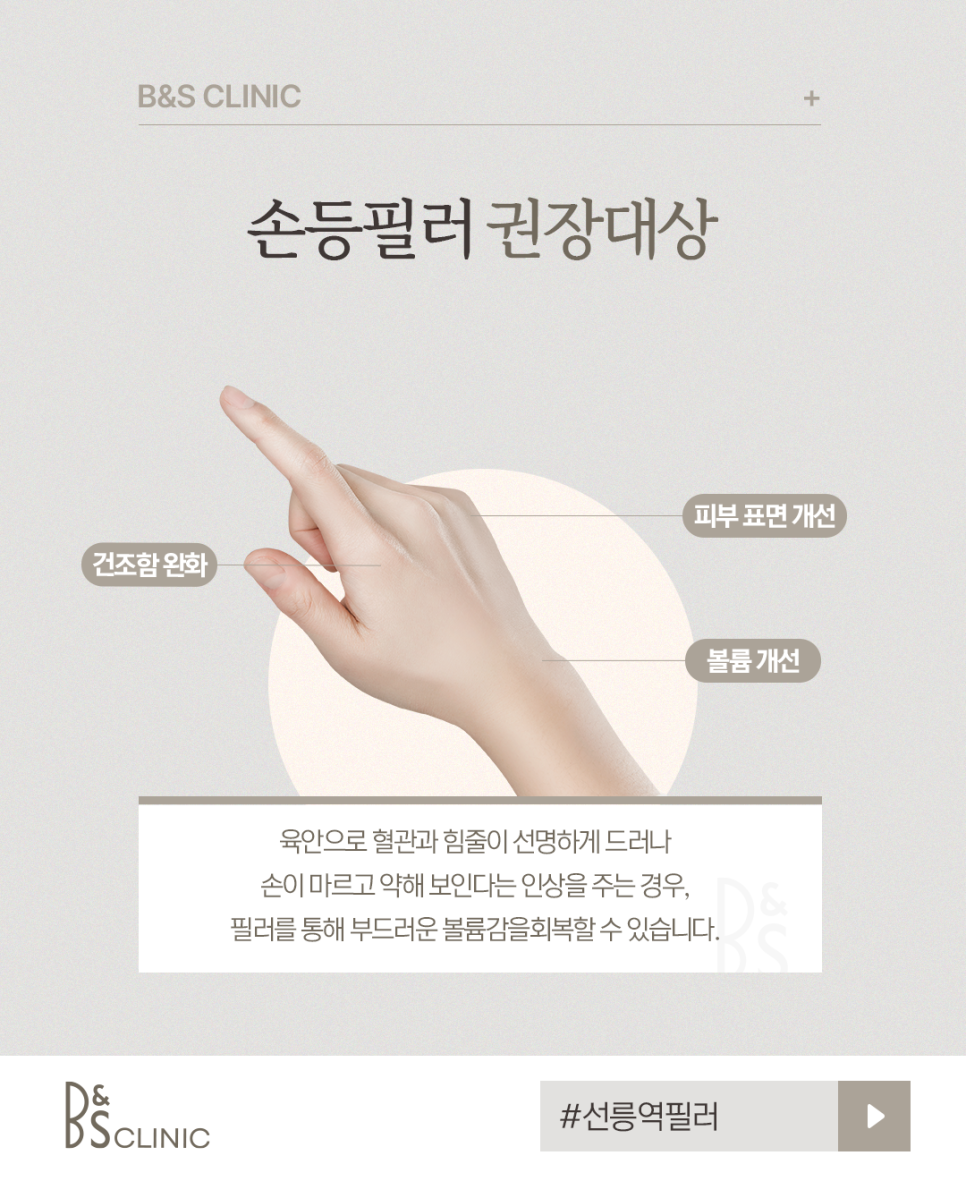
Gangnam Station filler hand filler is not limited to a specific age group or gender, and anyone who feels psychological or cosmetic discomfort due to changes in the appearance of their hands may be a candidate. If veins and tendons are clearly visible to the naked eye, making the hands look thin and weak, filler can help restore a soft sense of volume. In cases where, in addition to volume loss, repeated dryness of the back-of-hand skin or chronic roughness that does not improve with hand cream is present, the moisture-retaining properties of filler may have a positive effect on improving the skin surface.
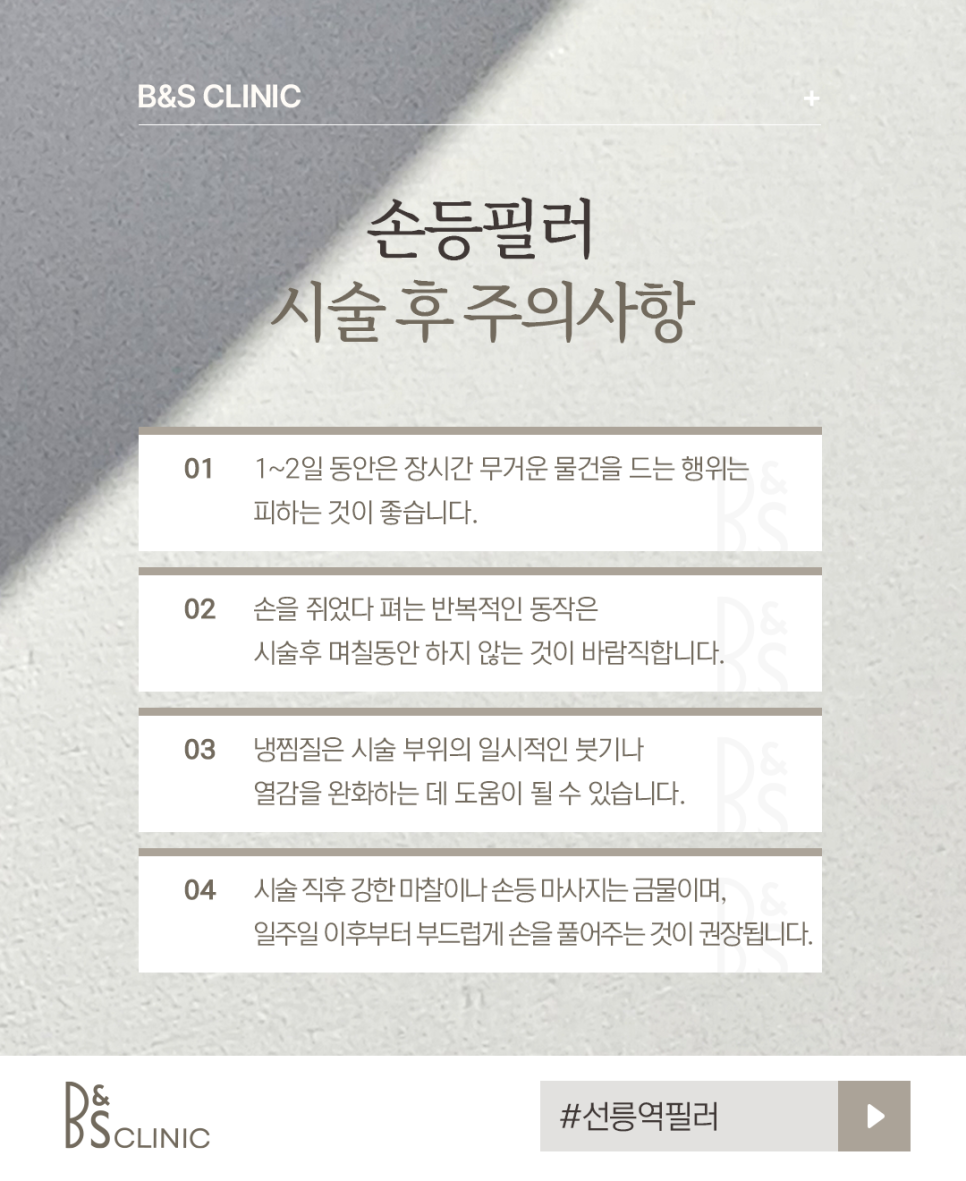
After the procedure, the first priority is to control hand use so that Gangnam Station filler can settle stably in the tissue. For 1 to 2 days, it is best to avoid lifting heavy objects for long periods, and repetitive motions such as clenching and opening the hand are also advisable to avoid.
Cold compresses can help reduce temporary swelling or warmth in the treated area. However, rather than placing ice directly on the skin, it should be applied indirectly using a towel or similar material to reduce skin irritation. Strong rubbing or massage of the back of the hands immediately after the procedure is also not recommended, and gently loosening the hands is advised after one week.

Each part of the body undergoes changes in different ways as we age, but the hands are one of the areas that first reveal those changes externally. Aging of the hands is not limited to thinning skin or reduced volume; it is also closely linked to everyday appearance.
Therefore, when considering a procedure, it is better not to focus solely on improving appearance, but also to take into account the resulting functional changes and skin response.