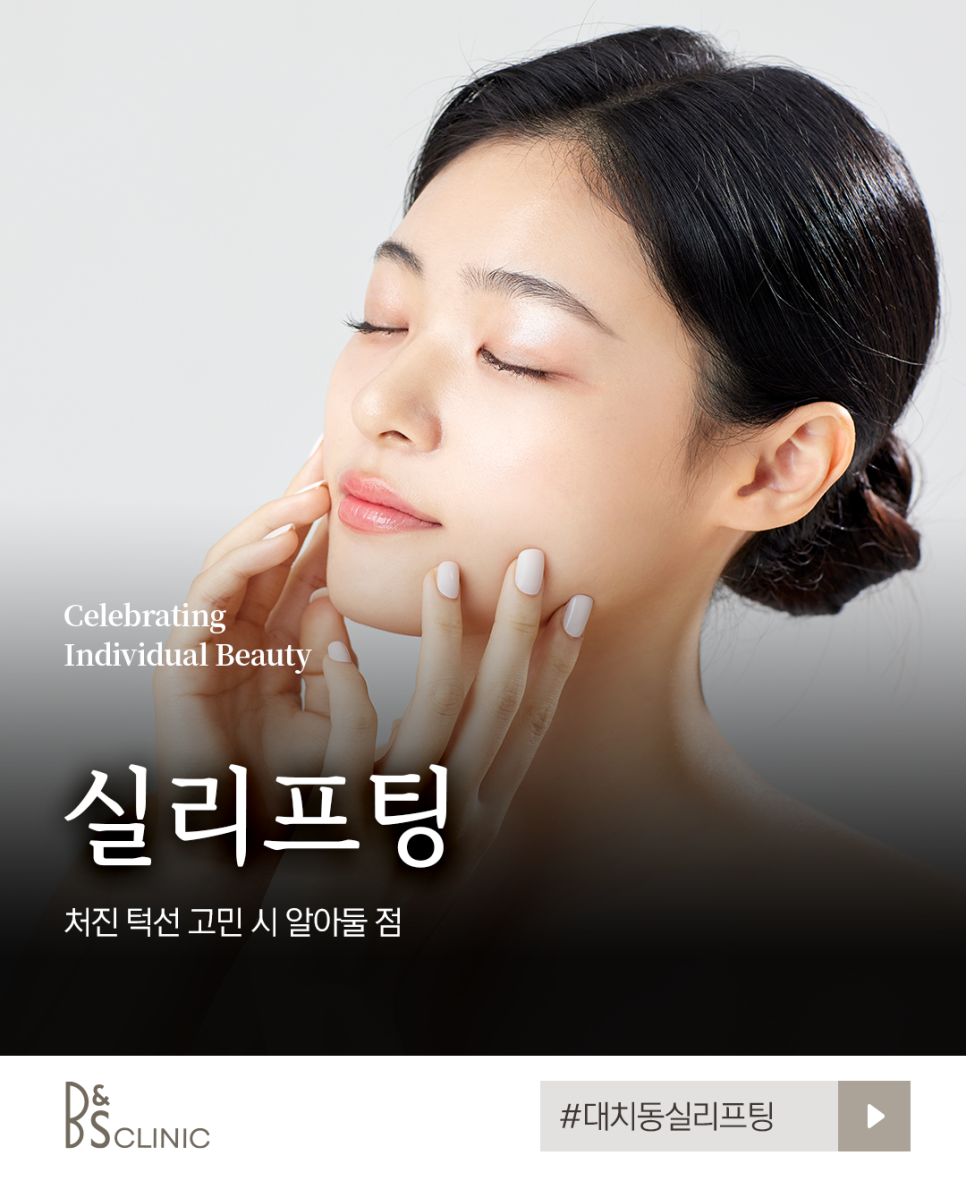
As we age, the skin gradually loses elasticity and begins to sag under the influence of gravity. In particular, the jawline and cheek area are among the first places where changes appear, and this can also affect the overall impression of the face. Even if you try various skincare routines or at-home care methods, satisfaction can vary from person to person.
As time passes and more people notice changes in facial contours, many look for different methods suited to their skin condition. Today, let’s take a look at Mint thread lifting, one of the methods often introduced for this purpose.
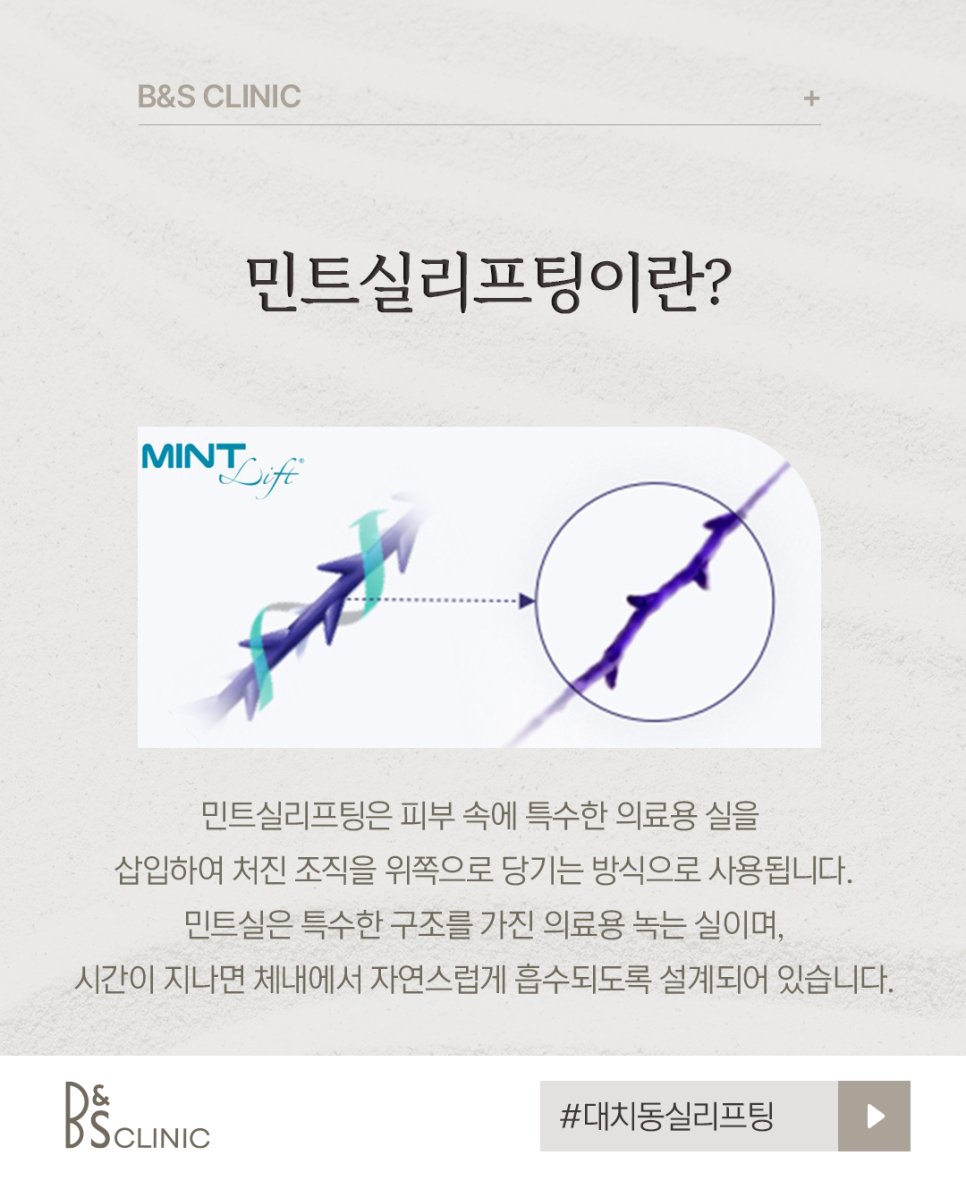
Mint thread lifting, used in Daechi-dong thread lifting, involves inserting a special medical thread into the skin to pull sagging tissue upward. Mint threads are medical dissolvable threads with a special structure, designed to be naturally absorbed by the body over time.
In addition, the surface of the thread has barbs at regular intervals, which can help support the tissue beneath the skin. Depending on the skin condition, Mint threads are sometimes used in areas where elasticity tends to decline, such as the jawline or around the cheeks.
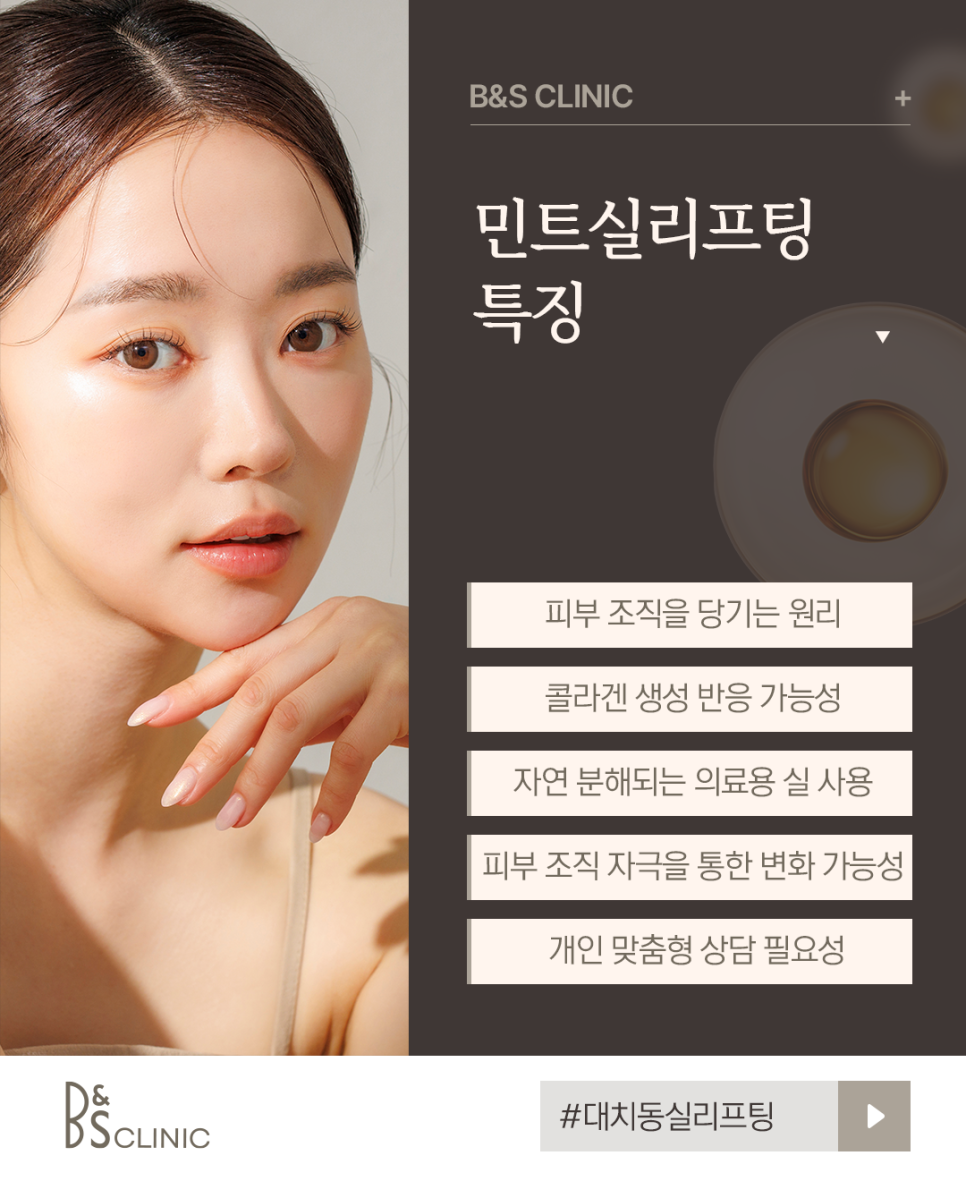
Mint thread lifting is characterized by the fact that the inserted thread physically pulls the tissue, while also inducing various physiological responses within the skin. Around the inserted thread, reactions may occur over time that could promote collagen production.
Also, the threads used in Daechi-dong thread lifting are designed to naturally break down in the body within about six months, and the breakdown process may stimulate the skin tissue. However, changes in skin elasticity and how long the effect lasts can vary depending on individual skin condition, age, lifestyle, and other factors. Therefore, before the procedure, it is important to thoroughly assess skin elasticity, the degree of sagging, and tissue characteristics, and to have a sufficient consultation.
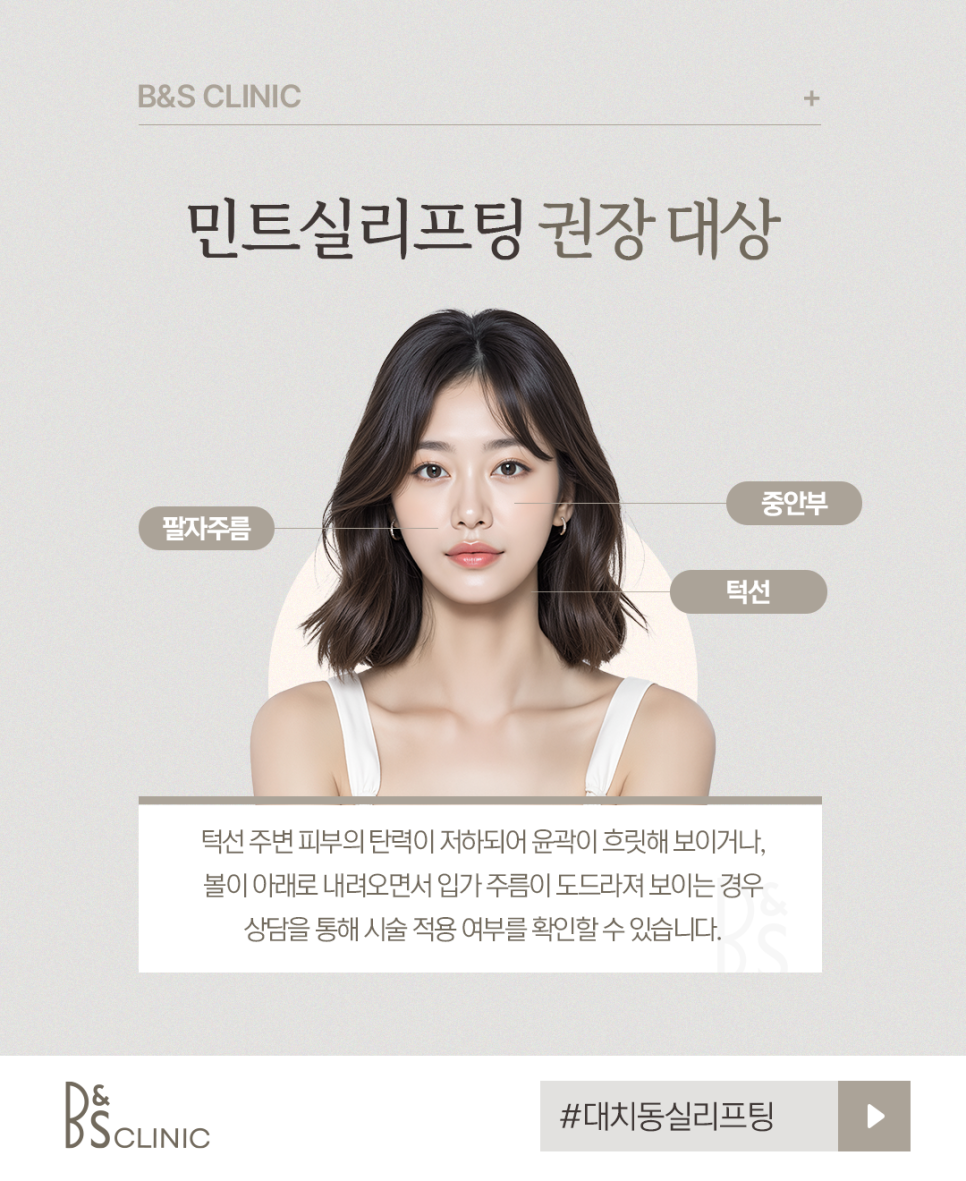
If the skin around the jawline has lost elasticity and the contour looks blurred, or if the cheeks have dropped downward and nasolabial folds appear more prominent, you can check through consultation whether the procedure is appropriate. It may also be considered as one option depending on the condition when nasolabial folds become more noticeable due to reduced skin elasticity.
For those who feel burdened by surgical lifting methods or are concerned about a long recovery period, it is a good idea to check suitable care options through a consultation with medical staff before considering a procedure. If the volume in the middle of the face has decreased and made the overall impression look different, or if volume has hollowed out on one side and changed facial balance, it is necessary to assess the individual condition first and then determine the available options.
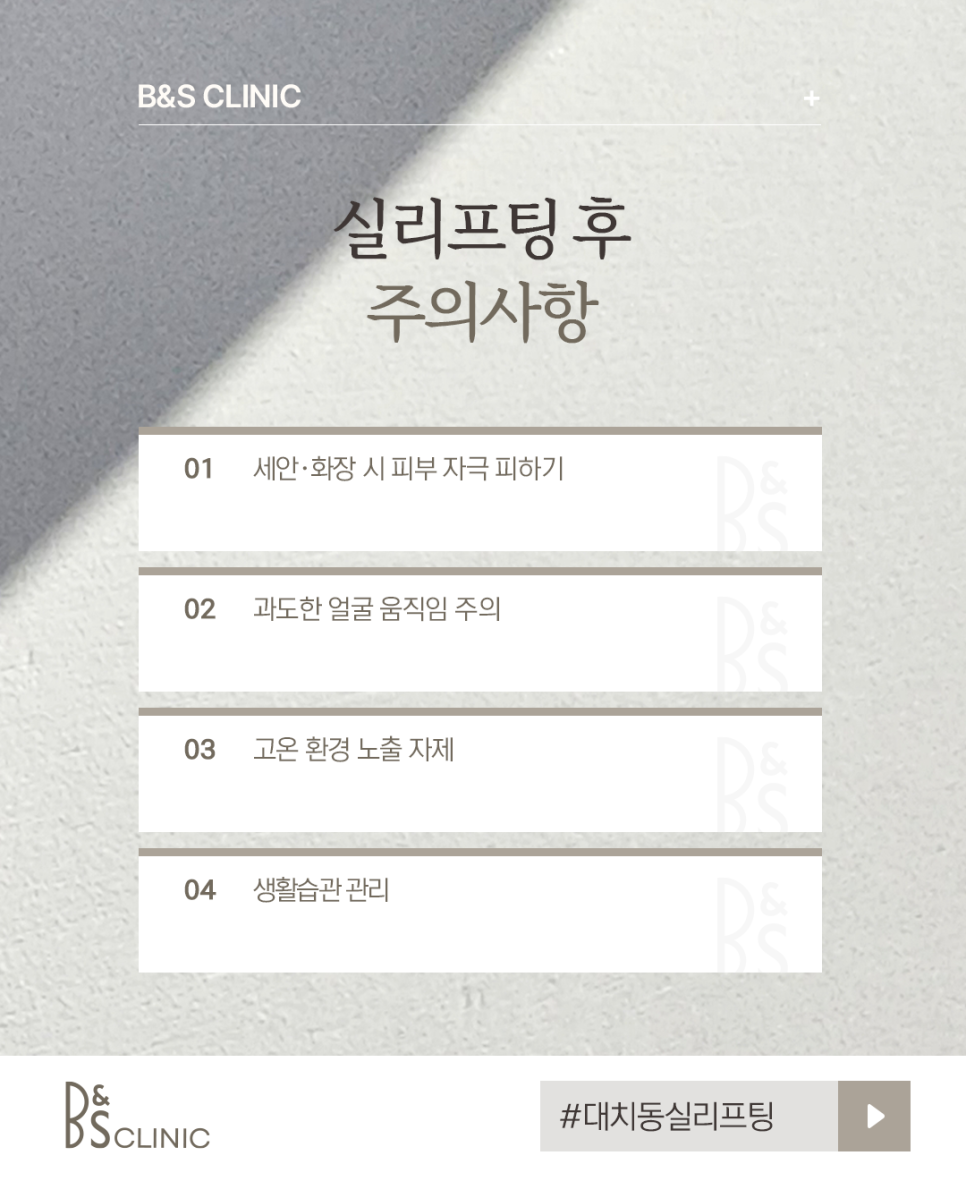
It is best to avoid rubbing or pulling the skin excessively while washing your face or applying makeup, and it is also advisable not to touch your face frequently for several days after the procedure. The area where the Daechi-dong thread lifting threads were inserted may be sensitive to movement for a certain period, so it is better to avoid making large facial expressions or opening the mouth too widely.
Also, exposure to high temperatures can raise the skin temperature and worsen swelling or irritation, so it is recommended to avoid saunas, heated rooms, and strong sunlight for at least one week after the procedure. During this period, it is also best to avoid alcohol and smoking, which can affect blood circulation, and to refrain from strenuous exercise.
Reduced skin elasticity is not just a matter of appearance; it can also change the overall impression of the face. Since natural aging and external stressors can alter skin condition, it is important to accurately assess the current state and find the right care method. Daechi-dong thread lifting is one option that can be considered during consultations regarding sagging skin, and it may be helpful to undergo a professional consultation to choose an approach suited to your individual skin condition.