- Why Juvederm Nasolabial Folds Are Mentioned

Nasolabial folds are one of the wrinkles that are relatively easy to notice on the face, and they run from the sides of the nose toward the corners of the mouth.
Wrinkles in this area can become more pronounced when making facial expressions, and because they can affect the overall impression of the face, many people take an interest in them.
Nasolabial folds do not usually appear suddenly at a certain point in time; rather, they often form gradually as skin changes accumulate.
Inside the skin, collagen and elastin play a structural support role, but over time the production of these components decreases.
As a result, skin elasticity declines and the skin tissue may move downward, leading to the appearance of wrinkles.
Against this background, various ways of managing nasolabial folds are discussed, and the Juvederm nasolabial fold approach is sometimes introduced as one such method.
Because it is a concept that considers not only surface skin changes but also the internal skin environment, more people are gradually searching for related information.
- Main Factors Affecting Nasolabial Fold Formation
Nasolabial folds often form as multiple factors work together. A representative factor mentioned is reduced skin elasticity.
As time passes and the collagen structure inside the skin decreases,
skin support may weaken, increasing the likelihood that wrinkles will form in certain areas.
Facial movements can also have an effect.
When smiling or talking, the facial muscles move repeatedly, and if these movements are repeated over a long period, the skin may gradually settle into a folded pattern.
The nasolabial fold area is an area with frequent facial movement, so it is known to be a location that is easily affected.
The external environment can also be linked to skin changes.
Ultraviolet rays are often mentioned as a factor related to skin aging, and prolonged exposure may lead to changes associated with reduced skin elasticity.
In addition, lack of sleep, rapid weight changes, and lifestyle habits are also discussed as factors that can affect skin condition.
Because these various factors work in combination,
when managing nasolabial folds, it is important to consider not only the visible line itself but also the skin condition and living environment.
From this perspective, the Juvederm nasolabial fold method is also sometimes discussed.
- Features of the Juvederm Nasolabial Fold Method

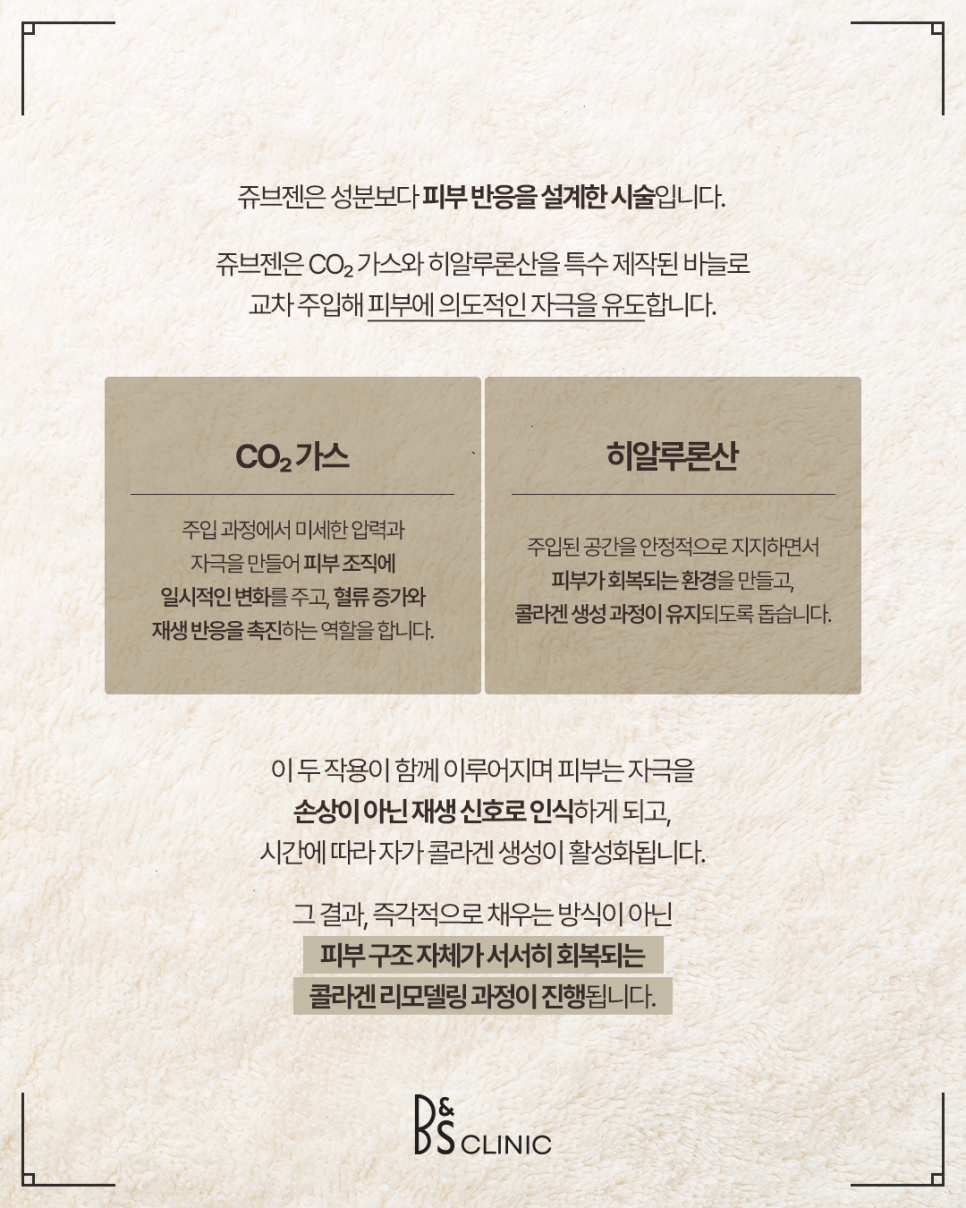
The Juvederm nasolabial fold method is sometimes described as an approach that stimulates the internal skin environment to induce processes related to collagen formation.
In this process, the use of hyaluronic acid and tiny CO₂ gas to deliver stimulation to the dermis is mentioned.
The dermis contains cells called fibroblasts, and these cells are involved in the collagen production process.
As studies introducing the idea that external stimulation can change the activity of these cells have been presented, it is also described as a method that takes the skin regeneration environment into account.
The volume-focused methods commonly mentioned often proceed in a way that fills in sunken areas.
In contrast, the Juvederm nasolabial fold approach is also described as a method that focuses on creating an environment that may influence skin structure changes and the collagen production process.
Because of these characteristics, the process of visible change and the time when it is felt can vary from person to person.
This is because various factors such as skin thickness, wrinkle depth, age group, and skin condition can have an effect.
- Procedure Process and Skin Response


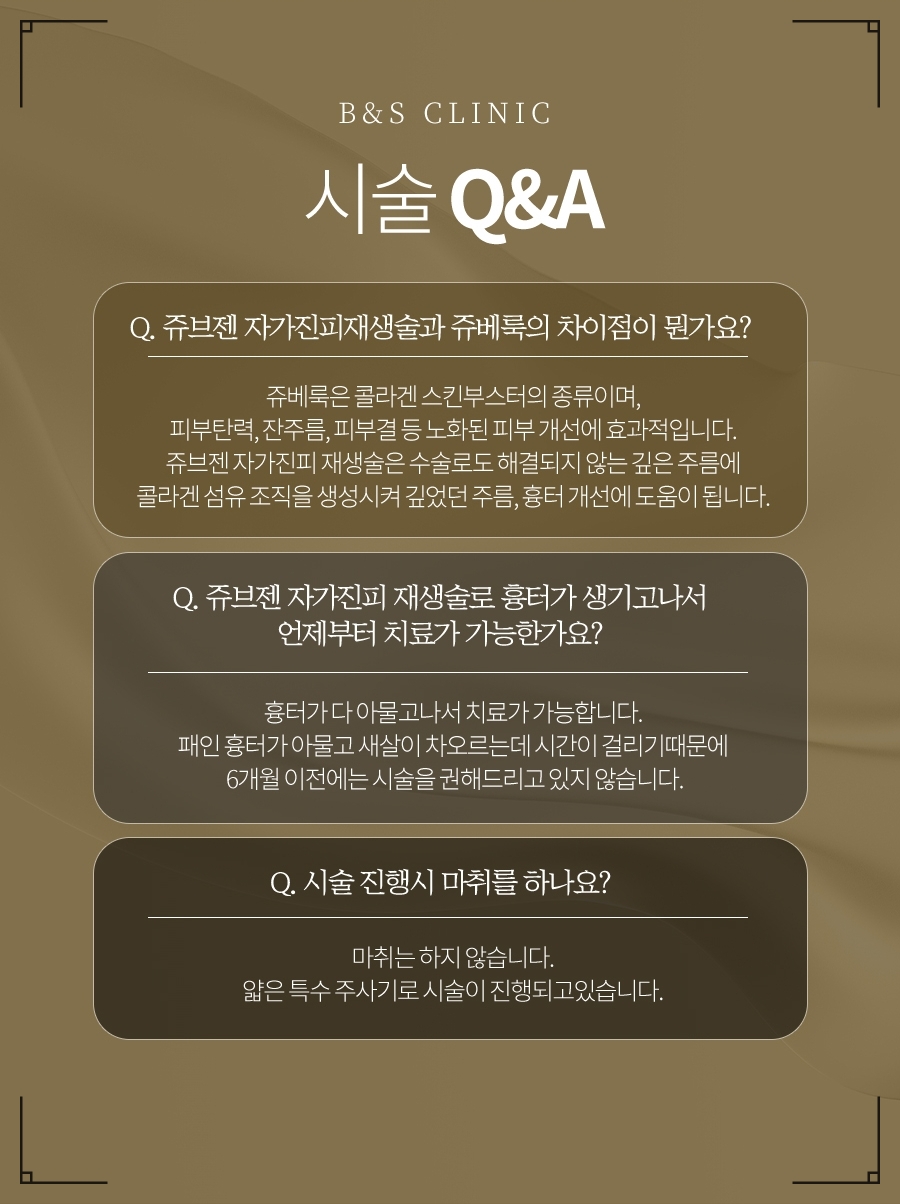
In general, the Juvederm nasolabial fold procedure is often completed in a relatively short amount of time.
Before the procedure, the skin condition is checked, and then the medication is delivered in the form of an injection.
Immediately after the procedure, redness or slight swelling may appear at the injection site.
These reactions are sometimes explained as natural responses to skin stimulation and often subside gradually over time.
Because the skin regeneration process unfolds over a certain period, all changes may not appear after just one session.
Depending on the skin condition and wrinkle depth, multiple sessions at set intervals may also be mentioned.
In addition, because the perceived changes can differ depending on an individual's skin regeneration cycle and lifestyle habits,
the treatment plan is often set by considering each person's skin condition.
- The Importance of Skin Care and Lifestyle Habits
When considering the skin change process, lifestyle habits are also mentioned as important factors.
First, adequate water intake is often discussed in relation to maintaining skin condition.
If moisture balance is maintained, some say it may help reduce dryness of the skin.
A balanced diet is also a lifestyle factor connected to skin health.
A diet that includes protein and vitamins is also mentioned in relation to the nutrient supply needed to maintain skin structure.
Sun protection is also discussed as an important part of skin care.
Ultraviolet rays are known as a factor related to the skin aging process, and prolonged exposure may be linked to changes in skin elasticity.
In addition, reducing alcohol consumption and smoking for a certain period and avoiding care methods that strongly irritate the skin
may help during the process of observing skin condition.
When these lifestyle practices are carried out together, they may help in more steadily monitoring the flow of skin changes after the Juvederm nasolabial fold procedure.