As we age, various changes appear in the skin’s structure.
The amount of collagen and elastin in the dermis gradually decreases,
and as the elasticity of the tissues supporting the skin weakens,
the facial line may shift downward compared to before.
These changes can appear at different times and to different degrees depending on a person’s lifestyle,
UV exposure,
and genetic factors.
As a result, some people experience nasolabial folds, sagging around the jawline,
and reduced elasticity in the cheek area.
Recently, various methods for managing these changes have been introduced,
and one of them is a lifting method using threads.
In this article, we will organize information to help you understand the structure and characteristics of thread lifting,
the types of threads used,
and care after the procedure, focusing on the keyword Samseong Station thread lifting.
- Understanding the lifting structure using threads in Samseong Station thread lifting
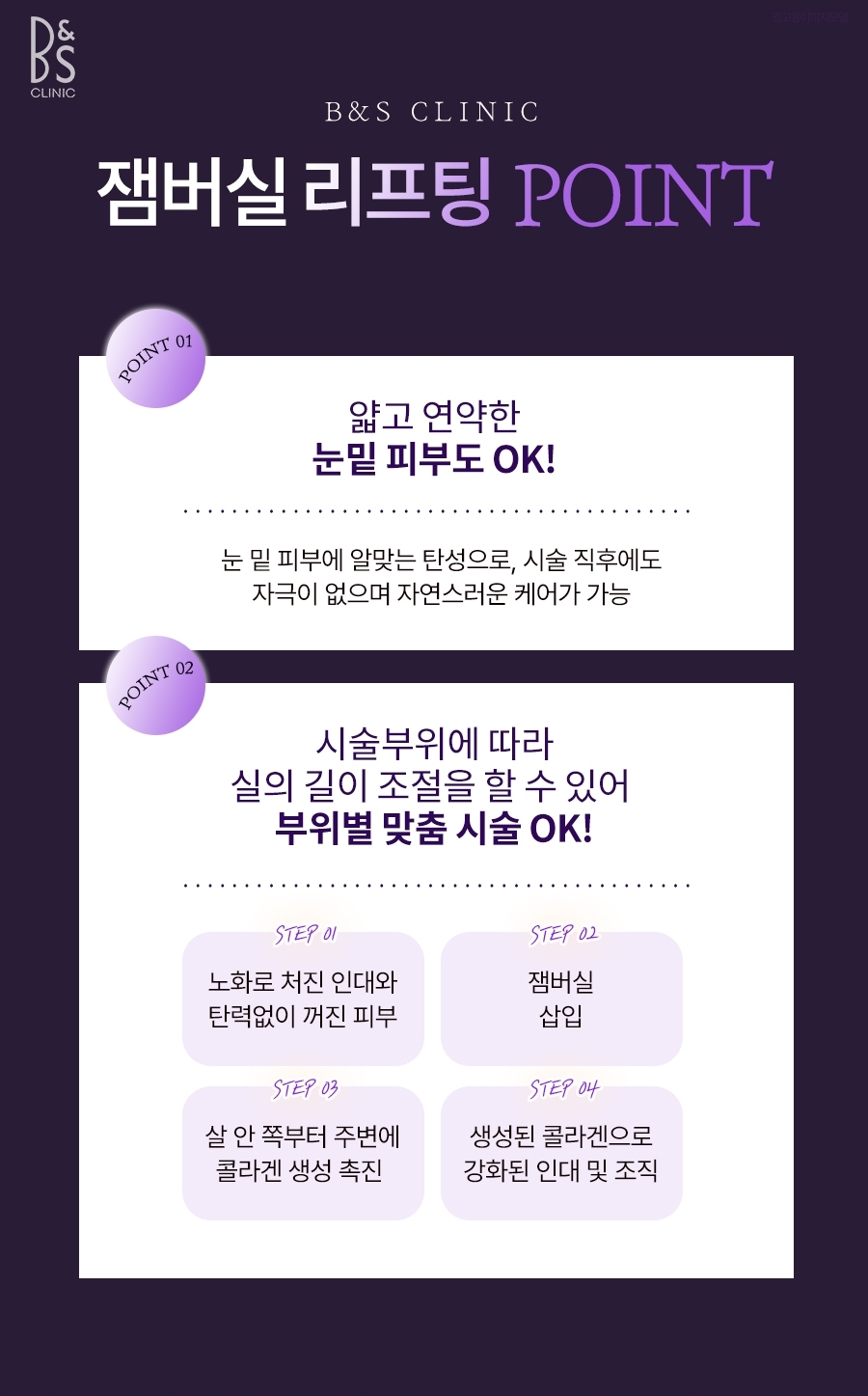
Thread lifting is described as a method in which medical threads are inserted into the skin layers
so that they physically support the tissue.
The threads have fine barbs or structures that hold the skin tissue,
and depending on the direction of insertion, they are used to control the movement of facial contours.
When the threads are inserted, the effect is not limited to simply pulling the skin upward.
When a foreign substance enters the body, the human body responds by trying to reorganize the surrounding tissue,
and in this process, an increase in collagen formation has also been reported.
These changes may help support the skin tissue over time.
However, the degree of this response varies depending on the individual’s skin condition, age, and lifestyle.
Therefore, even with the same procedure, the pattern of change and the duration of effect may differ from person to person.
- Materials of the threads used in Samseong Station thread lifting

The medical threads used in thread lifting are made from various materials.
Commonly known materials include PDO, PLLA, and PCL, and each one differs in
the period over which it is broken down and in the characteristics of the tissue response.
PDO threads are a material that has been used for a relatively long time and have the characteristic of
being broken down in the body after a certain period.
After insertion, they support the skin tissue and are gradually absorbed over time.
Threads made of PLLA are reported to have a relatively longer breakdown period,
and they may be used in the process of structural changes in the skin tissue.
Some studies have introduced that reactions related to the collagen production process may occur.
PCL material is known to have relatively flexible elasticity.
Cases have been reported in which the breakdown period in the body is longer than that of other materials,
and because of this characteristic, it is also used in procedures intended to support skin tissue.
The type of thread selected may vary depending on the skin condition, tissue thickness, and the area that needs improvement.
Therefore, which material is used is determined according to the medical staff’s judgment.
- Application methods by facial area in Samseong Station thread lifting

Thread lifting, referred to by the term Samseong Station thread lifting, has application cases introduced in various areas of the face.
Typical examples include sagging cheeks, changes in jawline contour, and skin movement around nasolabial folds.
The cheek area is a region where tissue movement appears relatively large.
As time passes, if the position of the fat layer changes and skin elasticity decreases, the facial contour may look rounder.
In this area, a method may be used in which the threads are placed upward to support the tissue.
The area around the jawline is an important part that shapes the facial contour.
If the skin and fat layer move downward, the jawline may appear less defined.
In such cases, there are examples in which a method of supporting the skin tissue with threads is used.
Nasolabial folds refer to the wrinkles that extend from the sides of the nose toward the mouth.
As skin elasticity decreases and cheek tissue shifts, the folds may appear deeper.
Thread lifting may also approach this area by moving the surrounding tissue upward.
These methods are often performed while considering the overall structure of the face.
Rather than considering only a specific area on its own, the process of assessing facial balance together is often emphasized.
- Possible reactions and care after the procedure
After thread lifting, various reactions may appear on the skin for a certain period of time.
For example, swelling, mild bruising, and a pulling sensation may be reported.
These reactions are explained as a common process that appears after stimulation is applied to the tissue
and in many cases gradually decrease over time.
For a certain period after the procedure, it may be advised to avoid pressing or
rubbing the face strongly.
It may also be explained that excessive facial movement or actions that apply strong pressure
should be avoided.
Strenuous exercise, saunas, and environments with strong heat exposure may be restricted
for a certain period.
The purpose of this is to reduce unnecessary stimulation during the tissue stabilization process.
Washing the face and wearing makeup may be possible after a certain amount of time has passed.
However, the exact timing may vary depending on the individual’s condition.
- Considerations for understanding Samseong Station thread lifting
Thread lifting is often of interest when signs of reduced skin elasticity begin to appear.
However, the same method is not applied to everyone, and the approach may differ depending on skin thickness,
fat layer distribution, and facial contour structure.
In addition, the number of threads, the direction of insertion, and the depth are also factors considered when planning the procedure.
It is important that this process be carried out with an understanding of facial anatomy.
Thread lifting is sometimes introduced as a method that does not involve making an incision in the skin,
but as a medical procedure, it should be accompanied by sufficient explanation and medical judgment.
This is because whether it can be applied may vary depending on the individual’s skin condition and health status.