Skin loss of elasticity and wrinkles are changes that naturally appear over time.
In particular, the under-eye area, cheeks, and jawline are areas where changes are easier to notice because the skin is thin and moves often.
As one way to respond to these changes, lifting using threads has continued to be mentioned,
and recently, various types of threads have been developed, broadening the range of applications.
The growing interest in Gangnam thread lifting is also related to this trend.
This is because cases are increasing that go beyond the simple concept of pulling the skin and instead approach the issue by inducing a reaction within the tissue.

One of the materials used in thread lifting, PDO (polydioxanone), has the characteristic of being broken down in the body after a certain period of time.
During this process, it is known to stimulate the surrounding tissue and induce collagen production.
Collagen is an ingredient that plays an important role in maintaining skin structure, and when the production process is activated, it can affect changes in skin density and elasticity.
Some of the various threads used in Gangnam thread lifting are designed based on this principle,
and they approach the procedure by considering biological reactions as well as simple physical support.

The form called Jambor thread is sometimes described as an advanced version of the existing COG thread structure.
Its defining feature is a spring-like structure,
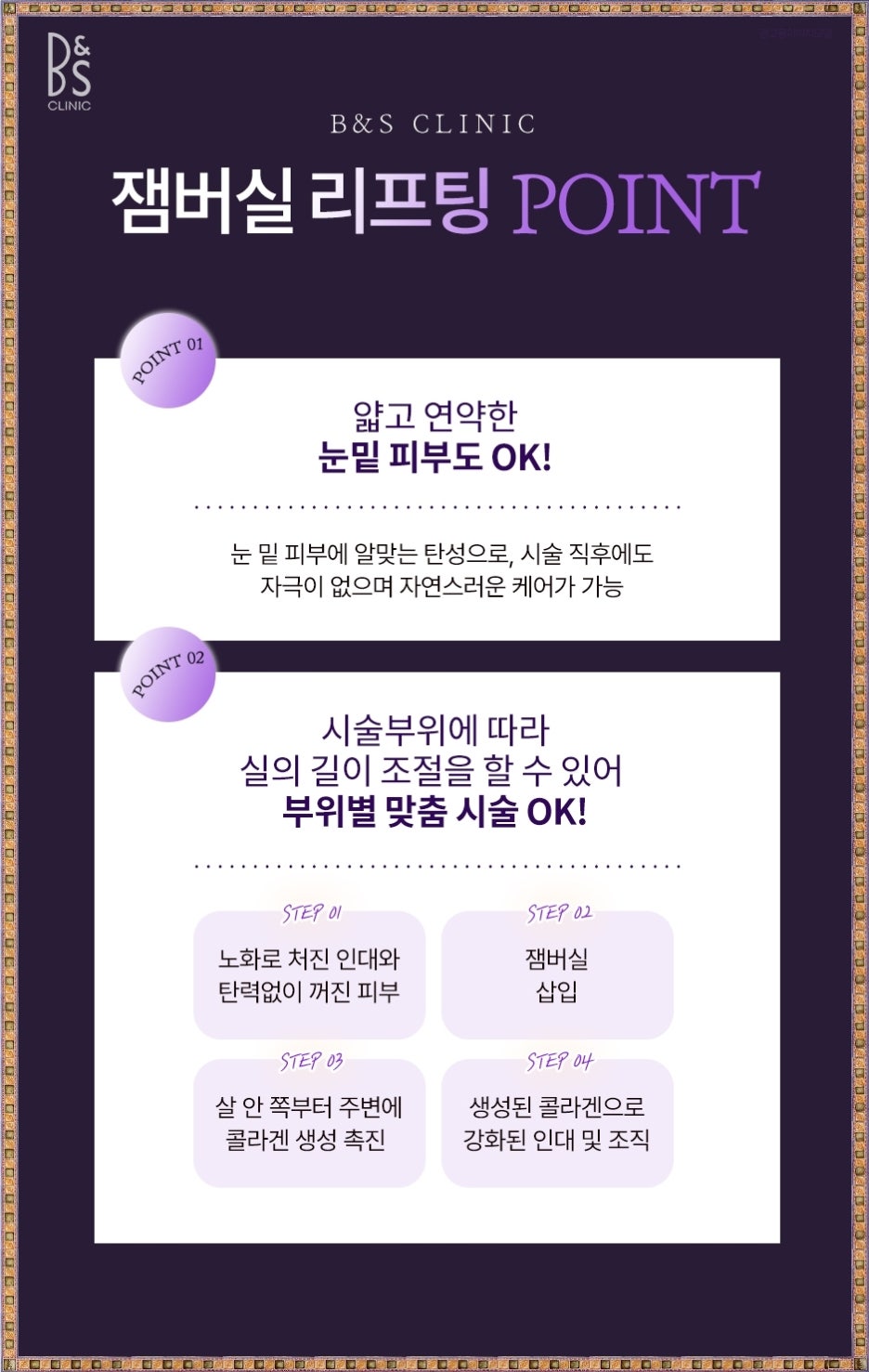
and it is designed to maintain a certain degree of elasticity so that it can move flexibly even after being inserted into the skin tissue.
This structure may help maintain relatively natural movement even in areas with frequent facial expressions.
In particular, in thin and sensitive areas such as under the eyes, soft elasticity rather than strong fixation may be an important factor.
The reason this kind of thread structure is used in Gangnam thread lifting is not simply to transmit pulling force,
but to create a support structure within the skin.
As collagen production is promoted around the area where the thread is inserted, the tissue can gradually be reinforced.
At first, the skin may appear more organized due to the physical support,
and later, as the collagen formation process continues, changes may follow.
However, the degree and speed of these changes can vary depending on individual skin condition, age, and lifestyle habits.
The shape of the thread and the insertion method are also important factors.
When a cannula-type guide is used, it is designed to pass relatively smoothly between skin tissues,
and the rounded tip structure is intended to reduce tissue damage.
In addition, threads with coating methods such as heat treatment may help maintain their shape,
and designs to reduce friction during insertion may also be incorporated. These elements are considered in relation to procedural safety.
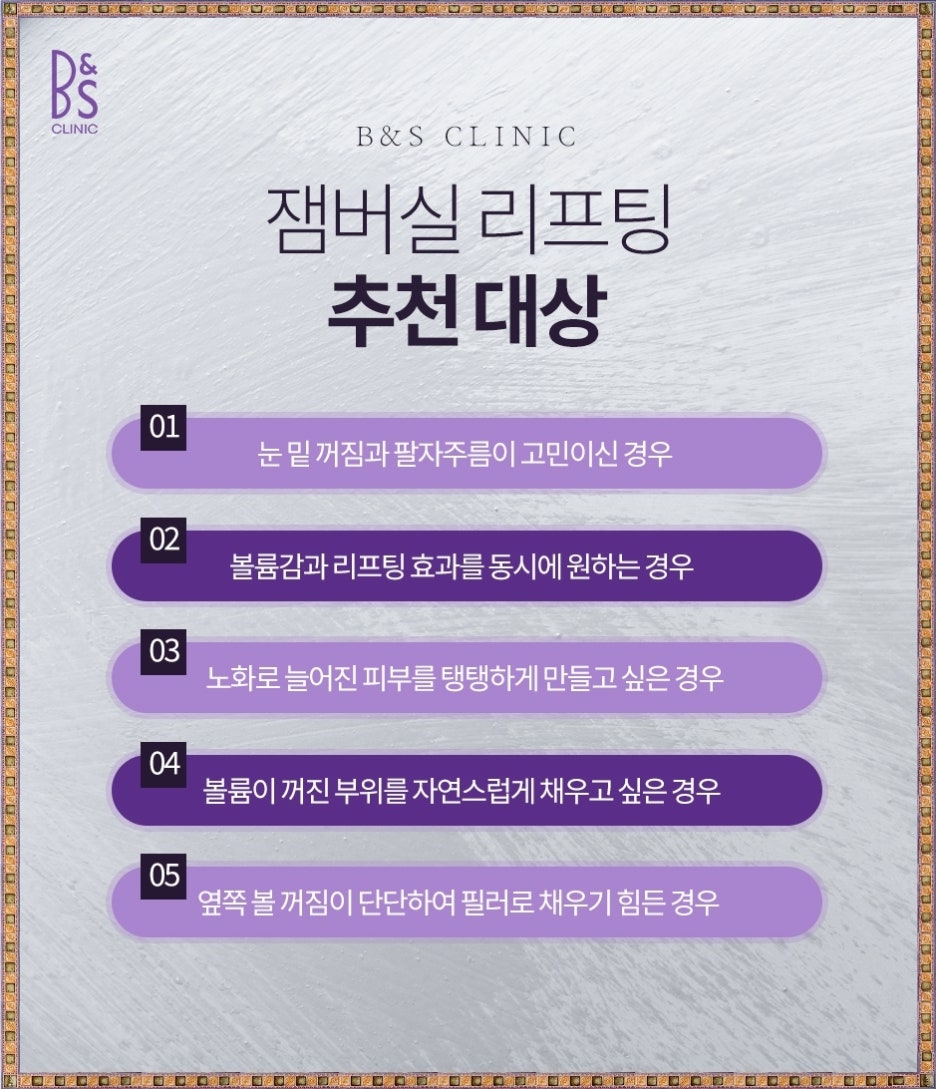
The application areas are also divided in various ways, and depending on each area, such as under the eyes, nasolabial folds, hollow cheeks, and the jawline, the required thread length, number, and insertion direction may differ.
For example, in areas with thin skin such as under the eyes, a method that provides gentle support rather than strong tension is preferred,
while the cheeks and jawline may be designed with a broader area in mind.
In Gangnam thread lifting, it is common to approach the procedure with these area-specific characteristics in mind.
Changes related to volume are also considered together.
Rather than simply lifting sagging skin, the procedure may also be approached in a way that complements facial dimension by creating a support structure for sunken areas.
This differs from fillers in that it induces reconstruction of the internal tissue.
However, rather than expecting the same result in every case, it is important to take an approach based on the individual's anatomical structure and skin condition.

When considering Gangnam thread lifting, it is necessary to sufficiently understand not only the type of thread but also the application method,
as well as the range of changes that can be expected.
Depending on the structure, material, and insertion depth of the thread, the direction of the results may differ,
and it is important to consider not only short-term changes but also the tissue response that appears over time.
In this respect, understanding the principles and process may be more helpful than simply looking at procedure information.
Ultimately, thread lifting is an approach that looks at not only the changes visible on the outside of the skin but also changes within the internal structure.
Although various information is shared under the keyword Gangnam thread lifting,
it is important to distinguish and understand the characteristics and applicable range of each method.
Taking a comprehensive look at the flow from thread shape and insertion method to tissue response can help support a more balanced judgment.