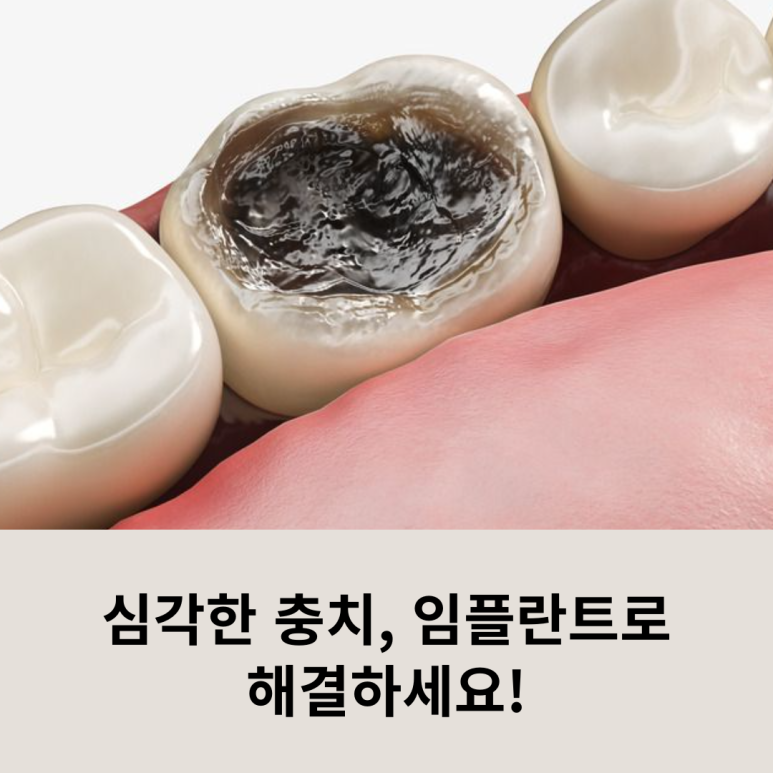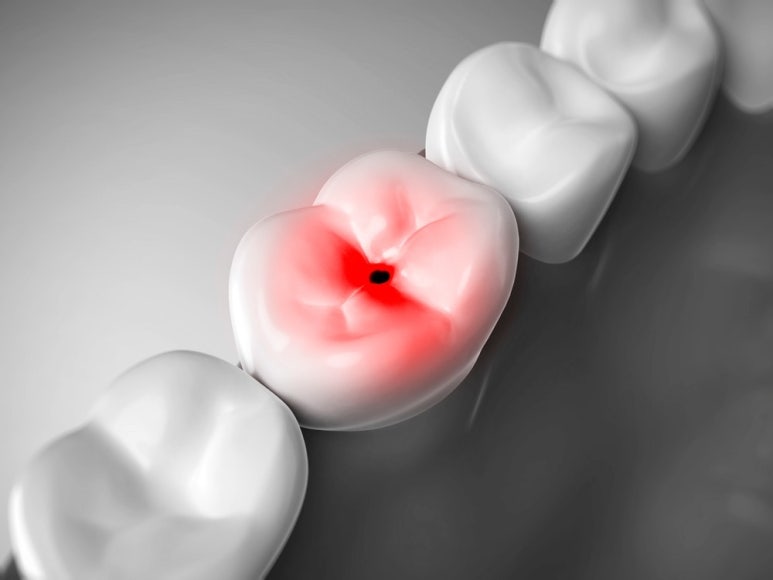
Hello! Today, let’s talk about tooth damage caused by severe cavities and the implant treatment used to address it. Cavities refer to the destruction of tooth enamel caused by acids produced by bacteria on the tooth surface. In the early stages, toothache is a common symptom, but because the tooth may only change color without any particular pain, many people fail to notice it and leave it untreated.
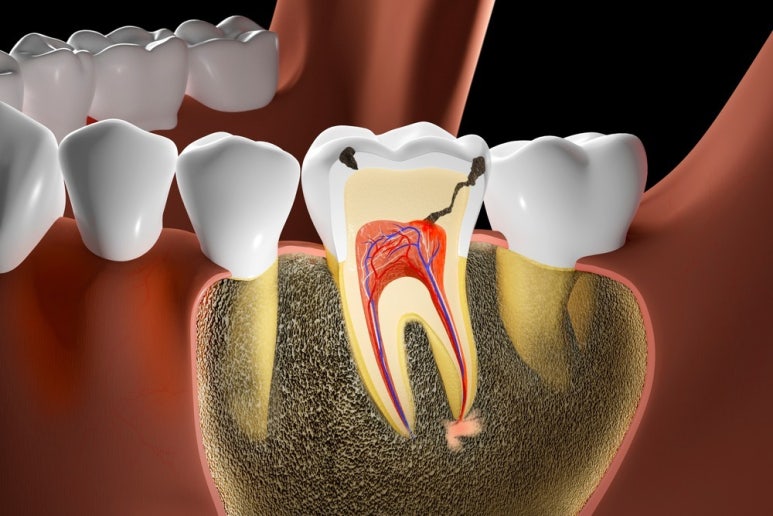
What happens if cavities are left untreated?
If cavities are left untreated, they gradually deepen and can damage the entire tooth. In such cases, treatment may be possible by removing the decayed area and filling it with a restorative material, but if the condition becomes too severe, the tooth may need to be extracted.
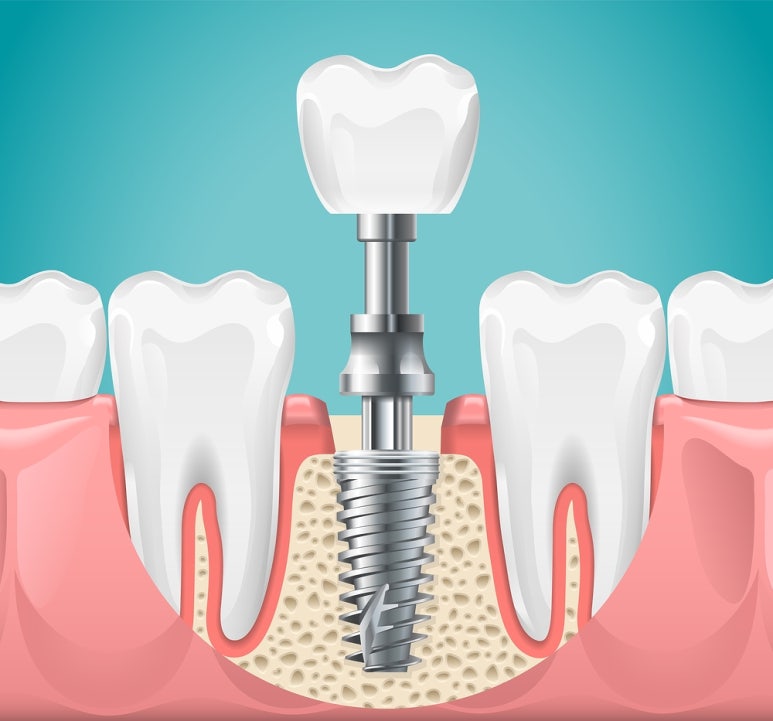
Implants are the solution!
After losing a tooth, it is best to fill the empty space with an implant. An implant is a method in which an artificial root is placed in the jawbone and a tooth-shaped prosthetic is attached on top. Because it provides an appearance and function that are very similar to natural teeth, many people prefer it.

Implant procedures require careful consideration
In particular, people with systemic conditions such as diabetes, high blood pressure, and heart disease need a careful approach before undergoing implant procedures. With these conditions, it may be difficult for the jawbone and the artificial root to fuse, and symptoms may worsen after the procedure.
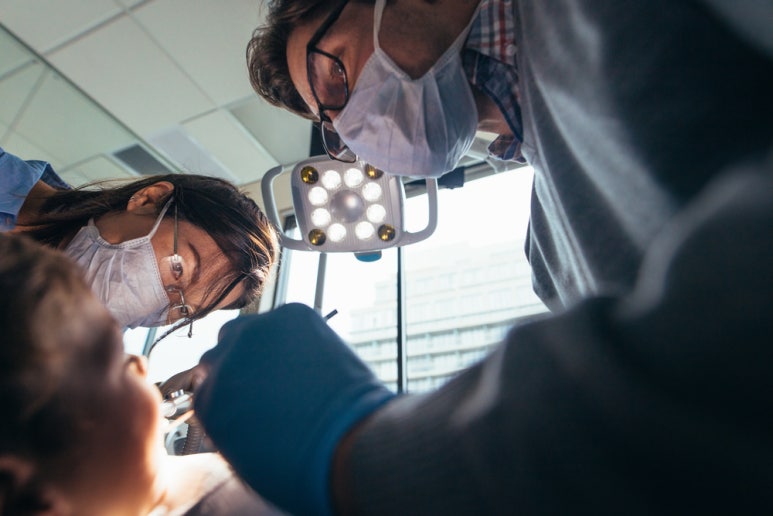
Various implant procedures
Recently, various implant procedures have been developed. These include immediate implant placement after extraction, sinus lift surgery, guided bone regeneration, and navigation implants.
-
Immediate implant placement: A method of placing an implant immediately after tooth extraction, allowing for faster recovery.
-
Sinus lift surgery: A procedure performed when there is insufficient bone height in the upper molar area.
-
Guided bone regeneration: A method of regenerating alveolar bone by inserting bone material when there is not enough depth and width for implant placement.
-
Navigation implant: A procedure that uses a surgical guide prepared in advance to place the implant in the optimal position.

Post-implant care is important
Implants have excellent durability and can be used for a long time, but ongoing care and regular checkups are still necessary after the procedure. Most importantly, to avoid tooth loss in the first place, it is essential to prevent cavities and various oral diseases through proper daily dental care.
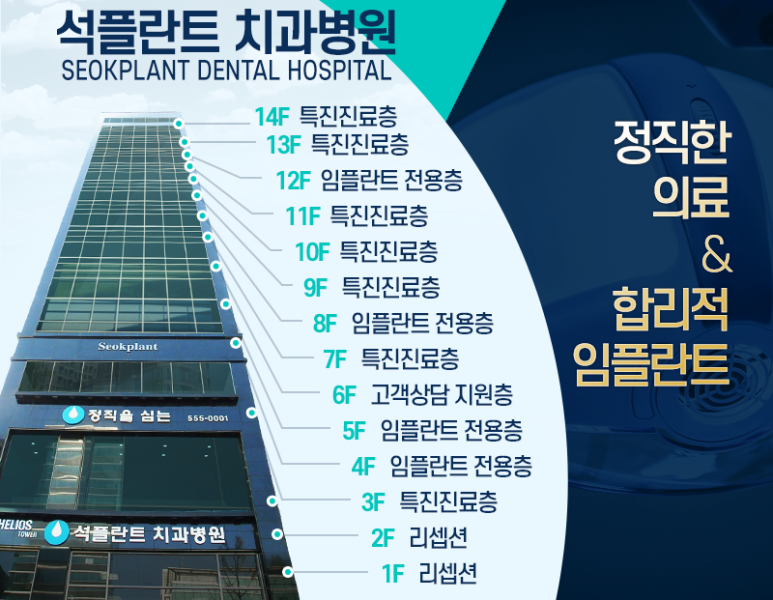
Seokplant Dental Hospital always does its best to protect your dental health. If you have any questions or need help, please feel free to contact us at any time. We will always strive for your healthy smile.