Implants
Among those looking into implants,
What is an implant?
#Implant procedure process?
There are probably many people who are curious about these topics.
Implant procedure method
#Implant surgery methods and
an overall explanation of implants
will be provided.
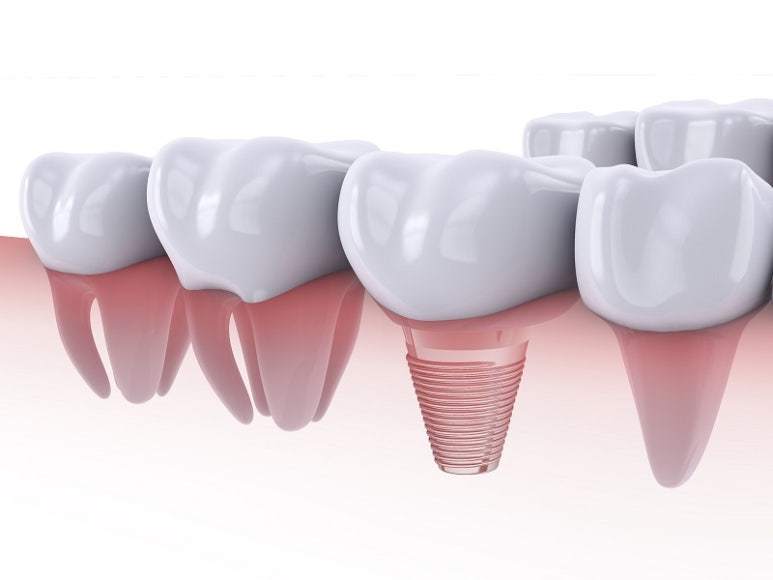
An implant is a dental artificial replacement that restores not only the chewing function of the original tooth but also the aesthetic aspect by placing a metal screw into the jawbone at the site where a tooth has been lost. It is currently the first treatment method considered when treating missing teeth, and because its chewing force is similar to that of natural teeth, it is regarded as a second permanent tooth.
The world’s first implant began in Sweden 70 years ago, and it has been over 30 years since it was commercialized in Korea. Today’s implant procedure is a treatment that has been proven stable over a long period of time.
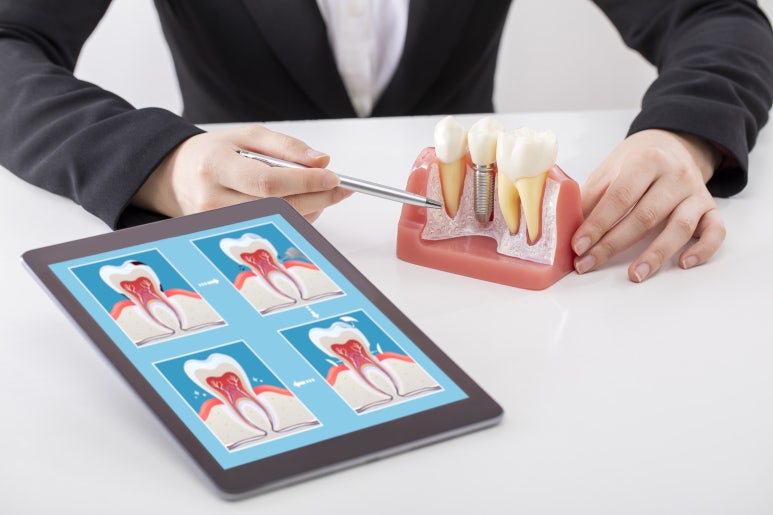
An implant is a dental prosthetic procedure in which an artificial root made of titanium is placed into the bone.
The metal titanium is not harmful to the human body, has high affinity, and has the property of bonding well with bone.
Once the titanium artificial root adheres to the bone, it takes root through the processes of osseointegration and bone attachment.
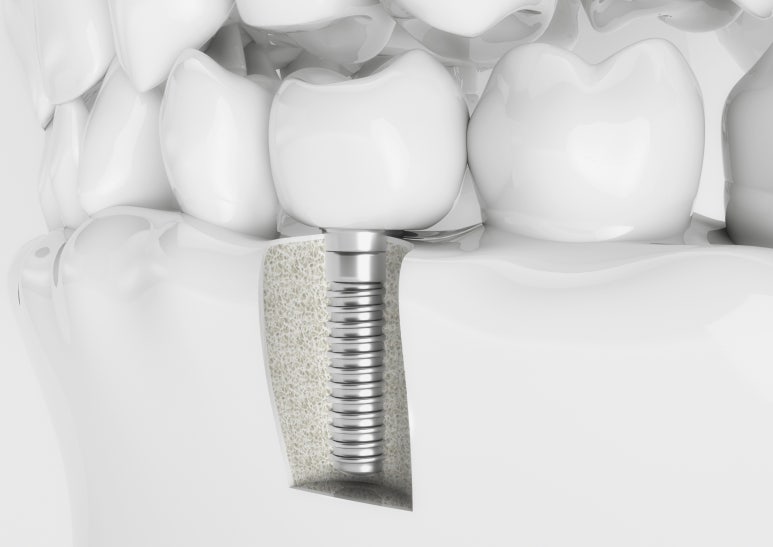
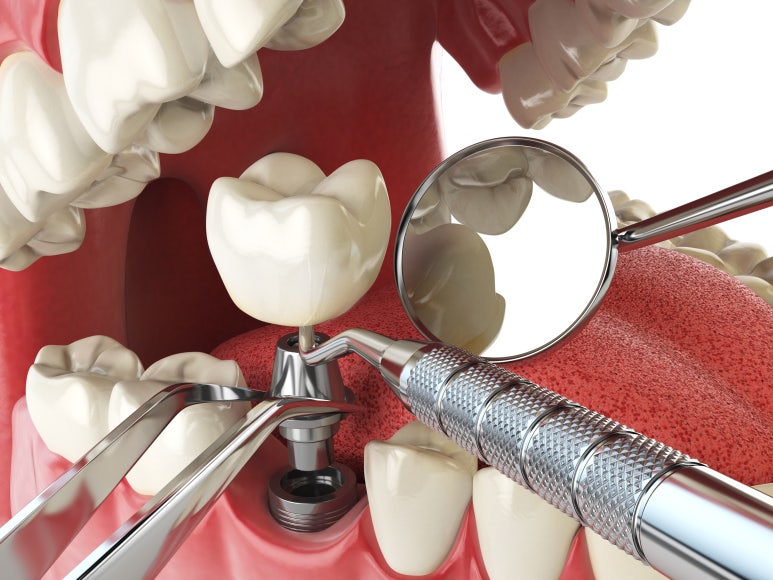
An implant consists of a fixture, a ceramic crown
superstructure prosthesis (artificial tooth)
and a connecting screw.
The advantages of implant treatment are:
First
It does not require grinding down adjacent natural teeth, and only the missing tooth area can be restored.
Second
Although it is not identical to a natural tooth, it can be used with the closest possible similarity to a natural tooth and without discomfort.
Third
Dentures using implants are more stable and comfortable to use than existing dentures.
Fourth
It is easier to eat with than dentures and is also superior in terms of aesthetics.
#Implant treatment period is
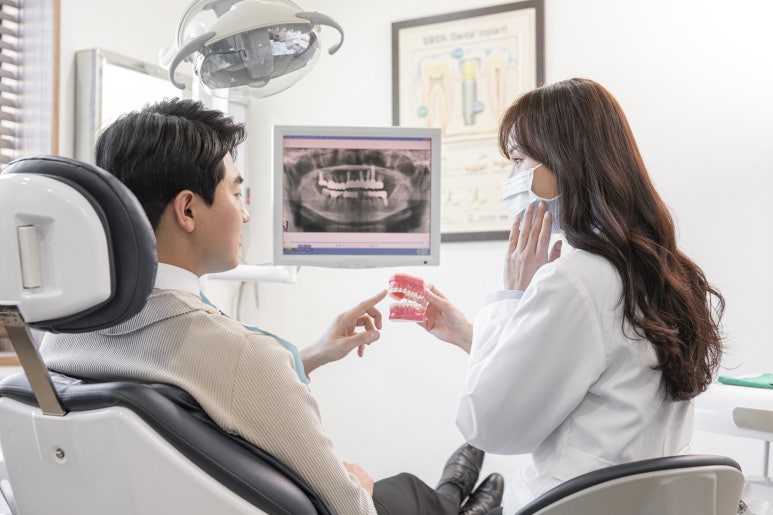
When an artificial root (fixture) is placed into the bone, a healing period is needed until the artificial root bonds firmly. This period varies depending on the condition of the bone at the implant site, age, and general health, but in general it takes about 4–6 months for the maxilla (upper jaw), which is cancellous bone, and about 2–3 months for the mandible (lower jaw), which is dense bone.

For those whose loss of jawbone has been confirmed through panoramic imaging before implant treatment, if bone grafting (bone augmentation) is additionally needed before implant surgery, the treatment period may be extended by 3–4 months.
How should care be managed after implant surgery?
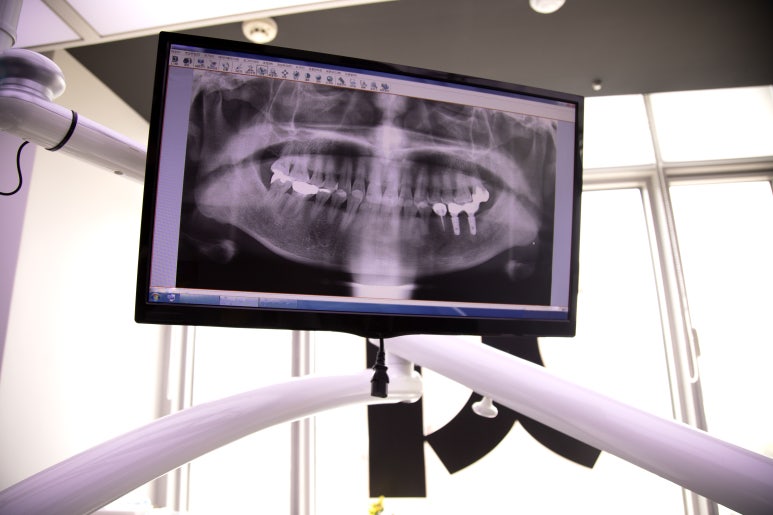
Post-surgery care for implants is very important. Although implant lifespan is semi-permanent, just like natural teeth, thorough oral hygiene management, avoiding excessive chewing force, and regular dental checkups are necessary.

Implant surgery
Please think of implants as being the same as natural teeth, and manage them carefully by brushing thoroughly and using dental floss and interdental brushes.
Peri-implantitis that occurs around implants, once it starts like periodontal disease, progresses faster in bone destruction than periodontitis and produces no noticeable symptoms at all.
Just as gum disease is a major cause of tooth loss, it is very important to always keep new implant teeth clean if you want to use them healthily for a long time.
After implant surgery,
please actively use dental floss and interdental brushes.
For the first year after implant surgery,
because the bone around the implant becomes stronger and stabilizes, it is recommended to avoid overly hard foods.
After implant surgery enters the stable stage,
regular checkups every 3 to 6 months are recommended.
It is also recommended to make sure to get scaling at least once a year.
Implant insurance
We will also introduce health insurance implants.
Currently, the National Health Insurance Service provides insurance benefits for two dental implants per person for patients aged 65 and older over a lifetime.
If a procedure is unavoidably discontinued under the medical judgment of the dentist, it is not included in the two covered cases, and one re-treatment is possible.
The out-of-pocket cost is 30% of the treatment expense.
For patients with partial edentulism (insurance does not apply in cases of complete edentulism, that is, when there are no teeth at all), insurance is recognized only when a split-type material (where the fixture and abutment are separate) is used. One-piece types, in which the artificial root and superstructure prosthesis are connected as one, are not eligible for insurance benefits.
Bone grafting (bone augmentation) is not covered by insurance.

For those who have other questions about implants,
implant surgery methods, treatment periods, and so on,
and for those who need implant treatment
or are planning implants,
if you are thinking about implants, Seokplant Dental Hospital

Consultation inquiries are accepted 24 hours a day, 365 days a year, so please feel free to leave an inquiry and receive free phone consultation for all consultations regarding implants and dental treatment.
All phone consultations are free.
Check monthly implant events
▼

If you think of implants, Seokplant Dental Hospital
Since opening in 2007, the hospital has been operating stably at its current location for 18 years.
Patients from all over the country visit for implant treatment,
and many people are willing to travel long distances for the reasonable prices.
Please be sure to remember Seokplant when you think of implants.
Get implant discount benefits
▼

Seokplant Dental Hospital
Make a Naver reservation
▼

Seokplant Dental Hospital
Location, directions
▼
Seokplant Dental Hospital
Directions by car
Dedicated parking lot location
▼
Source: National Health Information Portal