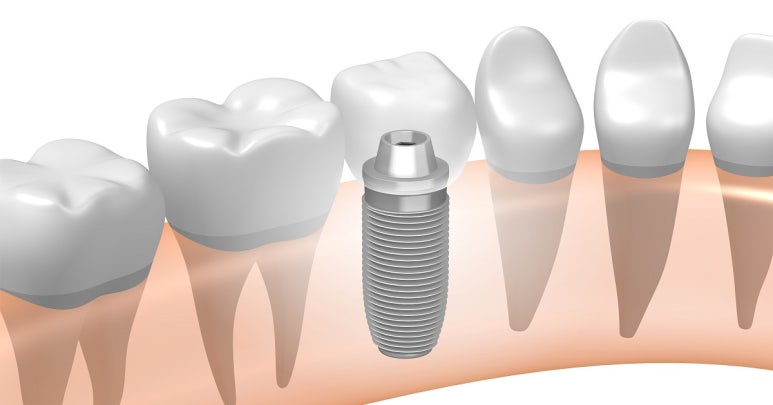
Implants
| 🦷 What Is an Implant? |
An implant is a treatment method in which an artificial root (titanium) is placed in the space left by a natural tooth and a prosthesis is attached on top. It bonds firmly with the jawbone and can perform functions similar to a natural tooth.
Hello.
For those considering full-mouth implants, here is the information you need,
all in one place, including whether health insurance applies, the placement process, and recovery time.
Full-mouth implants are more stable and comfortable than dentures, so let’s take a closer look now!
✅ What Are Full-Mouth Implants?
Full-mouth implants are a treatment that replaces all missing teeth with prostheses connected to implants.
They are chosen when most teeth are missing or when the mouth is edentulous,
and the full arch is restored with fixed prostheses after 6 to 8 implants are placed.
Recently, the Seokplant (full-arch implant) method has been drawing attention,
with the advantages of shorter surgery time and recovery period, and faster return to daily life.
💊 Is Health Insurance Coverage Available?
To put it simply,
full-mouth implants are almost never covered by health insurance.
However, if the following conditions are met, health insurance may apply to some implants.
But full-mouth implants are mostly treated as non-covered items because they involve fixed prostheses, multiple implant placements, and the use of premium materials.
👉 However, please check individually whether medical expense support is available for recipients of basic livelihood support, lower-income tiers, or certain local governments!
🦷 What Is the Full-Mouth Implant Placement Process?
- Diagnosis and treatment planning
- Implant placement
-
4 to 6 implants are placed in the upper jaw and lower jaw, respectively.
-
Depending on the patient’s condition, bone grafting may also be performed.
- Temporary prosthesis attachment
- Temporary teeth are attached on the same day or within a few days so that daily life is not inconvenient.
- Permanent prosthesis attachment
-
After the implant has fused with the jawbone (about 2 to 6 months),
-
the final prosthesis is attached and treatment is completed.
⏱ How Long Is the Recovery Period?
-
In general, daily recovery after surgery takes place within 3 to 7 days
-
It takes 2 to 6 months for the implant to fuse
-
There may be individual differences depending on age, bone condition, eating habits, and more
-
During the recovery period, quitting smoking and drinking, and eating soft foods, are recommended.
💡 Recently, to reduce the burden of recovery, more people are choosing flapless procedures or 1-day implants.
🧑⚕️ Medical Team
Medical staff from Seoul National University College of Dentistry
Board-certified specialists in oral and maxillofacial surgery and integrated dentistry on site
Based on extensive experience, as well as the latest digital equipment and technology, we establish individualized diagnosis and surgical plans
We aim for patient-centered care and focus on reducing anxiety through sufficient consultation and explanation
🦷 Main Treatment Areas
Implants
General implants, implants requiring advanced bone grafting
Immediate placement implants
Aesthetic prosthetic treatment
Zirconia and ceramic prostheses
Customized color/shape design
Conservative care and cavity treatment
Resin/inlay/crown, etc.
✅ Seokplant Clinic Hours
Mon–Thu: 10:00 AM ~ 9:00 PM Night clinic
Fri: 10:00 AM ~ 6:30 PM
Sat: 10:00 AM ~ 5:00 PM
Lunch break: 1:00 PM ~ 2:30 PM
Closed on Sundays/public holidays
Directions