
| 🦷 What Is an Implant? |
An implant is a treatment method in which an artificial root (titanium) is placed in the area where a natural tooth has fallen out, and a prosthetic restoration is attached on top. Because it bonds firmly with the jawbone, it can perform functions similar to those of a natural tooth.
| 🦷 What Is an Implant? |
An implant is a treatment method in which an artificial root (titanium) is placed in the area where a natural tooth has fallen out, and a prosthetic restoration is attached on top. Because it bonds firmly with the jawbone, it can perform functions similar to those of a natural tooth.
Implants are an innovative treatment that gives people who have lost natural teeth the joy of chewing again and renewed confidence. South Korea is the world’s leading country for implant procedures, and many people are regaining healthy lives through implants. However, finishing the procedure does not mean everything is complete. In fact, ongoing care and regular checkups after the procedure play a decisive role in the implant’s lifespan and success.
Implants: How They Differ from Natural Teeth and Their Vulnerability
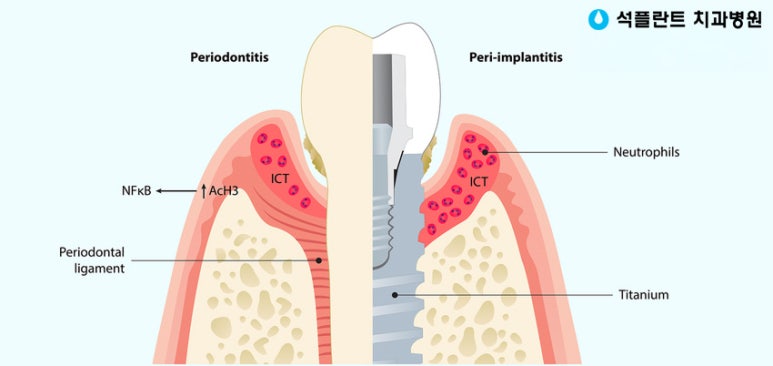
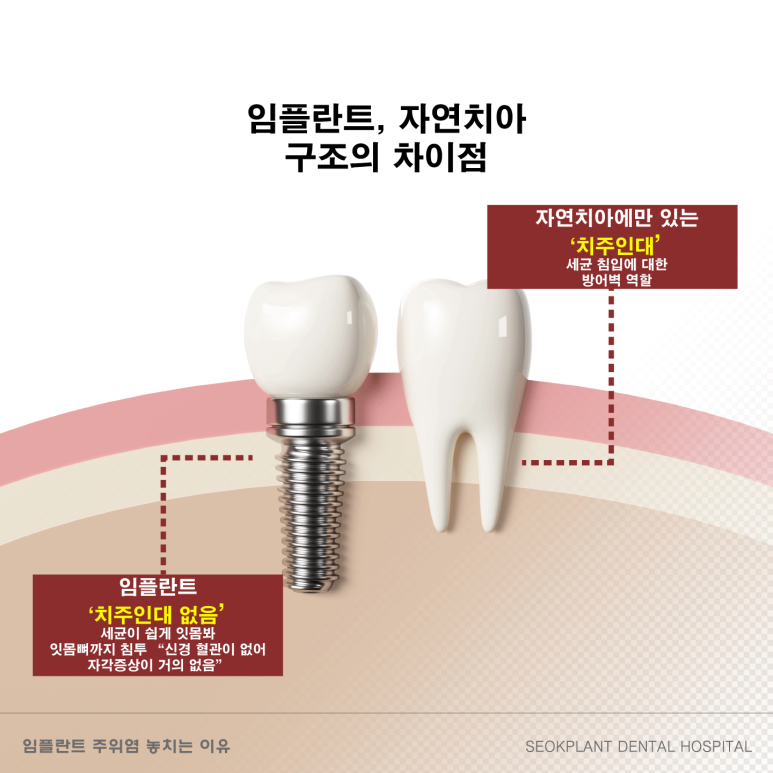
An implant functions as a substitute for a natural tooth by fixing a titanium screw into the jawbone and placing a prosthetic restoration on top. However, while natural teeth have a tissue called the periodontal ligament that connects the tooth, gums, and bone and helps protect against inflammation, implants have no periodontal ligament and are therefore highly vulnerable to inflammation. In addition, because they have no nerves or blood vessels, it is difficult to detect early signs of inflammation, and inflammation can quickly spread to the jawbone, causing bone loss. As a result, a serious condition called peri-implantitis can occur.
Peri-implantitis and Its Severity
Peri-implantitis is a condition in which inflammation develops in the gums and bone surrounding an implant, causing the jawbone to dissolve and no longer support the implant. In the early stages, the gums swell and bleed, but as symptoms worsen, the implant can become loose or even fall out. In severe cases, complications such as sinusitis may also occur, potentially affecting overall health.
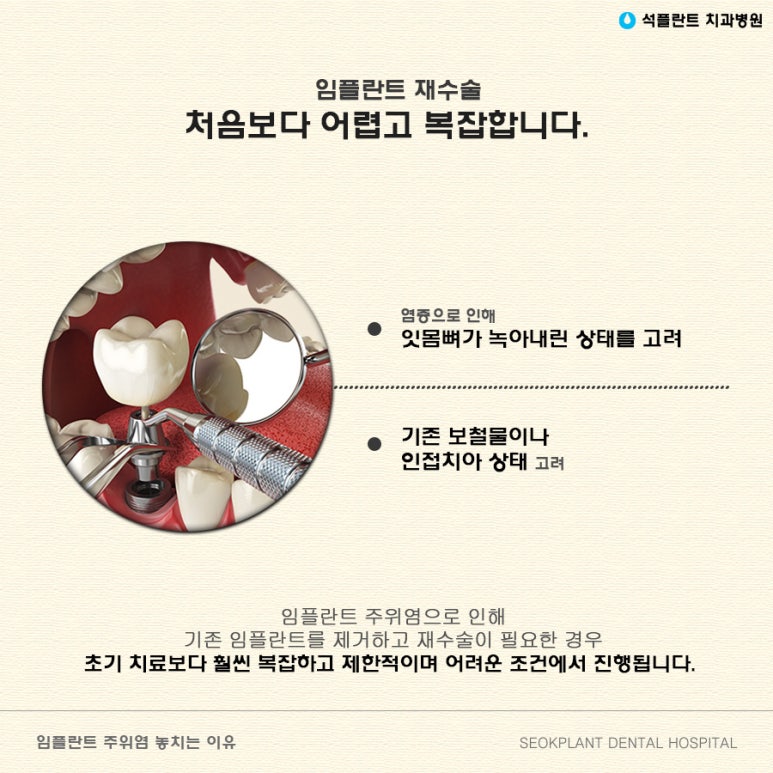
This is why peri-implantitis is difficult to recover from once it progresses, and if reoperation is needed, the burden in terms of time and cost becomes very large. That is why prevention and early treatment are especially important.
Thorough Implant Care: These Are Essential!
To keep an implant strong and long-lasting, special attention to daily oral hygiene is necessary.
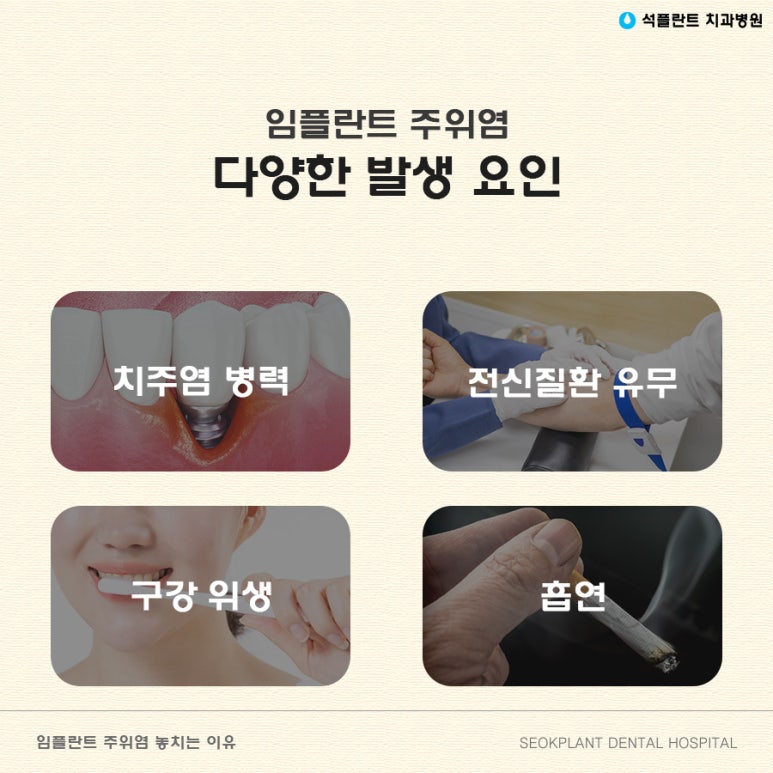
Brush carefully every day: Implants do not get cavities, but if plaque (a mass of bacteria) accumulates between teeth, inflammation can easily develop. Brushing is basic, and you should clean carefully around the implant and along the gumline.
Use dental floss, interdental brushes, and an oral irrigator: It is difficult to completely remove food debris and plaque from between implants using only a regular toothbrush. Frequent cleaning with dental floss or interdental brushes, along with an oral irrigator, is effective.
Absolutely no smoking: Smoking reduces blood flow to the gums and interferes with osseointegration, more than doubling the risk of implant failure. You must quit smoking.
Maintain healthy lifestyle habits: Chronic conditions such as diabetes and osteoporosis negatively affect inflammation and tissue regeneration. Ongoing health management helps maintain implants.
The Importance of Regular Dental Checkups and Professional Care
No matter how well you care for them yourself, it is not easy to detect inflammation or bone loss around an implant at an early stage. Peri-implantitis may have mild symptoms or no symptoms at all, making it easy to overlook.
Visit the dentist at least twice a year: Professional oral examinations, X-rays, and checks for inflammation are essential.
The Patient’s Responsibility and the Medical Team’s Role in Successful Implants
An implant procedure is not the end of treatment, but the beginning. Patients themselves must also take responsibility and protect implant health through consistent oral hygiene and regular checkups. The medical team must also provide patient education after implant treatment and establish a systematic follow-up care plan.
Cooperation between the patient and the medical team is essential for maintaining successful implants.
Although implants are not something you can use for a lifetime, with proper care and regular checkups, and active treatment such as periodontal curettage when needed, it is possible to maintain implant lifespan for as long as 20 years or more.
If you have received an implant procedure, do not let your guard down. Make a habit of careful brushing three times a day, using dental floss and interdental brushes, quitting smoking, and visiting the dentist regularly. Healthy implants will help protect your quality of life for a long time.
🧑⚕️ Medical Team
Medical staff from Seoul National University School of Dentistry
Specialists in oral and maxillofacial surgery and integrated dentistry on site
Based on years of experience, along with the latest digital equipment and technology, personalized diagnosis and surgical plans are established
We focus on patient-centered care and work to reduce anxiety through thorough consultations and explanations
🦷 Main Treatments
Implants
General implants, implants requiring advanced bone grafting
Immediate placement implants
Aesthetic prosthetic treatment
Zirconia, ceramic prosthetics
Color/shape-customized design
Conservative and cavity treatment
Resin/inlay/crown, etc.
✅ Seokplant Clinic Hours
Mon–Thu: 10:00 AM ~ 9:00 PM night clinic
Fri: 10:00 AM ~ 6:30 PM
Sat: 10:00 AM ~ 5:00 PM
Lunch break: 1:00 PM ~ 2:30 PM
Closed on Sundays and public holidays
Directions