Aegyo filler # Orbicularis oculi muscle # Aegyo-sal # Middle-aged lower blepharoplasty # Under-eye fat repositioning
Relationship Between Fat Repositioning Surgery and the Orbicularis Oculi Muscle
Preserving the orbicularis oculi muscle during fat repositioning surgery is very important.
Sometimes, among patients undergoing revision surgery, there are people whose orbicularis oculi muscle has been removed, and in such cases, the result looks very awkward and unnatural.
The under-eye aegyo-sal is the muscle that appears when smiling, and without this muscle, the area can look flat and cold.
Removing the aegyo-sal is one of the side effects of under-eye fat repositioning surgery, and once the muscle has been removed, it cannot be restored even with revision surgery.
Therefore, preserving it naturally is the most important thing.
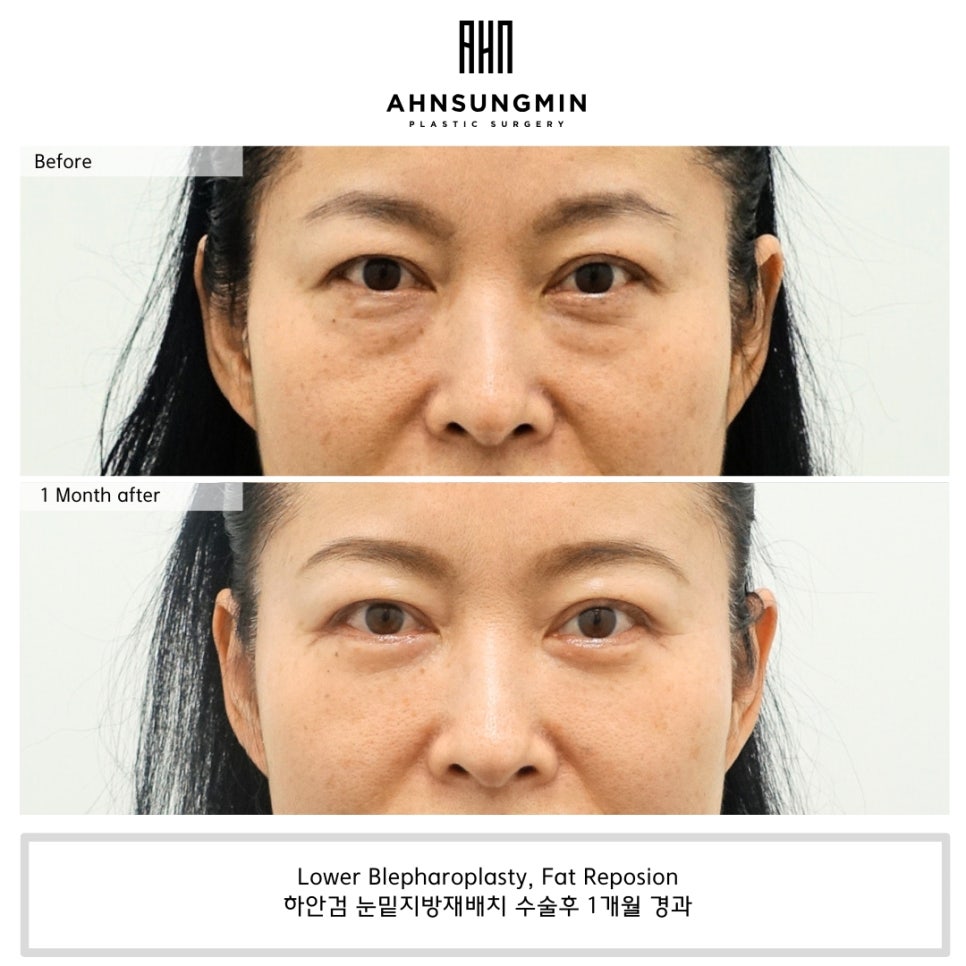
Preserving the Aegyo-Sal in Lower Blepharoplasty
The under-eye aegyo-sal naturally gives a youthful impression when smiling, and it is a muscle that must be preserved.
The orbicularis oculi muscle is not created during surgery. By moving the bulging fat beneath the aegyo muscle to a sunken area and repositioning it, the patient’s original aegyo muscle is revealed.
The Ideal Under-Eye Fat Repositioning
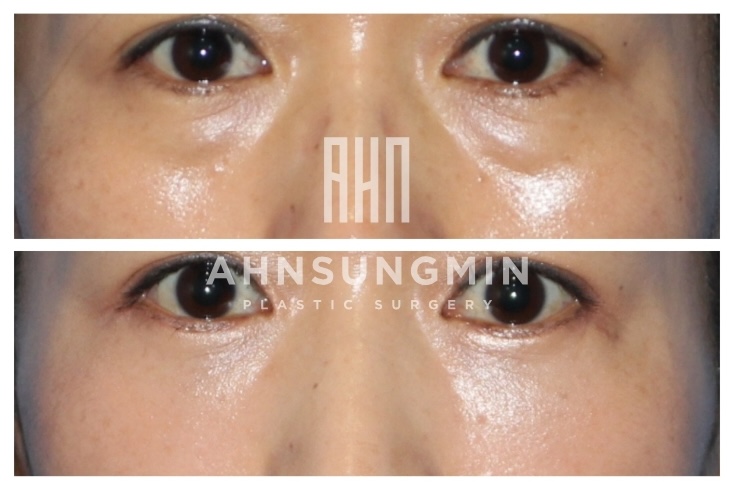
The size and shape of the orbicularis oculi muscle vary from person to person, and may differ depending on age and smiling habits.
Why Aegyo-Sal Should Be Preserved in Middle-Aged Lower Blepharoplasty
https://blog.naver.com/asmps2020/223501207772
Surgery Time and Aftercare
The surgery takes about 1 hour and 30 minutes for both sides combined.
It is performed under local anesthesia.
After surgery, it is best to rest and avoid overexertion for 1 to 2 days.
For about 2 weeks after surgery, you should avoid irritating the eyes, such as rubbing them hard, and avoid positions that increase intraocular pressure by bending your head down.
It is best to allow about 6 months for the surgical traces to disappear completely
and for the lower blepharoplasty to look natural.
Eye Surgery · Lower Blepharoplasty No. 1
An·Seong·Min Plastic Surgery
We will be waiting for you at
An Seong Min Plastic Surgery, a plastic surgery clinic near Jamsilsaenae Station, that creates natural changes.
Thank you.
Inquiries: 02.414.1114
Consultation: 010. 3507. 3009
Go to Naver Booking
KakaoTalk ID: kr.asmps