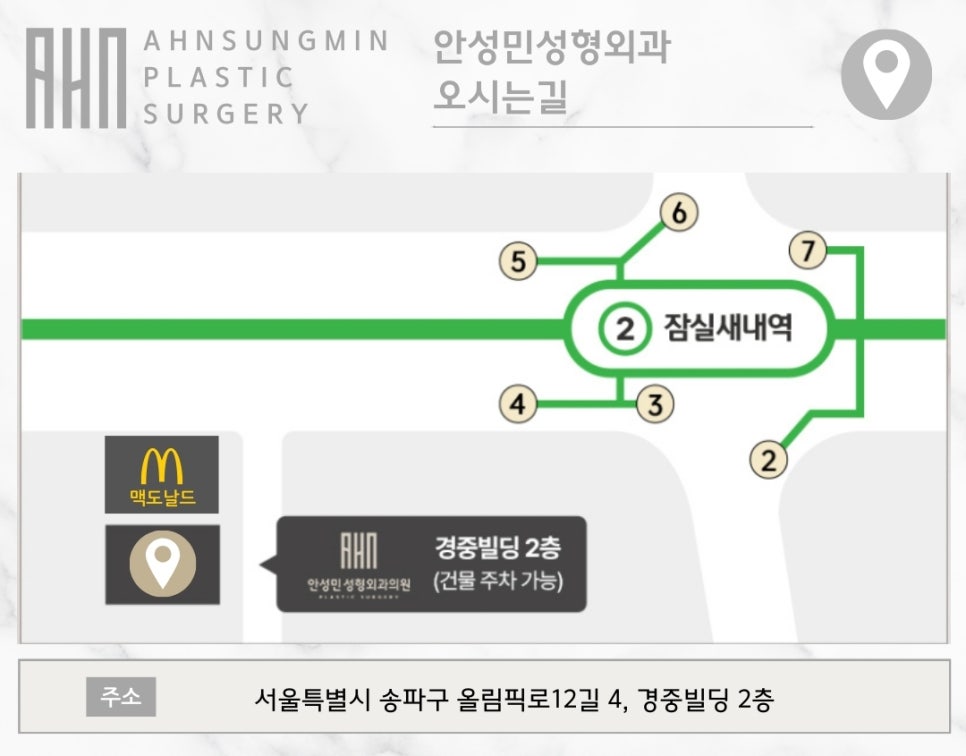
#Fat Removal #Jamsil Saenae Station Plastic Surgery #Ahn Sung-min #Fat Repositioning
The Difference Between Fat Removal and Fat Repositioning
What causes the under-eye area to become puffy?
To explain it very simply, as we age, the orbital septum that surrounds the fat pads stretches, allowing the fat to push outward. This causes puffiness under the eyes, and as the fat pushes downward, it also affects the upper eyelids, leading to a hollowed appearance. There may be genetic factors as well, but in most cases it happens because aging causes the skin, muscles, and the membranes surrounding the eyeballs to stretch and lose elasticity.
When the under-eye area looks puffy, many people may think of fat removal as a simple solution.
If there is too much fat, of course it can be removed, but cases where the amount of fat is excessive enough to justify removal are rare.
Considering age and the degree of aging, fat removal can be a risky approach.
If the protruding fat is more than what is needed for the sunken area, it can be moved to the hollow area to provide enough volume.
Fat repositioning is not simply about flattening the under-eye area; its goal is to add volume and elasticity.
Therefore, rather than simply removing fat, the more accurate approach is to choose the surgical method according to the amount of each person’s own fat.
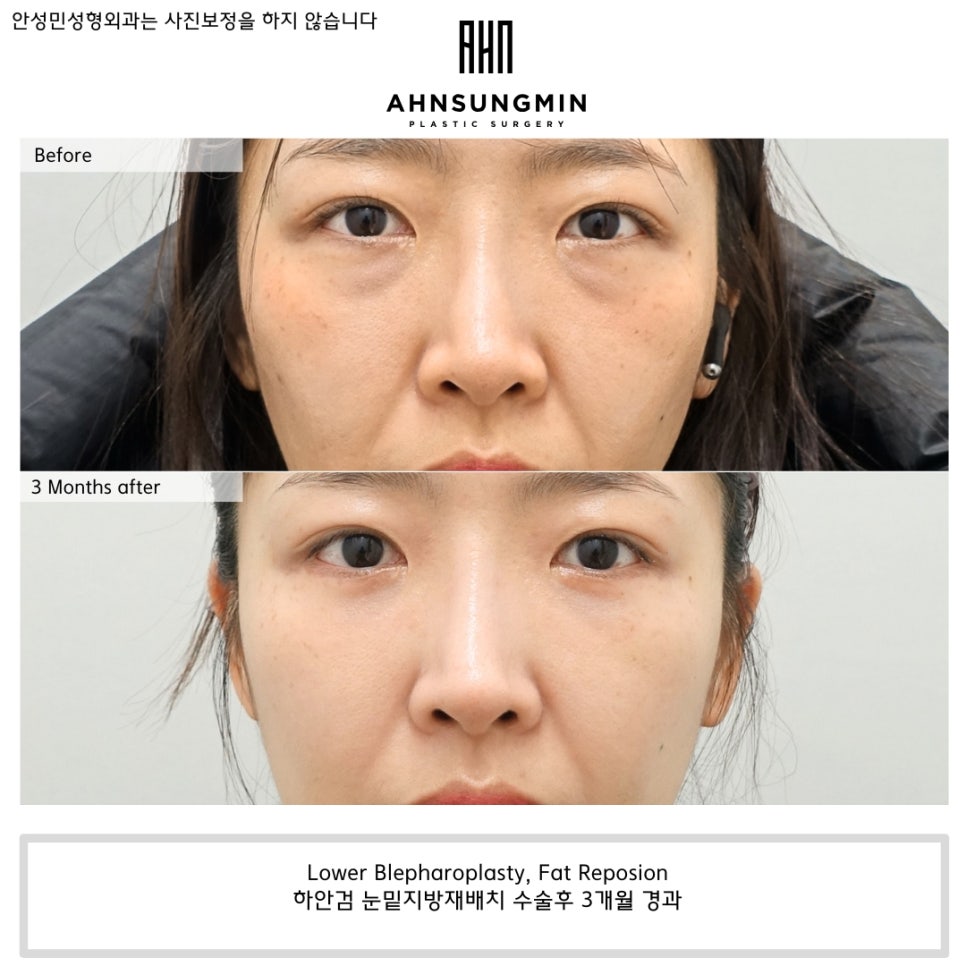
Before and after under-eye fat repositioning in a patient in their 40s
We do not remove fat carelessly.
If there is more fat than needed for the hollowed area and it becomes protruded, fat removal may be chosen.
However, once removed, fat does not regenerate. In particular, if fat is removed at a young age, patients may later complain of a hollow under-eye area in middle age.
Therefore, excessive fat removal can cause a hollowed appearance, leading to fat grafting or filler injections and other repeated cycles, eventually becoming the start of revision surgery.
The goal of Ahn Sung-min Plastic Surgery is to preserve the under-eye eye muscle and, through fat repositioning, move the fat to the hollowed area to create volume.
Under-Eye Fat Repositioning Recovery Process
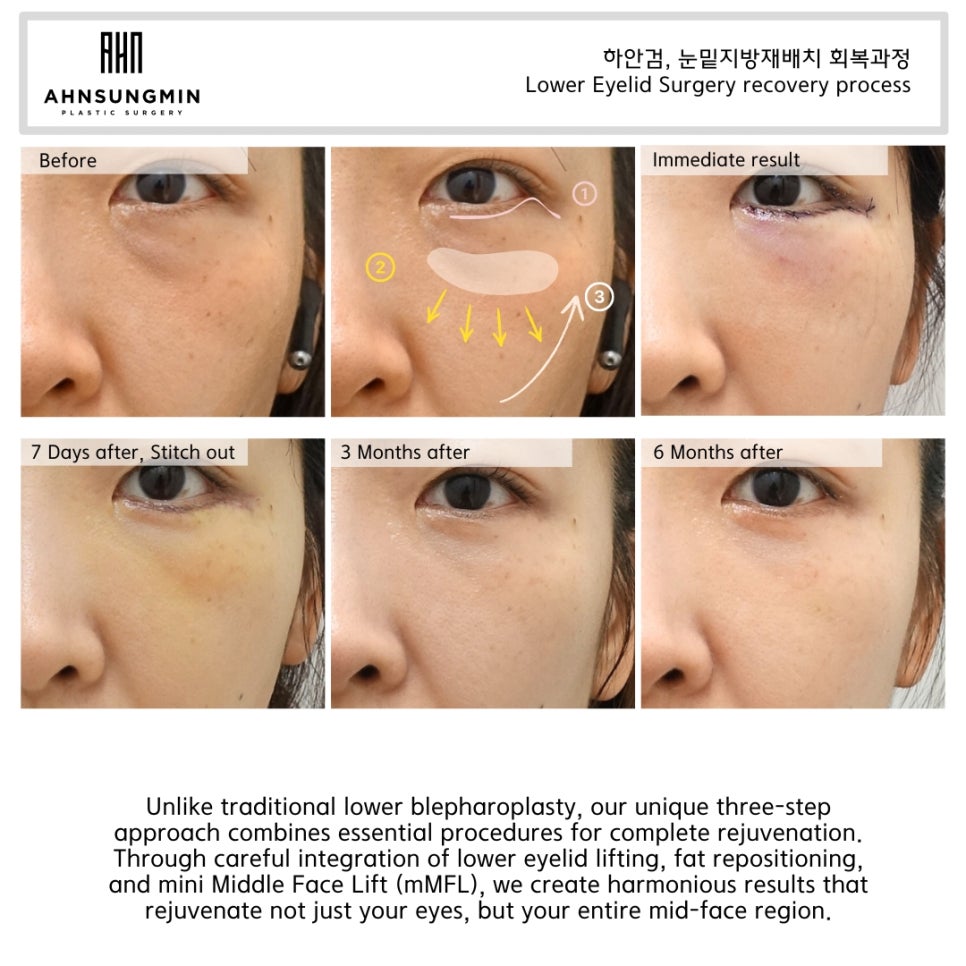
Recovery process after under-eye fat repositioning in a patient in their 40s
Under-Eye Fat Repositioning Surgery Method
-
An incision is made, the area is dissected, and access is gained to the fat layer.
-
The protruding fat is moved to the hollowed area.
-
The midface submuscular tissue is pulled and fixed to the periosteum.
-
The incision is sutured.
Surgery Time and Care
The surgery takes about 1 hour and 30 minutes for both eyes combined and is performed under local anesthesia.
Communication with the director during surgery is necessary.
You may feel a slight prickling sensation during anesthesia, but there is no pain after the anesthesia takes effect.
Local anesthesia is the safest method for eye surgery.
Because it is local anesthesia, no fasting is required, and you can go home immediately after the surgery.
For safety, please avoid driving.
For the first 1–2 days after surgery, avoid overexertion and rest.
Major swelling may take at least one month to subside, and minor swelling may take at least 2–3 months.
It is best to allow about 6 months for recovery.
Revision Surgery · No.1 Hospital for Under-Eye Fat Repositioning Surgery
Ahn·Sung·Min Plastic Surgery
We look forward to seeing you at
#Jamsil Saenae Station Plastic Surgery Ahn Sung-min Plastic Surgery,
where natural changes are created.
Thank you.
Inquiry: 02.414.1114
Consultation: 010. 3507. 3009
Naver Reservation Direct Link
KakaoTalk ID : kr.asmps