Cases where eyelid correction is not necessary.
The most important criterion: when the patient does not want it.
Eyelid correction is not a surgery that must be done simply because it can be done. If the patient does not want functional correction, that choice itself should be respected. Eyelid correction is not a basic procedure; it is a surgery that should be chosen only when there is a clear need.
The patient's intention is the first criterion for judgment.
When the cause of the problem is the skin, not the muscle.
Many patients visit the clinic because of aging, eye irritation, or a feeling of heaviness, and simply want excess eyelid skin removed. In these cases, the eyes can already open sufficiently well, but sagging eyelid skin is blocking the field of vision.
This is called pseudoptosis.
In such cases, the function of the muscle that opens the eyes is normal, and the black part of the eye is already sufficiently exposed. The reason the field of vision is blocked is the skin, not the muscle. In these cases, removing only the eyelid skin can sufficiently improve vision, and eyelid correction is not necessary.
In cases of true ptosis.
By contrast, true ptosis is when the muscle that opens the eyes itself is weak. Even without much excess skin, the eyelid covers the black part of the eye, and patients often unconsciously raise their eyebrows to compensate.
In this case, simple skin removal alone cannot solve the problem.
When both are present.
In actual clinical practice, it is far more common for pseudoptosis and true ptosis to coexist than for only one condition to be present.
At this point, the most important thing is not surgical technique, but judgment.
If skin alone is removed while the muscle problem is ignored, the field of vision may feel better temporarily, but the underlying problem remains. On the other hand, performing eyelid correction even when the muscle function is already sufficient may create unnecessary risk.
Why an accurate distinction matters.
Eyelid correction should be performed only when needed. What matters is not adding surgery, but choosing the right surgery.
A precise determination of whether the problem is the skin, the muscle, or both is directly linked to the safety and stability of the surgical result.
The term "removal" in this article does not mean being passive; it means being precise.
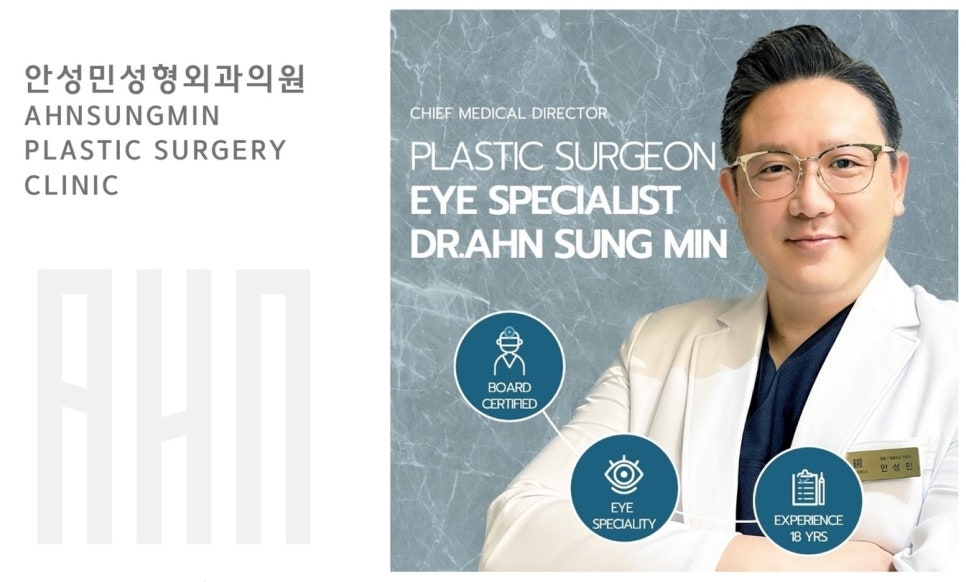
Director Ahn Seong-min of Ahnseongmin Plastic Surgery
Seeing the Eye as a Whole, Not in Parts
A Clinic Dedicated to Eyelid Revision Surgery in Korea
Ahnsungmin Plastic Surgery
Ahnseongmin Plastic Surgery
Ptosis · Eyelid Correction Revision Surgery
Inquiries: 02.414.1114
Consultation: 010. 3507. 3009
KakaoTalk ID: kr.asmps