Hello, residents looking for a dental clinic in Gaepo-dong
I’m Kim Mu-jin, the chief dentist at D-Day Dental Clinic, and I’ve been meeting with patients under the motto of “a dental clinic that preserves natural teeth as much as possible.”

As a specialist in Integrated Dental Medicine, I always do my best for my patients’ oral health :)
When you think of a dental clinic, what comes to mind first?
Many people looking for a dental clinic in Gaepo-dong probably think of “fear.”
And just as worrying is the “treatment cost.”
If I suddenly needed more than 1 million won for dental treatment, I would feel very overwhelmed.
On top of that, people keep putting off their visit, saying, “My tooth hurts... but I just can’t find time to go to the dentist.”
Especially because of a vague fear of cavity treatment,
many people avoid treatment or give up on visiting the clinic midway through treatment.

Today, I prepared this post to clear up all your questions and fears about cavity treatment.
- What is a cavity?
A cavity is a condition in which calcium is lost from the hard tissue of a tooth, causing the tooth to become soft and crumbly.
In the beginning, calcium gradually leaches out,
and as it progresses, the tooth breaks down and a hole forms.
When food gets stuck in that hole, it turns black.
Cavities begin at a stage that is invisible to the eye.
They may first appear as white spots or brown spots and gradually turn darker, which makes them difficult to detect in the early stages.
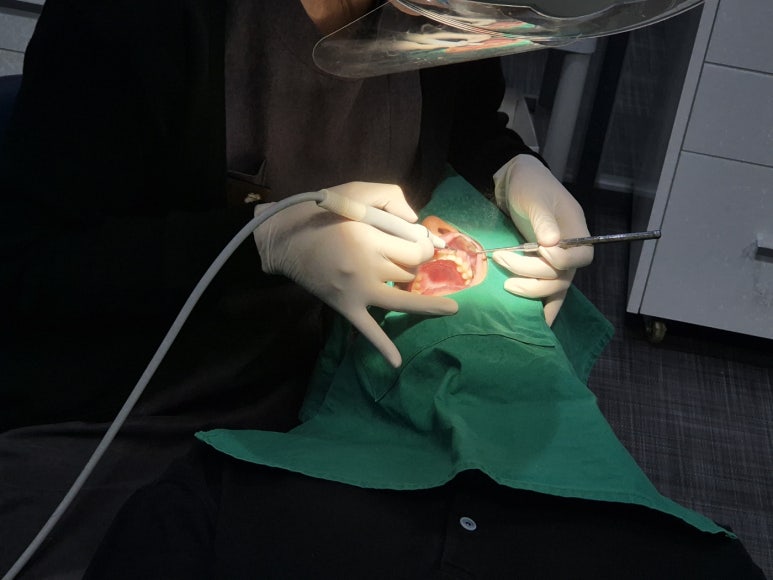
That is why regular checkups are very important.
Just as water slowly fills a boat with a small hole,
cavities may go unnoticed at first, then gradually worsen, eventually causing severe pain.
If caught and treated early, they can be resolved easily, but if left untreated, they can lead to bigger problems.
- Does cavity treatment really hurt?
The biggest fear about cavity treatment is pain.
However, dental anesthesia techniques have advanced greatly, so most cavity treatments are performed with little to no pain.
In particular, early cavity treatment usually does not damage the nerve, so if treatment is done after anesthesia, you will feel almost no pain.
Some people do not feel pain or the sensation of a loose tooth, yet still come to the clinic because their periodontal disease has progressed significantly.
Because there are people who do not feel pain, periodontal disease can be even more frightening.
Above all, as a doctor, I believe the best outcome is for patients to keep their permanent teeth strong and healthy for as long as possible.
That is because no artificial prosthesis can be exactly 100% the same as a natural tooth.
So I hope more people will visit the clinic early, when problems can still be solved relatively easily.
- How is cavity treatment done?
Cavity treatment can be broadly divided into three stages.
First, in the early stage of a cavity, damage is limited to the enamel (the outer part of the tooth), so treatment involves simply removing the decayed area and filling it with resin.
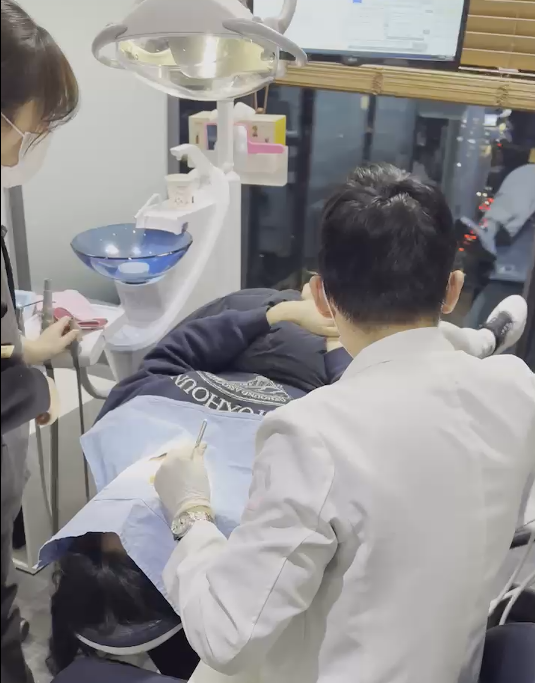
At this stage, there is usually little pain and the procedure takes a short time.
Second, when the cavity has progressed beyond the enamel into the dentin (the inner part of the tooth), the decayed area is removed and treated with a restoration such as an inlay or onlay.
Third, severe cavities are those in which the pulp (nerve) has become infected, and root canal treatment is needed.
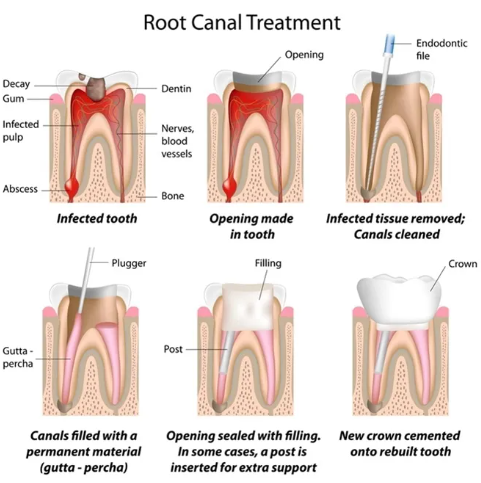
At that point, all of the infected nerve tissue inside the tooth is removed, the empty space is filled, and then a crown is placed to protect the tooth.
For adults, if there is an early cavity, it does not always need to be treated immediately.
If you carefully manage it with auxiliary tools such as dental floss
and receive regular checkups,
a cavity in its early stage can be maintained for 10 or even 20 years.
However, if a hole has already formed and there is pain, treatment should not be delayed.
Teeth do not heal on their own like a cold.
Even a small cavity, if left untreated,
can eventually lead to root canal treatment or extraction.
In particular, interproximal cavities (cavities that form between teeth) are hard to see and often progress without noticeable symptoms.
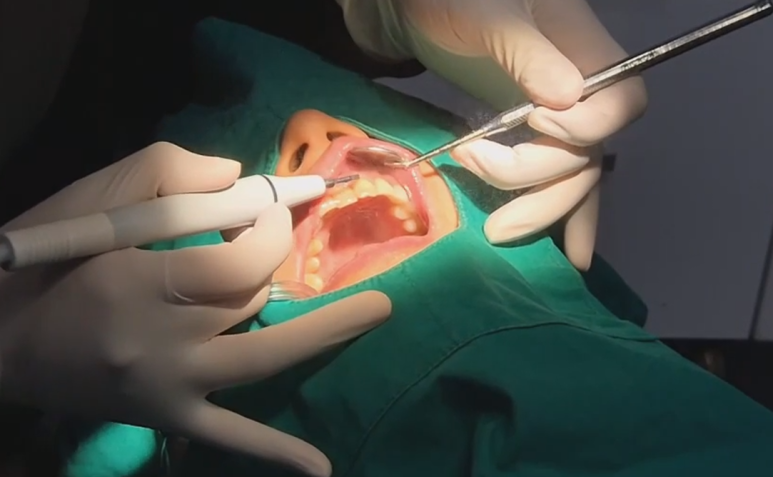
Receiving regular scaling and checkups every six months can greatly help prevent cavities.
The key to cavity treatment is prevention.
Manage your teeth before they hurt,
and treat them when the cavity is still small—that is the way to save on costs and reduce pain.
From a doctor’s perspective, it is best for patients to keep their permanent teeth strong and healthy for as long as possible.
That is because no artificial prosthesis can be completely identical to a natural tooth.
At D-Day Dental Clinic, we do our best to preserve the natural teeth of everyone looking for a dental clinic in Gaepo-dong.
Even if you are afraid of cavities,
do not delay treatment, and we hope you can catch it early and resolve it easily.
We will always be ready to support your healthy smile at our Gaepo-dong dental clinic :)
| D-Day Dental Clinic Naver reservation, where only the treatment you truly need is honestly recommended ✔ |
| Seoul D-Day Dental Clinic inquiry |
|---|
| Main phone number: 02-568-2877 (Go now) Naver TalkTalk inquiry (Go now) |

| This post was written directly by D-Day Dental Clinic in compliance with Article 56, Paragraph 1 of the Medical Advertising Act for the purpose of providing medical information and promoting the clinic. However, the information provided on this blog should be used for reference only, and for an accurate understanding of your personal symptoms, we recommend visiting a medical institution directly and confirming with medical staff. All procedures and surgeries performed at the dental clinic, including implants, may carry the risk of side effects depending on the individual (such as inflammation, bleeding, swelling, nerve damage, etc.). Therefore, please make your decision after sufficient consultation with medical staff in advance. The treatment photos in this post were taken with the consent of a patient who completed all treatment procedures at our clinic. The before-and-after photos are of the same person and were taken under the same conditions. |
Gaepo-dong Dental Clinic: Does Cavity Treatment Hurt? Here’s Everything from A to Z