Gangnam-gu Implant, From the Bone Grafting Process to Treatment Duration
Hello, everyone who is curious about Gangnam-gu implants.
I am Kim Mu-jin, the director of D-Day Dental Clinic and a specialist in integrated dentistry : )

When people are told that a tooth needs to be extracted, one of the biggest worries they often have is this.
It is the fear of, “What if I can’t get an implant because there isn’t enough bone...?”
In fact, many of the patients who visit us tell us things like this.
Doctor, I had a tooth removed because it hurt before,
and my gums ended up sunken in.
Now I want to get an implant...
but they said I can’t because there isn’t enough bone.
At another dental clinic, they said there was so little bone
that dentures were the only option.
Is there really no other way?
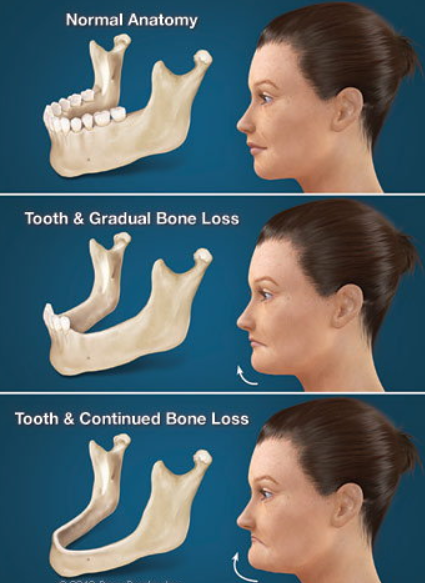
After a tooth is lost, the jawbone naturally resorbs over time.
Like an old cliff being worn down by wind and rain, unused gum bone gradually diminishes.
According to research, even six months after extraction, the bone can decrease by about 3.87 mm horizontally and 1.67 mm vertically.
But what is even more worrying is missing the treatment timing because of a vague fear of “not enough bone.”
Having insufficient bone does not mean that implants are impossible.
That is because modern dentistry can rebuild deficient bone firmly through various bone grafting methods.
Today, I would like to explain in detail the topics that patients often ask about, from why bone grafting is needed during Gangnam-gu implant procedures to how long treatment takes.
Gangnam-gu Implant: Why Bone Grafting Is Needed
A tooth is like a tree.
It needs strong roots to grow healthily.
The same is true for implants.
They need firm jawbone in order to be used healthily for a long time.
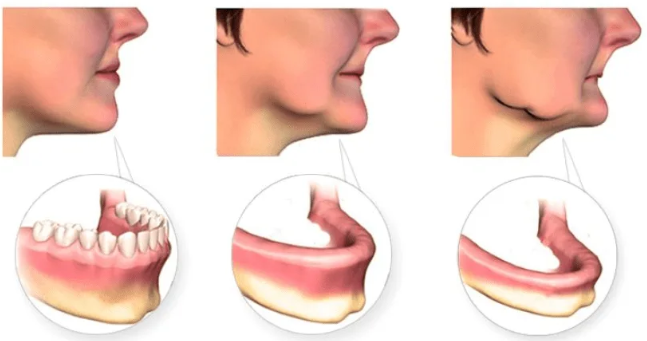
But when a tooth is lost and time passes, bone naturally decreases.
This is a natural phenomenon in which the body tries to reduce parts that are no longer being used.
It is easy to understand if you think about hammering a nail into a wall.
A nail goes in well on a solid concrete wall, but on a weak wall such as drywall, it can easily become loose.
The same applies to implants.
If there is not enough bone, it becomes difficult for the implant to be firmly fixed, and problems may arise in the long term.
In particular, at least 2 mm of bone is needed around an implant.
This is an essential condition for the implant’s long-term stability.
If an implant is placed forcefully when there is not enough bone,
over time the gums may recede and the implant may become exposed, leading to serious problems.
Gangnam-gu Implant Bone Grafting Methods
Modern dentistry can rebuild insufficient bone in various ways.
Like rebuilding a collapsed castle wall, lost bone is restored with precise techniques.
Representative methods include grafting using autograft, allograft, xenograft, and synthetic bone.
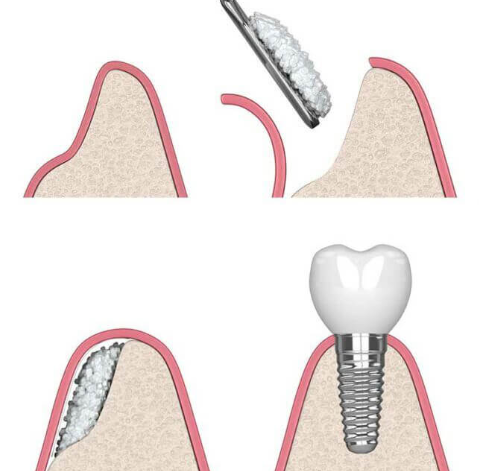
An autograft uses the patient’s own bone, allowing for the most natural healing.
If bone powder obtained during the implant surgery is used, good results can be achieved without additional surgery.
A xenograft uses material extracted from cow or pig bone, and its safety has been proven through thorough verification.
In particular, the upper molar area requires special caution because there is an air pocket called the maxillary sinus.
In such cases, the missing bone can be supplemented through a special surgical method called sinus lifting.
It is a method of carefully lifting the sinus membrane, like setting up a tent, and filling the space with bone graft material.
Gangnam-gu Implant Treatment Duration
Implant treatment with bone grafting is similar to tending a garden.
Just as seeds need enough time to sprout and bloom, transplanted bone also needs appropriate time to settle and harden.
In general, it takes about 3 to 6 months for new bone to form after bone grafting.
The healing period may vary depending on the patient’s age, overall health, and the amount of grafted bone.
In some cases, bone grafting and implant placement are performed at the same time, while in others the implant is placed after a sufficient healing period following the graft.
What matters is not to rush.
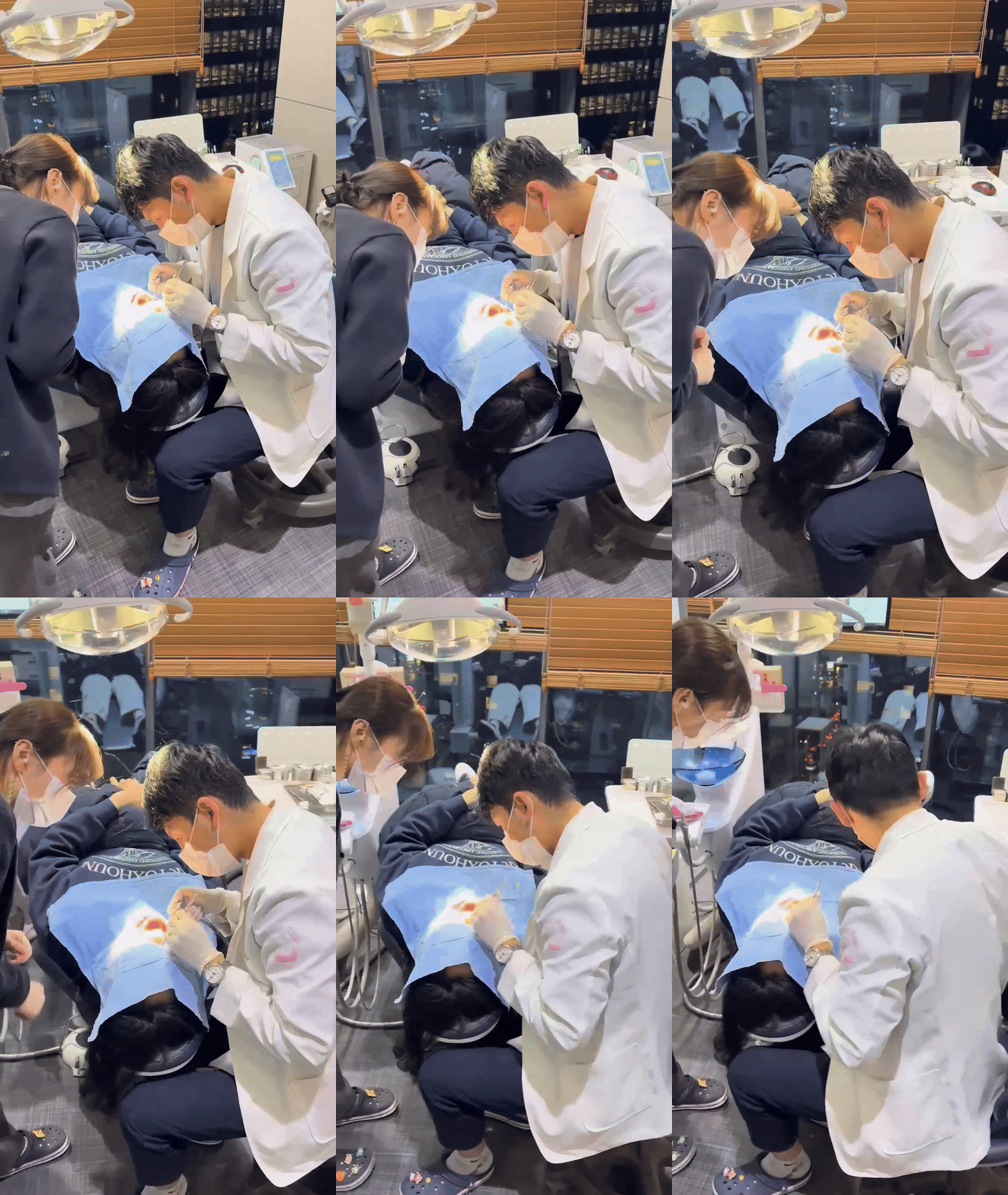
If sufficient healing time is not allowed after bone grafting, it can negatively affect the implant’s long-term prognosis.
For patients with osteoporosis or diabetes, a more cautious approach is needed, and the healing period may be a little longer.
Among those reading this, some may still be wondering, “Can I really get an implant in my case?”
You may feel this especially if you have been missing teeth for a long time or if a great deal of jawbone has already been resorbed.
From my clinical experience, I have come to realize one thing.
The greatest suffering for patients is not simply the absence of teeth, but the despair of thinking, “There is nothing that can be done now.”
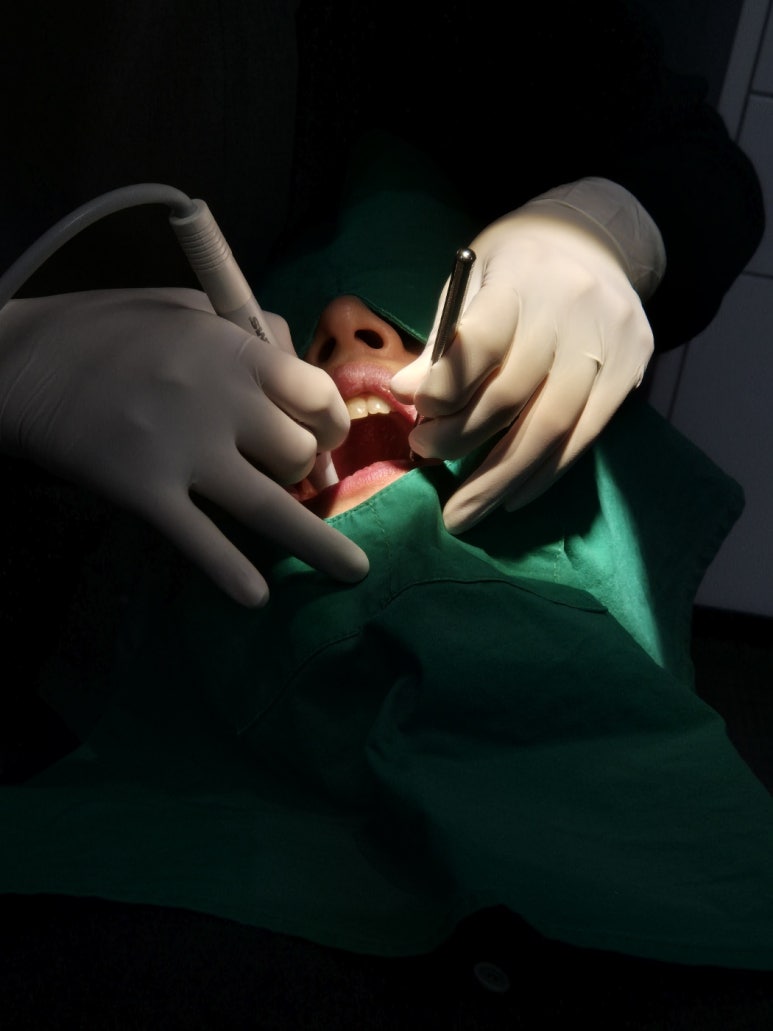
However, modern dentistry has made tremendous progress over the years.
Even when bone is lacking, healthy teeth can be restored through an appropriate treatment plan and delicate procedures.
Gangnam-gu implant treatment is not just about replacing a missing tooth.
It is a process of restoring lost confidence and regaining enjoyable meals and bright smiles.
Above all, the most important thing is to find the treatment method best suited to you through sufficient consultation with a specialist.
I hope this article has been helpful, even just a little, for those considering Gangnam-gu implants.
Until the day you can smile happily every day with healthy teeth, we will be here with you : )
| A place that honestly recommends only the treatments that are truly necessary D-Day Dental Clinic Naver Reservation ✔ |
| Seoul D-Day Dental Clinic Treatment Inquiries |
|---|
| Main phone number: 02-568-2877 (Go here) Naver TalkTalk inquiry (Go here) |
| This post was written directly by D-Day Dental Clinic in compliance with Article 56, Paragraph 1 of the Medical Advertising Act for the purpose of providing medical information and promoting the clinic. However, please use the information provided in the blog for reference only, and for an accurate understanding of your individual symptoms, we recommend visiting a medical institution directly and confirming with medical staff. All procedures and surgeries performed in dental clinics, including implants, may carry side effects such as inflammation, bleeding, swelling, and nerve damage depending on the individual. Therefore, please make your decision after sufficient consultation with medical staff in advance. The treatment photos in this post were taken with the consent of patients who completed all treatment at our clinic. The before-and-after photos are of the same person and were taken under the same conditions. |
Gangnam-gu Implant, From the Bone Grafting Process to Treatment Duration





