Hello.
Are you worried about a black spot on your tooth?
I’m Kim Mu-jin, a specialist in Integrated Dentistry.

At D-DAY Dental Clinic, we do our best every day to save our patients’ precious natural teeth :)
Have you ever looked in the mirror and found a black spot on your tooth?

At that moment, only one word comes to mind: the frightening word “decay.”
If you search for “black spot on a tooth” online, you’ll find terrifying claims such as “if you see a black spot, it’s 90% likely to be decay.”
After seeing such information, you may have lost sleep worrying,
“Do I need to go to the dentist right away and get treatment?”,
“Could it be that I need root canal treatment?”
Even more frightening is the fear that if you delay treatment,
a bigger problem may arise.
But if you listen to what I’m going to share today,
I think you’ll be able to ease many of those worries.
That’s because a black spot on a tooth does not necessarily mean decay.
Table of Contents
-
A black spot on a tooth is not always decay
-
A black spot on a tooth does not always require treatment, even if it is early decay
-
For an accurate diagnosis of a black spot on a tooth, a professional examination is necessary
-
A black spot on a tooth is not always decay
Many people think that if they see a dark area, it must be decay.
But in reality, that is not the case.
A black spot can develop for several reasons.
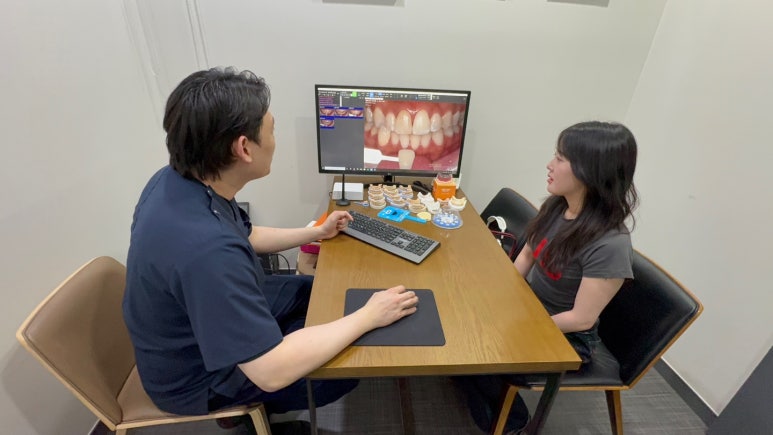
The most common cause is staining from food and drinks.
For people who frequently consume strongly colored foods such as coffee, tea, wine, or curry, surface staining can occur easily.
It can also appear dark when food debris gets stuck in small pits or gaps on the surface.
Sometimes, previously placed treatment materials can discolor over time and appear black.
In particular, with amalgam fillings, the surrounding tooth can take on a grayish color because of the metal components.
There is a way to distinguish true decay from simple staining.
Decay usually creates a sunken area and a hole on the surface, whereas staining leaves the surface smooth.
Also, decay tends to grow larger over time, while staining changes relatively little.
- A black spot on a tooth does not always require treatment, even if it is early decay
Even if the black spot is truly decay,
not all decay needs to be treated immediately.
That is because decay has stages.
A tooth is made up of enamel, dentin, and pulp (the nerve) from the outside inward.
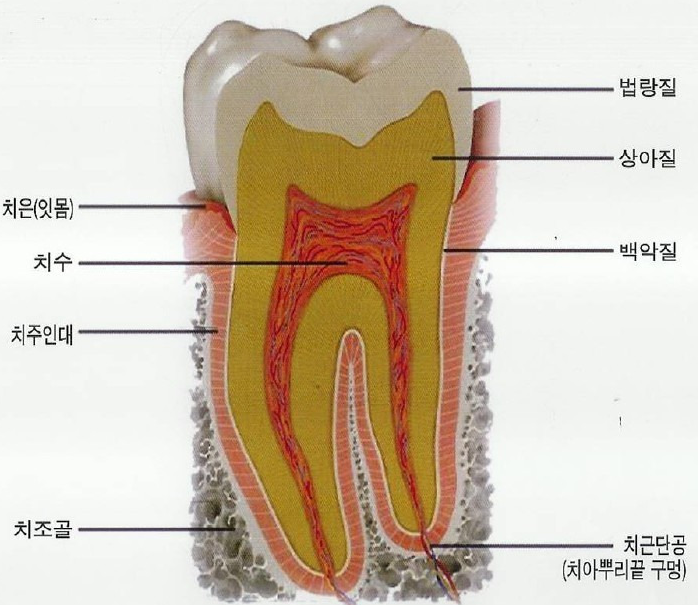
For early decay limited to the enamel,
its progression can be stopped through proper oral care and regular observation.
Just as a minor wound can heal naturally,
early-stage lesions can recover on their own through a process called remineralization.
For adults in their 30s and older, the speed of decay progression is significantly slower than in children.
So rather than rushing into treatment,
it may sometimes be better to observe the condition for about 6 months to 1 year.
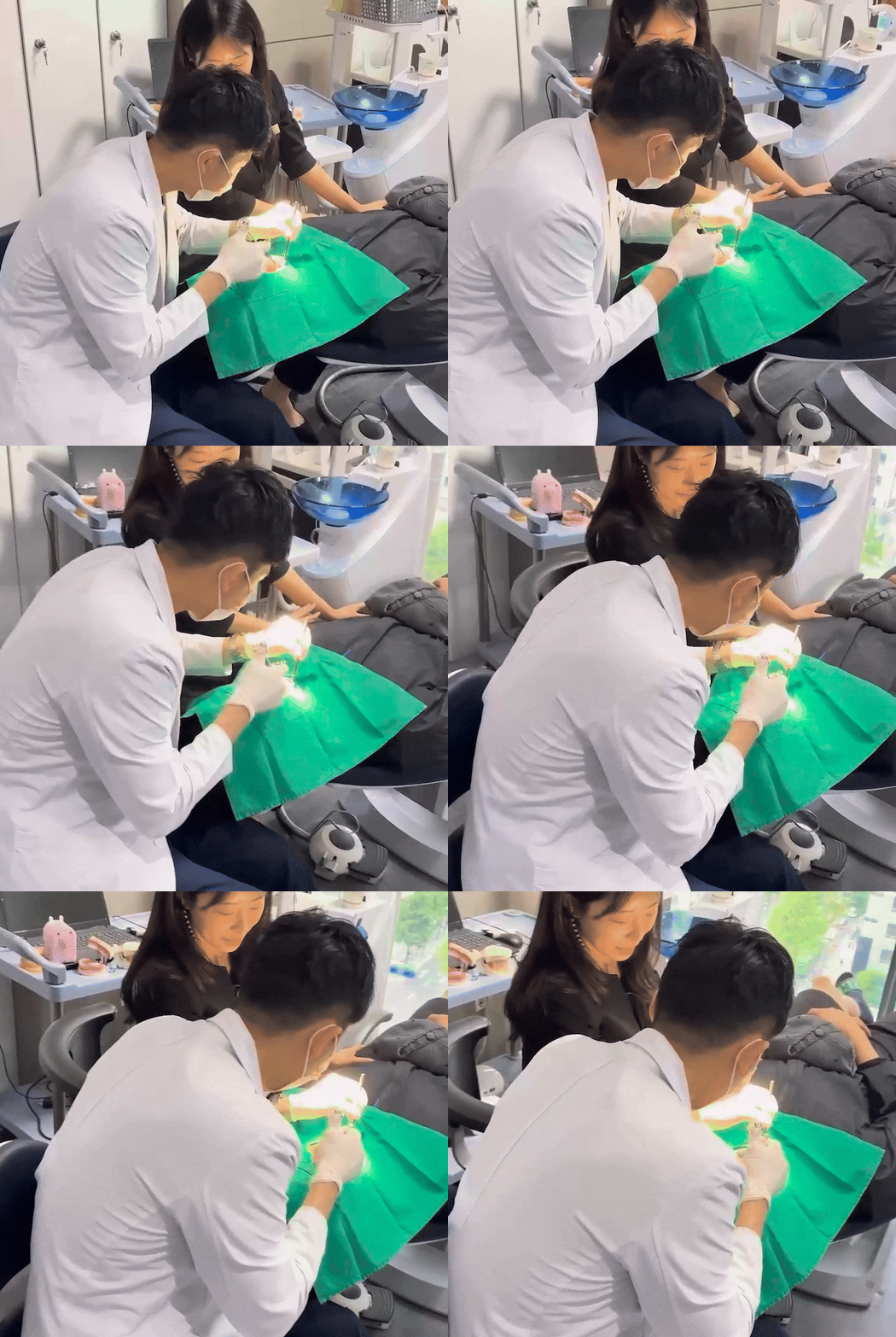
During this period, proper brushing, flossing,
and the use of fluoride toothpaste can help suppress the progression of decay.
However, if the decay has progressed to the dentin or
if there is a hole, active treatment is necessary.
If left alone in that state, it can eventually lead to root canal treatment or even extraction.
- For an accurate diagnosis of a black spot on a tooth, a professional examination is necessary
Whether a black spot on a tooth is decay or not is
difficult to determine accurately by visual inspection alone.
In particular, in the case of interproximal decay that develops between teeth, it often cannot be seen externally at all, but when an X-ray is taken, it may already be fairly advanced.
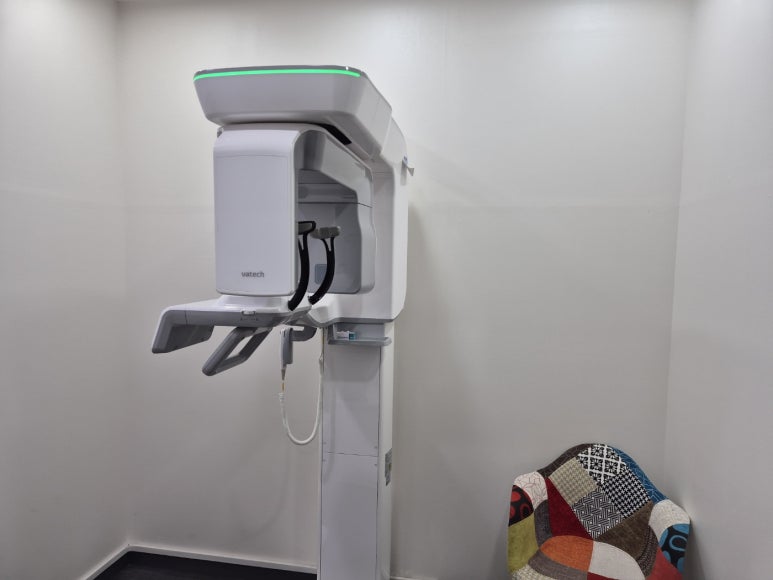
A variety of examinations are needed for an accurate diagnosis.
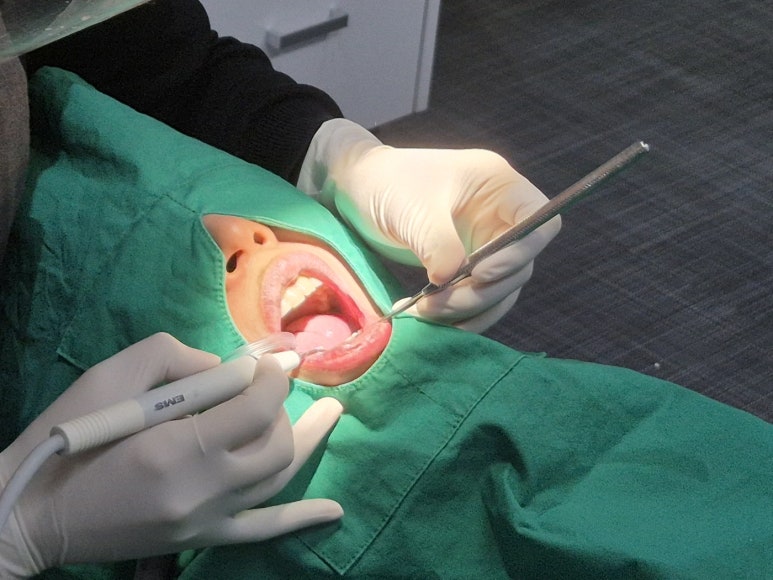
First, an intraoral examination is performed
to check the surface condition,
and a probe is used to assess how soft the surface is.
After that, X-rays are taken to check the internal condition,
and CT scans may also be performed if necessary.
Sometimes, the condition is monitored over several months to observe how it changes.
Through this process, we can accurately determine whether treatment is truly necessary
or whether observation alone is sufficient.
Most importantly,
we must provide patients with accurate information
and help them understand their condition through a thorough explanation.
We need to clearly explain why this diagnosis was made, what treatment is needed,
and what may happen if treatment is not performed.
You do not need to worry just because a black spot is visible.
What matters is understanding the current condition through an accurate diagnosis
and finding the appropriate management method for it.
As a doctor, the thing I value most is
reducing my patients’ anxiety.
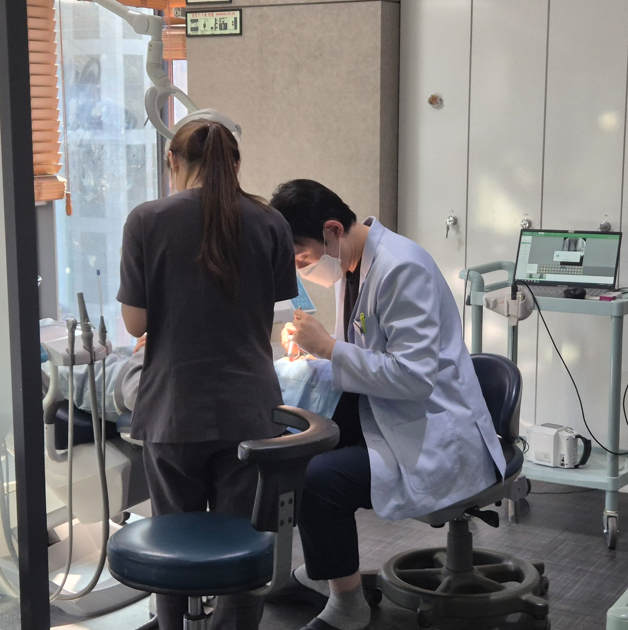
That is because I have seen far too many cases where people delayed treatment out of fear of the dentist and ended up with bigger problems.
Your precious natural teeth cannot be restored once they are damaged.
That is why they must be diagnosed and treated even more carefully and accurately.
Rather than unnecessarily removing healthy tooth structure through excessive treatment, it is much wiser to receive the best treatment at the moment it is truly needed.
If you’ve been losing sleep over the possibility that something might be wrong,
please let that worry go for now.
Do not be swayed by the indiscriminate information found online;
please get an accurate diagnosis from a specialist.
So that you can enjoy a bright smile
and a happy daily life,
I will always provide treatment with honesty and warmth.
If you have any questions or are worried about your condition,
please feel free to visit anytime :)
| A place that honestly recommends only the treatment you truly need D-DAY Dental Clinic Naver reservation ✔ |
| Seoul D-DAY Dental Clinic treatment inquiries |
|---|
| Main phone number: 02-568-2877 (Go here) Naver TalkTalk inquiry (Go here) |

| This post was written directly by D-DAY Dental Clinic in compliance with Article 56, Paragraph 1 of the Medical Advertising Act, for the purpose of providing medical information and promoting the clinic. However, please use the information provided on this blog for reference only, and for an accurate understanding of your individual symptoms, we recommend visiting a medical institution directly and confirming with medical staff. All procedures and surgeries performed at a dental clinic (including implants) may cause side effects depending on the individual (inflammation, bleeding, swelling, nerve damage, etc.). Therefore, please make decisions after sufficient consultation with medical staff in advance. The treatment photos in this post were taken with the consent of the patients who completed all treatment processes at our clinic. The before-and-after photos are of the same person and were taken under the same conditions. |
A Black Spot on a Tooth Does Not Mean There Is a 90% Chance of Decay — That Is False












