Hello.
I’m Oh Tae-hoon, the chief director of D-Day Dental, where we focus on preserving natural teeth,
and a specialist in integrated dentistry.

I always put my patients’
dental health first,
and I do my best to make sure you can receive treatment as comfortably as possible : )
I thought once I got an implant,
I could use it for life,
but it hurts and feels so uncomfortable
that I just can’t take it.
The implant is so uncomfortable
that I honestly think it was better
when I didn’t have it.
If you are reading this post now,
you are probably either about to undergo implant surgery or are wondering how to care for it after treatment.

However, the internet is full of misleading information such as
“Implants are semi-permanent,”
and
“Once you get one, that’s it.”
If you believe this kind of information
and fail to take proper care,
an implant that cost a lot of money to place may develop inflammation within just a few years, or in severe cases, you may face the situation of having to remove it again.
In particular, once peri-implantitis begins,
the jawbone gradually dissolves,
which causes the implant to loosen,
and it can ultimately lead to the worst-case scenario where it has to be removed.
This is not simply a matter of money.
It is because, along with the pain of re-treatment, you may also lose the joy of chewing.
But if you follow the proper precautions,
an implant can be used healthily for a long time, just like a natural tooth.
Today, I’ll explain the precautions you must know in order to use your implant healthily for 10, 20 years or more.
Table of Contents
-
Implant procedure precautions,
the period right after surgery is the most important.
-
Implant procedure precautions,
lifestyle habits you must follow
if you want to use it for life
-
Implant procedure precautions,
regular checkups,
the key factor that determines implant lifespan
-
Implant procedure precautions,
the period right after surgery is the most important.
The first month after implant surgery is the most important period, when the implant firmly integrates with the bone.
If it is not properly managed during this period,
the implant may fail to bond with the bone and could come out entirely.
The most important thing is not to chew on the surgical site.
An implant is made of metal,
so it needs time to fuse with the bone.
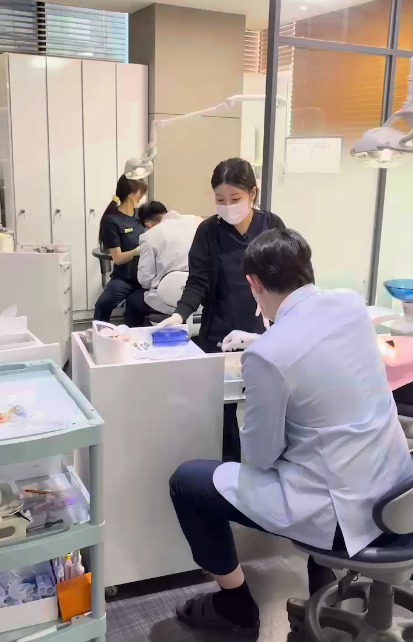
If external pressure is applied during this period,
even a movement of just 0.15 mm can cause soft gum tissue—not bone—to fill the space.
You must also take the prescribed antibiotics exactly as directed.
The mouth contains more bacteria than a toilet, so the risk of infection is high.
Smoking is absolutely forbidden.
The heat and harmful substances in cigarettes interfere with wound healing,
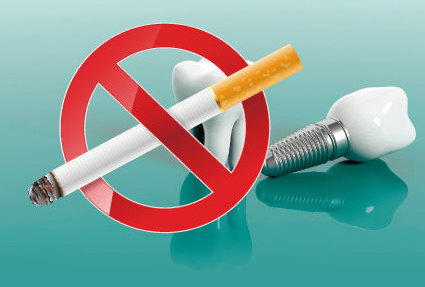
and block blood flow in the capillaries,
which hinders fusion with the bone.
Constantly touching the implant area with your tongue is also dangerous.
A small action like casually tapping the area with the tip of your tongue out of curiosity can lead to implant failure, so be careful.
- Implant procedure precautions,
lifestyle habits you must follow
to use it for life
Even after the implant has successfully fused with the bone,
that is not the end.
To use it healthily for a long time,
proper lifestyle habits are essential.
The most serious enemy is “peri-implantitis.”
Just as periodontitis can develop around natural teeth,
inflammation can also occur around an implant.
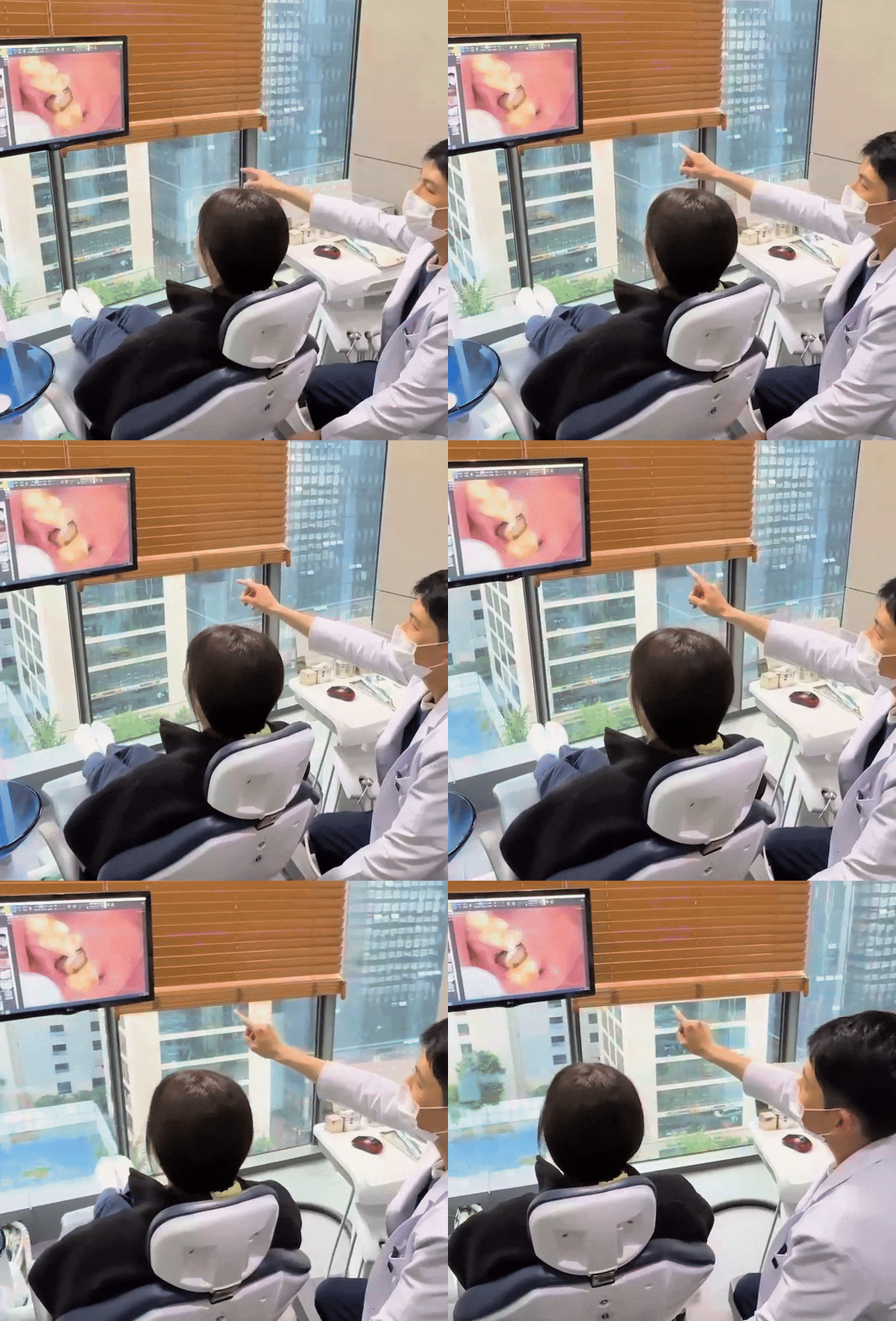
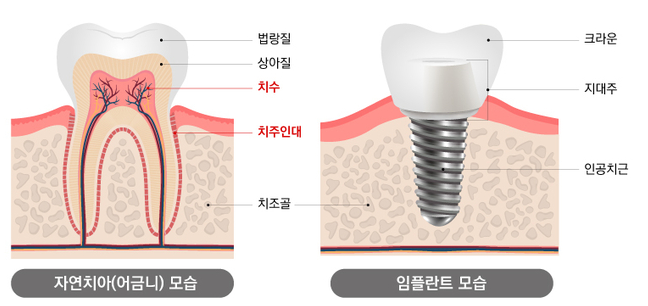
The problem is that implants do not have periodontal ligaments,
so they are more vulnerable to inflammation.
Once bone starts to dissolve,
natural recovery is almost impossible.
To prevent this,
regular brushing alone is not enough.
Because implants have thinner roots than natural teeth,
food tends to get stuck at the connection between the crown and the implant.
Interdental brushes and dental floss must be used as well.
You should avoid hard and chewy foods.
Unlike natural teeth, implants do not have periodontal ligaments that act as cushioning,
so they are especially vulnerable to lateral forces.
Foods such as nuts, ice, and foods with bones can put stress on the implant.
If you have a habit of grinding your teeth or clenching your jaw,
you must correct it.
Strong pressure applied unconsciously while sleeping can loosen the implant screw or, in severe cases,
fracture the implant itself.
- Implant procedure precautions,
regular checkups,
the key factor that determines implant lifespan
If you think, “I’ve had an implant, so I don’t need to go to the dentist anymore,” that is a big mistake.
Implants actually require more careful management.
Because implants are made up of multiple parts, the screws can loosen.
If the screws loosen, surrounding tissue can be damaged
and bone may dissolve.
Also, no matter how carefully you brush,
tartar that cannot be completely removed can only be eliminated through professional scaling.
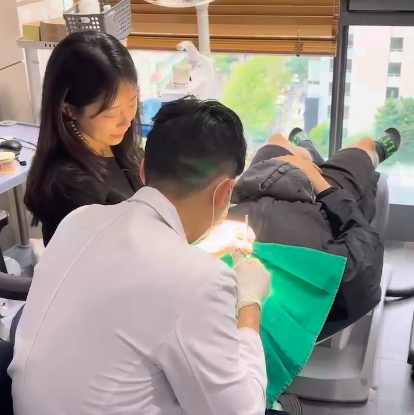
During regular checkups,
we check not only the condition of the implant but also your bite.
This is because, over time,
the position of nearby teeth may change or wear down,
which can place excessive force on the implant.
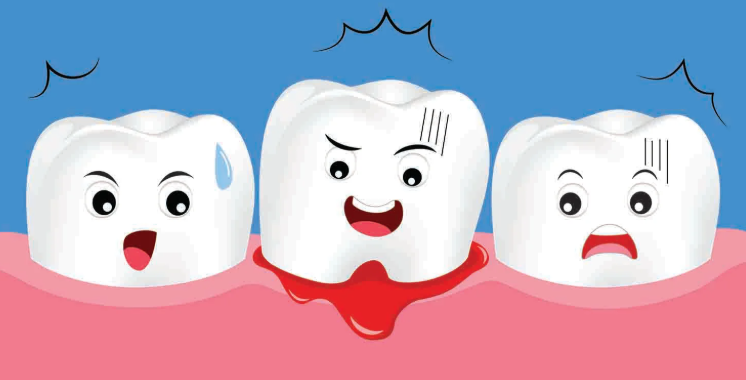
The earliest symptom of peri-implantitis is bleeding.
If you notice bleeding while brushing,
try focused care for about a week,
and if the bleeding still continues,
you should visit the clinic immediately.
If caught early, it can be resolved with simple treatment,
but if left untreated, it can lead to a situation where the implant has to be removed.
If cared for properly,
implants are an excellent treatment that can be used as long as natural teeth.
However, if you neglect care because of the mistaken belief that “once you get one, that’s it,”
your expensive investment may go to waste.
Thorough care for the first month after surgery,
proper lifelong habits,
and regular checkups
- If you follow just these three things carefully,
you will be able to enjoy delicious food to your heart’s content with your implant
and spend your later years in good health.
I hope you can enjoy the pleasure of chewing for life with healthy implants : )
| We are a place that honestly recommends only the treatments that are truly necessary D-Day Dental Naver Reservation ✔ |
| Inquiries about treatment at Seoul D-Day Dental |
|---|
| Main phone number: 02-568-2877 (Go directly) Naver TalkTalk inquiry (Go directly) |
| This post was written directly by D-Day Dental Clinic for the purpose of providing medical information and promoting the clinic, in compliance with Article 56, Paragraph 1 of the Medical Advertising Act. However, please use the information provided on the blog only as a reference, and for an accurate understanding of your individual symptoms, we recommend visiting a medical institution directly and confirming with a medical professional. All procedures and surgeries performed at the dental clinic, including implants, may involve side effects depending on the individual (inflammation, bleeding, swelling, nerve damage, etc.). Therefore, please make your decision after sufficient consultation with the medical staff in advance. The treatment photos in this post were taken with the consent of the patient who completed the entire treatment process at our clinic. The before-and-after photos are of the same person and were taken under the same conditions. |
Implant Procedure Precautions,, Why You Can’t Use It for 10 Years If You Don’t Know This








