Hello,
Are you worried about lower tooth decay?
I am Oh Tae-hoon, the CEO dentist of D-Day Dental Clinic,
Specialist in Integrated Dentistry.

I always put patients’
dental health first,
and aim to provide treatment that preserves
natural teeth as much as possible :)
Have you perhaps looked in the mirror,
noticed a black spot or hole in your lower teeth,
and thought, “It doesn’t hurt yet, so it must be fine”?

Or have you kept putting off a visit to the dentist,
saying, “I’m busy, I’ll go when I have time later”?
This kind of thinking is truly dangerous.
Lower tooth decay may look small on the surface,
but inside the tooth it may already be progressing significantly.
Like the tip of an iceberg,
what you can see is only a tiny part.
In particular, lower teeth are close to the salivary glands,
so decay tends to progress relatively quickly,
and once the nerve becomes infected,
you can end up losing sleep because of severe pain.
What is even more serious is that treatment costs can multiply,
and in the worst case, extraction may be necessary.
Today, I will clearly explain the two reasons
why lower tooth decay, which many people tend to overlook,
should never be delayed.
If you read this post to the end,
you may want to make a dental appointment right away.
Table of Contents
-
Lower tooth decay progresses quickly and carries a high risk of root canal treatment
-
Lower tooth decay often occurs in multiple teeth, expanding the treatment scope
-
Lower tooth decay progresses quickly and carries a high risk of root canal treatment
The reason lower tooth decay is especially dangerous
is its speed of progression.
Because lower teeth are close to the tongue,
food debris gets trapped easily,
and because saliva circulation is relatively poor,
it creates an environment where bacteria can multiply.
Decay begins in the enamel,
the hardest layer of the tooth.

At this stage, there is no pain at all,
so most people miss it.
But the moment it breaks through the enamel and reaches the dentin underneath,
decay spreads rapidly.
It is like a dam with a small hole.
At first, only a little water leaks out, but as time passes the hole gets bigger and the dam eventually collapses,
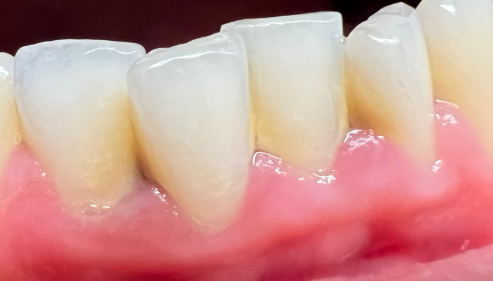
decay also becomes uncontrollable once it reaches the dentin.
In particular, lower teeth tend to have relatively short roots,
and the distance to the nerve is shorter.
Therefore, it takes much less time for decay to reach the nerve than it does in upper teeth.
If the nerve becomes infected, severe pain follows,
root canal treatment becomes unavoidable, and additional treatment such as placing a crown is also required.
What could have ended with a simple cavity treatment can turn into root canal treatment and crown treatment,
extending the treatment period from weeks to months
and increasing the cost by more than ten times.
- Lower tooth decay often occurs in multiple teeth, expanding the treatment scope
Another characteristic of lower tooth decay
is that it does not occur in just one place.
Decay on the adjacent surfaces between teeth often occurs simultaneously in multiple areas.
Interproximal decay is
almost invisible to the naked eye.
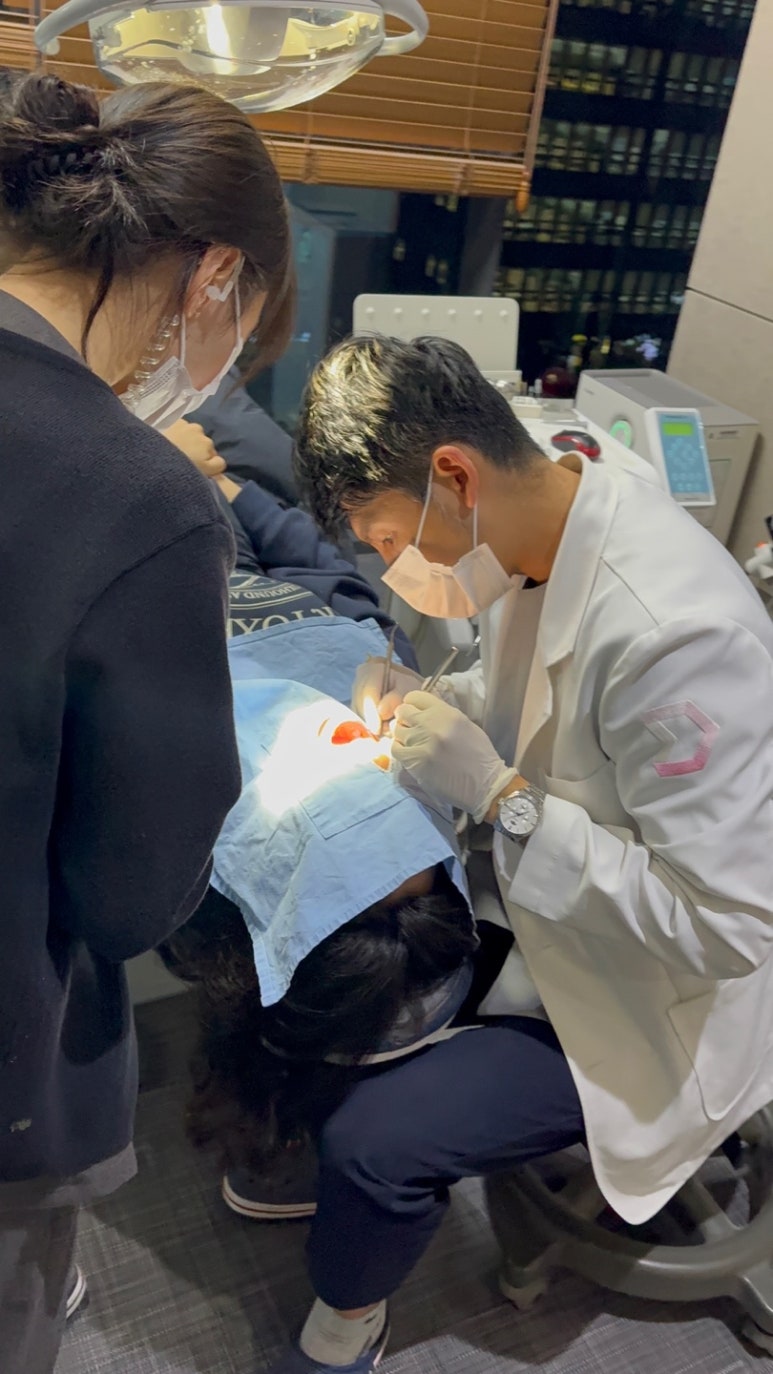
It may look fine on the surface, but when you take an X-ray, you find that decay is progressing in several teeth at once.
It is like termites eating through a house.
It may look intact from the outside,
but the interior is already severely damaged.
Because lower teeth are located near the salivary glands,
bacterial growth is especially active,
and because brushing is relatively difficult in this area,
there is a high chance that decay will occur in multiple teeth at the same time.
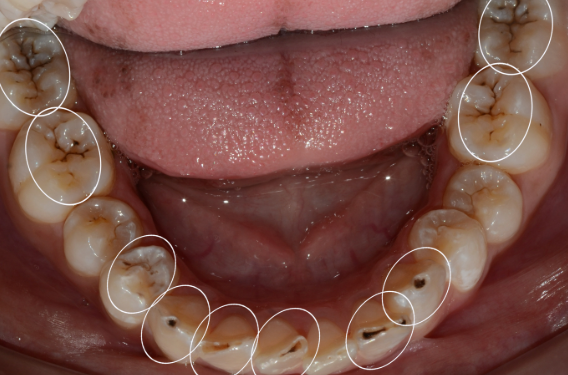
The problem is that if this kind of multiple decay is left untreated,
the decay gets deeper and only the outer shell of the tooth remains, so the tooth can break while chewing hard foods.
When that happens, it is no longer a matter of simple cavity treatment;
you may need complex prosthetic treatment or, in severe cases, extraction.
If it is detected early through regular checkups,
it can be solved with a simple resin filling,
but if you keep delaying, you may need inlays or crowns on several teeth,
which greatly increases the financial burden.
Lower tooth decay is a typical condition that brings to mind the saying,
“Losing the cow and then mending the barn.”
Even if it does not hurt right now,
with time the treatment becomes more complex
and the cost increases exponentially.
Healthy teeth
are an asset for life.
Rather than enduring a small inconvenience and postponing treatment,
we recommend getting an accurate diagnosis right away.
Early detection and treatment are the best ways to protect your precious
natural teeth :)
| A place that honestly recommends only the treatment that is truly necessary D-Day Dental Clinic Naver reservation ✔ |
| Contact for treatment at Seoul D-Day Dental Clinic |
|---|
| Main phone number: 02-568-2877 (Go directly) Naver TalkTalk inquiry (Go directly) |

| This post was written directly by D-Day Dental Clinic in compliance with Article 56, Paragraph 1 of the Medical Service Act, for the purpose of providing medical information and promoting the clinic. However, the information provided on this blog should be used for reference only, and for an accurate understanding of an individual’s symptoms, we recommend visiting a medical institution in person and confirming with medical staff. All procedures and surgeries performed at the dental clinic (including implants) may cause side effects depending on the individual (such as inflammation, bleeding, swelling, nerve damage, etc.). Therefore, please make your decision after sufficient consultation with medical staff in advance. The treatment photos in this post were taken with the consent of the patient who completed all treatment processes at our clinic. The before-and-after photos are of the same person and were taken under the same conditions. |
Lower Tooth Decay: 2 Reasons You Should Not Delay Treatment