Hello.
Are you looking for laminate types?
I’m Kim Moo-jin, chief doctor at D-Day Dental Clinic.

Recently, a patient told me,
Doctor,
there are so many types of laminates
I don’t know which one to choose.
I actually get this question very often when consulting with patients.^^
If you look at laminate ads these days,
you’ll see all kinds of names like
no-prep, ultra-thin, mini-tooth, and so on.

Some clinics even give their own brand names,
which makes things even more confusing.
A lot of people ask me,
"Can I also get clean and bright teeth like a celebrity with laminates?"
The most important thing is choosing the type that fits your teeth condition.
So today, as a practicing dentist, I’ll clearly organize the differences between laminate types and the criteria for choosing them.
If you read just this one article carefully,
you won’t be confused anymore.
Table of Contents
-
Laminate types,
No-prep vs. regular laminate: what’s the difference?
-
Laminate types,
Only check this for laminate materials
-
Laminate types,
How to find the right type of laminate for me
But if you choose the wrong type of laminate,
serious problems can occur.
The most common case is getting a no-prep laminate treatment even though the condition is not suitable for it,
which can make the teeth protrude unnaturally,
or, on the other hand,
removing too much tooth structure when preparation was not actually needed.
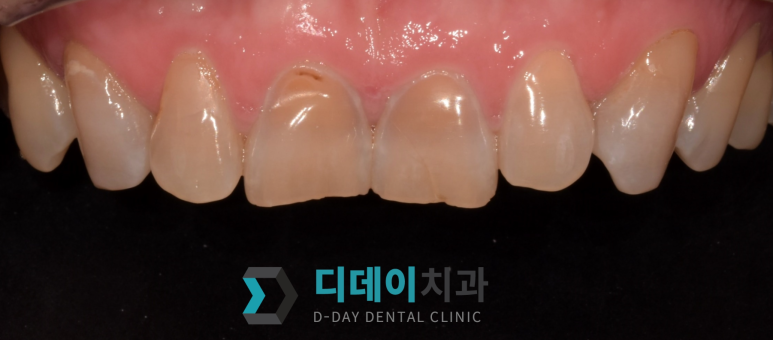
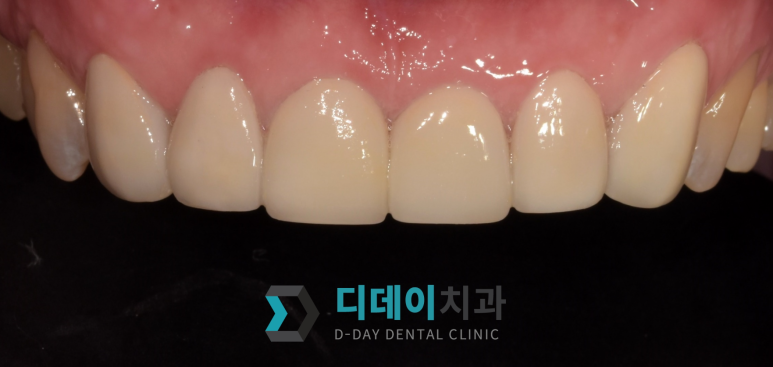 25-02-17
Laminate treatment on the upper front six teeth
25-02-17
Laminate treatment on the upper front six teeth
In particular, if you choose blindly thinking,
"It’s no-prep, so it must be safe,"
you may end up regretting it even more.
That’s because once a laminate is bonded,
removing it inevitably causes some damage to the tooth.
- Laminate types,
No-prep vs. regular laminate: what’s the difference?
First, let me explain the no-prep laminate,
which is the one most people are curious about.
A no-prep laminate is, as the name suggests,
a method of bonding ceramic without filing down the tooth at all.
But there is an important fact here.
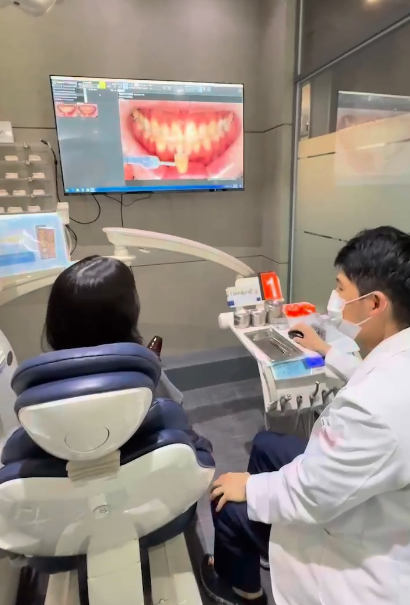
No-prep laminate is only possible in certain cases.
It is only possible when the teeth are small,
when there are spaces between the front teeth,
or when the teeth are positioned inward.
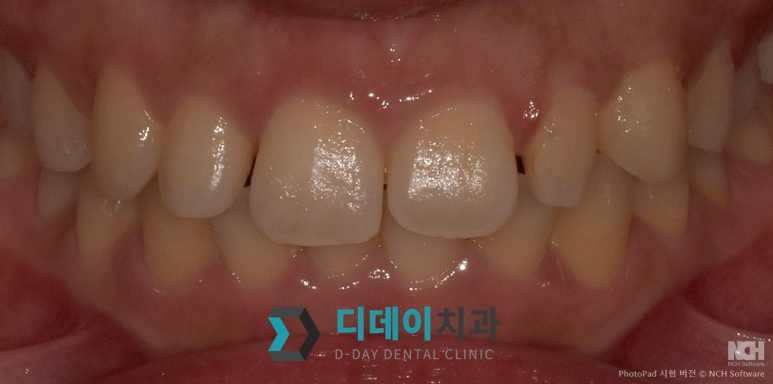
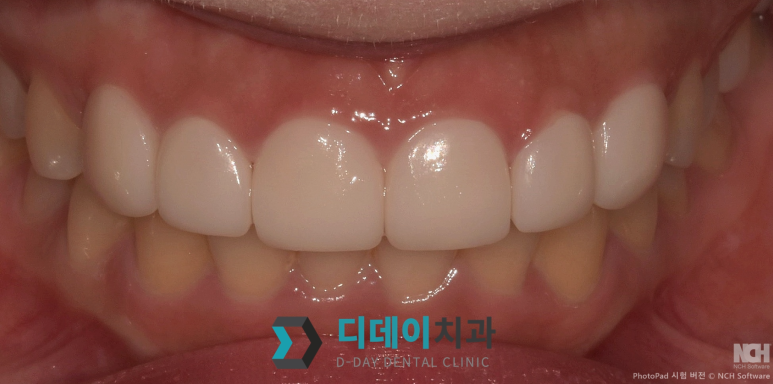 25-06-09
Laminate treatment on the upper front six teeth
25-06-09
Laminate treatment on the upper front six teeth
In cases like these, the teeth actually need to be built up to look larger and more attractive.
On the other hand, what happens if someone whose teeth are already large
or protruding gets no-prep laminates?
The teeth will become even more rabbit-like and look unnatural.
In such cases, proper preparation is actually necessary.
Regular laminate usually involves lightly filing down about 0.3 to 0.5 mm of the tooth surface and bonding ceramic to it.
In the past, more tooth structure was removed, but these days, thanks to advances in technology, even minimal preparation is enough to make it beautiful and durable.
- Laminate types,
Only check this for laminate materials
When deciding on the type of laminate,
the quality of the material is also very important.
Even with the same no-prep laminate, the result can be completely different depending on which material is used.
Globally recognized brands include the Filtek series from 3M in the United States and products from Ivoclar Vivadent in Europe.
At D-Day, we use products from Ivoclar.^^
These high-quality materials can achieve transparency and shade that are almost identical to natural teeth, and they also have excellent bonding strength.

The quality of the adhesive also should not be overlooked.
3M is also famous for its Post-it adhesive technology.
It also has outstanding technology in dental adhesives.
On the other hand, if low-quality materials are used, there is a higher risk of discoloration or detachment over time.
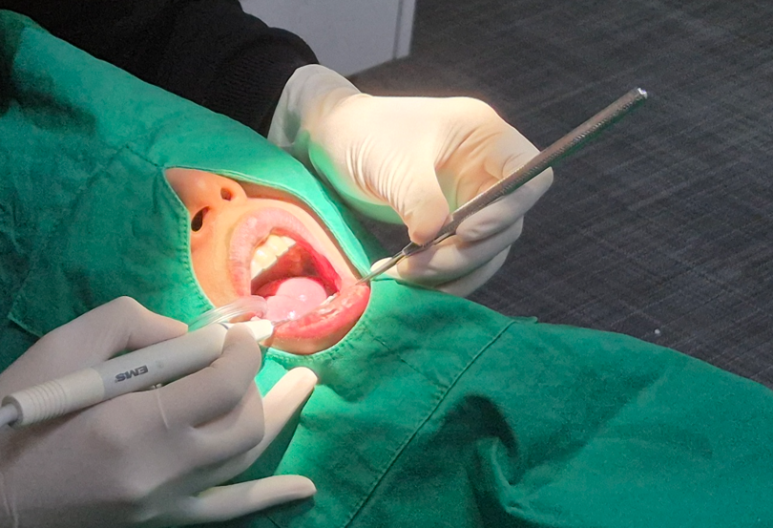
If a laminate comes off,
reattaching it is difficult,
and it can even cause tooth damage,
so it is important to use good materials from the start.
- Laminate types,
How to find the right type of
laminate for me
So how can you find the right type of laminate for you?
The most important thing is
a correct diagnosis.
Tooth size, alignment, color, and gum condition all need to be evaluated comprehensively.
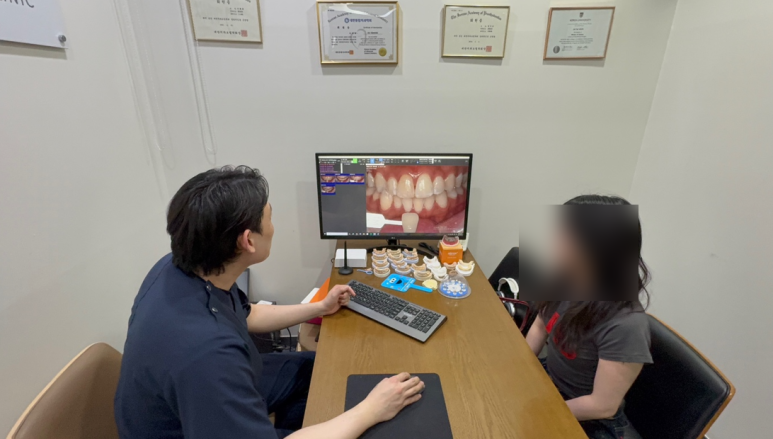
For example, if the front teeth are small and spaced apart,
no-prep laminate is appropriate,
and if the teeth are crooked or large,
minimal-prep laminate is better.
In addition, the patient’s lifestyle should also be considered.
If you often eat hard foods
or have a teeth-grinding habit,
you may need thicker and more durable laminates.
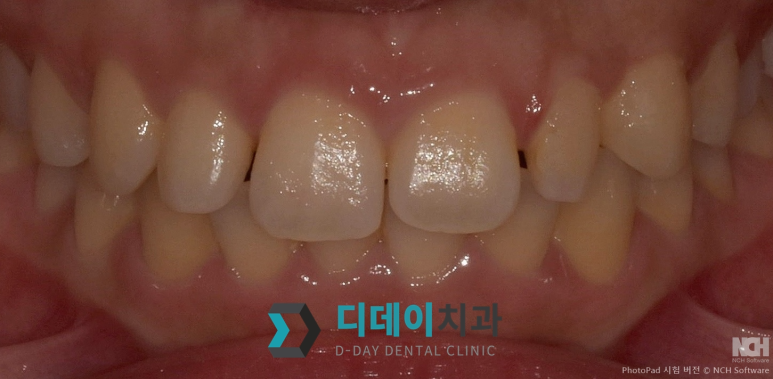
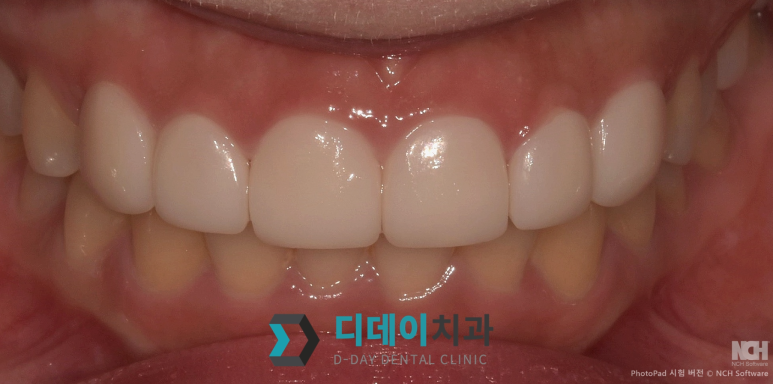 25.04.21
Laminate treatment on the upper front six teeth
25.04.21
Laminate treatment on the upper front six teeth
Above all, it is important to let go of the bias that
"no-prep is always good"
or "preparation is always bad."
Each method clearly has its pros and cons,
and the best choice depends on the patient’s condition.
To summarize what I explained today:
The type of laminate should be determined according to the condition of the teeth,
no-prep is not always better,
and the quality of the material also matters.
The most important thing is to choose the type that suits you through an accurate diagnosis.
Do not be swayed by advertisements,
and make a wise choice through sufficient consultation.
| A place that honestly recommends only the treatments that are truly necessary | D-Day Dental Clinic Naver Reservation ✔ |
| Contact for treatment inquiries at Seoul D-Day Dental Clinic |
|---|
| Main phone: 02-568-2877 (Go directly) Naver TalkTalk inquiry (Go directly) |

| This post was written directly by D-Day Dental Clinic in compliance with Article 56, Paragraph 1 of the Medical Advertising Act for the purpose of providing medical information and promoting the clinic. However, please use the information provided on this blog only as a reference, and for an accurate understanding of your personal symptoms, we recommend visiting a medical institution directly and confirming with medical staff. All procedures and surgeries performed at the dental clinic (including implants) may cause side effects depending on the individual (infection, bleeding, swelling, nerve damage, etc.). Therefore, please make your decision after sufficient consultation with medical staff in advance. The treatment photos in this post were taken with the consent of the patient who completed all treatment processes at our clinic. The before-and-after photos are of the same person and were taken under the same conditions. |
Laminates Types: Here’s All You Need to Check






Previous image
Next image