Hello.
Are you looking into the implant stitch removal process?
I am Dr. Kim Mu-jin of D-Day Dental Clinic, sharing the happiness of life through implants.

Once you get an implant,
isn’t it something you keep using?
Is it painful when the stitches are removed too?
Recently, patients have been asking me
these kinds of questions very often.
In particular,
Aren’t all implants
basically the same?
Removing the stitches
must be the same everywhere, right?
There are people who say that,
but that is not actually the case.

When I meet patients,
I often come across situations that are truly unfortunate.
An implant surgery may have ended successfully,
but because they did not receive a proper explanation during the stitch removal process,
some people become afraid, saying, “I heard removing the stitches hurts more than the surgery...”
However, you really do not need to worry about this.
Stitch removal is a simpler and less painful process than you might think.
Since my university days until now,
what I have considered most important is
to treat each patient as if they were my own family
and provide honest, ethical care.
So today, I will honestly explain
all the questions you may have about stitch removal.
<Contents>
-
Implant stitch removal process,
when is the best time to do it?
-
Implant stitch removal process:
this is how it goes
-
Implant stitch removal process,
when is the best time to do it?
The most common question after implant surgery is
when the stitches should be removed.
Generally, stitch removal is performed
7 to 10 days after implant surgery.
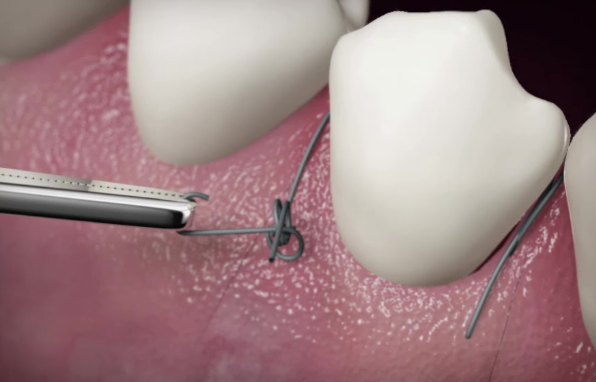
But the important thing here is
the patient’s recovery status.
We first need to check whether the gums have healed enough
and whether there is any inflammation.
In my clinical experience, most patients
can have their stitches removed starting on day 7.
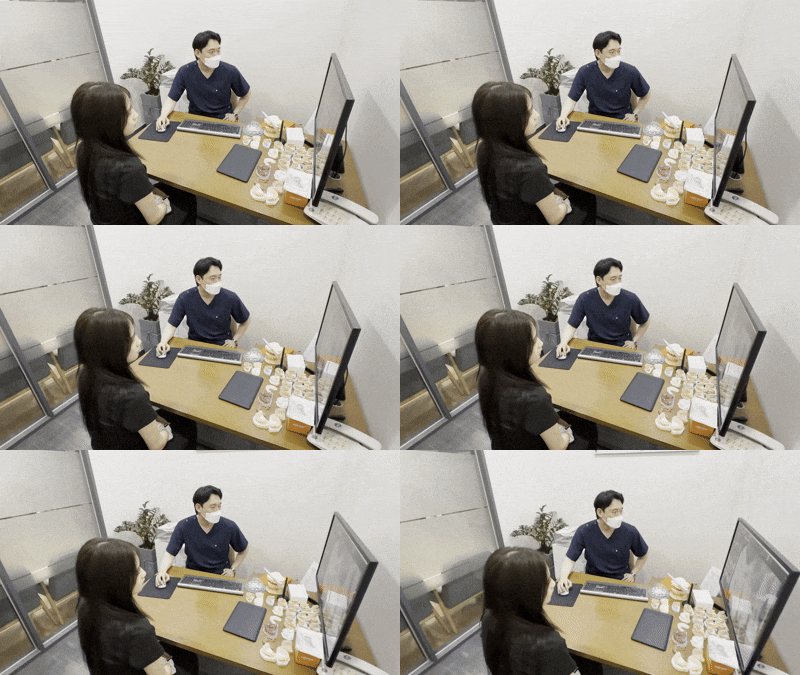
You can think of it as being similar to
removing a bandage from a wound.
I always try to provide personalized consultation and treatment
that suits each patient.
The timing of stitch removal is no different;
there can be individual differences.
For patients who smoke or have diabetes,
recovery may take a little longer,
so the procedure is done after waiting about 10 to 14 days.
What happens if the timing of stitch removal is missed?
If they are left in too long, bacteria can multiply around the stitches,
and the chance of gum inflammation increases.
That is why it is very important
to remove them at the right time.
- Implant stitch removal process:
this is how it goes
Many people are afraid of stitch removal,
but the procedure itself is really simple.
No anesthesia is needed,
and the entire process is over in about 5 minutes.
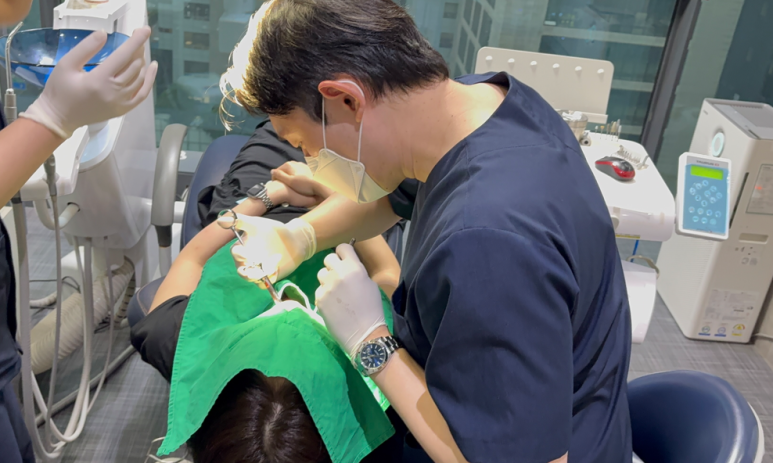
First, the surgical site is cleaned thoroughly
through disinfection.
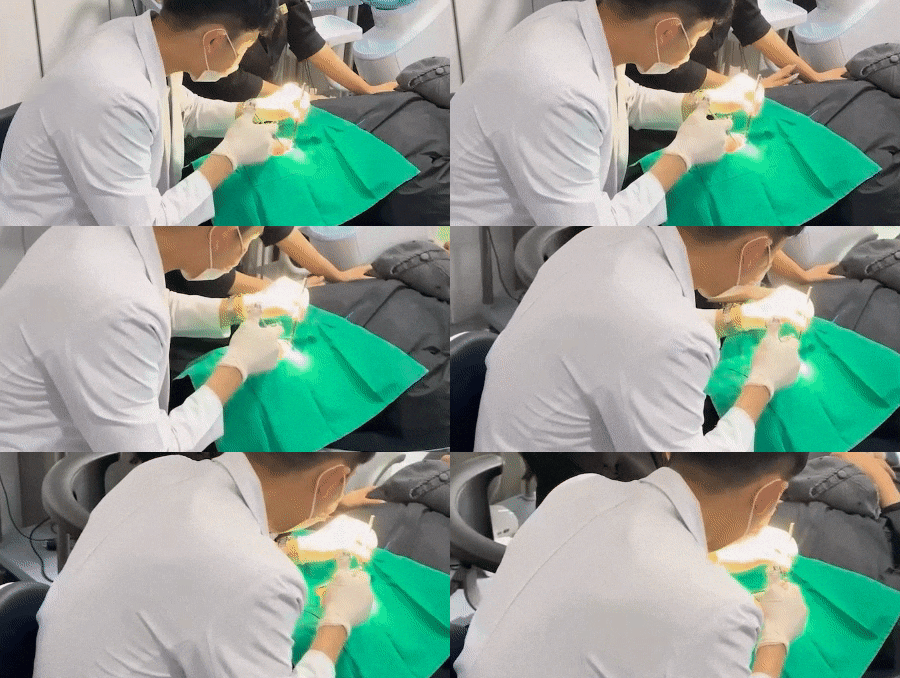
Then, using special scissors or tweezers,
the stitches are carefully removed one by one.
At this point, the sensation patients feel is
roughly a slight pulling feeling.
Rather than pain, it is more like a mildly strange sensation.
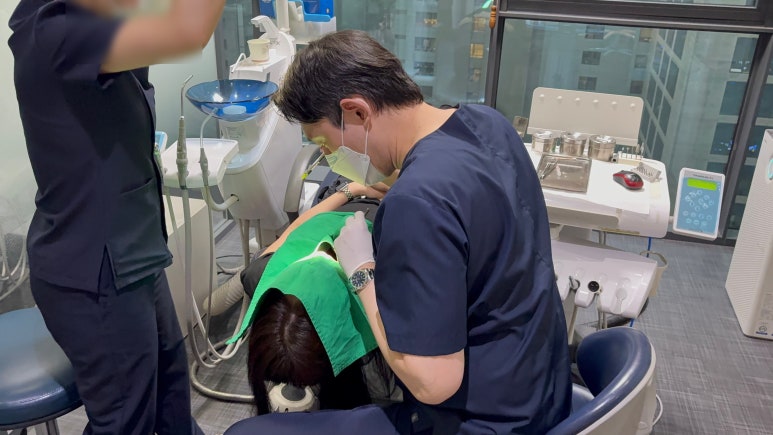
What I always emphasize to patients is
that I provide treatment with the mindset of
wanting the other person to truly do well.
That is why I explain each step as I go
through the stitch removal process.
Then patients feel
much more at ease.
After the stitches are removed, the area is disinfected once more,
and the condition of the gums is checked.
Whether healing is progressing well,
whether there is any inflammation,
careful checking is the most important part.
I always tell my patients,
“Rather than worrying about patients not coming in,
I worry that I may not be able to complete the treatment for everyone I have seen.”
That is why, even after stitch removal,
if severe pain, bleeding, or swelling occurs,
I ask you to contact us right away.
Most cases are part of the normal healing process,
but occasionally there may be an infection or another issue.
Stitch removal is a very small part
of the implant treatment process,
but I know very well that it can be a major concern
for patients.
That is why I always strive to provide enough explanation
and help you receive the procedure as comfortably as possible.
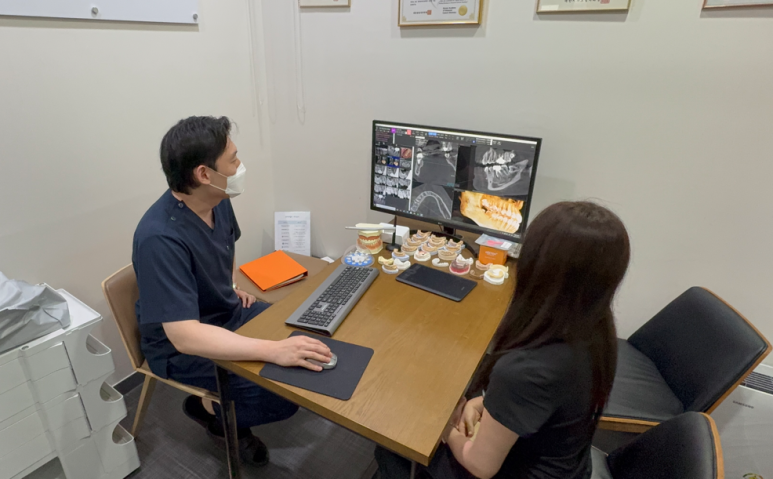
To summarize what I shared today:
Stitches are removed 7 to 10 days after surgery,
and the process itself is simple, taking about 5 minutes.
It is not painful enough to require anesthesia,
and most people can tolerate it comfortably.
However, for about one day after stitch removal,
you should be careful not to irritate the surgical site.
From now on, do not worry about stitch removal.
It is a truly simple process
and easier than you may think.
If you have any questions,
please feel free to contact us anytime.
| A place that honestly recommends only the treatment that is truly necessary D-Day Dental Clinic Naver Reservation ✔ |
| Seoul D-Day Dental Clinic Treatment Inquiry |
|---|
| Main phone number: 02-568-2877 (Go directly) Naver TalkTalk Inquiry (Go directly) |
| This post was written directly by D-Day Dental Clinic in compliance with Article 56, Paragraph 1 of the Medical Advertising Act, for the purpose of providing medical information and promoting the clinic. However, the information provided on the blog should be used for reference only, and for an accurate understanding of an individual’s symptoms, we recommend visiting a medical institution in person and confirming with medical staff. All procedures and surgeries performed at the dental clinic (including implants) may carry the risk of side effects such as inflammation, bleeding, swelling, and nerve damage, depending on the individual. Therefore, please make your decision after sufficient consultation with medical staff in advance. The treatment photos in this post were taken with the consent of the patient who completed the entire treatment process at our clinic. The before-and-after photos show the same person and were taken under the same conditions. |
Implant Stitch Removal Process: Just Knowing This Is Enough









