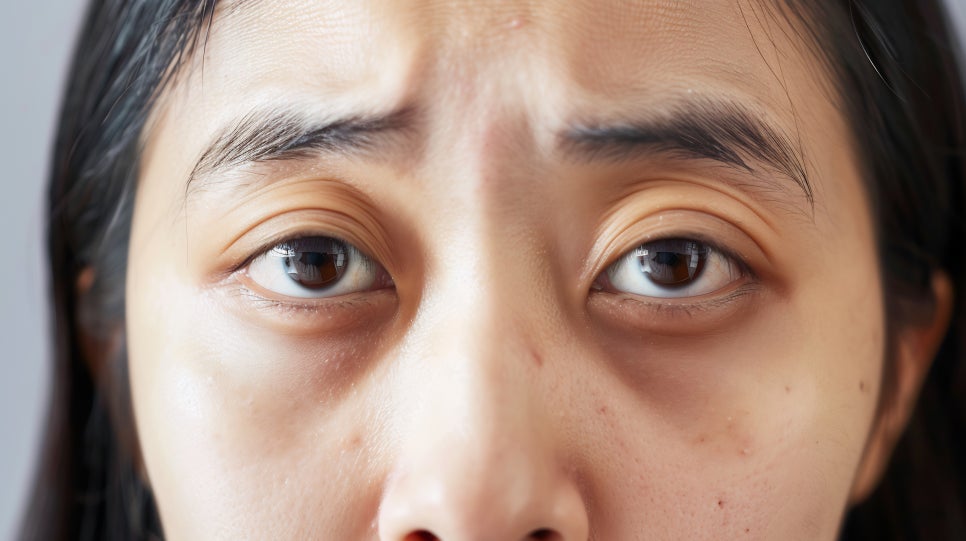
“Pu Bao has not left. He is always around my eyes.”
“It’s not my mood that’s shadowed—it’s just the area under my eyes!”
Bulging fat under the eyes and dark circles can make someone look depressed and tired.
In particular, they can make a person look older, and since makeup has its limits in covering them, they are a source of stress for both younger people in their 20s and 30s and middle-aged people in their 40s to 60s.
Why does hollowness under the eyes occur?
Deep within the eyelids is orbital fat that surrounds the eyeball.
This fat is held in place by a thin membrane called the septum.
As we age, if the septum loosens and can no longer hold the fat adequately, the fat begins to protrude forward.
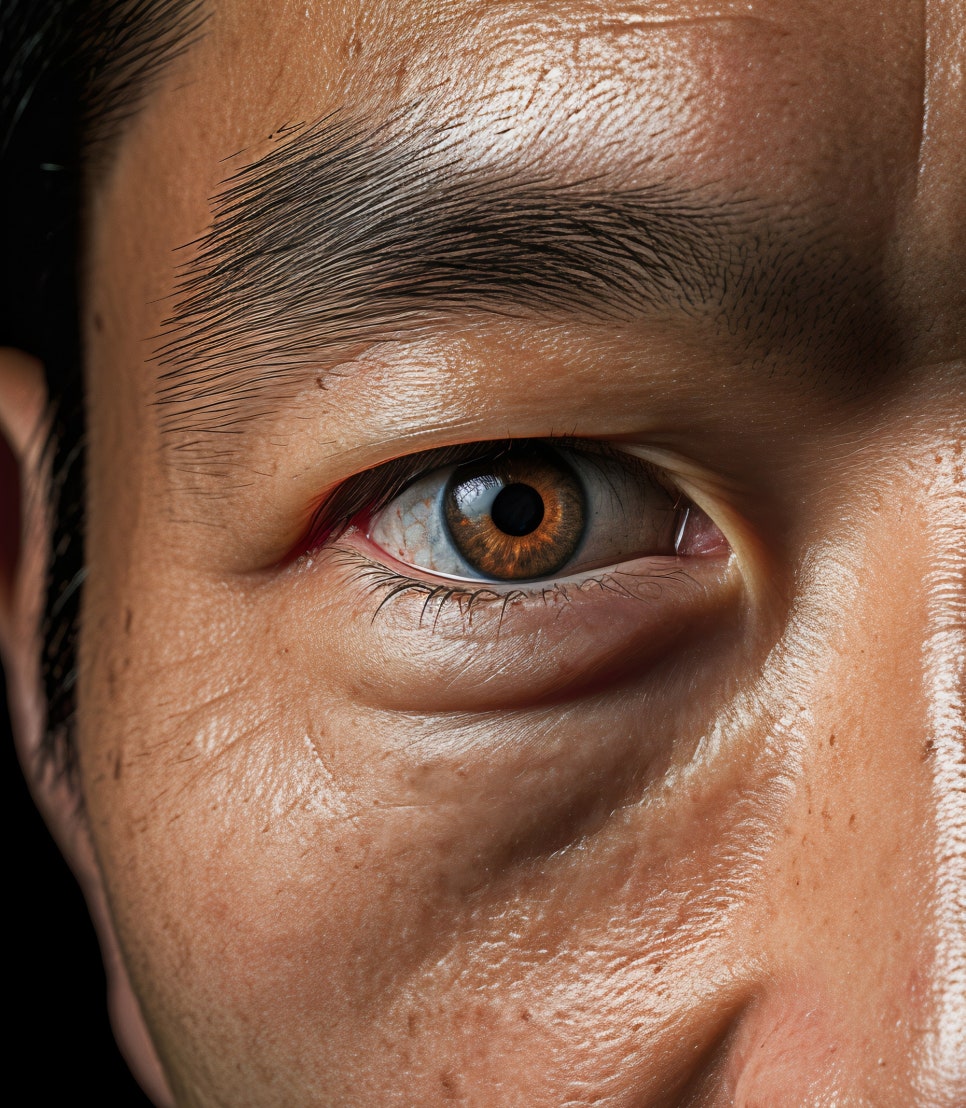
The tear trough ligament area, commonly called the tear trough, is a normal anatomical structure,
and there is naturally no fat in that area.
When the orbital fat above the tear trough protrudes forward,
the tear trough itself cannot protrude, so that area appears even more sunken.
Below the tear trough, various facial fat compartments are present.
When these fat compartments are located close to the tear trough—that is, close to the eyes—the tear trough is less noticeable and the area looks youthful and full.
But when these fat layers descend downward, the tear trough area appears empty,
creating the impression of hollow under eyes.
In this way, when the area centered around the tear trough or the tear trough ligament appears protruded above and sunken below, the protruding fat creates shadow in that region.
This makes dark circles look more severe.
The two can occur together and look worse, or one may be more pronounced than the other.
If you are concerned about the area under your eyes looking dark, you may want to consider lower eyelid fat repositioning or lower blepharoplasty.
Both procedures involve the under-eye area, but what is the difference between them?
First, the surgical method and the target patients are different.

First, lower eyelid fat repositioning is mainly for people in their 20s and 30s, relatively younger individuals.
It is a procedure for cases where the septum is weak and the fat protrudes forward despite no sagging of the skin or muscles, or
where the midface bones are underdeveloped from the beginning, causing the fat to sit relatively farther forward.
By moving the fat to address the bulging under-eye fat and improving the sunken areas and dark circles, this surgery helps create a brighter appearance.
Instead of making an incision in the outer skin around the eye, the surgery is performed through the inner conjunctiva by everting the eye, so there is no visible scar on the outside, which can increase patient satisfaction.
In addition, the recovery period is short, allowing a quick return to daily life, which is a major advantage.
I think it would be better to explain with a case,
so I brought a lower eyelid fat repositioning patient case.
*These are photos of a patient who consented to the use of the content.
Before surgery
These are photos of the patient before surgery. You can see bulging fat under the eyes and the shadow created by it.
However, there is almost no sagging of the skin, and no muscle laxity is observed.
After surgery
This is the post-surgery result. You can see that the hollowed area below has been filled in again. The dark circle area has also become somewhat brighter. Among the various elements that make up dark circles, the skin color itself does not change, but when the protruding area is improved through surgery, the shadow improves as well, resulting in an improvement in skin that looks dark or dull.
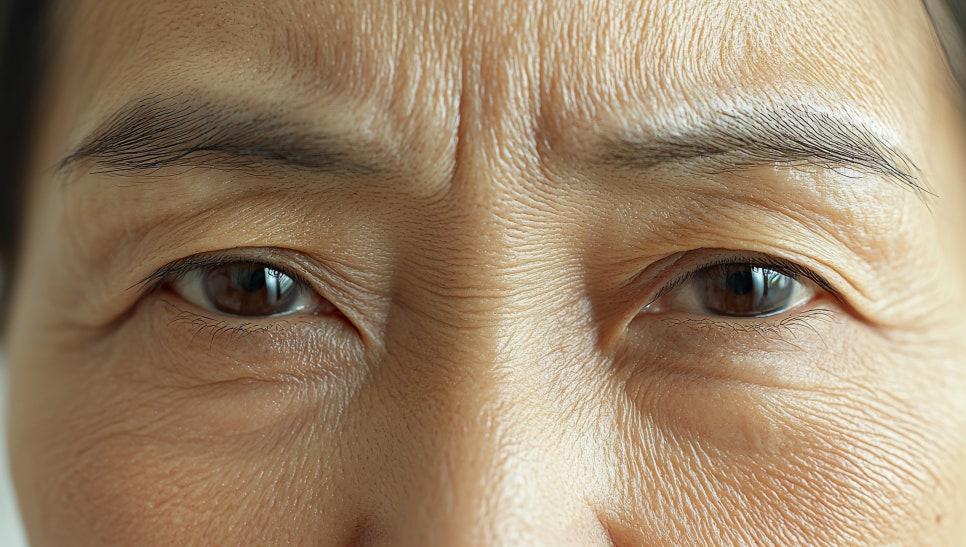
If lower eyelid fat repositioning is a procedure that addresses the appearance of hollowness caused mainly by the protrusion of the upper fat layer,
lower blepharoplasty is mainly performed for people in their 40s to 60s.
When the issue is not simply bulging under-eye fat, but sagging due to aging as well, you can think of it as a procedure that improves the under-eye fat and other related concerns.
Lower blepharoplasty can correct protruding under-eye fat caused by aging, as well as sagging skin, lax muscles, and other related changes.
If under-eye skin sagging is severe, the muscles are loose, there are many wrinkles, and the fat has dropped, lower blepharoplasty may be worth considering.
Likewise, I think it would be better to explain with a case, so I brought a lower blepharoplasty patient case.
*These are photos of a patient who consented to the use of the content.
Before surgery
This is the patient before surgery. Bulging under-eye fat and the resulting shadow are visible, but there is also some sagging skin, and laterally the muscles have also descended.
After surgery
This is the post-surgery result. You can see that the hollowed area below has been filled in again. The dark circle area is visibly brighter. By correcting the sagging skin and muscles and improving the fat layer at the same time, better results can be achieved.
To summarize,
If there is almost no skin sagging,
if the tear trough ligament is intact,
and if the under-eye fat protrudes forward, creating a shadow below that point,
then lower eyelid fat repositioning is recommended.
If the skin is loose and there are wrinkles under the eyes,
and the muscles are also lax (especially toward the outer eye area),
then lower blepharoplasty is recommended, in which the excess skin is removed by excision,
and the loosened muscles are lifted and fixed in place.
Under-eye plastic surgery such as lower eyelid fat repositioning and lower blepharoplasty requires a personalized diagnosis based on each individual’s skin condition, degree of aging,
eye shape, and other circumstances.
In addition, it is most important to accurately understand the differences between the two procedures and, through consultation with a plastic surgery specialist with extensive clinical and surgical experience,
confirm the procedure that is appropriate for you and establish a surgical plan.
We hope that through effective under-eye plastic surgery tailored to you, you can bring back a youthful look from shadowed under-eyes.