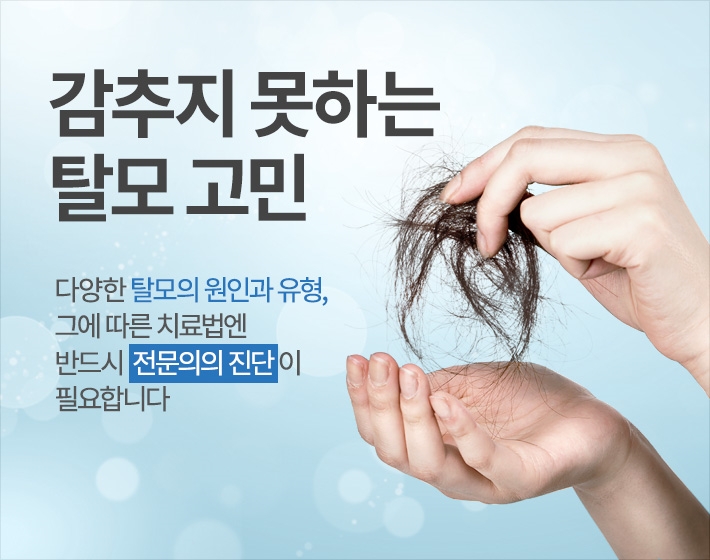
Why does hair loss occur?
The average hair cycle on the scalp is about 3 years for the growth phase, 3 weeks for the regression phase, and 3 months for the resting phase. Of the total scalp hair, about 84% is in the growth phase, 2% in the regression phase, and 14% in the resting phase. Hair loss occurs when the balance of these phases is disrupted, causing the growth phase to shorten or the resting phase to lengthen.
Normally, about 50 to 100 hairs fall out naturally each day. If more hair than this falls out, hair loss should be suspected. Since there are many types and causes of hair loss, and therefore many different treatments, it is important to receive a diagnosis from a specialist.
Androgenetic alopecia
Unlike animals, humans can develop baldness not only because of genetic predisposition or male hormones, but also due to various causes such as mental stress, nutritional disorders, and aging. In particular, baldness caused by male hormones occurs frequently in men, but saying that excess male hormones cause baldness is not an accurate expression.
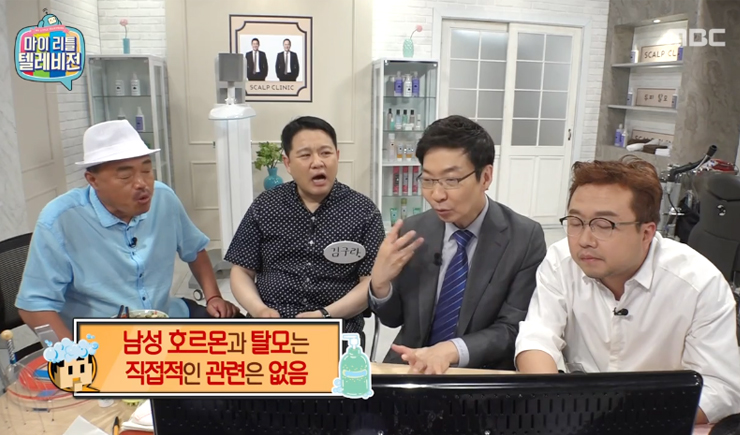
MBC entertainment program 'My Little Television (Maltel)' Kim Heung-guk, Kim Gu-ra, Imi-seok (CEO doctor of Imi Seok Theme Dermatology / President of the Korean Society for Hair Loss Treatment), Park Hwi-soon [Photo = MBC entertainment program 'My Little Television (Maltel)' screen capture]
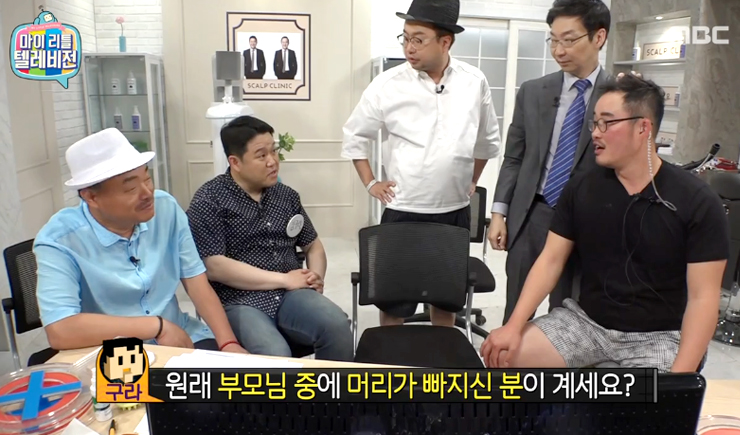
Considering that women rarely go bald, male hormones can be said to be a major factor in baldness. However, baldness does not occur simply because there are too many male hormones. Rather, baldness occurs when excessive secretion of male hormones is combined with other causes such as genetic factors, stress, hormonal changes, and dietary habits.
It is true that androgenetic alopecia is caused by testosterone, a male hormone. However, not everyone who secretes a lot of testosterone becomes bald. Instead, people whose body cells that receive testosterone, known as receptors, are genetically developed are more likely to become bald.
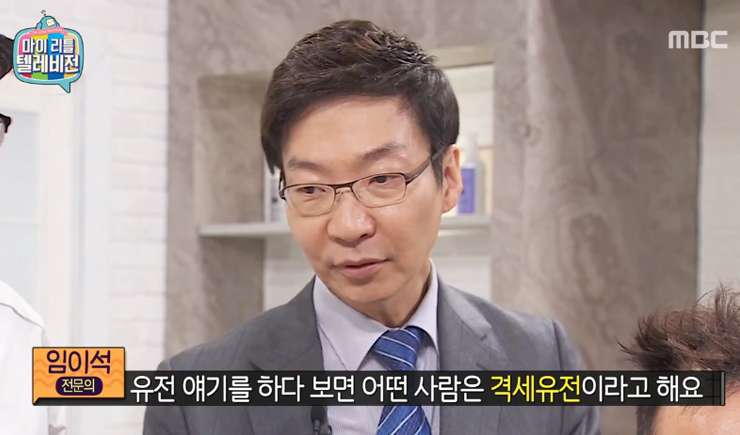
Dermatology specialist Imi-seok (CEO doctor of Imi Seok Theme Dermatology / President of the Korean Society for Hair Loss Treatment) [Photo = MBC entertainment program 'My Little Television (Maltel)' screen capture]
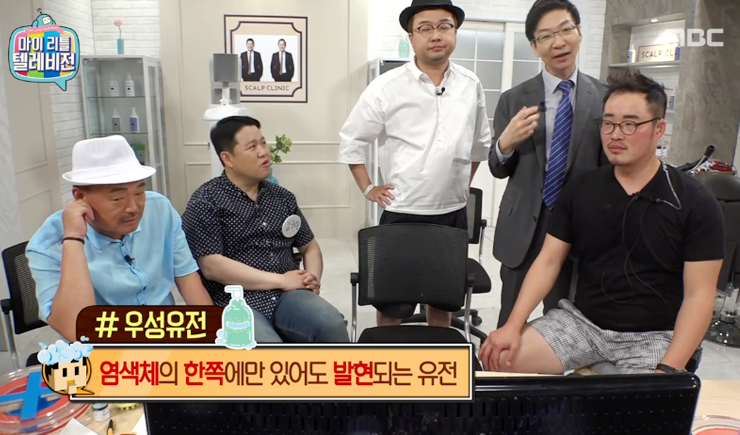
Androgenetic alopecia is caused by testosterone (male hormone), but the sensitivity of the cells that recognize and receive that hormone is not determined by blood levels; it is inherited genetically from the family. In other words, people who genetically have more cell receptors that recognize and receive information about male hormones, the cells that serve as the gateway for male hormones, are the ones who become bald.
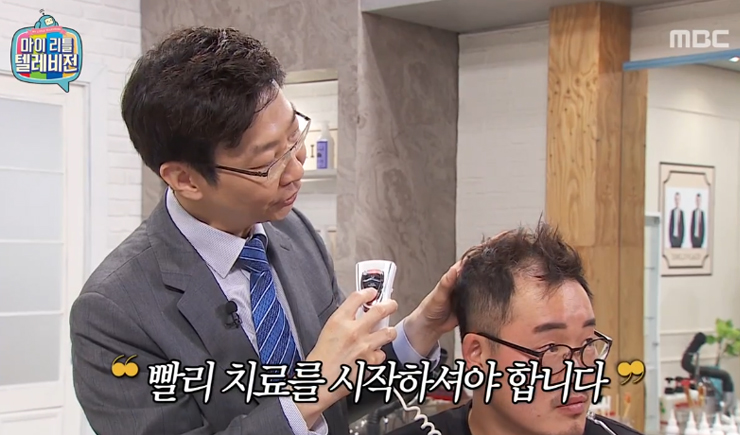
Dermatology specialist Imi-seok (CEO doctor of Imi Seok Theme Dermatology / President of the Korean Society for Hair Loss Treatment) [Photo = MBC entertainment program 'My Little Television (Maltel)' screen capture]
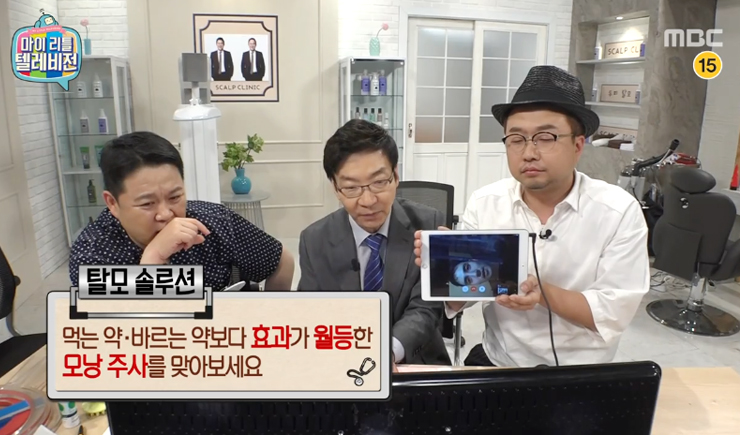
Hair loss solution: 'Try follicle injections, which are far more effective than oral or topical medication' [Photo = MBC entertainment program 'My Little Television (Maltel)' screen capture]
Female pattern hair loss
“Hair loss in women too..?” In the case of female hair loss, there are many causes and types. In general, relatively common cases include alopecia areata in people who are very sensitive to stress, hair loss that occurs temporarily after childbirth because postpartum care was not done properly and the hair grows back late, and hair loss caused by nutritional deficiency from dieting, or by diseases such as anemia or ovarian cysts.
In cases of androgenetic alopecia in women, women have far more of the female hormone estrogen than the male hormone androgen, which causes hair loss, so they do not become completely bald like men. Only a large amount of hair falls out, reducing overall hair density. The cause is that the function of estrogen, the female hormone, or androgen, the male hormone, should be suppressed, but when the hormonal balance in the body is disrupted and androgens increase excessively, or when the secretion of androgen, the male hormone, is activated due to misuse of oral contraceptives and severe dieting, it tends to appear easily. Various stressors from social life and taking medications that have male hormone-like effects can also be causes.
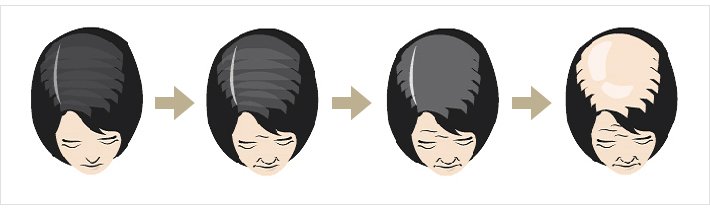
Among women with androgenic alopecia, some complain not only of scalp hair loss but also of body hair growth, masculinization symptoms, and other endocrine abnormalities. The pattern of female hair loss appears around the crown area. At this time, the front hairline becomes more sparse and the scalp is visible, but it does not extend beyond the boundary of the hairline.
There is no definite treatment for hair loss in women, and it tends to be permanent and show a genetic predisposition. In some cases, Minoxidil has been reported to be effective, and if the hair loss is concentrated in the front area or causes cosmetic problems, autologous follicular unit transplantation may be considered.
Alopecia areata
Alopecia areata is when the hair on one or more areas of the scalp falls out in a circular pattern all at once. It cannot really be called baldness; it is a temporary hair loss disorder. Suggested causes include autoimmune theory, peripheral nerve abnormality theory, and autonomic nerve abnormality theory, and mental stress is also pointed out as a major cause.
Recovered hair may grow back as white hair, but over time it is usually replaced with dark-colored hair. In some cases, however, it may remain white for years. Although it often heals naturally, if the lesion expands or merges to form a large patch of hair loss, it may progress to total scalp hair loss or complete body hair loss.
Telogen effluvium
Hair goes through growth, regression, and resting phases, so each strand lives out its life according to a cycle. Telogen effluvium refers to a condition in which the hair follicle is exposed to some kind of stress, cannot complete its designated growth period, and transitions into the resting phase midway, causing an abnormally large amount of hair that should normally remain to fall out.
Stresses that can trigger telogen effluvium include childbirth, surgery, high fever, medication, pulling on the hair, chronic systemic illness, nutritional deficiency, and chronic scalp skin diseases. Hair loss appears all over the scalp. If there is no continuing stimulus, hair that has entered the resting phase will return to the growth phase after about 6 months and recover.
Disease-related hair loss
When we experience illnesses accompanied by high fever, severe infectious diseases, or major surgery, our body suffers tremendous stress, and 1 to 3 months after recovery, we may notice that a lot of hair is falling out. This type of hair loss usually improves on its own, but hair loss caused by chronic illness may improve or worsen depending on whether the disease recovers. In particular, hair loss caused by disease can be exemplified by hair loss due to thyroid disorders. In general, patients with hypothyroidism have coarse, brittle hair and a reduced amount of hair.
Patients undergoing cancer treatment may also experience hair loss as a side effect of anticancer drugs or hormone therapy. Anticancer drugs work by suppressing cell division and proliferation, and when they affect the hair, hair loss occurs. Anticoagulants used for hemophilia can also affect the blood components in the hair papilla vessels, causing nutritional disorders in the hair and leading to hair loss.
Traction and pressure alopecia
If hair is tied or pulled too tightly, the roots can weaken and hair loss may occur. In the past, it was common in Korea to tie young girls' hair very tightly. If this affects hair during the growth stage, it can lead to hair loss.
Imi Seok Theme Dermatology hair loss prevention 'Scalp and Hair Clinic'
Through our scalp care program, you can make your hair sufficiently strong. Healthy hair comes from a healthy scalp. When hair begins to fall out and your forehead gradually becomes wider, you may start considering hair transplantation. It is not too late to first receive scalp care that helps prevent hair loss and keeps your existing hair stronger for longer, and then decide on hair transplantation.
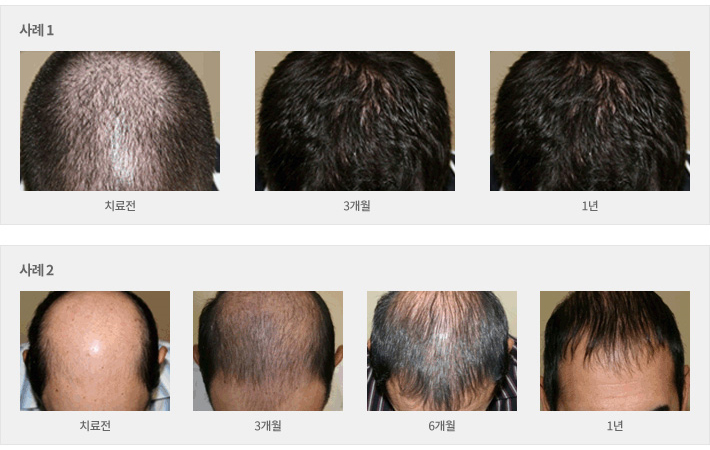
Hair loss treatment case (PRP-only hair loss treatment)
Discover total care for hair, from scalp disorders to hair transplantation!
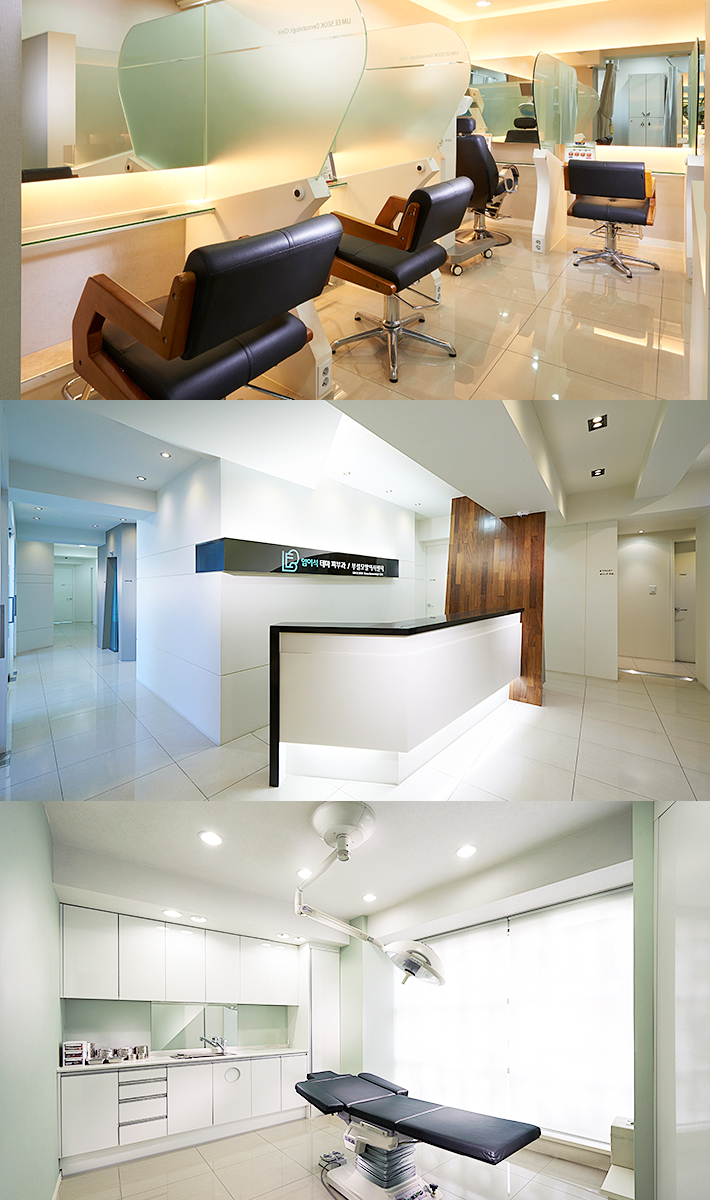
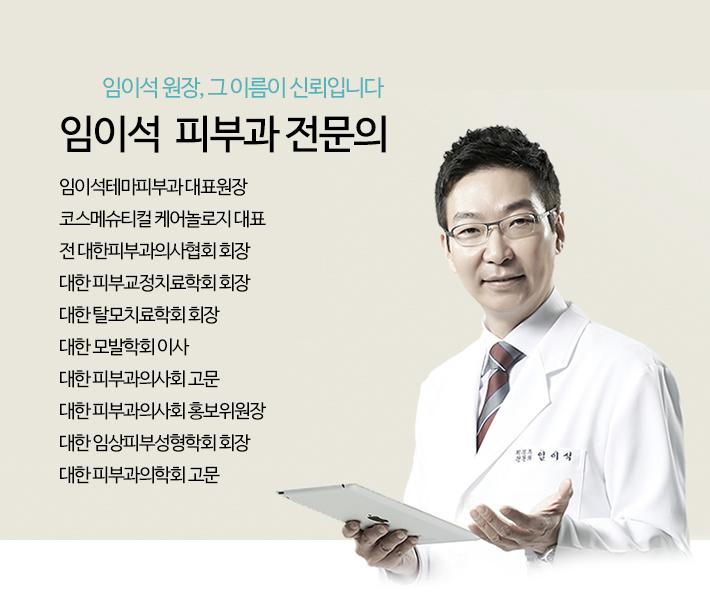


Sinsa Station Dermatology, Imi Seok Theme Dermatology
Phone consultation: 02-3446-1110 / 3446-1131
KakaoTalk consultation: Hair ID thema1 / Skin ID thema2