Low-Temperature Burns to Watch Out for in Winter
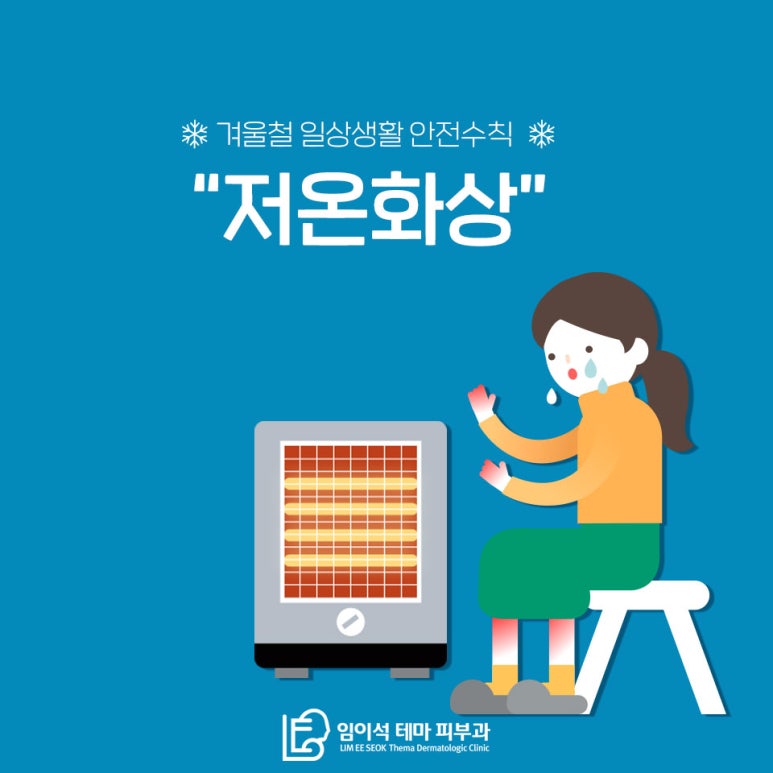
Recently, as electric heating mats, electric pads, and other heating products that exceeded the surface temperature standard and posed fire and burn risks were discovered and ordered recalled, special attention is being urged regarding low-temperature burns. Portable hand warmers, heat packs, hot-air heaters, and similar products that warm the body gradually at relatively low temperatures can expose users to low-temperature burns if they are used for long periods while forgetting the risk of burns. Let’s look at low-temperature burns that increase in winter due to the use of heating devices, along with what to do if you get one and how to prevent them.
What Is a Low-Temperature Burn?
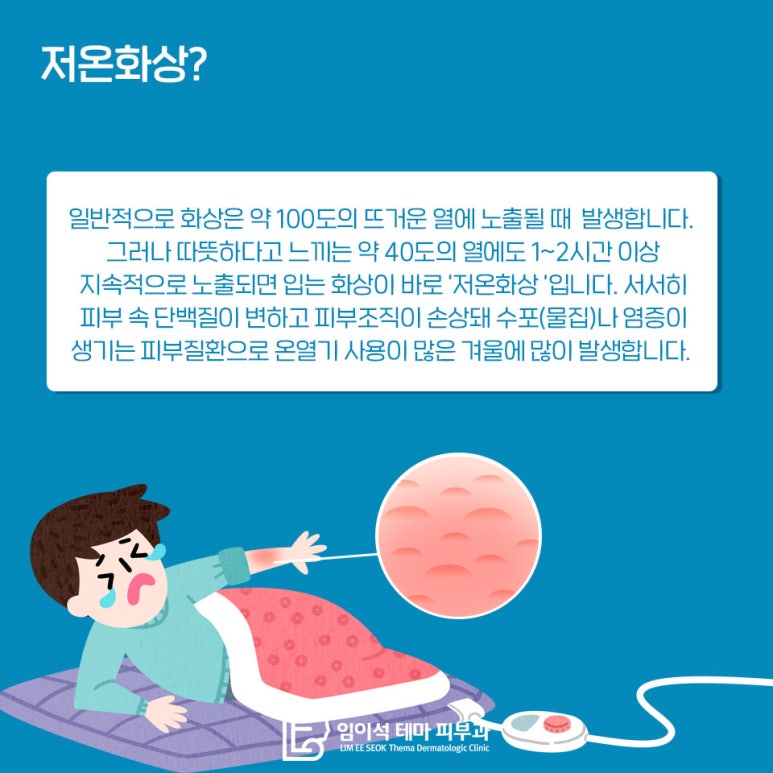
In general, burns occur when exposed to heat of about 100 degrees. However, even heat of about 40 degrees, which feels warm, can cause a burn if you are continuously exposed to it for more than 1 to 2 hours; that burn is called a “low-temperature burn.” A low-temperature burn is a skin condition in which skin proteins slowly change and the skin tissue is damaged, causing blisters or inflammation. Skin tissue may necrose and turn brown or black. It occurs frequently in winter, when heating devices are used a lot. In particular, people with dulled peripheral sensation due to diabetes or stroke should be careful because they may not easily notice a low-temperature burn. There is also a risk of low-temperature burns if you fall asleep on an electric pad after drinking alcohol or after taking sleeping pills. Low-temperature burns usually appear as a second-degree burn, and in severe cases, they can even become third-degree burns.
Characteristics of Low-Temperature Burns
-
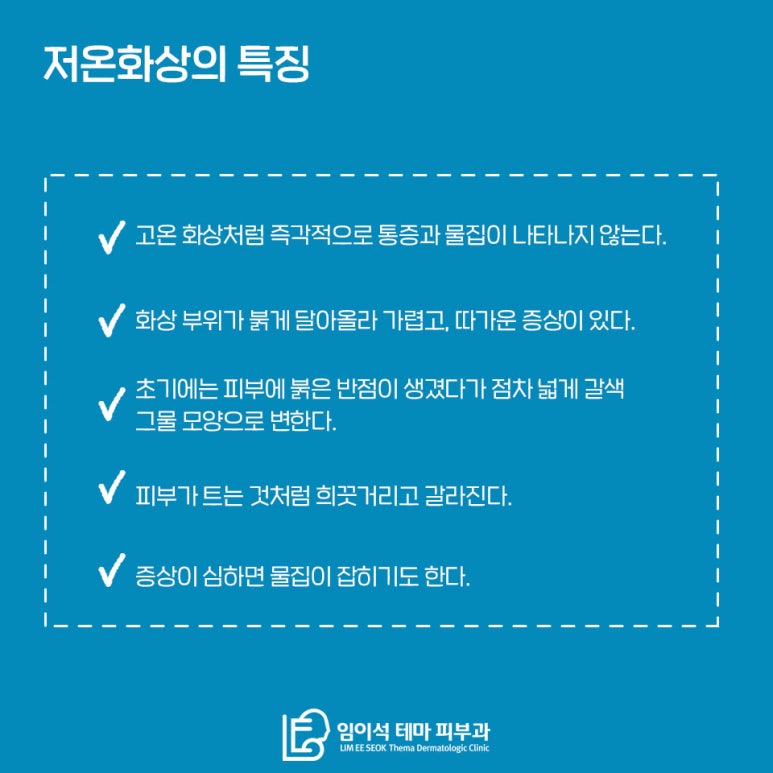
Unlike high-temperature burns, pain and blisters do not appear immediately.
-
In the early stage, red spots appear on the skin and then gradually turn into a broad brown net-like pattern.
-
The burned area becomes red, itchy, and stingy.
-
The skin looks pale, as if it is cracking, and may split.
-
If the symptoms are severe, blisters may form.
Classification of Burns by Severity
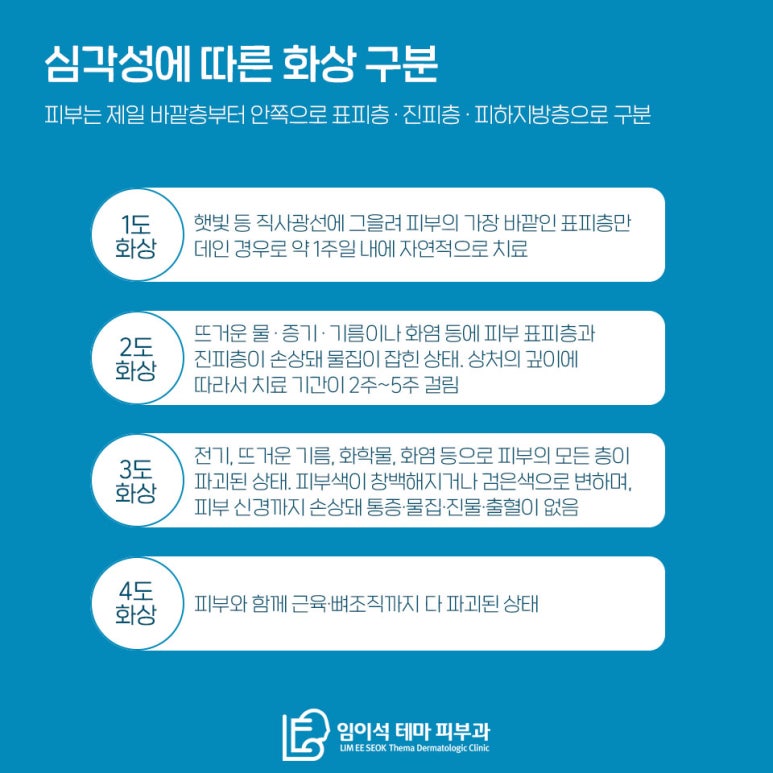
The skin is divided, from the outermost layer inward, into the epidermis, dermis, and subcutaneous fat layer.
-
First-degree burn: A burn in which only the outermost layer of the skin, the epidermis, is affected, such as from sunlight or other direct sunlight exposure, and it can heal naturally within about one week.
-
Second-degree burn: A state in which the epidermis and dermis are damaged by hot water, steam, oil, or flames, causing blisters. Depending on the depth of the wound, treatment may take 2 to 5 weeks.
-
Third-degree burn: A state in which all layers of the skin are destroyed by electricity, hot oil, chemicals, flames, and so on. The skin becomes pale or turns black, and because the skin nerves are also damaged, there is no pain, blistering, oozing, or bleeding.
-
Fourth-degree burn: A state in which not only the skin but also the muscle and bone tissue are completely destroyed.
Things to Be Careful About Regarding Low-Temperature Burns
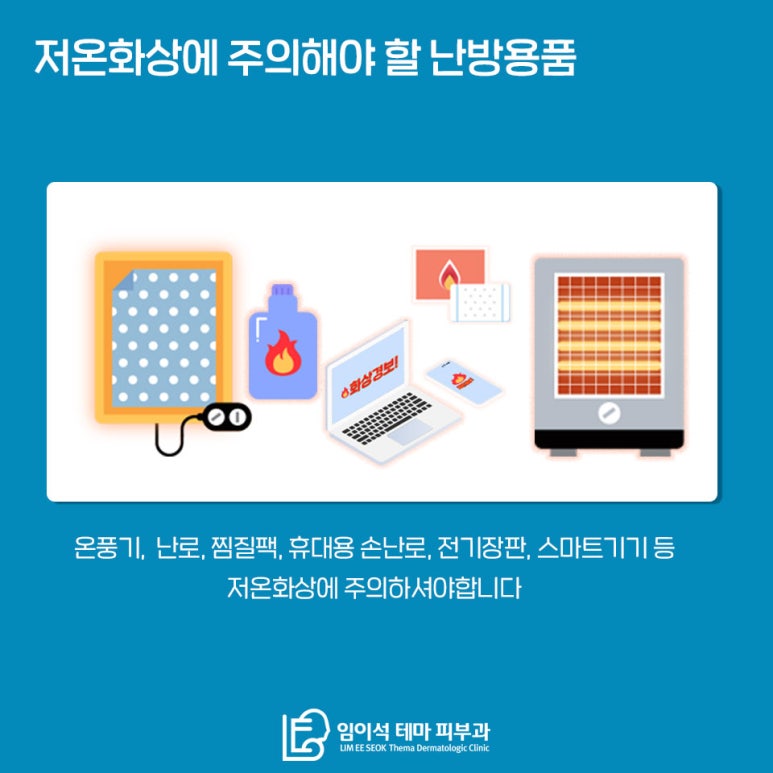
What should you be careful about when it comes to low-temperature burns? You can easily get a low-temperature burn from electric pads, electric seat cushions, heat packs, portable hand warmers, hot-air heaters, and even a heated phone screen, which are commonly used in winter.
What to Do If You Get a Low-Temperature Burn
-
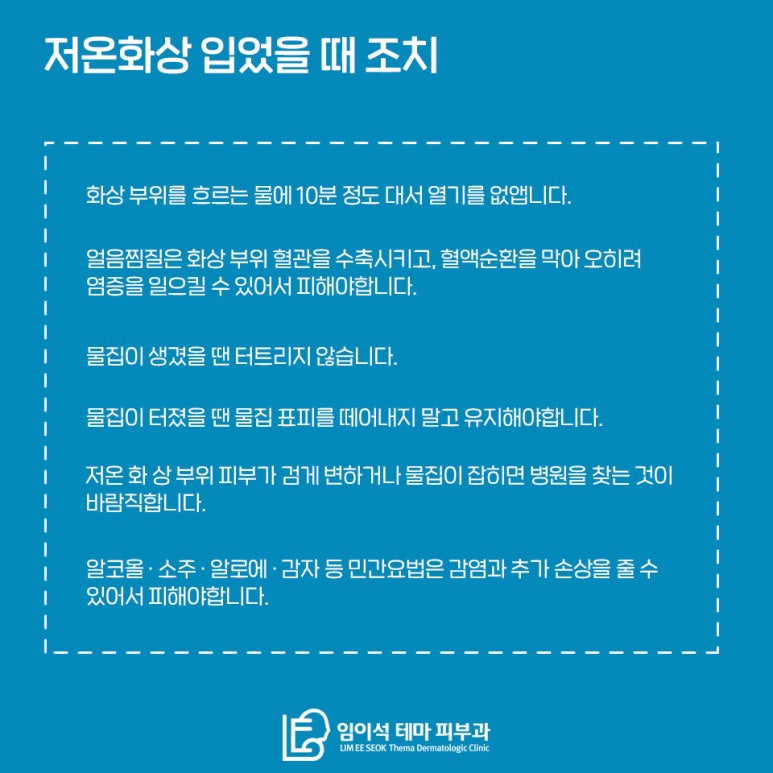
Hold the burned area under running water for about 10 minutes to remove the heat.
-
Ice packs should be avoided because they can constrict blood vessels in the burned area and block blood circulation, which may instead cause inflammation.
-
If blisters form, do not pop them.
-
If a blister bursts, do not remove the blister skin; it should be kept in place.
-
If the skin in the low-temperature burn area turns black or blisters form, it is advisable to visit a hospital.
-
Folk remedies such as alcohol, soju, aloe, or potatoes should be avoided because they can cause infection and further damage.
When a low-temperature burn is severe, it is good to apply a Vaseline-type ointment that helps prevent dryness or an antibiotic ointment that helps prevent infection. If the burn is severe enough to cause the skin to turn black or form blisters, the safest method is to wash the suspected burn area with saline or cool water and then receive treatment at a dermatology clinic as soon as possible.
How to Prevent Low-Temperature Burns
-
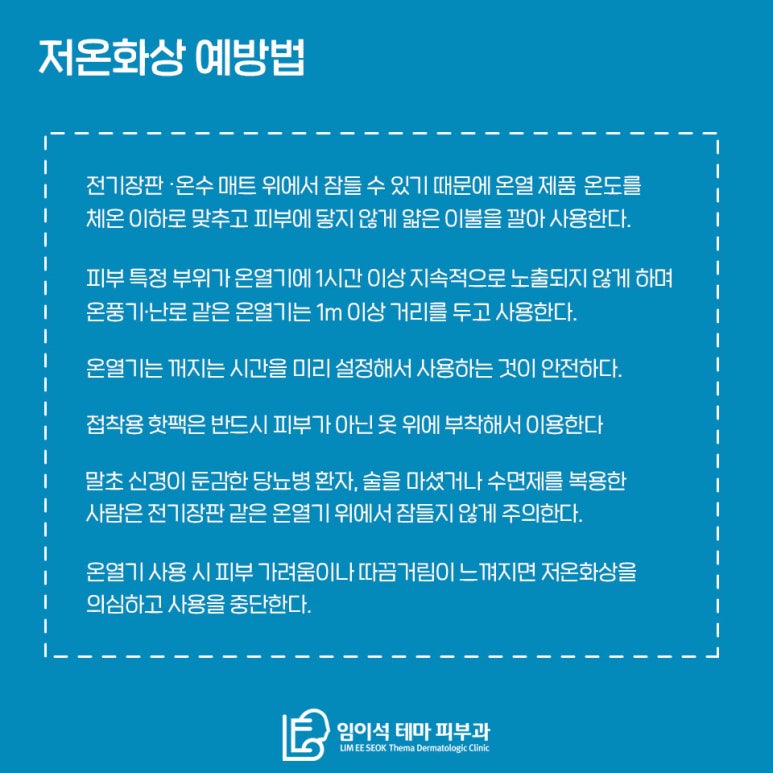
Because you may fall asleep on an electric pad or hot-water mat, set the temperature of heating products below body temperature and place a thin blanket over them so they do not touch the skin.
-
Do not allow a specific area of the skin to be continuously exposed to a heating device for more than one hour, and use heating devices such as hot-air heaters or stoves at a distance of at least 1 meter.
-
It is safer to use heating devices with the shutdown time preset.
-
Adhesive heat packs must be attached to clothing, not directly to the skin.
-
Patients with diabetes whose peripheral nerves are less sensitive, or people who have been drinking alcohol or taken sleeping pills, should be careful not to fall asleep on heating devices such as electric pads.
-
If you feel itching or tingling in the skin while using a heating device, suspect a low-temperature burn and stop using it.
Why Low-Temperature Burns Are Hard to Notice
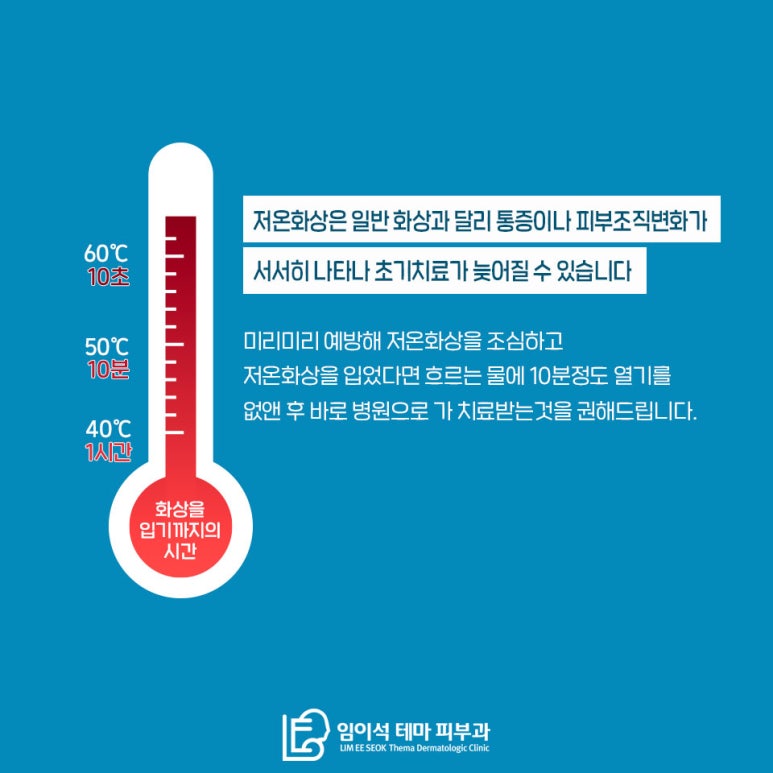
Unlike ordinary burns, low-temperature burns develop pain and changes in skin tissue very slowly. For that reason, people often do not notice skin changes immediately, and early burn treatment is often delayed. Another reason is that the dermis and fat cells where low-temperature burns occur do not sense pain well.
Today, we talked about low-temperature burns, which can become serious when you let your guard down in winter. Because the early symptoms of low-temperature burns are not prominent, people often overlook the risk and continue using heating products. Feeling warm is nice, but because scars can remain on the body, you should stay alert. Older adults and infants, as well as others with delicate skin, should be especially careful.
If the burn is severe enough to cause the skin to turn black or form blisters, the safest method is to wash the suspected burn area with saline or cool water and then receive treatment at a dermatology clinic as soon as possible. If you have already suffered a low-temperature burn and have a scar, we recommend visiting a dermatology clinic quickly to treat the scar. Rather than going to just any dermatology clinic, it is important to receive customized treatment according to the condition of the scar. We recommend seeking scar treatment at a place with a variety of devices used for scar treatment.
At Imi Seok Theme Dermatology Clinic, we have theme-based clinics built on extensive clinical experience, possess about 60 laser devices, and provide customized treatment tailored to each patient’s condition and symptoms. We have coordinators in administration, treatment, and care to provide services, and our medical staff visits patients’ treatment rooms to carry out care while also offering private service. If you have any questions or would like a dermatology consultation, please apply for a consultation through the link or number below. Imi Seok Theme Dermatology Clinic will always be with you.