How to Care After Mole Removal
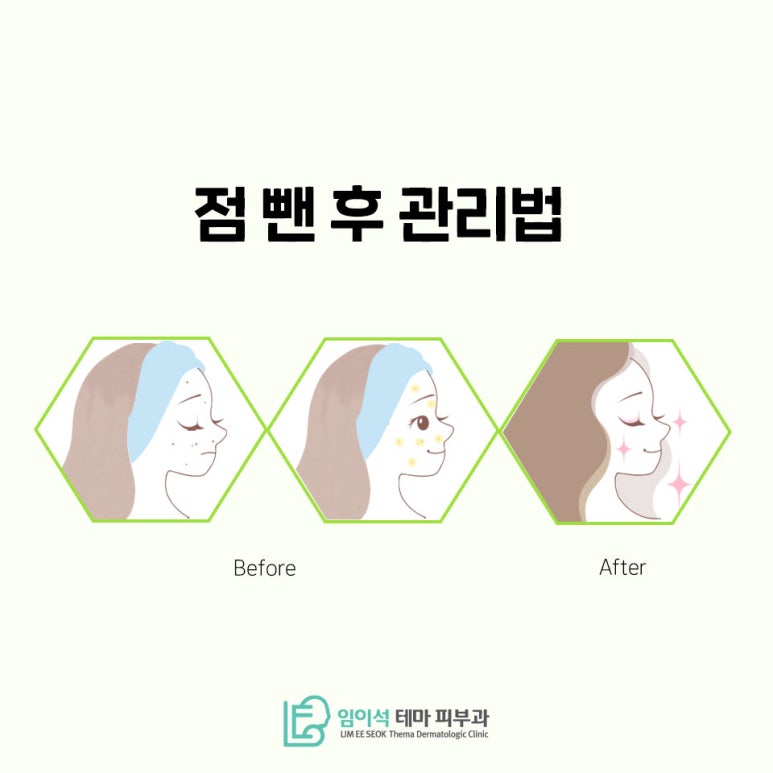
Moles on the face can occur for various reasons and can cause cosmetic discomfort. That is why many people visit clinics to have moles removed. Removing a mole is not difficult, but depending on how you care for the skin afterward, it can have various effects on the skin.
Many people worry about the changes that occur on the skin after mole removal procedures and ask questions. We explain the precautions in detail during the procedure, but in many cases, proper care is not followed. So today, we will talk about effective care after mole removal.
The mole removal process refers to shaving off or burning away the mole cells gathered within the skin using a laser. Therefore, various changes can occur during and after the procedure, and the skin's reaction may differ depending on the size of the mole.
Advantages and Disadvantages of Mole Removal Procedures

◆ Small mole procedures
Moles that do not exceed an average of 1 mm when viewed with the naked eye are called small moles, and removal is performed with a laser. Because the mole is small, the wound is not deep during laser treatment, there is not much fluid discharge, and in general, after about a day a scab forms, so there is little inconvenience in daily life such as wearing makeup. After removing a small mole, it is not necessary to use artificial skin, because the scab that forms quickly after the procedure serves the role of artificial skin. Artificial skin is waterproof and helps with faster recovery, but when many moles are removed it can be inconvenient in daily life, so after removing a small mole, using an ointment that helps scab formation and recovery may be more effective than using artificial skin. Therefore, immediately after the procedure, artificial skin should be used, and after 1 to 2 days, it is better to avoid using artificial skin so that a scab can form.
◆ Large mole procedures
Moles larger than 1 mm are considered large moles. Because they are broad in range and located deep within the skin layers, the wound after the procedure is wide and deep. Therefore, fluid continues to ooze for several days after the procedure, so a scab does not form well and applying artificial skin helps recovery. If artificial skin is applied, the wound heals faster and scarring is almost nonexistent.
◆ Scabs after the procedure
Scabs generally last for about 5 to 10 days and then gradually fall off. Around one week later, they often come off while washing the face or wiping away moisture after washing, and this means the skin is recovering, so there is no need to be too alarmed.
How to Use Artificial Skin After Mole Removal!

Many people use artificial skin after mole removal. Although artificial skin has advantages, it also has disadvantages. The main reason for using artificial skin after mole removal is to promote faster wound recovery and prevent contact with water. Even after removing a mole, daily life must continue, and people who work or have social obligations still need to go to work and carry on with their routines, which is why artificial skin is used.
When artificial skin is used, it reacts with the wound and fluid is produced. This fluid contains many elements that help wound recovery, such as growth factors, immune cells like white blood cells, and proteolytic enzymes. However, if the adhesive bandage is changed too often or not often enough, side effects can occur. Therefore, when using artificial skin, it should be changed every 1 to 3 days for one week, depending on the amount of fluid. If disinfecting the wound area, it is best to gently wipe it with saline.
Sun protection is essential to prevent pigmentation after mole removal!
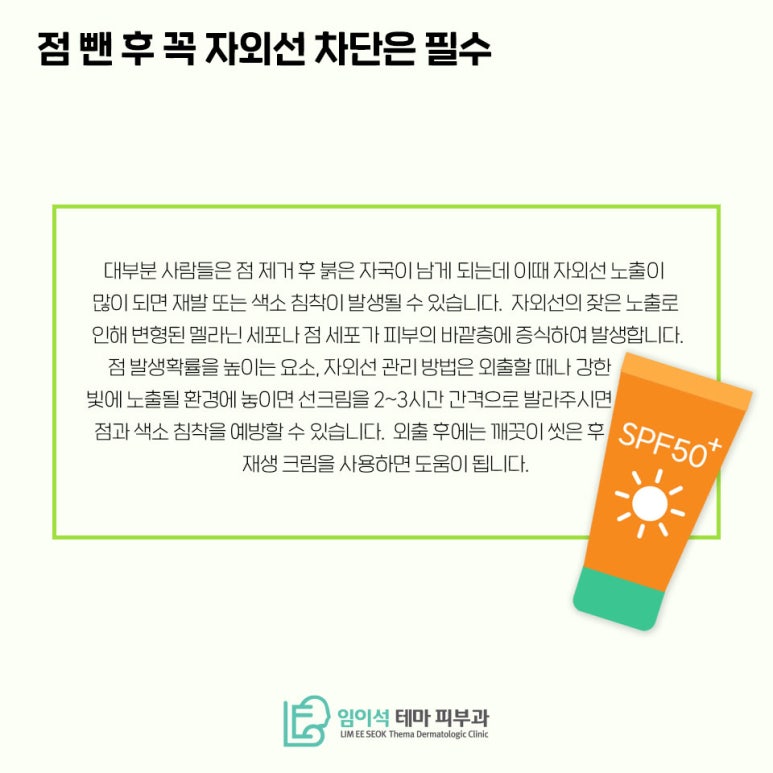
Generally, after removing a mole, red marks remain. Although there may be individual differences from person to person, red marks remain in almost everyone, and careful care at this stage is necessary to prevent pigmentation. Since the skin is in a self-healing state to recover from the wound, there is no need to worry too much, but if exposed to a lot of ultraviolet light, recurrence or pigmentation can occur. Therefore, after mole removal, once the skin has healed to some extent and the regenerative bandage is no longer needed, or once the scab has fallen off, active care is necessary. The care method is to apply sunscreen or BB cream when going outside or when exposed to strong light, and after going out, wash thoroughly and then use a recovery cream.
<Summary of Care After Mole Removal>

-
Care for the area so that it does not come into contact with water as much as possible.
-
If disinfecting, use saline.
-
When washing your face, use artificial skin and do it gently without rubbing.
-
After washing your face, when using a towel, do not rub; gently press it against the skin.
-
After the artificial skin or scab has been removed, be sure to use sunscreen or BB cream to prevent pigmentation.
Many people believe that moles are caused by ultraviolet rays, but this is both true and untrue. In fact, the exact cause of moles is not clearly known, but ultraviolet rays do increase the likelihood of moles forming. For people who are born with moles, they were not affected by ultraviolet rays, and in the case of moles that develop later in life, they can occur when mutated melanocytes or mole cells proliferate in the outer layer of the skin due to frequent exposure to ultraviolet rays.
Removing moles and caring for the skin afterward are both important, but the best approach is to prevent them from forming in the first place. In everyday life, avoid sun exposure as much as possible, and if you must be exposed, using sunscreen every 2 to 3 hours can help with prevention.
Today, we talked about how to care for skin after mole removal. If you have any further questions, want to have a mole removed, or are worried about recurrence or pigmentation after mole removal, please contact our clinic. Imi-seok Theme Dermatology has more than 60 different lasers and our specialist medical staff provide treatment based on extensive clinical experience. Our clinic, with more than 20 years of experience and experts in each field, provides customized treatment tailored to the patient's symptoms and condition.