Types, Causes, and Treatment Methods for Melasma and Skin Spots

Hello. This is Lee Mi-suk Theme Dermatology Clinic.
Clean skin has long been considered one of the key conditions of beauty. Many people are concerned about pigment disorders such as melasma, freckles, and skin spots that make the skin look dark and dull. So today, we will look at the types and causes of melasma and skin spots, as well as how to get rid of melasma and skin spots, treatment methods, and precautions.
Do treatment methods vary depending on the type of melasma, skin spots, and pigment?
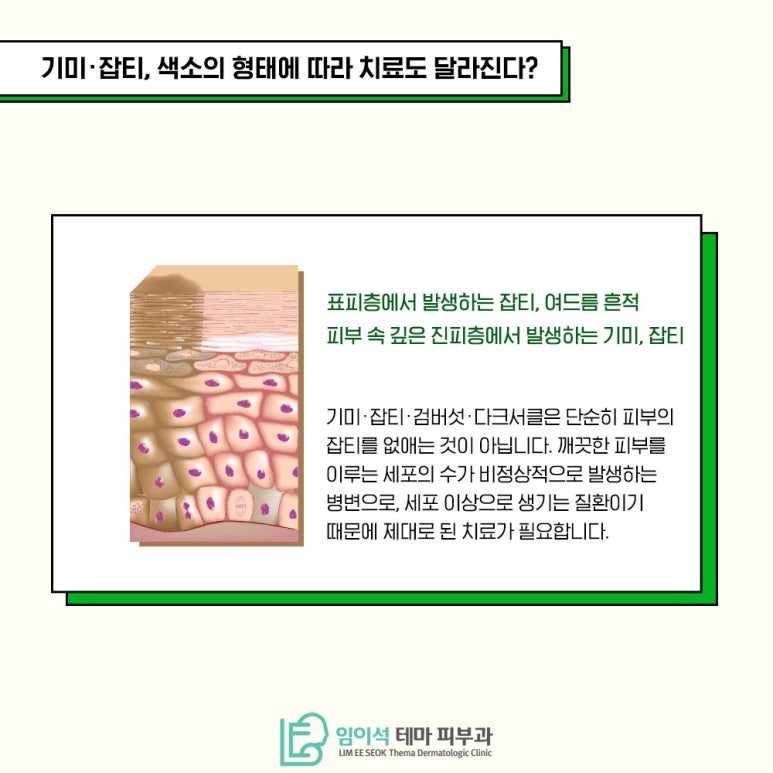
Melasma, skin spots, and age spots are treated differently depending on the type of pigment. There are skin spots and acne marks that occur in the epidermis, and melasma and skin spots that occur deep in the dermal layer of the skin. Melasma, skin spots, age spots, dark circles, and similar conditions are not simply skin blemishes; they are lesions caused by cell abnormalities, where the number of cells that make up clear skin develops abnormally, so proper treatment is necessary.
Main causes of melasma and skin spots
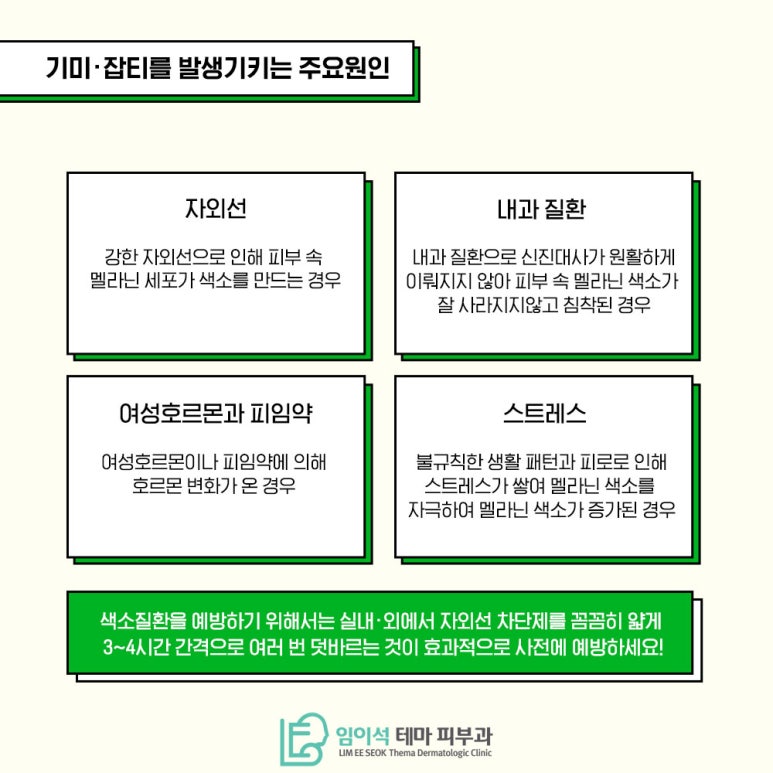
The cause of pigment disorders such as melasma, freckles, and skin spots is that melanin pigment is produced in our body as a defense mechanism to protect the skin from ultraviolet rays. In addition, these conditions can occur when strong ultraviolet rays cause melanocytes in the skin to produce pigment, when internal medical conditions prevent metabolism from functioning properly and melanin pigment in the skin does not disappear well and becomes deposited, when hormonal changes occur due to androgen hormones or birth control pills, or when irregular lifestyle patterns and fatigue lead to stress that stimulates melanin pigment and increases it.
Melasma is a brown pigmentary deposition that appears on the face, especially under the eyes or on the forehead. Freckles are small yellow-brown pigmented spots that mainly appear on areas exposed to sunlight. They are usually found on the cheeks, upper arms, chest, and upper back. In appearance, they are often difficult to distinguish from melasma. To prevent pigment disorders such as melasma, freckles, and skin spots, it is best to apply sunscreen carefully both indoors and outdoors as a preventive measure. When applying sunscreen, it is effective to apply it in thin layers several times, and when spending a long time outdoors, it should be reapplied at least once every 3 to 4 hours to maintain sun protection. It is also a good idea to regularly eat foods that help brighten the skin, such as fresh fruits and vegetables rich in vitamin C like strawberries, lemons, kale, and parsley. Drinking green tea, which contains large amounts of catechins, can also help prevent melanin formation.
If pigment disorders such as melasma, freckles, and skin spots have already developed, do not rely on self-treatment; instead, visit a dermatology clinic as soon as possible and receive treatment from a specialist. This is because the condition is likely to worsen, and the pigmented area may spread further, resulting in more treatment sessions and a longer treatment period. Melasma, skin spots, age spots, and dark circles are not simply about removing skin blemishes. Since they are lesions caused by cell abnormalities, where the number of cells that make up clear skin develops abnormally, the type of pigment, the depth of pigment deposition, the cause, and the symptoms must be precisely diagnosed so that treatment can proceed according to the cause.
Premium laser treatment devices for melasma, skin spots, and pigment disorders
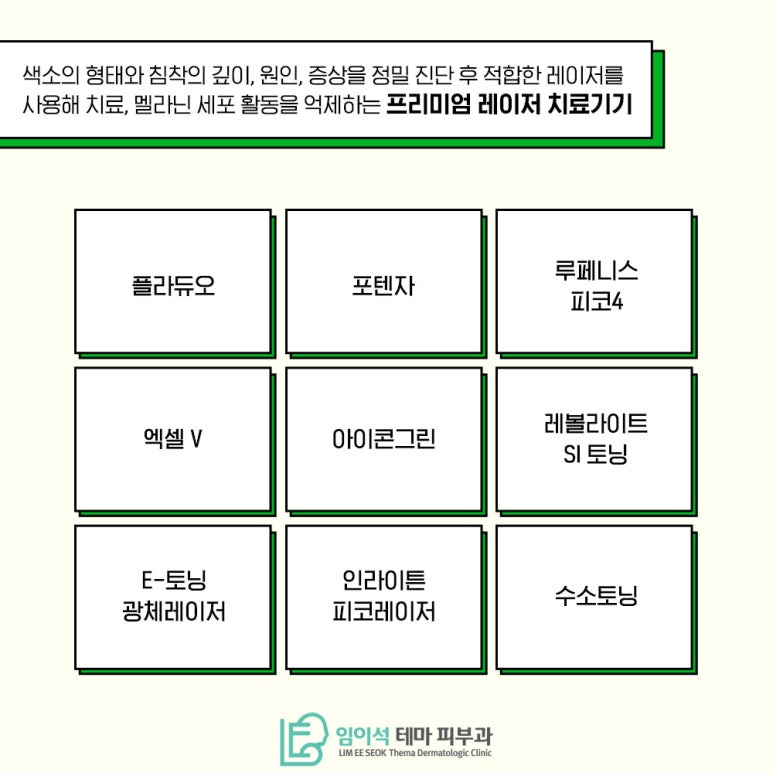
For pigment disorder treatment, Pico laser, Revlite SI, eToning, Excel V, Icon, and Sylfirm Laser are commonly used. This procedure selectively destroys only melanin pigment, so it does not directly stimulate skin tissue, resulting in little pain or swelling, and the short treatment time makes it convenient for busy office workers.
When treating pigment disorders such as melasma, freckles, skin spots, age spots, and Ota nevus, appropriate laser treatments are combined depending on the skin condition. For example, if melasma becomes severe, removing only the pigment in the epidermis with a laser may make the symptoms look worse, so the pigment in both the epidermis and dermis must be treated at the same time. For this reason, several lasers such as Pico laser, toning laser, and Icon are used together.
Principle of laser treatment for melasma, skin spots, and age spots
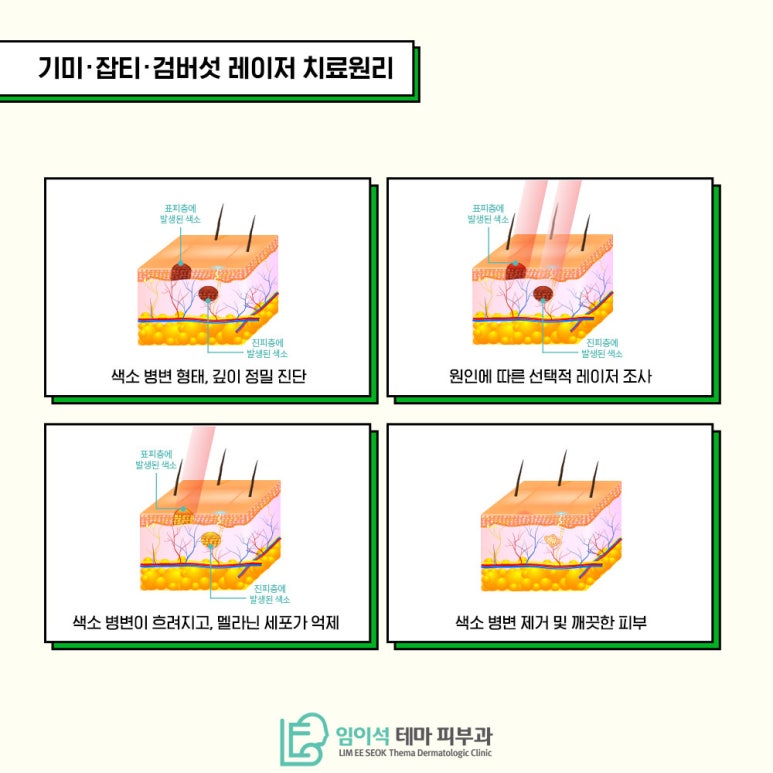
After a precise diagnosis of the form and depth of pigment lesions in the epidermal or dermal layer, the laser is applied to the pigment that has developed according to the cause. The pigment lesion in the irradiated area becomes less noticeable, and melanocytes are suppressed. Laser treatment removes pigment lesions and helps restore clear skin.
Skin care that goes well with treatment
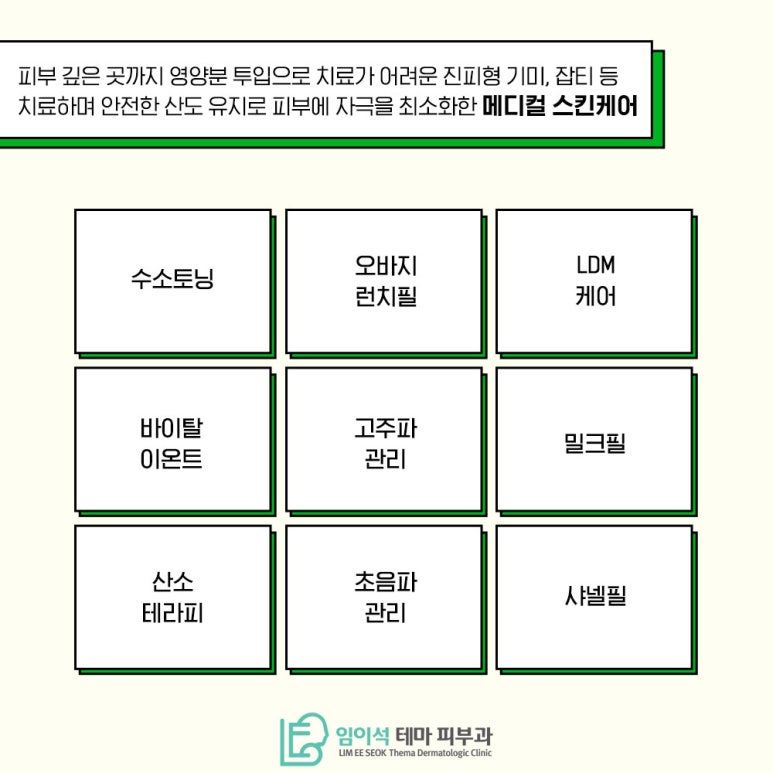
Through the medical skin care at Lee Mi-suk Theme Dermatology Clinic, nutrients are delivered deep into the skin to treat even dermal-type melasma and mixed-type melasma, which are difficult to treat, and the skin can be protected from irritation by maintaining a safe pH level. Combining laser treatment with various medical skin care options such as hydrogen toning, Obagi Lunch Peel, LDM care, Vital Iont, radiofrequency care, milk peel, oxygen therapy, ultrasound care, and Chanel peel can help reduce skin irritation.
Precautions when treating melasma, skin spots, and age spots
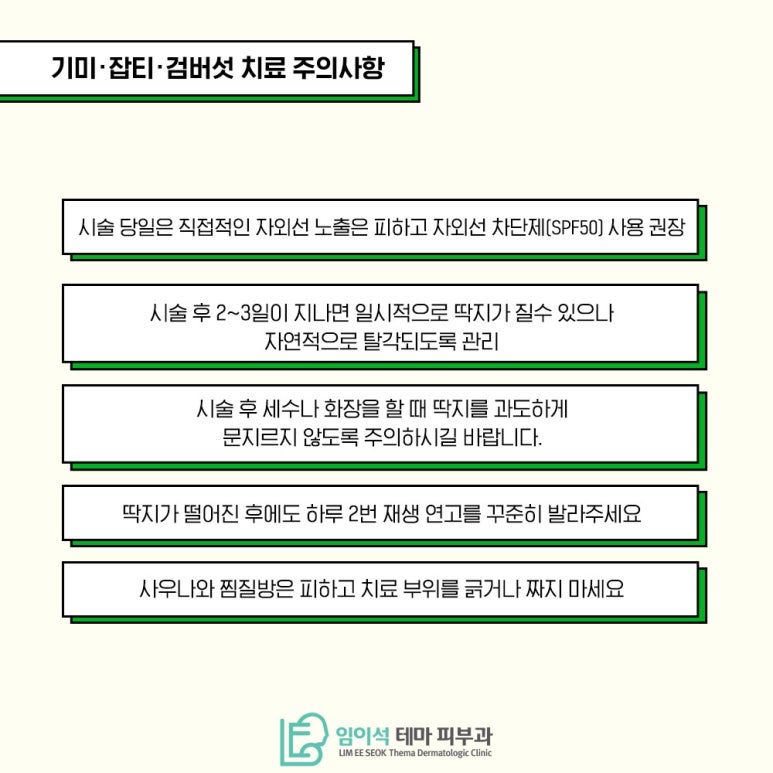
On the day of the procedure, avoid direct exposure to ultraviolet rays and use sunscreen. Two to three days after the procedure, scabs may temporarily form, but care is needed so they can naturally shed. After the procedure, be careful not to rub the scabs excessively when washing your face or applying makeup. Even after the scabs fall off, continue applying a regenerative ointment at least twice a day. Avoid saunas and jjimjilbangs, and do not scratch or squeeze the treated area. After treatment for melasma, skin spots, and age spots, you should also avoid prolonged exposure to sunlight and make sure to apply sunscreen properly. It is also good to continue maintenance treatments at regular intervals.
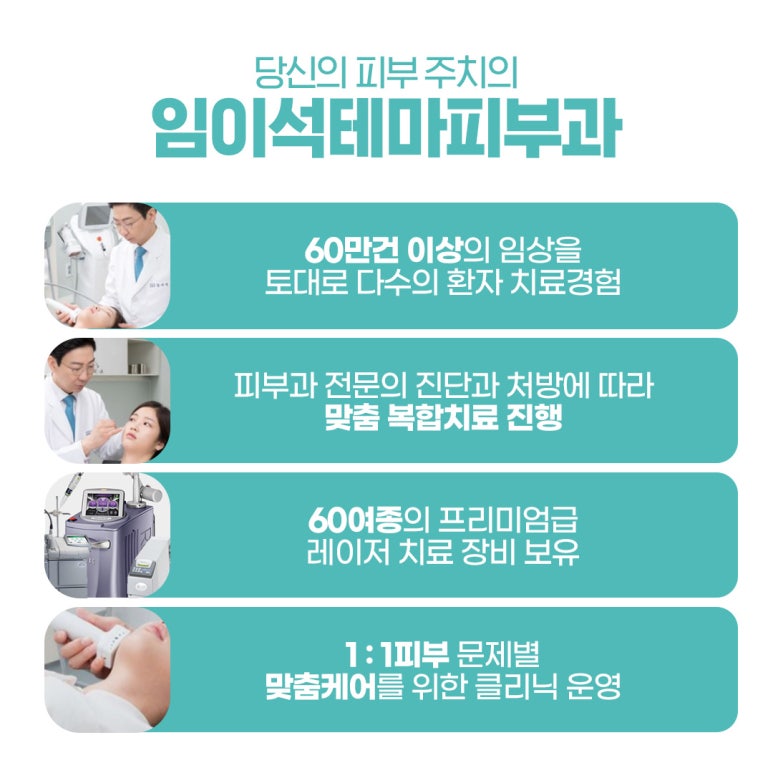
With rich clinical experience of over 600,000 cases, Lee Mi-suk Theme Dermatology Clinic provides trustworthy treatment. Rather than focusing on isolated causes, it plans treatment programs based on the diagnosis and prescription of a board-certified dermatologist and carries out treatment according to each patient's condition. To achieve more effective results, the clinic continuously adds and replaces premium laser treatment equipment. Since procedures and treatment must always begin with diagnosis, we hope you will solve the underlying skin problem through an accurate consultation.