How to Manage Adolescent Acne
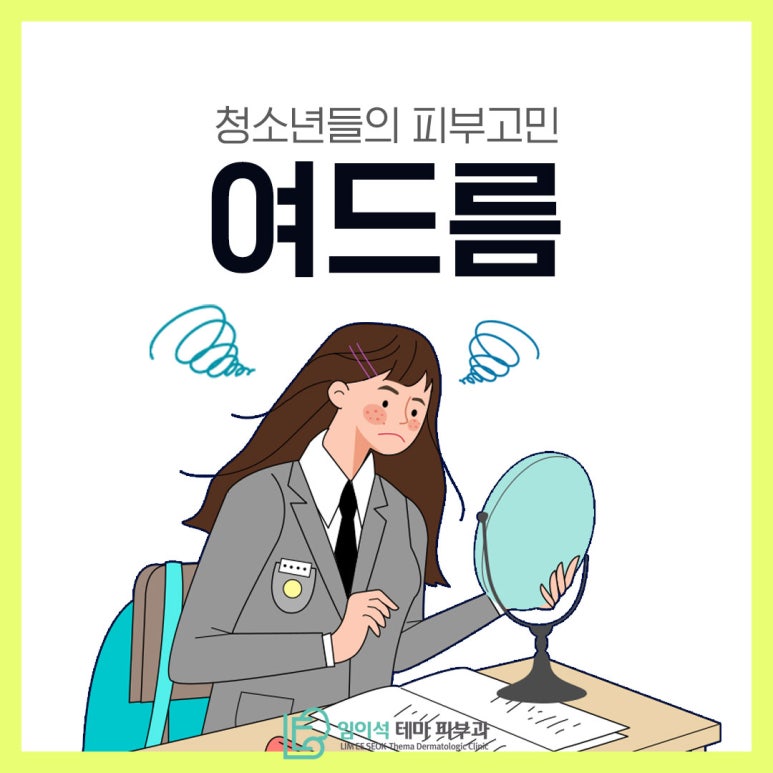
During adolescence, the sebaceous glands develop in earnest, so acne often begins or worsens. One of the key differences between adult acne and adolescent acne is that, as sebaceous gland development progresses, the areas where acne appears also shift and change. In particular, acne-related stress can affect schoolwork and lower confidence, so some adolescents experience even more stress during puberty.
What causes acne in students, who are at the age when they look best in school uniforms?
Main Causes of Acne
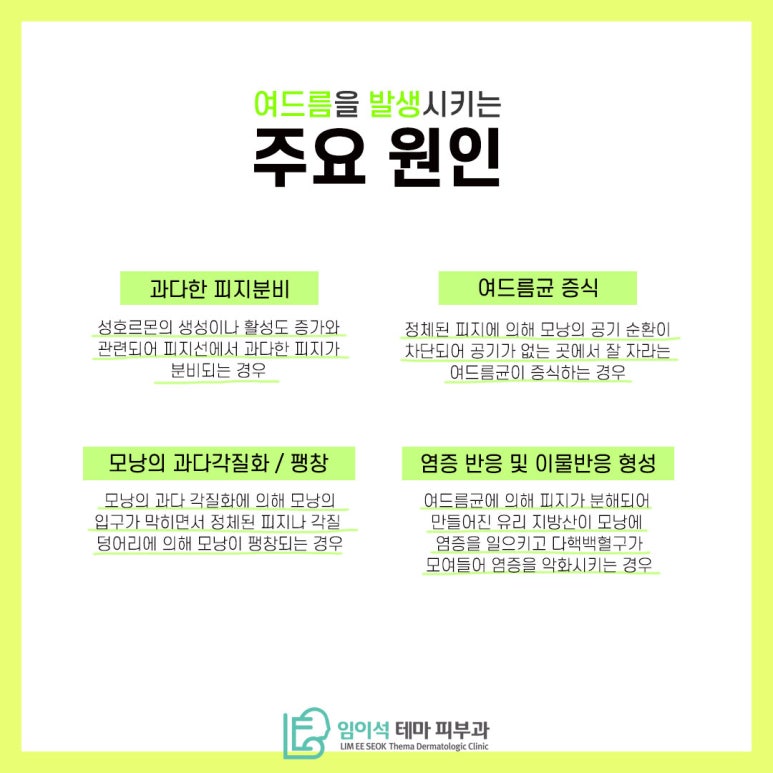
The reasons acne develops can be broadly divided into four categories. The first is excessive sebum secretion, the second is acne bacteria overgrowth, the third is excessive follicular keratinization/dilation, and the fourth is an inflammatory response and foreign-body reaction. These four are the main causes.
-
Excessive sebum secretion: A case in which excessive sebum is secreted from the sebaceous glands due to increased production or activity of sex hormones such as androgen or dihydrotestosterone
-
Acne bacteria overgrowth: A case in which the follicular opening becomes blocked by excessive keratinization of the follicle, causing the follicle to dilate due to stagnant sebum or a mass of dead skin cells
-
Excessive follicular keratinization/dilation: A case in which acne bacteria, which grow well in airless areas of the follicle, proliferate due to stagnant sebum
-
Inflammatory response and foreign-body reaction formation: A case in which free fatty acids formed when sebum is broken down by acne bacteria cause inflammation in the follicle, and polymorphonuclear leukocytes gather to worsen the inflammation
Acne Laser Treatment
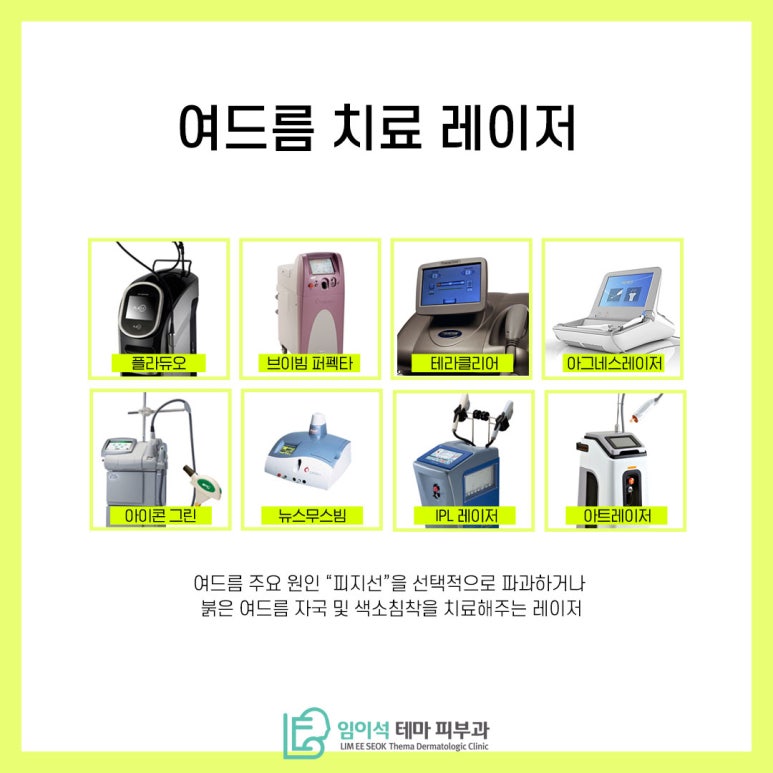
By selectively destroying the sebaceous glands, which are the main cause of acne, or by choosing a laser suitable for the skin condition, red acne marks and pigmentation are treated.
Acne treatment lasers include PlaDuo, Icon Green, TeryClear, Vbeam Perfecta, Agnes Laser, New SmoothBeam, IPL Laser, and ART Laser. After checking the skin condition, type of acne, and acne symptoms, it is best to proceed with laser treatment that suits the skin.
If the skin has suffered significant damage from acne, combining medical skin care with acne treatment laser can improve treatment effectiveness.
Medical skin care is a treatment that helps restore skin damaged by acne. Medical skin care that works well alongside laser treatment for acne-related skin damage includes Obagi Lunch Peel, Astrodome Facial, Anion Care, Gold PTT, Milk Peel, Black Peel, Oxygen Therapy, Chanel Peel, ED Peel, and Chemical Peel. Medical skin care should also be carried out in a way that matches the skin condition and laser treatment.
Why Adolescent Acne Care Is Important
The period when people are most sensitive to their appearance is adolescence. In particular, girls often experience a great deal of stress.
During adolescence, acne-related stress can affect schoolwork and lower confidence, and some adolescents experience even more stress during puberty. In particular, adolescent acne-prone skin has active sebum secretion, leading to increased oil production and greater vulnerability to bacterial infection. If it progresses to inflammatory acne, pitted acne scars may occur, so careful management of acne during the adolescent period, when sebum secretion is vigorous, is necessary to prevent acne scars from remaining.
Behaviors to Follow to Prevent Acne Recurrence
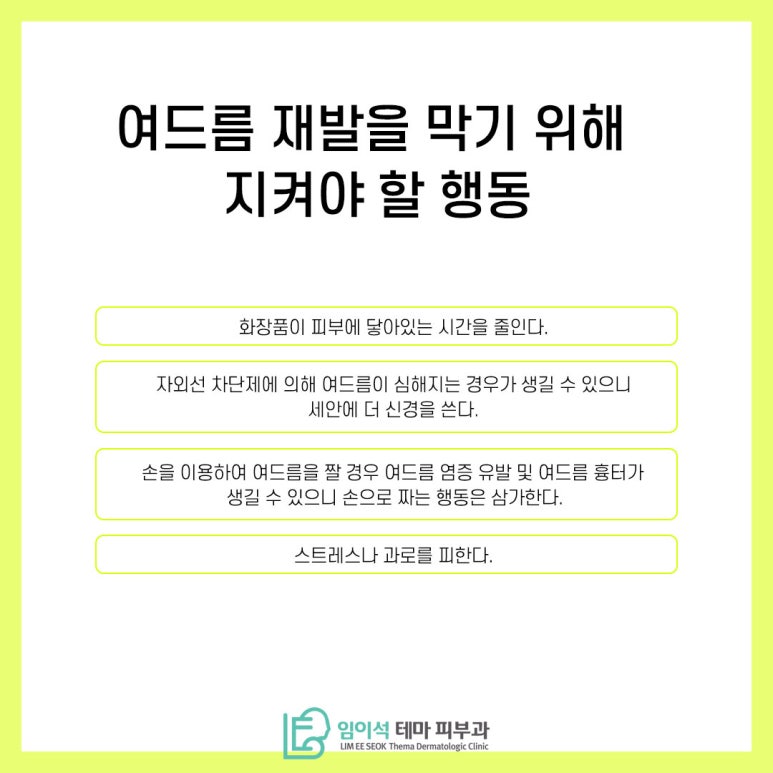
Here are the behaviors to follow to prevent acne from recurring.
-
Reduce the amount of time cosmetics stay on the skin.
-
Be more careful with cleansing, since sunscreen may sometimes worsen acne.
-
If you squeeze acne with your hands, it may trigger inflammation and cause acne scars, so avoid squeezing it with your hands.
-
Avoid stress and overwork
Precautions Before and After Acne Treatment
During the treatment period, you should avoid using scrubs. On the day of acne treatment, you should avoid direct sun exposure, and you should consistently use moisturizer and sunscreen. It is also best to avoid saunas and Korean steam rooms. The treated area may look red for about 1 to 2 days after the procedure, and you should not scratch or squeeze the treated area. If itching or a strong feeling of heat occurs after the procedure, it is recommended that you visit the clinic and receive treatment.
Imi-seok Thema Dermatology has more than 60 premium laser treatment devices and continues to add and replace them in order to provide more effective treatment results.